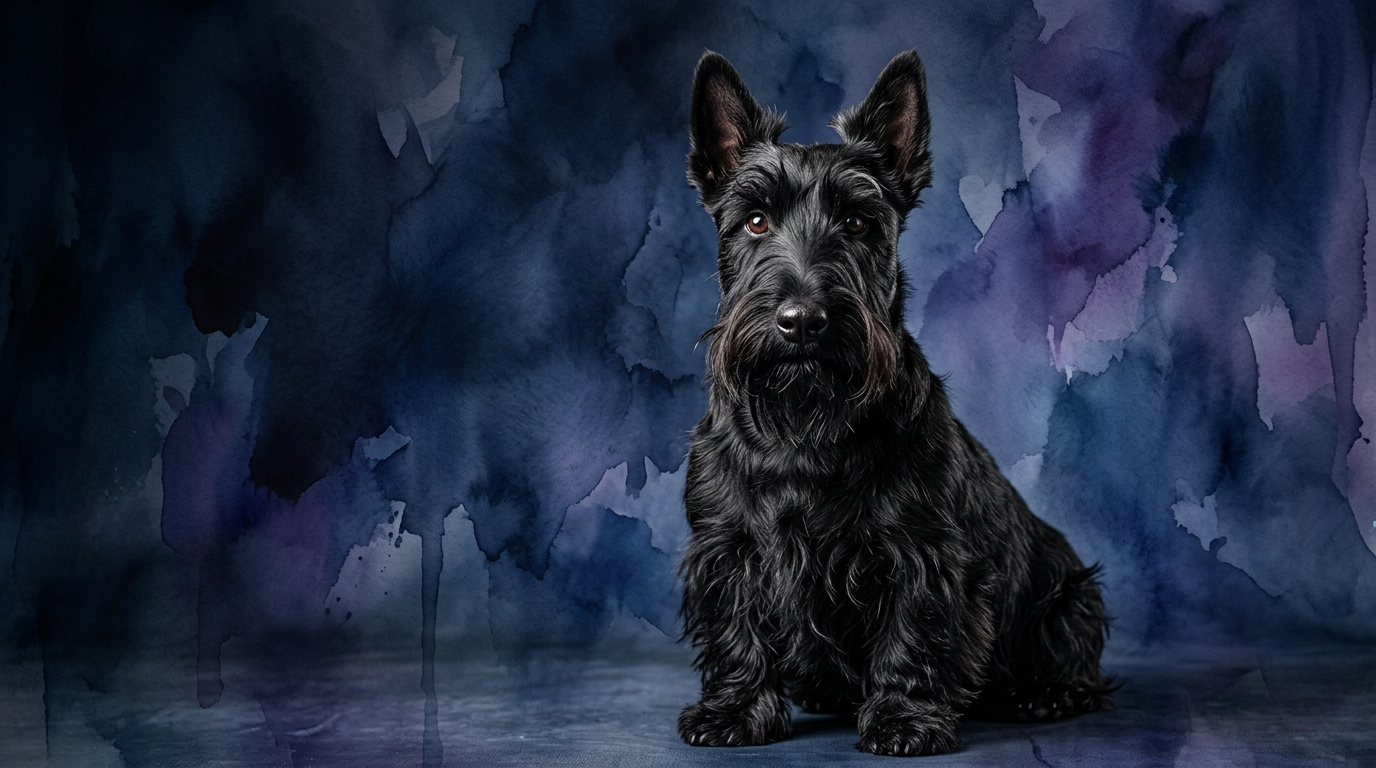
Side-by-Side IQ Profile: Scottish Terrier
The Scottish Terrier displays problem-solving through persistent, focused effort, particularly when engaging with tasks that align with their original vermin-hunting purpose. This might involve strategizing how to access a perceived burrow or meticulously working to retrieve a toy under furniture. Their approach is often characterized by determined, independent thinking rather than seeking human guidance for complex puzzles.
Scottties learn at a moderate pace, but their strong-willed nature means they often weigh whether a command is truly worth their effort. They are capable of understanding and remembering cues, yet their application of learned behaviors can be selective, especially if a more compelling personal agenda, like investigating a smell or marking territory, presents itself. Consistency and high-value rewards are key to accelerating their learning curve.
These terriers exhibit a discerning social awareness. They are deeply bonded and perceptive within their immediate family unit, understanding subtle cues and routines. However, they tend to be reserved, even aloof, with strangers, assessing new individuals carefully before offering acceptance. Their social interactions are often precise and not overly effusive, reflecting a strong sense of self and personal space.
The Scottish Terrier possesses a robust instinctive drive rooted in their heritage as a working terrier. This manifests as a compelling urge to dig, chase small animals, and patrol their perceived territory. This drive is a powerful motivator, often influencing their choices and requiring diligent management to prevent it from overriding learned behaviors in stimulating environments.
Scottties demonstrate a solid memory for routines, learned commands, and the specific behaviors of their human companions and other pets. They recall places and experiences well, which can be beneficial for training consistency but also means they may remember negative experiences or perceived slights, influencing future interactions.
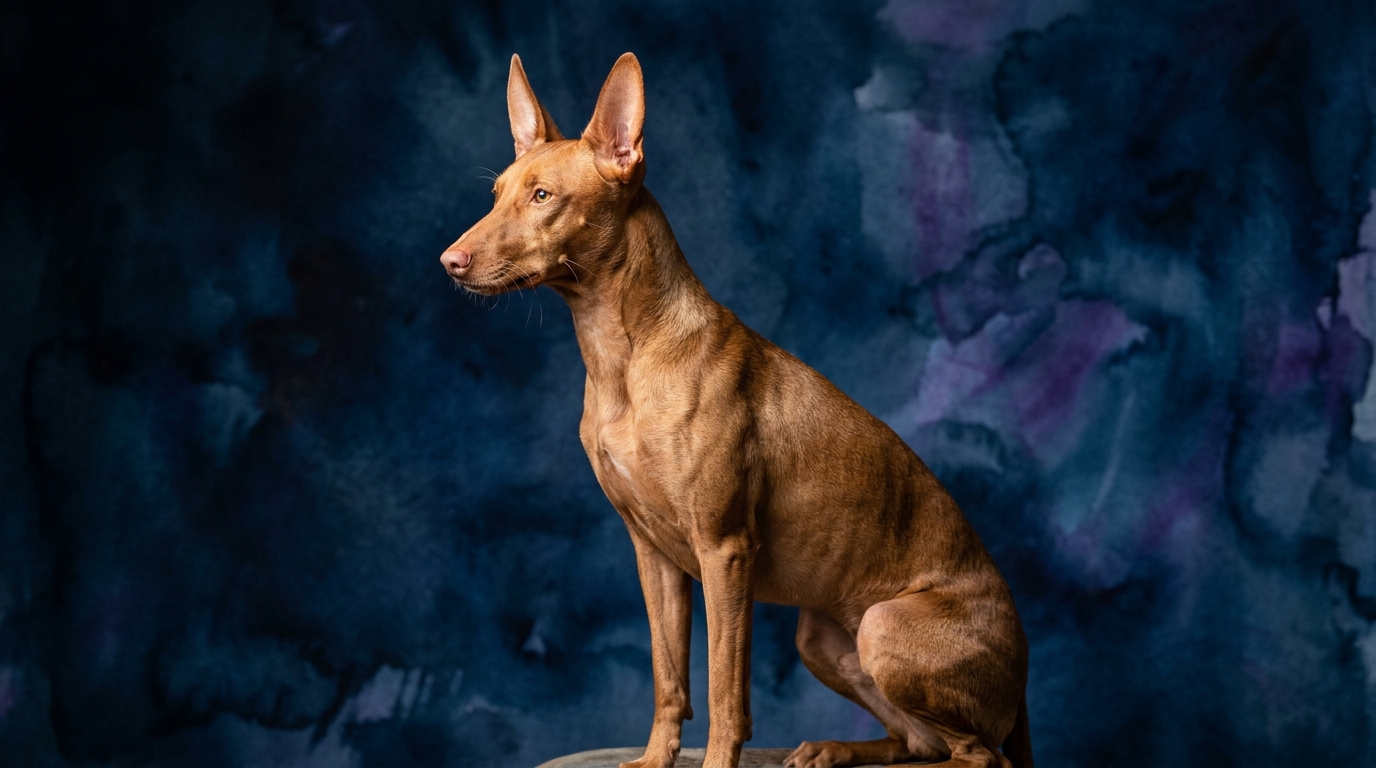
Side-by-Side IQ Profile: Pharaoh Hound
The Pharaoh Hound’s problem-solving abilities are finely tuned to their sighthound heritage, excelling in tasks requiring swift spatial reasoning and quick adaptations in open environments. This involves navigating complex terrain during a chase, identifying the quickest path to a perceived target, or figuring out how to bypass obstacles efficiently. Their solutions are often immediate and action-oriented, driven by visual cues.
Pharaoh Hounds can grasp new concepts with surprising speed, especially when training is engaging and incorporates their natural drives. However, their training speed is frequently tempered by a powerful instinct to pursue, making them highly susceptible to distractions from movement or distant objects. They learn best with positive reinforcement and short, focused sessions that compete effectively with their environmental awareness.
These hounds display a warm, sensitive social intelligence within their chosen family, often forming close, affectionate bonds. They are generally polite with strangers, though they may maintain a dignified distance until trust is established. Their sensitivity means they are attuned to human emotions and can be quite responsive to their family's moods, thriving in a harmonious household.
Pharaoh Hounds possess a paramount instinctive drive for chasing and hunting by sight, a deeply ingrained trait from their ancient lineage. This drive is incredibly powerful, leading them to pursue perceived prey with single-minded focus and impressive speed. Managing this drive requires secure environments and outlets like lure coursing, as it can be difficult to override once activated.
Pharaoh Hounds exhibit good memory, particularly for familiar routes, the locations of exciting events, and the people they trust. They recall training cues and routines effectively, though their application of these memories can be influenced by immediate, compelling sensory input. Their memory helps them navigate familiar spaces and anticipate daily activities.
Where the Scottish Terrier Wins Cognitively
The Scottish Terrier's cognitive strengths shine brightest in areas demanding sustained focus on a specific, often localized, task. Their tenacity translates into an impressive ability to stick with a 'problem' — be it a puzzle toy or a perceived burrow — for extended periods, exhibiting a form of cognitive endurance. This breed demonstrates a superior aptitude for independent decision-making in confined or complex environments, relying on their own judgment rather than consistently looking to a handler for direction.
For instance, a Scottie might independently figure out how to manipulate an object to get what they want, showcasing a self-directed problem-solving approach that aligns with their historical role as an earth dog needing to work alone underground. Their cognitive edge lies in a determined, self-sufficient application of their mental resources, making them particularly adept at detailed, single-minded investigations.
Where the Pharaoh Hound Wins Cognitively
Conversely, the Pharaoh Hound excels in cognitive domains requiring rapid processing of visual information and spatial reasoning over vast distances. Their sighthound heritage gifts them with an exceptional ability to scan and interpret open landscapes, identifying movement and adapting their pursuit strategy in real-time. This manifests as superior situational awareness in dynamic environments, allowing them to make split-second decisions based on visual cues.
For example, a Pharaoh Hound will quickly assess the trajectory of a moving object and calculate the optimal interception path, demonstrating a highly specialized form of problem-solving geared towards speed and efficiency in the chase. Their cognitive superiority is evident in their unparalleled ability to perceive, process, and react to a rapidly changing visual world, making them masters of the open field.
Which is Easier to Train and Why
Comparing the ease of training between these two breeds reveals distinct challenges stemming from their core cognitive profiles. The Scottish Terrier, with its Coren rank of #65, generally requires more repetitions to learn new commands and can be perceived as more challenging due to their independent and sometimes stubborn nature. Their '3/5' training speed is often tempered by a strong personal agenda; they learn quickly when they perceive value in the task, but may choose to ignore commands if their own instincts or desires are more compelling. Training a Scottie demands consistency, patience, and creative motivation to convince them that complying is more rewarding than pursuing their own interests. Their learning isn't slow, but their willingness to apply it is selective.
The Pharaoh Hound, while also scoring a '3/5' in training speed, presents a different set of obstacles. Their primary challenge lies in their profound distractibility due to their powerful visual and prey drives. They can grasp concepts quickly, but maintaining their focus in an environment with stimulating movement or sights is a constant battle. Training a Pharaoh Hound requires an owner to manage the environment carefully, use high-value rewards, and engage in short, frequent sessions to compete with their natural inclination to scan and chase.
While both breeds require dedicated trainers, the Scottie demands a battle of wills and motivation, whereas the Pharaoh Hound requires an ongoing effort to channel and manage their potent, environmentally-driven instincts. Neither is inherently 'easier' than the other, but the *nature* of the training challenge differs significantly, reflecting their foundational breed purposes and cognitive priorities.
Which Suits Active Owners vs. Relaxed Owners
When considering suitability for active versus relaxed owners, both breeds present specific demands, though in different forms. The Scottish Terrier, despite its compact size, is not a sedentary companion. They suit owners who appreciate consistent daily walks, engage in stimulating play, and are prepared for mental challenges like puzzle toys or scent work to satisfy their curious, busy minds. While they don't require vast open spaces for running, their need for mental engagement and a firm, consistent hand makes them less ideal for truly 'relaxed' owners who prefer minimal interaction or training. They thrive with owners who enjoy structured activities and can appreciate a dog with a strong, independent personality.
The Pharaoh Hound, on the other hand, is unequivocally a breed for active owners. Their powerful sighthound instincts and lean, athletic build necessitate considerable physical exercise, ideally in secure, open areas where they can run at full speed. Activities like lure coursing, long hikes, or vigorous games of fetch are essential to their well-being. A Pharaoh Hound would be a mismatch for a relaxed owner who cannot provide consistent, high-intensity physical outlets. While they are calm indoors after exercise, their fundamental need for exhilarating runs and mental stimulation tied to their chase drive makes them unsuitable for a truly relaxed, low-activity lifestyle. Their elegance belies a profound need for movement.
The Verdict
Choose the Scottish Terrier if you seek an independent, tenacious companion who thrives on consistent mental engagement, enjoys structured walks and puzzle challenges, and whose strong personality you are prepared to guide with patience and positive reinforcement.
Opt for the Pharaoh Hound if you are an active individual or family capable of providing extensive, secure opportunities for running and sighthound-specific activities, appreciating a sensitive yet powerful dog whose elegance is matched by a profound need for physical and instinctual fulfillment.
🧠 Find Your Pet's IQ Score
Our Pet IQ Lab assessment covers 25+ tests across 5 cognitive dimensions — personalized to your breed.
Take the Full IQ Test →Frequently Asked Questions
Are Scottish Terriers good apartment dogs despite their problem-solving IQ?
Yes, Scottish Terriers can adapt well to apartment living, provided their owners commit to daily walks and provide consistent mental stimulation through training and puzzle toys. Their problem-solving IQ means they need engagement, not necessarily acres of space, but their strong instinctive drive requires careful management in shared living environments.
Does the Pharaoh Hound's high instinctive drive make them difficult to live with?
The Pharaoh Hound's high instinctive drive, particularly for chasing, requires proactive management but doesn't make them inherently difficult. Owners must provide secure fences, avoid off-leash situations in unfenced areas, and offer appropriate outlets like lure coursing to channel this drive positively. With proper care, they are affectionate and calm companions indoors.
Given their identical IQ scores, how significant are their breed differences?
Despite identical 3/5 IQ scores, their breed differences are profoundly significant in how these cognitive traits manifest. The Scottish Terrier's scores reflect tenacious, independent application in localized tasks, while the Pharaoh Hound's scores point to rapid, visually-driven processing over distance. These distinctions dictate vastly different training approaches and lifestyle requirements, making breed type crucial.