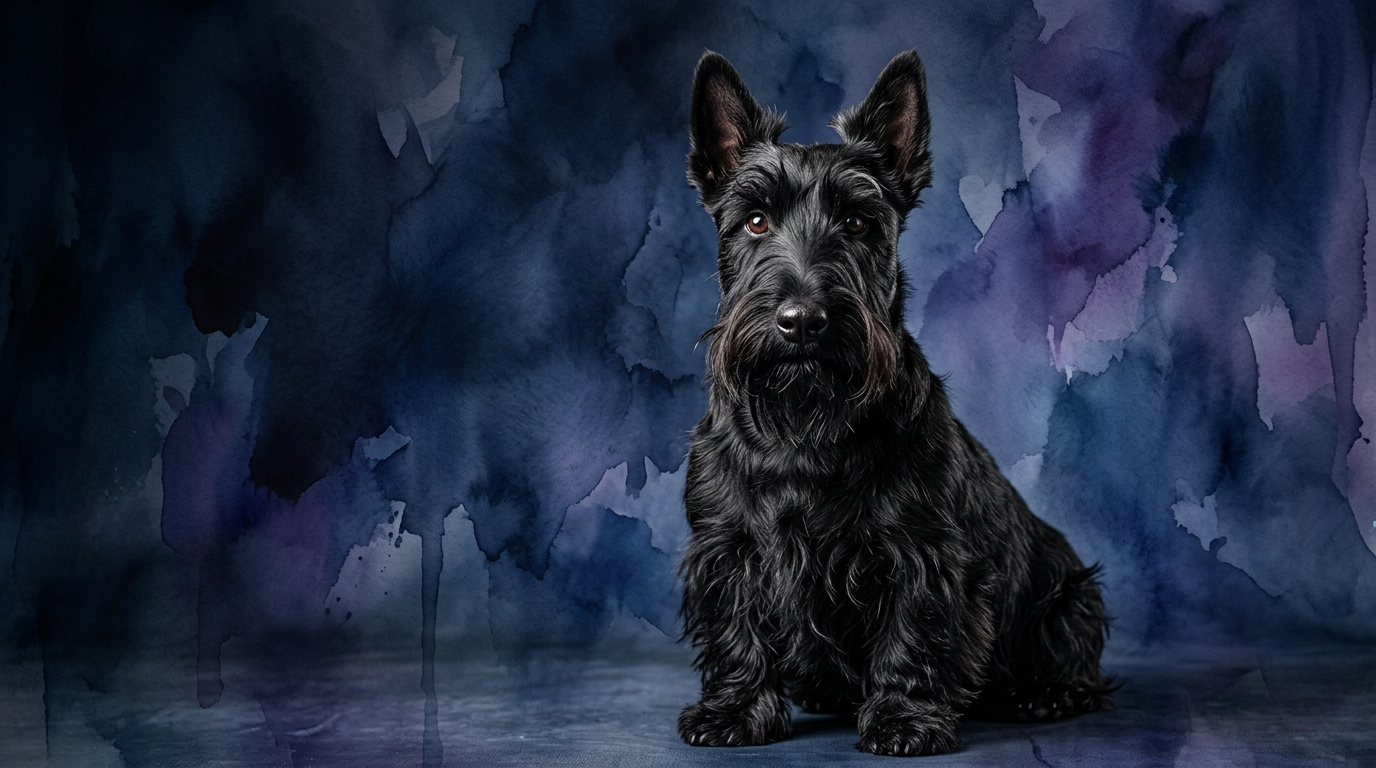

Side-by-Side Cognitive Profiles: The Pet IQ Lab Dimensions
The Pet IQ Lab assesses canine intelligence across five crucial dimensions: Problem Solving, Training Speed, Social Intelligence, Instinctive Drive, and Memory. Intriguingly, both the Scottish Terrier and the Russian Toy achieve a consistent 3/5 rating across all these categories, suggesting a baseline of competent cognitive function without extreme strengths or weaknesses. A 3/5 score indicates that these dogs possess a solid capacity for learning and adaptation, neither struggling significantly nor displaying exceptional aptitude that sets them apart from the average canine.
For the Scottish Terrier, a '3/5' in Problem Solving means they can figure out moderately complex tasks, like opening a simple latch or navigating a familiar obstacle course, but might hit a wall with multi-step puzzles requiring abstract thought. Their Training Speed at 3/5 suggests they grasp new commands in a reasonable number of repetitions, typically mastering a new cue within 15-20 attempts, though consistent motivation is key. Social Intelligence at 3/5 implies they are adept at reading human cues and intentions, forming strong bonds, and understanding social hierarchies, but might not be as overtly emotionally expressive or responsive as some breeds. Their Instinctive Drive, also 3/5, reflects a moderate manifestation of their terrier heritage—a persistent desire to dig, chase small animals, or investigate, which can be channeled or managed. Finally, a Memory score of 3/5 means they retain learned commands, routines, and experiences for a good duration, remembering people and places even after extended periods.
The Russian Toy mirrors these scores, though the practical manifestation can differ due to their breed group. Their 3/5 Problem Solving might be more focused on navigating indoor environments to gain access to preferred toys or human attention, rather than tackling outdoor challenges. A Training Speed of 3/5 indicates they are capable learners, much like the Scottie, but their smaller size and companion nature might mean they respond best to gentle, positive reinforcement methods, possibly requiring more patience for certain complex commands. Social Intelligence at 3/5 suggests they are attuned to their human family's emotions and routines, often seeking close companionship and responding to subtle cues. Their Instinctive Drive at 3/5 often presents as a vigilant, alert nature, quick to bark at perceived threats or strangers, a remnant of their 'toy' guard dog role, rather than a strong prey drive. A Memory score of 3/5 ensures they remember their training, house rules, and who their favorite people are, making them reliable companions once routines are established.
Where the Scottish Terrier Demonstrates Cognitive Advantages
While their IQ scores are identical, the Scottish Terrier's historical role as an independent vermin hunter imbues their 3/5 problem-solving and instinctive drive with a particular tenacity. This manifests as a robust determination to see tasks through, especially those involving physical manipulation or exploration. A Scottie might excel in scenarios requiring sustained focus on a singular objective, like scent work or navigating a complex scent trail to its conclusion, even if it takes time. Their Coren rank of #65, while not directly measuring raw intelligence, places them above many breeds in 'working and obedience intelligence,' suggesting a greater aptitude for structured learning when motivated, especially in tasks requiring a degree of independence and resilience.
This breed's cognitive advantage often lies in its self-sufficiency and perseverance. A Scottish Terrier with a 3/5 problem-solving score is less likely to give up on a puzzle or a digging project, demonstrating a mental fortitude that can be leveraged in training for tasks requiring persistence. Their memory (3/5) combined with this tenacity means they will remember solutions to challenges and apply them consistently, making them effective at mastering routines that benefit from their independent thinking. They thrive on tasks that allow them to utilize their natural instincts to 'work,' even if it's just a game of hide-and-seek with a favorite toy, engaging their problem-solving in a practical, physical manner.
Where the Russian Toy Shows Cognitive Strengths
The Russian Toy, despite identical 3/5 IQ scores, often excels in areas related to companion dynamics and subtle communication, reflecting its purpose as a cherished household dog. Their social intelligence (3/5) frequently presents as a heightened sensitivity to human moods and changes in the home environment. They might be quicker to notice a subtle shift in their owner's demeanor or a new object in the room, processing these social and environmental cues with a keen awareness, even if their problem-solving isn't geared towards complex mechanical puzzles. This makes them exceptionally responsive to emotional nuances within the family unit.
Their 3/5 instinctive drive, while not manifesting as intense prey drive, often translates into a sharp vigilance and an impressive 'alarm system.' This cognitive trait means they are adept at identifying and reacting to novel sounds or sights, making them excellent, albeit vocal, watchdogs. Their memory (3/5) in this context allows them to quickly learn and recall who belongs and who doesn't, contributing to their role as alert companions. The Russian Toy's cognitive strengths lean towards finely-tuned perception of their immediate social and domestic world, enabling them to adapt seamlessly to the rhythms of family life and anticipate their owner's needs or intentions with a gentle attentiveness.
Training Dynamics: Scottie's Resolve vs. Russian Toy's Sensitivity
Given their identical 3/5 training speed, both breeds are capable of learning at a moderate pace, but their underlying temperaments dictate different training approaches. The Scottish Terrier, with its independent Terrier spirit, often requires consistent, firm-but-fair training that emphasizes engagement and makes learning feel like a collaborative effort rather than a command performance. Their 3/5 problem-solving can sometimes manifest as a stubborn streak if they don't see the value in a task, requiring trainers to be creative with motivation and reward. They respond well to positive reinforcement but may test boundaries, necessitating patience and a clear understanding of expectations. Training for a Scottie often benefits from incorporating games that tap into their natural hunting instincts, like scent work or retrieving, to keep them mentally stimulated and cooperative.
The Russian Toy, despite the same 3/5 training speed, tends to be more sensitive and eager to please, making them generally more responsive to gentle, reward-based methods. Their smaller stature and close bond with their owners mean they thrive on positive reinforcement, praise, and treats, often wilting under harsh corrections. While they can be quick to pick up commands, their 3/5 instinctive drive often includes a tendency to bark, which requires early and consistent training to manage. Their social intelligence (3/5) means they are highly attuned to their owner's reactions, making a calm, encouraging training environment crucial. They might be more prone to 'learned helplessness' if training is too intimidating, highlighting the need for a confident, gentle handler.
Lifestyle Match: Active Engagement vs. Relaxed Companionship
When considering an owner's lifestyle, the Scottish Terrier, despite its compact size, generally suits more active owners who appreciate a dog with a robust personality and a need for regular mental and physical engagement. Their 3/5 instinctive drive and problem-solving capabilities mean they thrive on daily walks, interactive play, and opportunities to explore safely. They enjoy having a 'job,' whether it's backyard patrol or learning new tricks, and can become bored or destructive if not adequately stimulated. An owner who enjoys consistent training, outdoor adventures, and a dog with a strong, independent character will find a Scottie a rewarding companion.
The Russian Toy, while spirited, typically aligns better with relaxed owners or those living in smaller spaces, valuing close companionship over intense physical demands. Their 3/5 social intelligence means they are content to be near their people, participating in daily life from the comfort of a lap or a soft bed. While they do enjoy short walks and indoor play, their exercise needs are generally lower than a Scottie's. Owners who prefer a charming, affectionate lapdog that is sensitive to their moods and enjoys being an integral part of indoor family life will find the Russian Toy a perfect match. Their vigilance (3/5 instinctive drive) makes them excellent little watchdogs without requiring extensive outdoor activity.
The Verdict
Choose a Scottish Terrier if you appreciate a tenacious, independent canine partner who thrives on consistent engagement and enjoys having a purpose, even with moderate cognitive scores. They are best for owners who can provide structured training and appreciate a dog with a robust, spirited character.
Opt for a Russian Toy if you seek a sensitive, affectionate companion highly attuned to your emotions, content with indoor activities, and desiring close, constant proximity. They are ideal for owners who prefer a gentle, vigilant lapdog with moderate cognitive capabilities but a strong preference for domestic comfort.
🧠 Find Your Pet's IQ Score
Our Pet IQ Lab assessment covers 25+ tests across 5 cognitive dimensions — personalized to your breed.
Take the Full IQ Test →Frequently Asked Questions
Are Scottish Terriers easy to train?
Scottish Terriers, with a 3/5 training speed, are capable learners but require consistent, engaging methods due to their independent terrier nature. They respond well to positive reinforcement, but trainers must be patient and creative to overcome their occasional stubbornness and keep them motivated.
How does the Russian Toy's social intelligence manifest?
The Russian Toy's 3/5 social intelligence often manifests as a keen sensitivity to human moods and subtle environmental changes, making them highly attuned companions. They form strong bonds and are responsive to their owner's emotions, thriving on close interaction and gentle communication within the family unit.
Which breed is better for first-time dog owners?
Neither breed is inherently 'easier' for first-time owners without understanding their specific needs. The Russian Toy might be slightly more manageable due to its smaller size and lower exercise requirements, but its sensitivity and potential for vocalness require diligent, positive training. The Scottish Terrier's independence demands a committed owner willing to invest in consistent, engaging training and socialization.