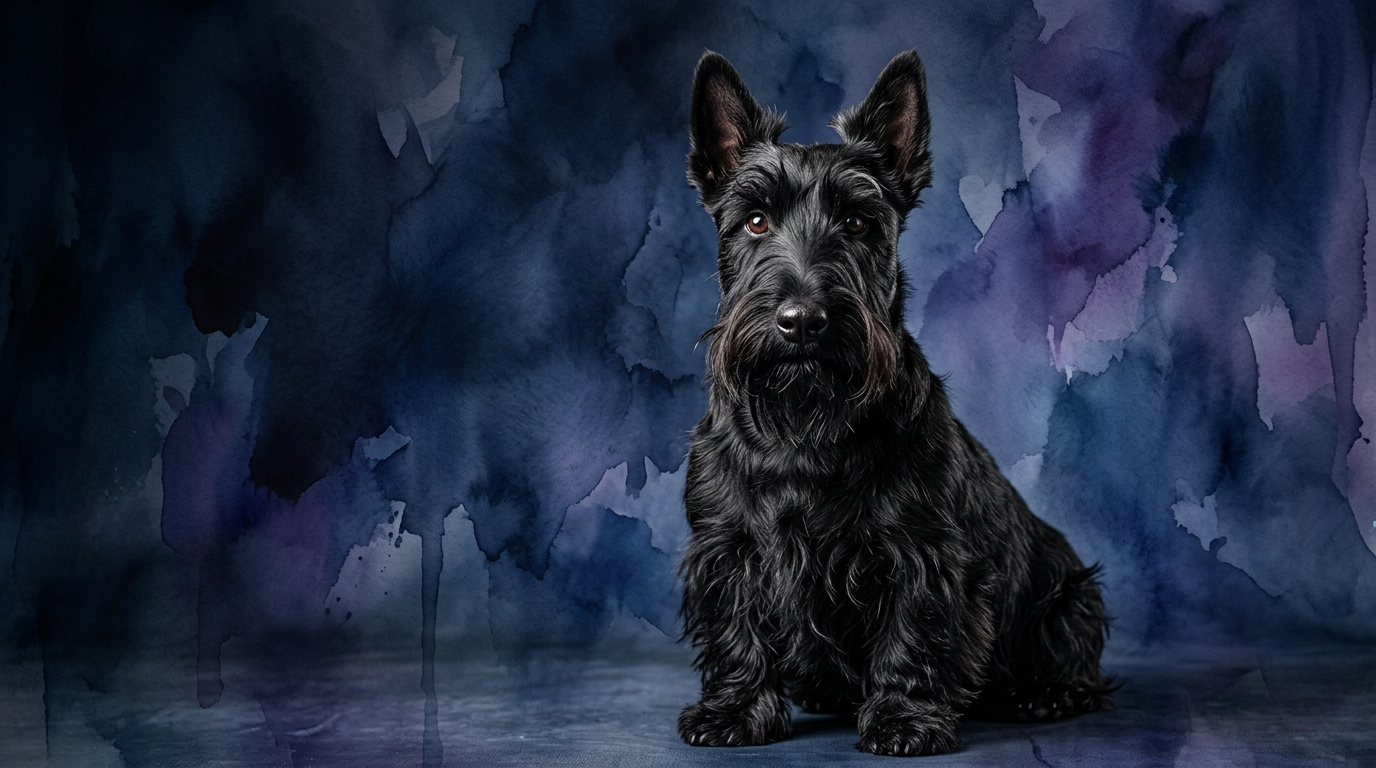
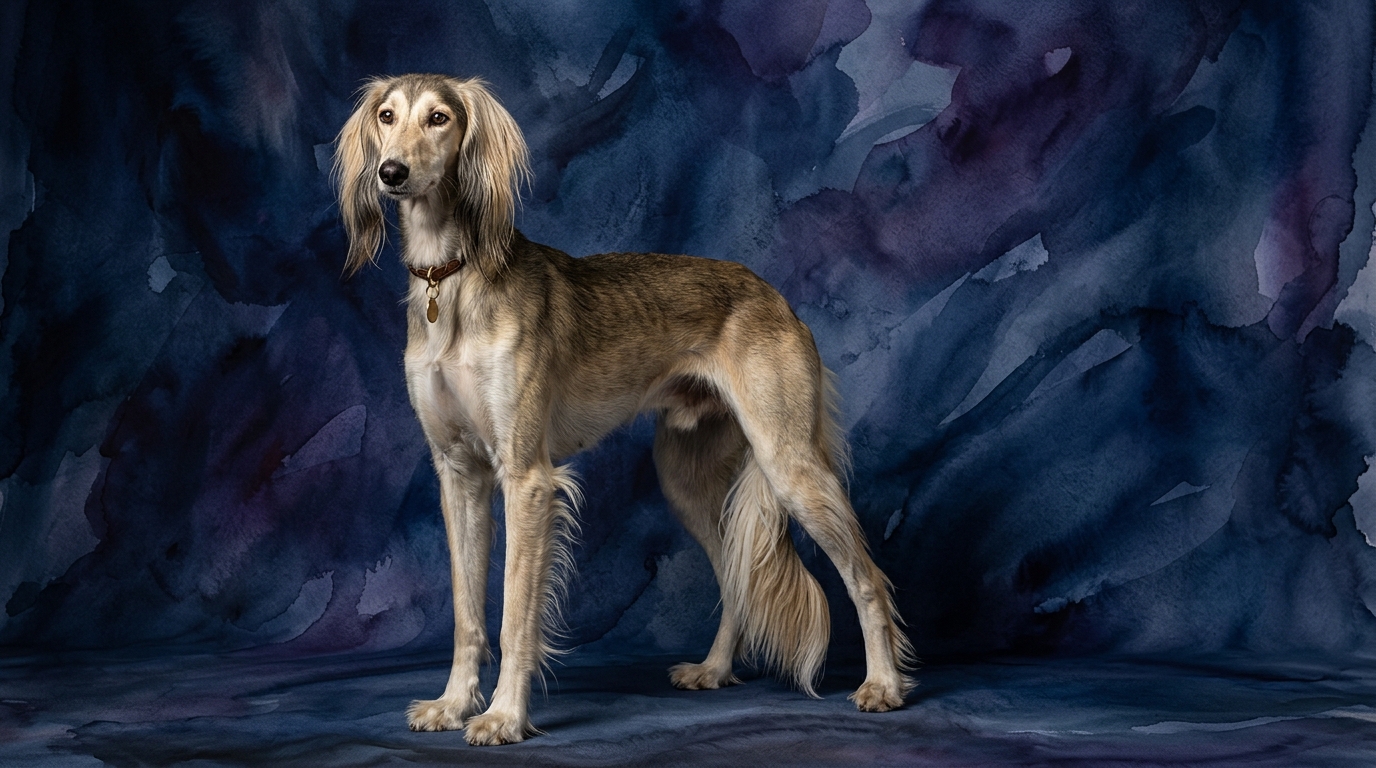
Side-by-Side IQ Profile: Scottish Terrier vs. Saluki
At first glance, the Scottish Terrier and Saluki share identical scores across all five dimensions of our Pet IQ Lab assessment: Problem Solving, Training Speed, Social Intelligence, Instinctive Drive, and Memory, each rated at 3/5. This parity, however, belies the profound differences in how these cognitive strengths are expressed through their unique breed temperaments and historical purposes. The Scottish Terrier, a tenacious member of the Terrier group, stands at Coren rank #65, a testament to its independent working intelligence, while the Saluki, a graceful Sighthound, remains unranked by Coren, a common occurrence for breeds whose primary 'work' involves independent pursuit rather than obedience.
For the Scottish Terrier, a 3/5 in Problem Solving often translates into a determined effort to outmaneuver perceived obstacles, whether it's accessing a forbidden treat or digging out a burrowing creature; their intellect is rooted in persistent, practical application. Their Training Speed of 3/5 signifies a quick grasp of commands, yet their independent spirit often means they weigh the benefit of compliance against their own agenda. Social Intelligence at 3/5 indicates an observant nature, keenly aware of family dynamics, but often reserved, forging deep bonds on their own terms. An Instinctive Drive of 3/5 highlights their strong prey drive and territoriality, a core aspect of their being, while Memory at 3/5 ensures they retain knowledge of routines, people, and past experiences, particularly those involving perceived slights or successful endeavors.
The Saluki, in contrast, expresses its 3/5 Problem Solving primarily through efficient navigation and strategic pursuit during a chase, rapidly assessing terrain and trajectory to intercept quarry over vast distances. Their Training Speed of 3/5 reflects their ability to learn but also their independent, sometimes aloof, nature; they respond best to gentle, consistent methods, often prioritizing visual stimuli over human commands. A 3/5 in Social Intelligence means they are discerning and form profound, yet often subtle, bonds with their chosen family, typically maintaining an elegant reserve with strangers. Their 3/5 Instinctive Drive is overwhelmingly focused on the chase, a powerful, inherent urge that dictates much of their behavior outdoors. Finally, their Memory at 3/5 is excellent for vast landscapes, visual cues, and the routes of past hunts, allowing them to recall specific territories and experiences with precision.
Where the Scottish Terrier Wins Cognitively
While both breeds score identically, the Scottish Terrier’s cognitive edge lies in its tenacity and resourceful application of intelligence within a more confined or domestic context. Their 3/5 Problem Solving often manifests as a clever, persistent approach to manipulating their immediate environment, such as figuring out how to open a cabinet or bypass a gate. This isn't about speed across a field, but about focused, determined ingenuity in overcoming household or garden challenges. Their social intelligence, though reserved, allows them to subtly gauge and influence human behavior for their benefit, often through charming persistence or a well-timed 'look.'
The Scottish Terrier’s memory, combined with its instinctive drive, means it excels at remembering the location of preferred digging spots, the best places to find dropped food, or the subtle cues that precede a walk. This practical, self-serving memory is a distinct advantage in navigating the complexities of a human household and maximizing personal comfort. Their particular blend of independence and loyalty means they often 'think' about how to get their way within the family structure, demonstrating a nuanced understanding of social dynamics that is both endearing and occasionally frustrating for owners.
Where the Saluki Wins Cognitively
The Saluki's cognitive strengths shine brightest in scenarios demanding rapid, independent decision-making over large distances, a legacy of their sighthound heritage. Their 3/5 Problem Solving is geared towards optimizing pursuit: calculating trajectories, anticipating prey movements, and navigating complex outdoor environments at high speed. This is a highly specialized form of intelligence, focused on efficiency and instinctual precision in the hunt, which is distinct from the Scottie's more manipulative problem-solving.
The Saluki's instinctive drive is a powerful cognitive force, allowing them to process visual stimuli and react with incredible speed and focus, often tuning out other distractions. Their memory for vast territories and visual landmarks is exceptional, enabling them to recall complex routes and environmental details crucial for hunting. Furthermore, their social intelligence, while appearing aloof, allows them to maintain a dignified independence while still forming deep, respectful bonds, understanding human cues without necessarily feeling compelled to overtly respond to every command, particularly if their instincts are engaged. This selective engagement is a hallmark of their independent thought.
Which is Easier to Train and Why?
Despite identical 3/5 scores in Training Speed, neither the Scottish Terrier nor the Saluki are typically considered 'easy' in the conventional sense of quick, eager compliance often seen in retriever breeds. Their challenges stem from different aspects of their independence. The Scottish Terrier's training often involves a battle of wills; they learn quickly but will frequently 'negotiate' whether a command is worth their effort or if there's a more interesting agenda to pursue. Their stubbornness requires consistent, positive reinforcement, making training a patient process of convincing them that cooperation is the most rewarding path.
The Saluki, while sensitive and responsive to gentle methods, presents its own set of training challenges, primarily due to an intense prey drive and an independent nature that can be easily distracted by visual stimuli. Off-leash recall, for instance, can be particularly difficult, as their instinctive drive to chase often overrides any learned command the moment a distant object catches their eye. Their 'cat-like' demeanor means they learn commands but might choose to obey only when it suits them, or when no more pressing instinctive urge (like the sight of a squirrel) competes for their attention. While both require dedicated, understanding owners, the Saluki's profound sighthound instincts can make training for reliable obedience in varied environments marginally more challenging than the Scottie's more localized stubbornness.
Which Suits Active vs. Relaxed Owners
For active owners, the Saluki is often the preferred choice, provided 'active' means providing opportunities for intense, safe bursts of running rather than prolonged, steady exercise. Salukis require regular, vigorous exercise in a securely fenced area where they can stretch their legs and satisfy their innate need to run at top speed. They are not typically suited for off-leash adventures in unfenced areas due to their extreme prey drive. Owners who enjoy long, leashed walks or have access to large, secure private spaces for sprinting will find a compatible partner in the Saluki. Indoors, however, they are remarkably calm and graceful, often content to lounge regally.
The Scottish Terrier, while needing daily walks and mental stimulation, is generally better suited for owners seeking a moderately active companion. They enjoy exploring, digging, and engaging in play, but do not possess the same endurance or need for high-speed running as a Saluki. A secure yard for sniffing and patrolling, combined with regular leash walks and interactive games, satisfies their physical and mental needs. They can thrive with owners who appreciate a dog with an active mind but whose physical demands are more manageable than a sighthound's, making them a good fit for those who enjoy a relaxed home life punctuated by purposeful outdoor activity.
The Verdict
Choose the Scottish Terrier if you appreciate a tenacious, independent thinker who will challenge you with their cleverness and form a deeply loyal, albeit on-their-own-terms, bond within a moderately active lifestyle.
Opt for the Saluki if you are an owner who can provide ample, secure opportunities for high-speed running, valuing a dignified, independent companion whose profound loyalty is expressed through subtle affection and an elegant presence.
🧠 Find Your Pet's IQ Score
Our Pet IQ Lab assessment covers 25+ tests across 5 cognitive dimensions — personalized to your breed.
Take the Full IQ Test →Frequently Asked Questions
Are Scottish Terriers easy to train?
Scottish Terriers are intelligent and learn quickly, but their independent and sometimes stubborn nature means they often choose when to obey. Consistent, positive reinforcement and making training fun and rewarding are key to success with this breed.
Do Salukis need a lot of exercise?
Salukis require significant exercise, primarily in the form of high-speed running in a securely fenced area. While calm indoors, they must have an outlet for their intense prey drive and need for bursts of speed to stay physically and mentally healthy.
Which breed is better with children?
Both breeds can be good with respectful, older children, but neither is typically recommended for very young children. Scottish Terriers can be sensitive to rough handling, while Salukis often prefer a quieter environment and may be aloof with boisterous play.