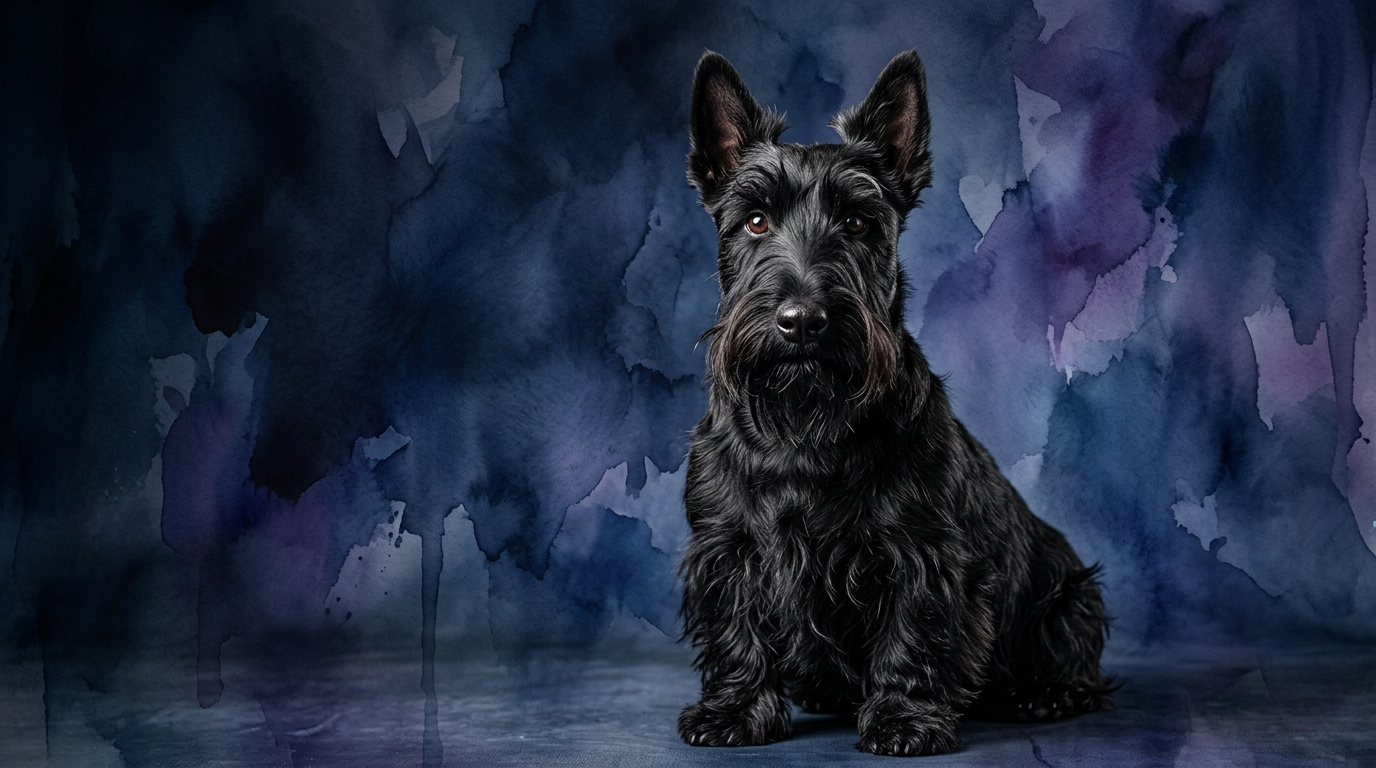
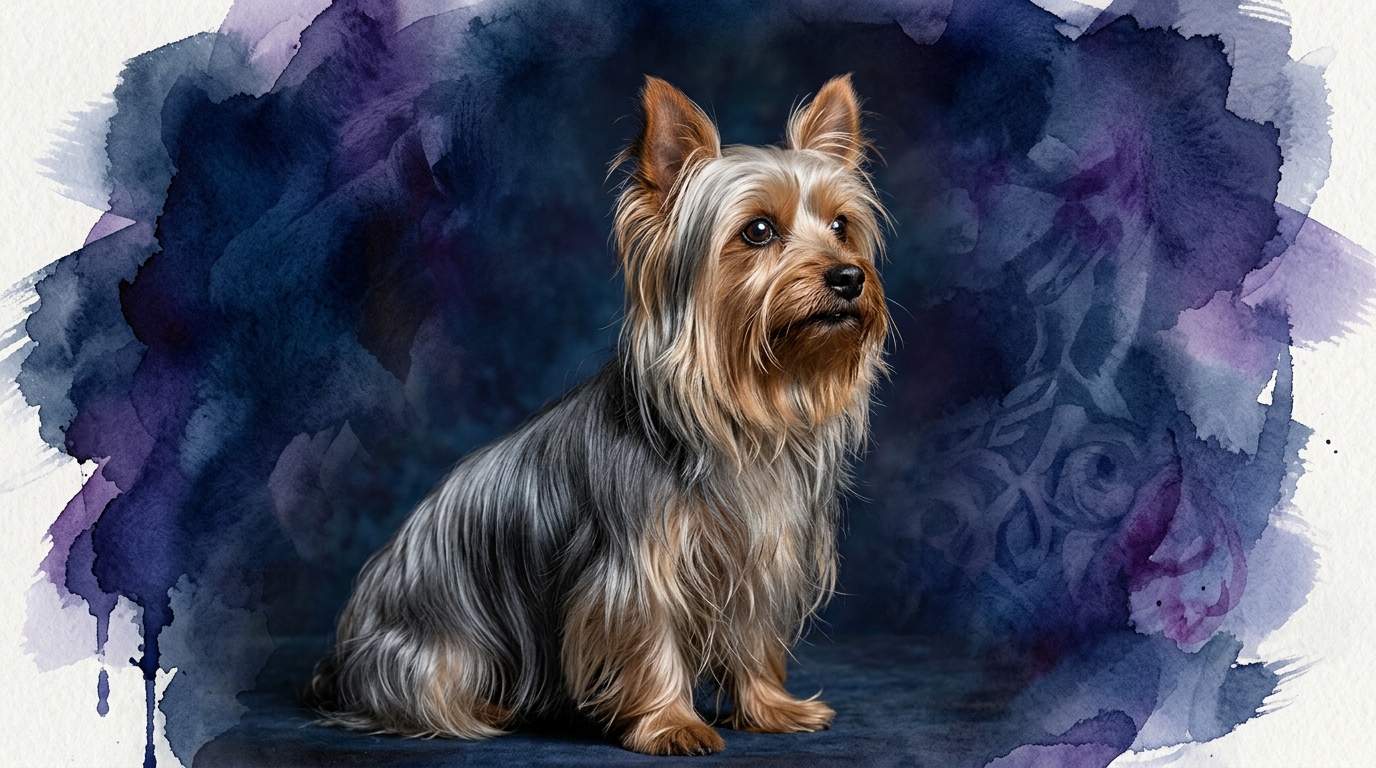
Side-by-Side Cognitive Profile
Delving into the cognitive landscape of the Scottish Terrier and the Silky Terrier reveals a shared baseline across five critical intelligence dimensions, each rated 3/5. This identical scoring suggests a moderate capacity in these areas for both breeds, yet their historical roles and temperaments mean these scores manifest in distinct ways.
Problem Solving (3/5 for both): Both breeds demonstrate a moderate capacity for navigating novel situations and figuring out solutions to environmental challenges. For the Scottish Terrier, this might manifest as creatively figuring out how to access a desired buried item in the yard or a clever way to manipulate a puzzle toy to get a treat, reflecting its historical role in independent hunting. The Silky Terrier, while sharing this score, might apply its problem-solving to more domestic challenges, such as strategically finding a comfortable sunbeam spot or subtly communicating a need to its owner, often with a touch of clever persistence.
Training Speed (3/5 for both): Both the Scottie and Silky show a moderate aptitude for learning new commands and routines, neither being exceptionally quick nor particularly slow. The Scottish Terrier's independent spirit can sometimes translate into a “what's in it for me?” attitude, requiring consistent, reward-based methods to keep them engaged and learning effectively. The Silky Terrier, often more eager to please its human companions, might pick up cues slightly faster in a positive reinforcement setting, though their small size and potential for distraction in busy environments can balance this out.
Social Intelligence (3/5 for both): Both breeds possess a moderate ability to understand and respond to social cues from humans and other animals. The Scottish Terrier's social intelligence often manifests as a discerning loyalty, forming deep bonds with its immediate family while being more reserved or watchful around strangers, reading their intentions carefully. The Silky Terrier, typically more outgoing and gregarious, uses its social intelligence to charm and interact with a broader circle, often adept at picking up on emotional states and seeking attention or comfort as appropriate.
Instinctive Drive (3/5 for both): This dimension, crucial for Terriers, is moderately present in both. For the Scottish Terrier, its historical function as a vermin hunter means this drive is often channeled into digging, chasing small critters, and a general tenacity when pursuing a goal, making it a powerful internal motivator. The Silky Terrier, despite its smaller size and “Toy” group classification, retains a robust terrier prey drive, expressing it through spirited chasing of toys, alert barking at perceived intruders, and a general zest for life that belies its dainty appearance.
Memory (3/5 for both): Both breeds exhibit a moderate capacity for retaining learned behaviors, locations, and social experiences. The Scottish Terrier's memory enables it to recall complex routines and remember specific boundaries or rules within its territory, contributing to its independent nature. The Silky Terrier's memory helps it recall specific interactions with people or other pets, allowing it to build strong, lasting relationships and anticipate daily routines with its family.
Where the Scottish Terrier Cognitively Excels
The Scottish Terrier’s cognitive strengths truly shine in scenarios demanding independent problem-solving and tenacious focus, particularly when driven by an innate purpose. Their 3/5 problem-solving score, coupled with their strong instinctive drive, means they excel at tasks requiring self-motivation rather than constant human direction. For instance, a Scottie might demonstrate superior cognitive persistence in figuring out how to bypass a minor obstacle to reach a specific scent, or in meticulously “rearranging” a garden bed to suit its digging inclinations. This breed often exhibits a more pronounced ability to assess and manage its immediate environment, remembering territorial boundaries and potential “intruders” with a discerning memory that aids in its watchful nature. While both breeds score 3/5 in memory, the Scottie's application often leans towards recalling environmental details and self-initiated strategies for achieving its goals, making them adept at navigating their personal “domains” with purpose.
Where the Silky Terrier Cognitively Excels
The Silky Terrier, while sharing identical raw cognitive scores, often demonstrates its strengths in areas that foster closer human-canine partnership and adaptability within a family setting. Their social intelligence, rated 3/5, often manifests as a more acute ability to read human emotions and intentions, adapting their behavior to elicit desired responses or offer comfort. This can make them particularly adept at understanding nuanced communication from their owners, such as subtle shifts in tone or body language, which might be less prioritized by the more independently-minded Scottie. Furthermore, their problem-solving, though rated 3/5, is frequently applied to navigating complex social dynamics or figuring out how to best integrate into household routines, rather than solely focusing on independent hunting tasks. A Silky might quickly learn the precise sequence of events leading to a walk or dinner, using its memory not just for locations but for predicting human actions, allowing them to anticipate and participate more smoothly in daily life.
Training Dynamics: Which is Easier and Why?
When it comes to ease of training, the distinction between these two breeds, despite their identical 3/5 training speed scores, largely hinges on their underlying motivations and behavioral predispositions. The Scottish Terrier, with its robust instinctive drive and inherent independence, often approaches training with a pragmatic “what's in it for me?” mindset. They are capable learners, but their focus might be on the reward itself rather than the act of pleasing. This means training a Scottie requires immense consistency, patience, and a strong understanding of positive reinforcement to make the desired behavior more appealing than their own independent pursuits, such as digging or exploring. Their training isn't necessarily harder, but it often demands a more structured and persistent approach from the owner to overcome their self-assured nature.
In contrast, the Silky Terrier, while still possessing a strong terrier drive, often exhibits a greater eagerness to please its human companions, leveraging its social intelligence to connect during training sessions. This desire for interaction and approval can make them seem more responsive and cooperative in obedience training. While they can still have their moments of terrier stubbornness, their natural inclination to engage with their family often translates into a slightly more fluid and less challenging training experience for many owners, especially in an indoor or controlled environment. Their smaller size also means they are often less physically challenging to manage during training compared to the more robust Scottie.
Lifestyle Match: Active vs. Relaxed Owners
The choice between a Scottish Terrier and a Silky Terrier based on owner lifestyle comes down to the type of activity and interaction an owner prefers. The Scottish Terrier, with its strong instinctive drive and independent problem-solving, thrives with owners who appreciate and can channel its purposeful energy. These are not necessarily dogs for long, fast runs, but rather for owners who enjoy structured walks with opportunities for exploration, scent work, and engaging in “jobs” that satisfy their digging and hunting instincts. An active owner for a Scottie might be someone who enjoys daily brisk walks in varied environments, puzzle toys, and consistent, engaging training sessions that challenge their cognitive persistence. They suit owners who are active in a “purposeful” rather than purely “athletic” sense, and who can provide mental stimulation to prevent boredom-driven behaviors.
On the other hand, the Silky Terrier, while still a spirited terrier, often aligns better with owners who appreciate a companion that is active in bursts but also content to be a close, social presence. Their energy levels, though significant for their size, are generally manageable within a smaller space, making them suitable for apartment living with regular walks and playtime. They suit owners who are moderately active, enjoying daily walks, interactive play, and who want a dog that is eager to participate in family life, often preferring to be on a lap or close by during relaxed periods. Their social intelligence makes them excellent companions for owners who value close interaction and include their dog in many daily activities, even if those activities are primarily indoors or less physically demanding than a large sporting breed might require.
The Verdict
Choose the Scottish Terrier if you appreciate a discerning, independent companion with a strong sense of purpose, and you are prepared for consistent, engaging training that respects their self-assured nature. They thrive with owners who provide structured mental and physical outlets for their inherent terrier drives.
Opt for the Silky Terrier if you desire a spirited, social companion eager to integrate into family life, and you can provide regular interaction, moderate activity, and consistent, positive training to channel their lively terrier personality.
🧠 Find Your Pet's IQ Score
Our Pet IQ Lab assessment covers 25+ tests across 5 cognitive dimensions — personalized to your breed.
Take the Full IQ Test →Frequently Asked Questions
Are Scottish Terriers good with children?
Scottish Terriers can be good with older, respectful children who understand how to interact with a dog that values its personal space. Their independent nature means they might not tolerate rough play as readily as some more overtly social breeds. Early socialization and supervision are key to fostering positive relationships.
Do Silky Terriers bark a lot?
Silky Terriers, true to their terrier heritage and alert nature, can be prone to barking, especially at perceived threats or new sounds. Their 3/5 instinctive drive often translates into being vocal watchdogs. Consistent training from a young age can help manage excessive barking.
Which breed is more adaptable to apartment living?
While both breeds can adapt to apartment living with sufficient exercise, the Silky Terrier is generally considered more adaptable due to its smaller size and slightly less intense demand for expansive outdoor 'work'. The Scottish Terrier requires more dedicated outdoor time to satisfy its digging and exploring instincts, even if it's just a secure yard.