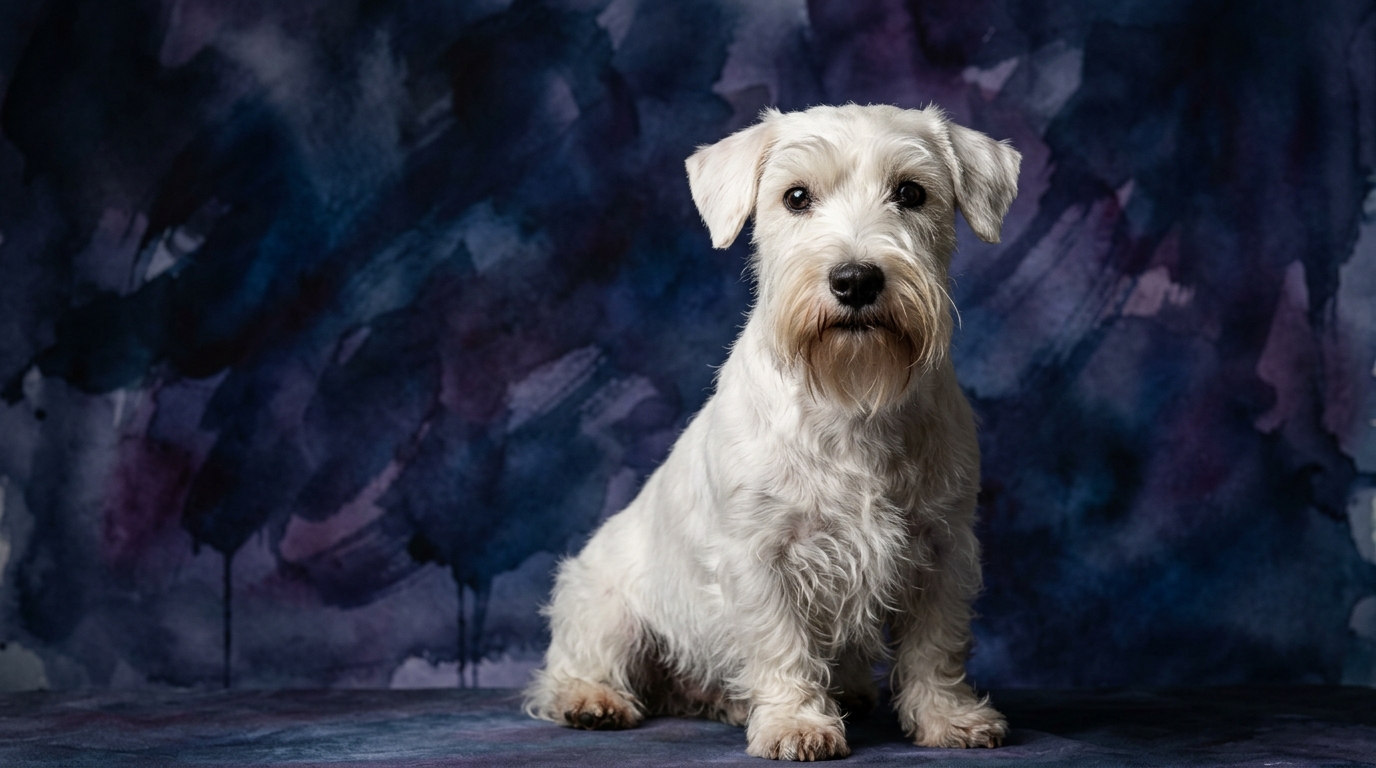

Side-by-Side Cognitive Profiles
At first glance, the Cosmic Pet Pet IQ Lab scores for both the Sealyham Terrier and the Basset Hound appear identical across all five dimensions, each registering a solid 3/5. However, these scores are broad indicators, and the 'how' behind each breed's performance is where their cognitive worlds diverge significantly. Understanding these nuances provides a richer picture than a simple number.
For the Sealyham Terrier, a member of the Terrier group, a Problem Solving score of 3/5 reflects a resourceful nature, particularly in contexts related to their original purpose of flushing out quarry. They exhibit cleverness in navigating physical obstacles or devising strategies to access desired items, often relying on their tenacity rather than brute force. Their Training Speed, also 3/5, indicates they can grasp new commands at a moderate pace, but their independent terrier spirit means compliance isn't always immediate or enthusiastic, requiring engaging and consistent methods. Social Intelligence at 3/5 suggests they are attuned to their family's emotions and routines, forming strong bonds, yet they can be reserved or assertive with strangers or other dogs if not well-socialized from a young age. Their Instinctive Drive of 3/5 is heavily weighted by their strong prey drive, manifesting as an urge to dig, chase small animals, and patrol their territory with vigilance. Finally, their Memory, also 3/5, allows them to retain learned behaviors and routines, but also to remember past interactions, both positive and negative, influencing future responses.
The Basset Hound, a classic scenthound, also scores 3/5 across the board, but their cognitive strengths lie in vastly different domains. Their Problem Solving at 3/5 is primarily expressed through their extraordinary olfactory capabilities; they excel at following intricate scent trails, piecing together a complex narrative through smell. This problem-solving is less about manipulating physical objects and more about persistent, focused sensory processing. Training Speed, rated 3/5, indicates they learn new cues, but often at their own deliberate pace, heavily influenced by environmental distractions, especially compelling scents. Patience and high-value rewards are paramount. Social Intelligence at 3/5 highlights their generally amiable and tolerant disposition; they typically integrate well into diverse family structures, including with children and other pets, reading social cues for companionship rather than confrontation. Their Instinctive Drive of 3/5 is overwhelmingly dominated by their powerful drive to track scents, which can override other motivations. This persistence on a trail is a hallmark of their being. Their Memory, also 3/5, is particularly acute for remembering scent locations, routes taken, and routines, especially those involving food or comfortable resting spots.
Where the Sealyham Terrier Excels Cognitively
The Sealyham Terrier's cognitive advantages often manifest in scenarios requiring direct interaction with their human counterparts and a certain degree of self-directed initiative. Their problem-solving capabilities, while rated 3/5, are more geared towards overcoming physical challenges or figuring out how to get their way in a human-centric environment. This can include creatively bypassing barriers to reach a toy or figuring out how to manipulate a puzzle feeder. Their terrier tenacity means they will often persist at a task until successful, provided it aligns with their immediate interest or perceived reward. In terms of training speed, when a Sealyham is motivated and the environment is free from overwhelming distractions, they can show a quicker initial grasp of obedience commands compared to a Basset, primarily due to their direct focus on the handler and a desire for engagement. Their memory for specific actions and cues, once solidified, can be quite reliable, making them responsive in familiar contexts. This breed often shines in activities like earthdog trials or agility, where their agility, quick thinking, and independent spirit are leveraged.
Where the Basset Hound Excels Cognitively
The Basset Hound's cognitive strengths are profoundly rooted in their specialized sensory world. Their 3/5 problem-solving score belies an unparalleled ability to process and interpret complex olfactory information, a skill far surpassing most other breeds. A Basset can meticulously follow a cold trail for miles, piecing together a story from imperceptible scent molecules, demonstrating a sustained focus and analytical prowess that is truly remarkable. This persistence in a singular, sensory-driven task is a key cognitive win. Their social intelligence, while also 3/5, tends towards a more universally placid and tolerant demeanor, making them adept at integrating into varied social groups with minimal conflict. This ease of social navigation reduces potential cognitive load from managing complex group dynamics. Furthermore, their memory, particularly for scent pathways and the locations of interesting smells, is exceptional, allowing them to revisit productive areas or recall trails. While their training speed might seem slower for conventional obedience, their capacity to learn and execute intricate scent-tracking tasks demonstrates a deep, specialized form of intelligence that is often underestimated in standard IQ assessments. They excel in scent work, tracking, and even some forms of detection, where their unique cognitive architecture is fully utilized.
Training Dynamics: Sealyham vs. Basset
When considering which breed is easier to train, it's crucial to acknowledge their inherent motivations and behavioral tendencies. The Sealyham Terrier, with its independent and often stubborn nature, requires a trainer who is consistent, firm, and creative. They learn commands at a moderate pace (3/5 training speed), but their compliance is often linked to their willingness and whether the task provides sufficient mental stimulation or a perceived reward. Their terrier drive means they are easily distracted by moving objects or potential 'prey,' necessitating a strong foundation in impulse control. However, their desire for interaction with their human family can be a powerful motivator, making them responsive to engaging, game-based training methods. They might appear to pick up basic obedience faster in a controlled environment due to their handler focus, but maintaining that focus against their innate drives is the real challenge.
The Basset Hound, on the other hand, presents a different set of training considerations. Their primary drive is scent, and this can be an overwhelming distraction, making traditional obedience training a test of patience. Their 3/5 training speed is often hampered by their tendency to follow their nose, making them appear less responsive. A Basset will learn, but usually on their own timeline and often when the training aligns with their interests or involves high-value rewards like food. They are generally amiable, which means they are less likely to actively defy commands out of stubbornness, but more likely to simply disengage if a scent proves more compelling. Effective training for a Basset involves understanding and leveraging their olfactory drive, perhaps incorporating scent games into their routine, and accepting that 'perfect' heel work might always be secondary to a fascinating aroma. Neither breed is 'easy' in the sense of being effortlessly compliant; both demand a trainer who deeply understands their unique cognitive wiring and adapts methods accordingly.
Lifestyle Match: Active Engagement vs. Relaxed Exploration
The choice between a Sealyham Terrier and a Basset Hound also hinges on the owner's lifestyle and what they seek in a canine companion. The Sealyham Terrier, while not a marathon runner, requires an owner who can provide consistent mental engagement and outlets for their terrier drives. This breed thrives on structured activities, interactive play, and opportunities to 'work' or solve problems. Owners who enjoy training classes, earthdog trials, or even just regular, varied walks with opportunities for safe exploration and digging will find a compatible partner. Without sufficient mental and physical stimulation, a Sealyham can become bored and express their cognitive ingenuity in less desirable ways, such as excessive digging or destructive chewing. They suit owners who appreciate a confident, spirited companion and are prepared to engage proactively with their dog's inquisitive and independent nature.
The Basset Hound, in contrast, aligns well with a more relaxed pace of life, though this doesn't equate to inactivity. While they are not built for high-intensity sports, they absolutely require daily opportunities to engage their powerful scenting instincts. This means leisurely, but consistent, walks where they are allowed to explore the world through their nose, ideally in a safely enclosed area or on a long lead. Owners who appreciate a slower, more deliberate exploration of their environment and are content with a dog whose primary joy is following a fascinating trail will find the Basset a wonderful match. Indoors, Bassets are typically calm and enjoy comfortable lounging, making them excellent companions for relaxed evenings. They suit owners who value amiability, patience, and are prepared to manage a dog whose world is often dictated by the captivating tapestry of scent, rather than constant vigorous physical activity.
The Verdict
Choose the Sealyham Terrier if you desire a spirited, interactive companion for structured activities, thriving on mental challenges and a close, engaging bond, and you are prepared for their confident, occasionally stubborn streak.
Opt for the Basset Hound if you appreciate a calm, amiable companion with an unparalleled love for olfactory exploration, valuing patience and a relaxed home environment over constant vigorous physical activity.
🧠 Find Your Pet's IQ Score
Our Pet IQ Lab assessment covers 25+ tests across 5 cognitive dimensions — personalized to your breed.
Take the Full IQ Test →Frequently Asked Questions
Are Sealyham Terriers good family dogs?
Yes, Sealyham Terriers can be wonderful family dogs, forming close bonds with their human family. They typically thrive in environments with clear boundaries and consistent training, though their terrier nature means supervision is wise with very young children or other small pets.
Do Basset Hounds need a lot of exercise?
Basset Hounds require daily exercise, but it's more about consistent, moderate activity rather than intense bursts. They need daily walks to satisfy their strong scenting instincts and maintain fitness, preferring a steady, deliberate pace to thoroughly explore their environment through smell.
What are the main behavioral differences between these two breeds?
Sealyhams are typically more alert, independent, and possess a strong prey drive, often expressing their curiosity through digging and active engagement. Bassets are generally more placid, amiable, and singularly focused on scent, often appearing more laid-back but with an unwavering persistence when on a trail.