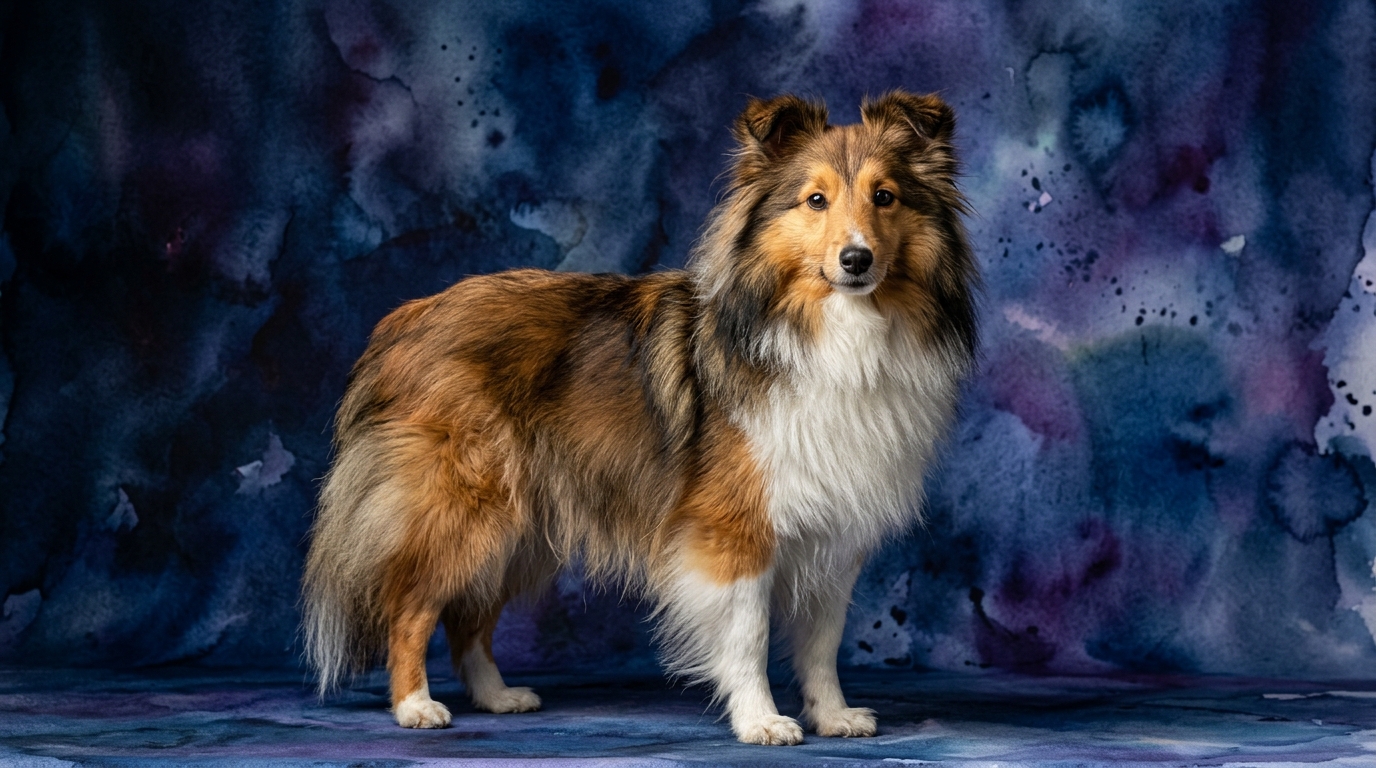

Side-by-Side Cognitive Profile: Shetland Sheepdog vs. Boerboel
At The Cosmic Pet Pet IQ Lab, we evaluate canine cognition across five key dimensions, providing a nuanced understanding of each breed's mental architecture. For the Shetland Sheepdog, a Herding group member Coren-ranked at #6, its profile paints a picture of quick-witted adaptability. Its Problem Solving is rated 4/5, indicating a strong capacity for figuring out complex tasks and often displaying creative solutions to environmental challenges or managing livestock. Training Speed is an exceptional 5/5, reflecting its eagerness and rapid assimilation of new commands and routines, frequently grasping concepts in very few repetitions. Social Intelligence stands at 4/5, showing a high attunement to human cues and family dynamics, capable of forming strong bonds and understanding subtle emotional signals. The Sheltie's Instinctive Drive is a formidable 5/5, expressed through intense focus, controlled movement, and an inherent desire to gather and manage. Finally, its Memory is 5/5, retaining learned information, both positive and negative, over extended periods, making training effective but also requiring careful management of early experiences.
In contrast, the Boerboel, a Working group breed not present on Coren's ranking, presents a cognitive profile geared towards steadfast protection. Its Problem Solving is 3/5, demonstrating practical skills particularly concerning territory management or defense, but perhaps not engaging in abstract or complex puzzles readily. Training Speed is 3/5, indicating a moderate learning pace that requires consistent, patient repetition and clear motivation, often needing more sessions to solidify new behaviors. Social Intelligence is 3/5, where it develops deep loyalty to its immediate family but can be reserved or wary with strangers, necessitating careful socialization to foster appropriate social responses. The Boerboel's Instinctive Drive is 3/5, exhibiting a strong protective instinct for its family and property, manifesting as vigilance and a readiness to defend, rather than a herding or hunting drive. Its Memory is 3/5, possessing a solid recall for routines, people, and places, but it may not retain specific training nuances as quickly or permanently as some other breeds without regular reinforcement.
Where the Shetland Sheepdog Excels Cognitively
The Shetland Sheepdog's cognitive strengths clearly lie in its processing speed and adaptive learning. Its 5/5 rating in Training Speed means it absorbs new information and commands with remarkable efficiency, often seeming to anticipate its handler's intentions. This rapid assimilation is coupled with a 5/5 Memory, allowing the Sheltie to retain a vast repertoire of behaviors and cues over long durations, making advanced obedience or intricate trick training particularly rewarding. Furthermore, its 4/5 Problem Solving ability, combined with its herding instincts, means it can independently assess and navigate complex situations, such as figuring out how to direct a flock or open a tricky gate. This breed often demonstrates a nuanced understanding of sequential tasks, breaking down larger goals into manageable steps, a testament to its operational thought processes, enabling it to excel in environments demanding mental agility and quick decision-making under pressure, characteristic of its original herding role.
Where the Boerboel Excels Cognitively
While not boasting the same speed as the Sheltie, the Boerboel's cognitive wins are rooted in its robust, practical application of its mental faculties, particularly concerning its core purpose: protection. Its 3/5 Problem Solving, though numerically lower, is specifically geared towards assessing and managing threats within its environment. This isn't about solving abstract puzzles, but about discerning intruders, understanding spatial boundaries, and reacting appropriately to perceived dangers, often without direct human instruction in critical moments. The Boerboel's 3/5 Social Intelligence manifests as a profound, unwavering loyalty to its family unit, coupled with a discerning watchfulness towards outsiders, a crucial cognitive trait for a guardian breed that must evaluate intentions. Its memory, rated 3/5, is particularly strong for recognizing familiar faces and routines, anchoring its sense of security and territory, making decisions that prioritize the safety of its human companions and their domain with unwavering consistency.
Training Dynamics: Sheltie's Responsiveness vs. Boerboel's Steadfastness
The Shetland Sheepdog is unequivocally easier to train, primarily due to its superior Training Speed (5/5) and Memory (5/5). Shelties are renowned for their eagerness to please and their capacity to pick up new commands in just a few repetitions. Their strong social intelligence (4/5) means they are highly motivated by human interaction and praise, making them responsive partners in training sessions. Their intense instinctive drive (5/5) for herding translates into focus and a desire for structured activity, which can be channeled into various disciplines like agility, obedience, or rally, often leading to rapid mastery. This breed thrives on mental challenges and collaborative work, making training a highly interactive and rewarding experience for both dog and owner.
In contrast, the Boerboel, with its 3/5 ratings across Training Speed, Social Intelligence, and Memory, requires a more patient, consistent, and reward-based approach. While capable of learning, Boerboels need more repetition to solidify behaviors and can be less intrinsically motivated by praise alone, often benefiting from food or toy rewards. Their protective instincts, while valuable, can also lead to independence and a strong will, demanding a confident and experienced handler who can establish clear boundaries and leadership. Training a Boerboel is a marathon, not a sprint; it's about building trust and respect through clear communication and unwavering consistency, ensuring that their formidable physical and mental capabilities are channeled constructively rather than becoming a source of challenge.
Matching Canine Cognition to Owner Lifestyle
The Shetland Sheepdog is an ideal match for active owners who thrive on engaging their dog in various activities. Their 5/5 Instinctive Drive for herding means they possess abundant energy and a strong desire for mental and physical stimulation, making them excellent companions for long walks, hiking, dog sports like agility or flyball, and advanced obedience training. An owner who enjoys teaching new tricks and participating in canine events will find the Sheltie's quick learning and problem-solving abilities (4/5) incredibly rewarding, as these dogs thrive on having a job, even if it's just learning complex sequences of commands. This breed's mental vitality demands an owner equally committed to consistent interaction and purposeful engagement, preventing boredom-induced behaviors.
Conversely, a relaxed owner might find the Sheltie's constant need for engagement overwhelming, potentially leading to boredom-induced behaviors like excessive barking or digging. The Boerboel, while requiring regular exercise to maintain physical condition, is more suited for owners who appreciate a dog with a calmer, more watchful demeanor indoors after sufficient activity. While not a couch potato, its energy output is different; it's less about constant motion and more about purposeful patrolling or strength-building exercises. A relaxed owner who can provide consistent, moderate exercise and values a steadfast, protective presence will find the Boerboel a fitting companion, understanding that its mental stimulation often revolves around its guardian role and discerning vigilance rather than intricate puzzles or rapid-fire command sequences. This breed thrives on routine and a clear sense of purpose within its family unit.
The Verdict
Choose the Shetland Sheepdog if you seek an agile, highly trainable companion eager to learn complex tasks and participate in diverse dog sports, thriving on consistent mental and physical engagement.
Opt for the Boerboel if you value a loyal, protective guardian with a discerning temperament, capable of independent judgment in security matters, and are prepared for a consistent, patient training approach.
🧠 Find Your Pet's IQ Score
Our Pet IQ Lab assessment covers 25+ tests across 5 cognitive dimensions — personalized to your breed.
Take the Full IQ Test →Frequently Asked Questions
Do Shetland Sheepdogs bark a lot due to their alertness?
Shetland Sheepdogs can be prone to barking, a behavior often linked to their alertness and strong herding instincts to communicate and manage. While not directly a measure of their cognitive abilities, their social intelligence and awareness mean they quickly learn to vocalize if not managed, especially when bored or sensing changes in their environment, using their voice as a tool.
How does a Boerboel's protective instinct relate to its problem-solving skills?
A Boerboel's problem-solving (3/5) in a protective context involves assessing situations for potential threats and determining appropriate responses, like positioning itself between a family member and a stranger, or barking to deter. This isn't about abstract puzzles, but practical, situation-specific judgment vital for its guardian role, where effective decision-making directly impacts security.
Can a Boerboel participate in dog sports like agility despite its lower training speed?
While a Boerboel may not excel in agility with the same speed as a Sheltie, it can certainly participate with dedicated training. Its strength and stability can be an asset, though its training speed (3/5) means progress will be slower, requiring more patience and repetition to master courses, focusing on precision and power rather than sheer velocity.