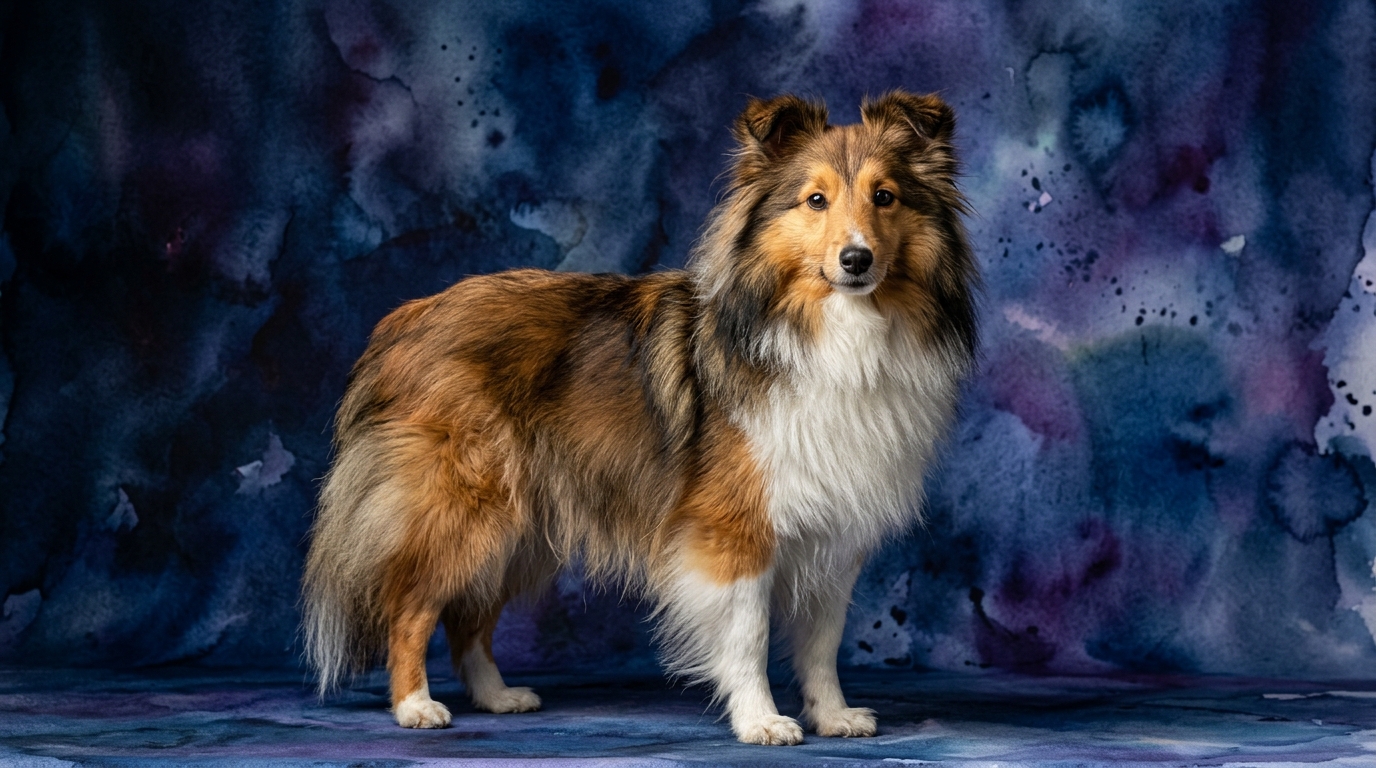
Shetland Sheepdog at a glance
| IQ Rank / Score | #6 |
|---|---|
| Trainability | ★★★★★ (5/5) |
| Social Intelligence | ★★★★☆ (4/5) |
| Lifespan | 12-16 years |
| Shedding | Low to moderate |
| Exercise Needs | High (60+ min/day + training) |
| Origin | Scotland (Shetland Islands) |
Beyond the Fluffy Fuzz: Decoding Sheltie Cognition
Originating from Scotland's rugged Shetland Islands, these members of the Herding Group demonstrate a truly remarkable set of intellectual strengths. Their intelligence profile reveals a powerhouse of mental agility: Problem Solving at 4/5, Training Speed at a perfect 5/5, Social Intelligence at 4/5, Instinctive Drive at 5/5, and Memory also at 5/5. This remarkable combination translates into a dog that not only learns with impressive speed but also retains information and applies it effectively in diverse situations.
Such a robust cognitive toolkit places the Shetland Sheepdog in an elite category within the canine world. Their position at #6 out of 138 breeds on Stanley Coren's obedience ranking underscores their exceptional capacity for quickly grasping new commands and executing them with consistent reliability. This isn't just about 'being smart'; it's about a specific blend of adaptability, quick uptake, and enduring recall that makes them stand out.
Understanding a Sheltie's intelligence means appreciating the subtle nuances of their breed history and purpose. They are not merely pretty companions; they are descendants of working dogs whose survival and success depended on their sharp wits and keen instincts. This heritage informs every aspect of their cognitive abilities, from how they interact with their human families to their innate drive to manage and organize.
A Mind for the Moors: Instinct and Independent Thought
The Sheltie's impressive problem-solving ability and strong instinctive drive are deeply rooted in their unique development. Shetland Sheepdogs were specifically bred to manage sheep that had adapted to rocky, scarce-resource terrain — requiring dogs that could make independent decisions without human guidance. This wasn't a job for a dog constantly looking to its handler for direction; it demanded critical thinking and self-reliance.
This historical imperative shaped a breed capable of assessing situations autonomously, reacting to environmental cues, and making swift, effective decisions to guide their flock. Their 4/5 Problem Solving score reflects this heritage, showcasing an aptitude for navigating novel challenges, figuring out how to achieve desired outcomes, and adapting strategies as needed. Whether it’s finding a lost toy or figuring out how to get to a forbidden treat, a Sheltie’s mind is constantly at work.
Their 5/5 Instinctive Drive manifests not just in traditional herding behaviors but also in their overall engagement with the world. This drive can translate into a keen interest in 'managing' family members, organizing toys, or even being highly observant of their surroundings. Channeling this natural drive through training and mentally stimulating activities is key to a happy, well-adjusted Sheltie.
The Sheltie's Learning Curve: Training Speed and Memory Mastery
When it comes to learning new behaviors, the Shetland Sheepdog is a superstar. Their perfect 5/5 Training Speed score means they absorb new commands and routines with astonishing rapidity. Owners often report that Shelties pick up complex sequences of actions after only a few repetitions, making them highly rewarding partners for positive reinforcement training.
This rapid acquisition is powerfully supported by their equally impressive 5/5 Memory. A Sheltie doesn't just learn quickly; they remember what they've learned, often for years. This robust memory extends beyond basic commands to include the names of numerous objects, specific routines, and even the nuances of human emotions and patterns. This means consistent training yields lasting results, building a strong foundation for their cognitive growth.
For pet parents, this high training speed and excellent memory present a unique opportunity. Shelties thrive on mental engagement that challenges these capabilities. Teaching them complex tricks, engaging in dog sports like agility or obedience, or even just consistent daily training sessions, will not only strengthen your bond but also fulfill their innate need for intellectual work.
Communicating with Your Compact Herder: Social Smarts
A Sheltie’s 4/5 Social Intelligence highlights their nuanced ability to understand and respond to human cues and social dynamics. They are adept at reading body language, interpreting vocal tones, and often seem to anticipate their owner's next move. This makes them highly attuned companions, capable of forming deep, empathetic bonds with their families.
This social awareness also contributes to their effectiveness as watchdogs; they are quick to alert their families to anything unusual. While generally reserved with strangers, a well-socialized Sheltie integrates smoothly into family life, often demonstrating a clear understanding of household rules and routines. Their social intelligence, combined with their strong memory, means they quickly learn who is part of their 'flock' and how to best interact with each individual.
Engaging your Sheltie in regular social interactions, both with family members and carefully introduced new people or dogs, helps to hone their social intelligence. Opportunities for cooperative play and problem-solving games that involve human interaction are particularly beneficial for this aspect of their cognitive profile.
3 At-Home Tests to Measure Your Shetland Sheepdog's IQ
These tests are adapted from peer-reviewed ethology research. No equipment is needed beyond items you have at home. Run each test 5–10 times for reliable results.
The Myth: "Shelties are just 'mini Collies' with less brains."
✅ The Shetland Sheepdog is a distinct breed with its own unique history and cognitive profile. While sharing a common ancestor, Shelties were selectively bred for independent decision-making on the harsh Shetland Islands, demanding a specific kind of problem-solving and self-reliance that differs from the close human-handler focus often seen in Collies. Their intelligence, particularly in areas like independent thought, rapid training speed, and impressive memory, is not 'less' but rather uniquely adapted and equally profound.
Shetland Sheepdog vs. Similar Breeds
🧠 What's Your Dog's IQ Score?
Our full Pet IQ Lab assessment includes 12+ tests across 5 cognitive dimensions, calibrated for Shetland Sheepdogs specifically.
Take the Full IQ Test →Frequently Asked Questions
How smart is a Shetland Sheepdog?
Our Pet IQ Lab framework scores cognition across five dimensions (max 25). The Shetland Sheepdog totals 23/25 — exceptionally high for a domestic dog. The full article breaks down each dimension with at-home tests.
Are Shetland Sheepdogs easy to train?
Shetland Sheepdogs learn new cues very quickly — often in 5-15 repetitions. They score 5/5 on Training Speed in our breed profile.
Are Shetland Sheepdogs good with children and other pets?
Yes — their Social Intelligence rates 4/5 in our Pet IQ Lab framework. With early socialization and supervised play, most Shetland Sheepdogs integrate well into families with respectful children and other pets.
Do Shetland Sheepdogs need a lot of mental stimulation?
Absolutely. With Problem Solving 4/5 and Instinctive Drive 5/5, Shetland Sheepdogs need daily mental work — puzzle feeders, scent games, training sessions, or nose-work — to avoid boredom.
How much exercise does a Shetland Sheepdog need?
Shetland Sheepdogs need active engagement. Plan for 45-60 minutes of exercise and training per day, plus mental stimulation.
How good is a Shetland Sheepdog's memory?
Shetland Sheepdogs score 5/5 on memory. They remember routines, hiding spots, and learned cues for months, sometimes years.
What is the typical lifespan of a Shetland Sheepdog?
Shetland Sheepdogs commonly live 12-16 years when kept at a healthy weight.
The Shetland Sheepdog truly offers a fascinating glimpse into the depths of canine cognition, showcasing a full spectrum of intelligence within a compact, devoted companion. Their remarkable blend of independent problem-solving, lightning-fast training speed, and enduring memory solidifies their standing as a breed whose brainpower is as impressive as their beauty.