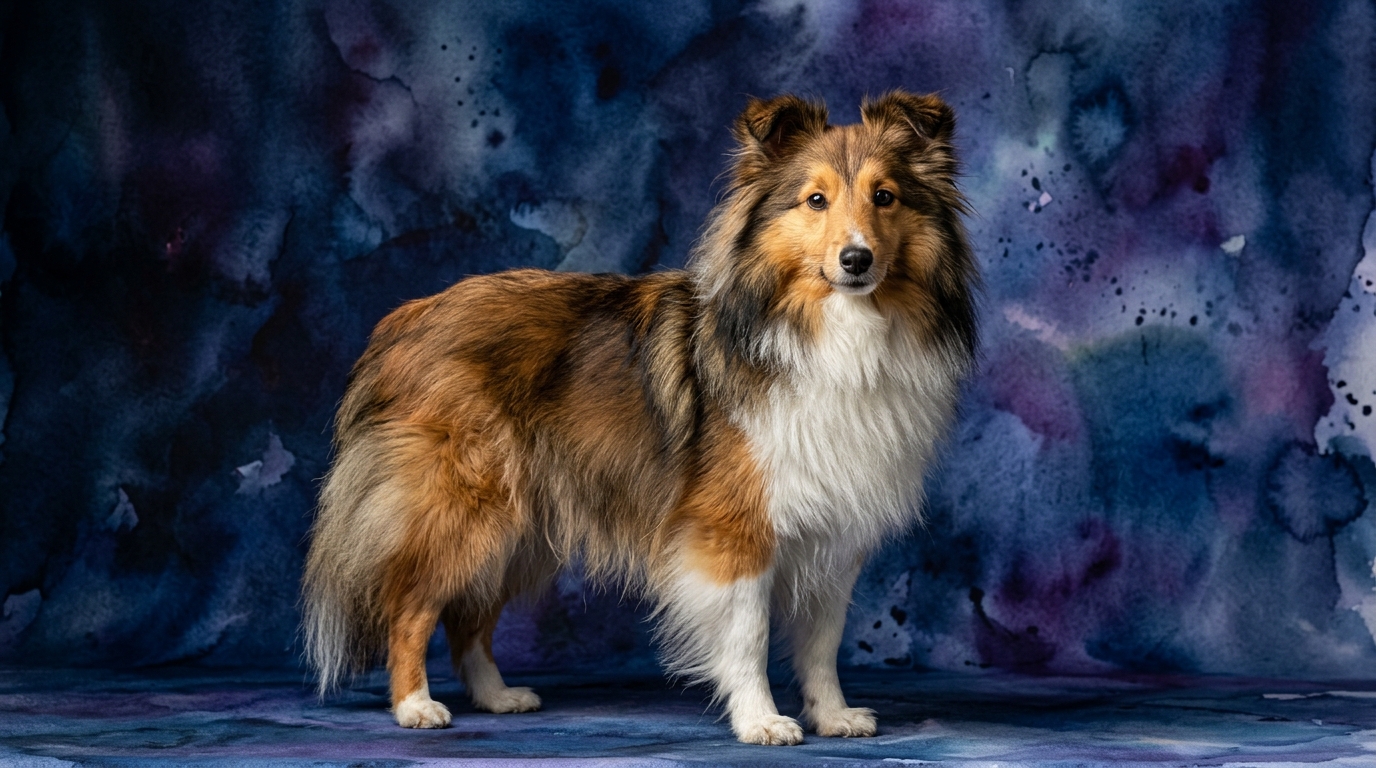

Side-by-Side Cognitive Profile: Sheltie vs. English Setter
At The Cosmic Pet Pet IQ Lab, we delve into five core cognitive dimensions to paint a comprehensive picture of a breed's mental makeup. The Shetland Sheepdog, a Herding group member, holds a notable Coren rank of #6, indicating a high capacity for learning and obedience. Its IQ profile shows Problem Solving at 4/5, Training Speed at an exceptional 5/5, Social Intelligence at 4/5, Instinctive Drive at 5/5, and Memory at 5/5. This paints a picture of a dog that is not only quick to learn but also highly motivated by purpose and attuned to its human companions.
In contrast, the English Setter, a Sporting group member, holds a Coren rank of #37, placing it firmly within the above-average range for working and obedience intelligence. Its IQ breakdown reveals Problem Solving at 4/5, Training Speed at 4/5, Social Intelligence at 3/5, Instinctive Drive at 3/5, and Memory at 4/5. These scores suggest a capable and responsive dog, albeit one with a different emphasis on social engagement and innate drive compared to its herding counterpart. Both breeds demonstrate solid problem-solving skills, but their applications and underlying motivations vary significantly.
Where the Shetland Sheepdog Excels Cognitively
The Shetland Sheepdog's cognitive strengths are particularly evident in its rapid assimilation of new information and its highly collaborative nature. With a perfect 5/5 in Training Speed and Memory, Shelties absorb commands and routines with remarkable efficiency and retain them consistently over time. This means they often require fewer repetitions to master a new skill, making them exceptionally responsive in structured training environments. Their 5/5 Instinctive Drive, rooted in their herding heritage, translates into a profound desire for purposeful activity and a keen attentiveness to direction, often anticipating an owner's next move. This drive isn't just about physical exertion; it's a mental engagement that seeks structure and a 'job.' The 4/5 Social Intelligence further enhances this, allowing Shelties to perceive and react to subtle human emotional cues, fostering a deeply communicative and cooperative partnership that is less common in breeds with lower social acumen.
Where the English Setter Shines Cognitively
While the Sheltie's strengths lie in speed and collaborative work, the English Setter's cognitive advantages are rooted in its specialized sensory processing and endurance-based focus. Their 4/5 Problem Solving, combined with a distinct instinctive drive (3/5) for scenting and pointing, equips them to meticulously track and locate targets over diverse terrains. This requires a different kind of cognitive effort: sustained attention, independent decision-making in the field, and the ability to ignore extraneous stimuli while locked onto a scent trail. This focused pursuit of a sensory goal is a testament to their particular cognitive stamina. Their 4/5 Memory supports the retention of complex hunting patterns, the recall of specific scents, and the identification of productive hunting grounds, showcasing their specialized cognitive prowess in their sporting domain.
Training Dynamics: Sheltie vs. English Setter
The Shetland Sheepdog generally offers a smoother and quicker training experience due to its superior Training Speed (5/5) and Memory (5/5). They grasp new commands and concepts with minimal repetition and demonstrate excellent retention, making them ideal candidates for advanced obedience, agility, or rally. Their powerful Instinctive Drive (5/5) to work with a handler, coupled with their 4/5 Social Intelligence, means they are eager to please and highly receptive to human guidance, often responding to subtle cues before a verbal command is even given. For instance, a Sheltie might learn a complex multi-step agility course in just a few sessions, consistently remembering the sequence.
The English Setter, while trainable with 4/5 in both Training Speed and Memory, typically requires more patient and consistent reinforcement. Their lower 3/5 Instinctive Drive, primarily focused on independent scenting, can mean they are more easily distracted by environmental stimuli during training sessions, especially if not engaged in an activity that taps into their natural drives. While they can master basic obedience proficiently, maintaining sustained focus on non-hunting-related tasks might demand more creative motivation and a longer learning curve compared to a Sheltie. For example, an English Setter might take longer to perfect a 'stay' command in a distracting park environment, as their nose might lead their attention elsewhere.
Matching Breeds to Lifestyles: Active vs. Relaxed Owners
For active owners who thrive on structured activities and mental challenges, the Shetland Sheepdog is an exceptional match. Their high instinctive drive, rapid learning capacity, and desire for mental engagement mean they flourish with consistent tasks and a 'job' to perform. Owners who enjoy competitive obedience, agility, flyball, or even herding trials will find the Sheltie to be an enthusiastic and capable partner. These dogs require owners who can provide daily mental stimulation beyond just physical exercise, ensuring their sharp minds are kept busy.
Conversely, English Setters, while still demanding significant physical exercise to satisfy their sporting heritage, can suit owners who prefer a more relaxed approach to structured training, provided their need for outdoor exploration and scent work is met. Their social intelligence, while lower at 3/5, still allows for a loving and affectionate family companion. Their more independent nature might appeal to owners who appreciate a dog that is less constantly seeking direction, but who are prepared to provide extensive outdoor activity like long hikes, runs, or field excursions where their natural drives can be safely expressed. They are excellent companions for owners who enjoy exploring nature and can accommodate a dog that follows its nose.
The Verdict: When to Choose Each Breed
Choose the Shetland Sheepdog if you're seeking a highly responsive, quick-learning companion eager for structured work and mental challenges, thriving on a close, communicative partnership in activities like competitive dog sports. Choose the English Setter if you appreciate a friendly, independent spirit with a strong drive for outdoor exploration and scent work, and are prepared to provide consistent physical outlets and patient, engaging training to harness their sporting instincts.
The Verdict
Choose the Shetland Sheepdog if you're seeking a highly responsive, quick-learning companion eager for structured work and mental challenges, thriving on a close, communicative partnership in activities like competitive dog sports.
Choose the English Setter if you appreciate a friendly, independent spirit with a strong drive for outdoor exploration and scent work, and are prepared to provide consistent physical outlets and patient, engaging training to harness their sporting instincts.
🧠 Find Your Pet's IQ Score
Our Pet IQ Lab assessment covers 25+ tests across 5 cognitive dimensions — personalized to your breed.
Take the Full IQ Test →Frequently Asked Questions
Are Shetland Sheepdogs good family dogs?
Yes, Shelties with their 4/5 social intelligence often form strong bonds with their families, are perceptive of emotions, and can be gentle with children, though early socialization is crucial for their confidence and temperament.
Do English Setters need a lot of exercise?
Absolutely, English Setters, originating as sporting dogs, require significant daily exercise, including long walks, runs, or off-leash play in secure areas, to satisfy their instinctive drive and maintain physical and mental well-being.
Which breed is better for first-time dog owners?
The Shetland Sheepdog, with its 5/5 training speed and high responsiveness, often presents an easier learning curve for first-time owners committed to consistent training and mental stimulation; English Setters might require more experience due to their independent sporting drive.