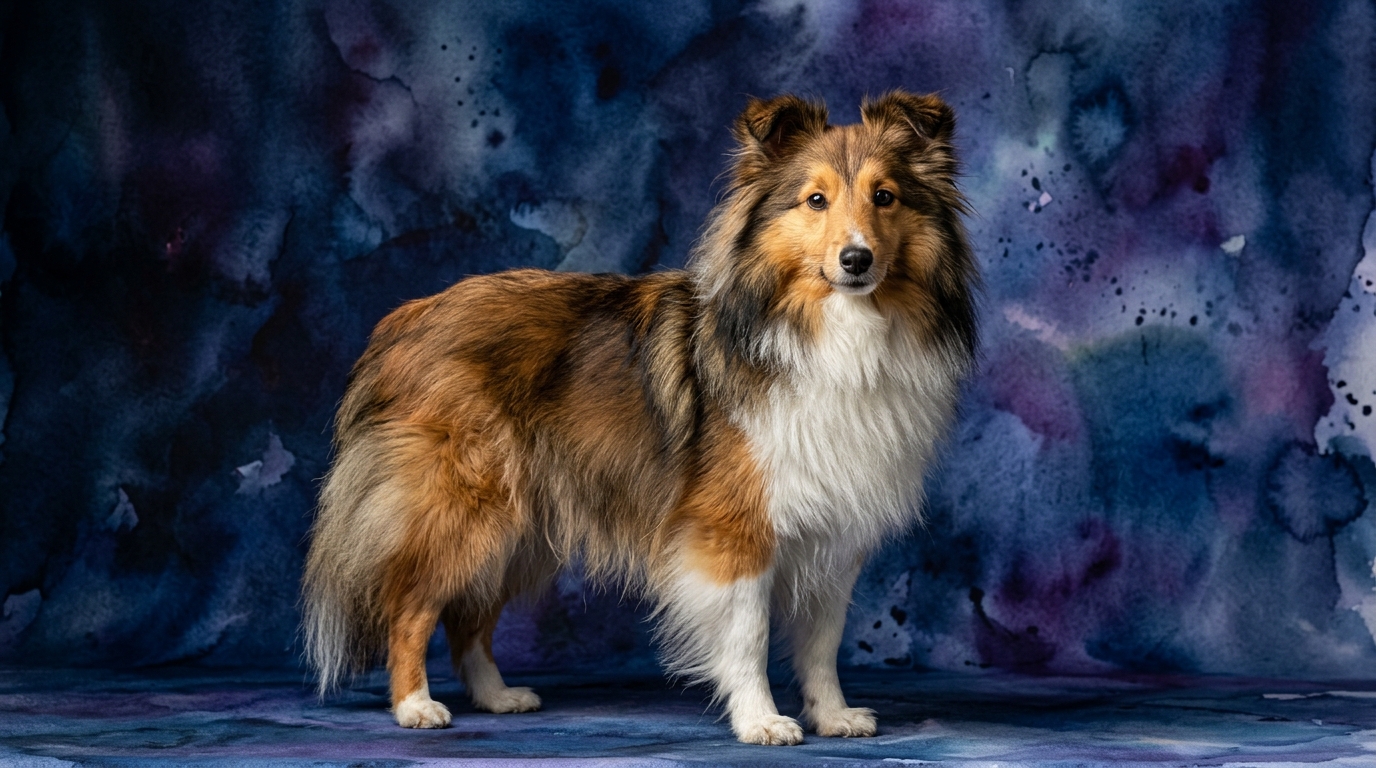

Side-by-Side IQ Profile: Herding Acumen vs. Toy Companion
The Cosmic Pet Pet IQ Lab employs a comprehensive five-dimensional framework to assess canine intelligence, offering a nuanced view beyond mere obedience. For the Shetland Sheepdog, a breed rooted in herding, this profile showcases a remarkable aptitude for complex tasks and rapid learning. Their Problem Solving is rated 4/5, indicating a strong capacity to analyze situations and devise solutions, a critical trait for managing livestock. Training Speed is an exceptional 5/5, reflecting their eagerness to absorb new commands and behaviors quickly. Social Intelligence stands at 4/5, highlighting their ability to interpret human cues and interact effectively within a social structure. Their Instinctive Drive, particularly for work and purpose, is a robust 5/5, while Memory is also a perfect 5/5, allowing them to retain vast amounts of learned information and routines.
In contrast, the English Toy Spaniel, bred purely for companionship, presents a different cognitive blueprint. Their Problem Solving is rated 3/5, suggesting they can navigate everyday challenges but may not independently seek out complex mental tasks. Training Speed is 3/5, meaning they are certainly trainable, but might require more repetition and patience compared to their herding counterparts. Social Intelligence is also 3/5, indicating a pleasant and cooperative nature, though perhaps less acutely attuned to subtle social dynamics than a working breed. Their Instinctive Drive is 3/5, reflecting a lower innate compulsion for 'work' or intense physical activity, aligning with their role as lap dogs. Memory, at 3/5, is sufficient for a companion animal, allowing them to remember routines and beloved family members without the need for extensive recall of intricate commands or tasks.
Where the Shetland Sheepdog Excels Cognitively
The Shetland Sheepdog's cognitive profile paints a picture of a canine built for purpose and precision. Their superior Problem Solving (4/5) means they are adept at figuring out how to open gates, retrieve out-of-reach toys, or even master complex agility courses with strategic thinking. This isn't just about following commands; it's about understanding the objective and planning steps to achieve it.
A Training Speed of 5/5 is a significant advantage, translating into an almost effortless learning process for many Shelties. They pick up new tricks, obedience cues, and even multi-step routines with impressive speed, often anticipating their handler's next instruction. This rapid assimilation of information is directly supported by their perfect 5/5 Memory, enabling them to recall an extensive vocabulary of commands and remember intricate sequences of actions over long periods.
Furthermore, the Sheltie's Instinctive Drive of 5/5 isn't just about herding; it fuels a profound desire for engagement and a 'job.' This drive translates into an eager willingness to participate in activities, from advanced obedience to canine sports, making them highly motivated partners. Their 4/5 Social Intelligence allows them to form deep bonds, read emotional cues, and respond appropriately in various social situations, making them excellent therapy dogs or service animals where understanding human nuance is paramount.
Cognitive Strengths of the English Toy Spaniel
While the English Toy Spaniel's scores may be numerically lower than the Sheltie's, their cognitive profile represents a distinct set of strengths perfectly suited to their role as devoted companions. Their 3/5 in Problem Solving means they are generally content with a simpler existence, less prone to the boredom-driven behaviors that can plague more cognitively demanding breeds. They excel at 'problem-solving' how to best snuggle into a lap or secure a comfy spot on the sofa, rather than devising complex escape routes.
The English Toy Spaniel's 3/5 Training Speed and Memory, while not record-breaking, are entirely adequate for mastering essential house manners and basic obedience. They learn what's expected of them and remember daily routines with ease, which is a 'win' for owners who prefer a less intense training regimen and a dog happy with consistency over constant novelty. Their cognitive focus is on connection and comfort, not complex tasks.
Perhaps the most significant 'win' for the English Toy Spaniel is in the context of their lower Instinctive Drive (3/5). Unlike breeds constantly seeking a job, this characteristic means they are inherently more relaxed and less prone to intense, high-energy behaviors that require constant channeling. This translates into a calm presence, a dog content to observe and participate gently in family life, making them ideal for individuals or families seeking a serene canine companion without the need for extensive mental stimulation programs. Their 3/5 Social Intelligence ensures they are amiable and enjoy interaction, but without the demanding 'intensity' that can sometimes accompany higher-drive breeds, fostering a more gentle and easygoing social dynamic.
Training Ease: Sheltie's Rapid Ascent vs. English Toy Spaniel's Steady Pace
When it comes to ease of training, the Shetland Sheepdog (Training Speed 5/5) holds a clear advantage. Their inherent desire to please, coupled with their sharp memory and high instinctive drive, means they are often one step ahead, eager to learn and quick to grasp new concepts. Shelties typically respond well to positive reinforcement and can master a wide array of commands and tricks in relatively few repetitions. Their herding background also imbues them with a natural attentiveness to their handler, making them highly receptive students.
The English Toy Spaniel (Training Speed 3/5), while certainly trainable, approaches learning at a more leisurely pace. They may require more patience and consistent repetition to solidify commands. Their lower instinctive drive means they might not possess the same fervent eagerness to 'work' for their owner, sometimes displaying a charming independence. Behavioral differences include the Sheltie's tendency to offer behaviors proactively, trying to figure out what you want, whereas the English Toy Spaniel might wait for clearer, more consistent instruction. With a patient, positive approach, English Toy Spaniels can achieve excellent basic obedience, but advanced or competitive training might demand more dedicated effort from the handler compared to a Sheltie.
Lifestyle Match: Active Engagement vs. Relaxed Companionship
The cognitive profiles of these two breeds directly inform their suitability for different owner lifestyles. The Shetland Sheepdog, with its high problem-solving, instinctive drive, and memory, thrives with active owners who can provide consistent mental and physical engagement. They excel in dog sports like agility, obedience, and herding trials, and require daily opportunities to use their minds and bodies. An owner who enjoys training, exploring, and engaging in structured activities will find a Sheltie to be an incredibly rewarding and responsive partner. Without adequate stimulation, their keen minds and strong drives can lead to boredom and potentially undesirable coping behaviors, like excessive barking or neurotic tendencies.
Conversely, the English Toy Spaniel is an ideal match for relaxed owners seeking a devoted, low-key companion. Their moderate instinctive drive means they are content with moderate daily walks and ample cuddle time. They are not typically driven to seek out complex mental challenges or constant physical exertion, making them excellent apartment dwellers or companions for individuals with a less active lifestyle. An English Toy Spaniel will thrive in a home where affection and proximity are prioritized, and where their gentle nature is appreciated without the expectation of demanding 'work' or high-octane activities. Their lower cognitive demands make them less prone to restlessness if a day is spent quietly at home.
The Verdict: Choosing Your Canine Companion
The Verdict
Choose a Shetland Sheepdog if you are an active individual or family eager to engage in consistent training, canine sports, and provide ample mental stimulation for a highly responsive and driven companion.
Opt for an English Toy Spaniel if you seek a calm, affectionate lap dog who thrives on companionship, requires less demanding physical and mental exercise, and prefers a relaxed, consistent home environment.
🧠 Find Your Pet's IQ Score
Our Pet IQ Lab assessment covers 25+ tests across 5 cognitive dimensions — personalized to your breed.
Take the Full IQ Test →Frequently Asked Questions
Are Shetland Sheepdogs prone to destructive behaviors if not mentally stimulated?
Yes, Shelties possess a high instinctive drive and problem-solving ability. Without sufficient mental engagement and physical exercise, they can become bored and develop behaviors such as excessive barking, digging, or chewing to occupy themselves, channeling their unused energy and intelligence constructively is key.
How does an English Toy Spaniel's lower instinctive drive manifest in daily life?
Their lower instinctive drive means English Toy Spaniels are generally more laid-back and less prone to intense 'work' or high-energy pursuits. They are content with moderate walks, enjoy quiet companionship, and are not typically driven by a need for a 'job,' making them ideal for serene home environments.
Can an English Toy Spaniel still excel in basic obedience despite a 3/5 training speed?
Absolutely. While they may require more patience and consistent repetition than a Sheltie, English Toy Spaniels are certainly capable of mastering basic obedience commands. Their pleasant social intelligence and desire for companionship mean they respond well to positive reinforcement and can become well-mannered family members.