
Side-by-Side Cognitive Profile: Sheltie vs. GSP
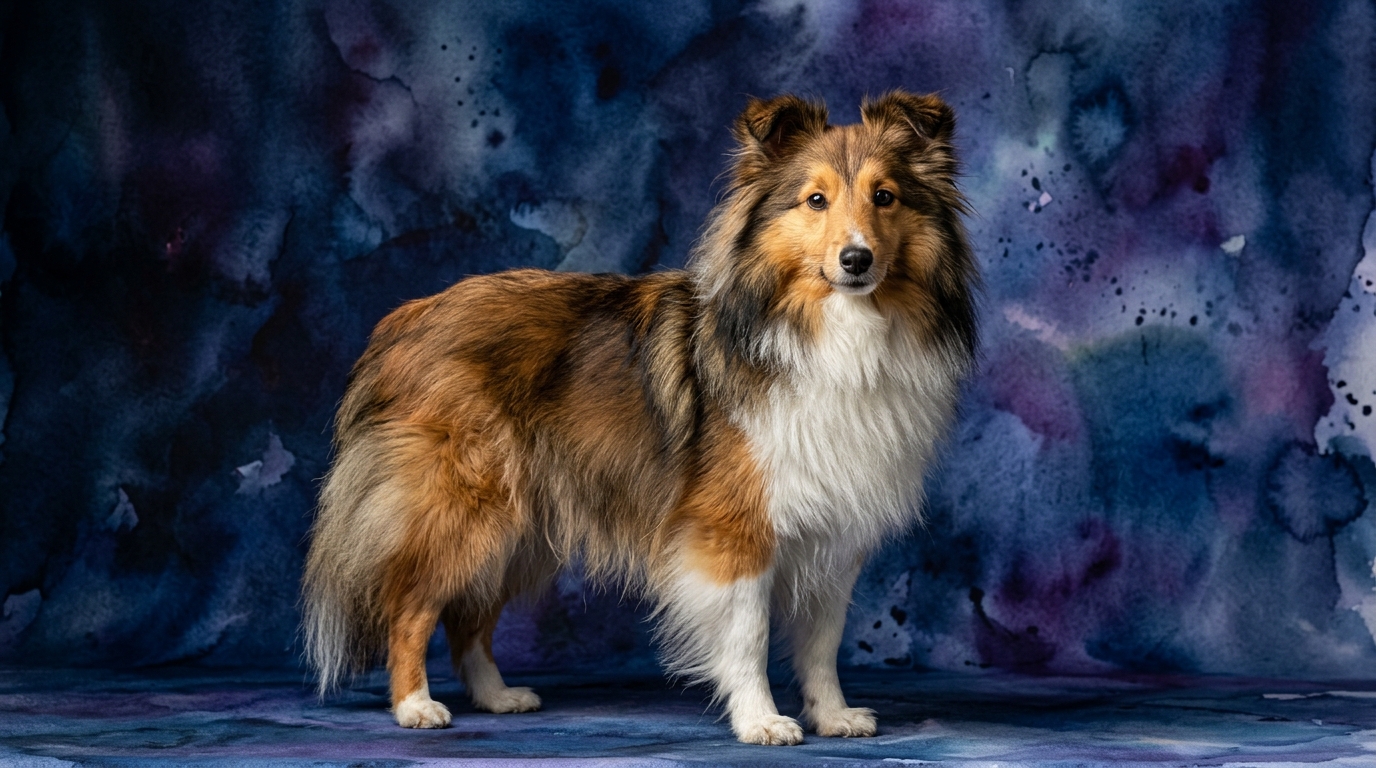
The Shetland Sheepdog, ranking #6 in Coren's hierarchy, exhibits a cognitive profile tailored for precise, responsive work. Their Problem Solving is rated 4/5, indicating a capacity to navigate moderately complex situations, often relying on learned patterns and handler cues. Training Speed is exceptional at 5/5, reflecting their eagerness to absorb new commands and behaviors with minimal repetition. Social Intelligence stands at 4/5, signifying a keen awareness of human and canine social dynamics, crucial for their cooperative herding role. An Instinctive Drive of 5/5 points to their inherent motivation for tasks, particularly those involving movement and control, while their Memory at 5/5 ensures they retain vast repertoires of commands and routines over time.
In contrast, the German Shorthaired Pointer, positioned at #17 in Coren's rankings, showcases a robust intellect geared towards independent action and environmental mastery. Their Problem Solving is a stellar 5/5, demonstrating an outstanding ability to assess and overcome novel obstacles, a trait vital for tracking game across varied terrains. Training Speed is rated 4/5, meaning they learn efficiently, though perhaps requiring slightly more motivation or varied approaches than the Sheltie, due to their independent nature. Social Intelligence is 4/5, reflecting their capacity to form strong bonds and understand group dynamics within their hunting pack or family. An Instinctive Drive of 5/5 highlights their profound urge to hunt, retrieve, and explore, making them relentless in their pursuits. Their Memory at 4/5 is solid, allowing them to recall learned behaviors and environmental cues, though perhaps not with the Sheltie's intricate precision for complex sequences.
Where the Shetland Sheepdog Excels Cognitively
The Shetland Sheepdog's cognitive strengths shine particularly in areas demanding rapid assimilation of information and precise recall. Their 5/5 Training Speed is a testament to their exceptional biddability and focus on their handler, making them extraordinarily quick learners. This aptitude is rooted in their herding heritage, where quickly understanding and executing complex directional commands was essential for managing livestock effectively. They pick up new tricks, obedience commands, and intricate agility sequences with remarkable efficiency, often needing only a few repetitions to solidify a behavior.
Furthermore, the Sheltie's 5/5 Memory is a significant advantage. This allows them to retain a vast vocabulary of commands and remember complex routines for extended periods, even after breaks in training. This robust memory is critical for tasks requiring sequential actions or remembering specific locations or cues. For owners engaged in dog sports like obedience, rally, or freestyle, this superior memory translates into a dog that reliably performs intricate patterns and command chains, showcasing a deep understanding of their learned repertoire without constant re-teaching.
Where the German Shorthaired Pointer Excels Cognitively
The German Shorthaired Pointer's cognitive edge is most evident in its superior Problem Solving, rated 5/5. This remarkable capacity stems directly from their role as versatile hunting dogs, where they must independently navigate diverse environments, locate game, and make real-time decisions without constant human intervention. Whether it's figuring out how to bypass an obstacle to reach a scent or strategizing the best approach to flush birds, the GSP demonstrates exceptional resourcefulness and adaptability. This means they are adept at finding creative solutions to new challenges, often thinking on their feet rather than relying solely on pre-programmed responses.
Their powerful Instinctive Drive (5/5), combined with this problem-solving prowess, makes them highly effective at tasks requiring sustained focus and independent initiative. While the Sheltie's drive is about control and precise movement, the GSP's drive is about exploration, tracking, and retrieval. This translates into a dog that can independently work through complex scent trails, persist in search tasks, and make intelligent choices in dynamic, unpredictable outdoor settings. Owners will observe this as a dog that doesn't easily give up on a puzzle or a scent, showcasing a deep-seated drive to complete their self-appointed missions.
Which Breed is Easier to Train and Why?
Based on their Pet IQ Lab profiles, the Shetland Sheepdog generally presents as the easier breed to train. Their Training Speed rating of 5/5, compared to the German Shorthaired Pointer's 4/5, is a key indicator. Shelties possess an inherent eagerness to please and a strong desire to work cooperatively with their handlers, which translates into rapid learning. Their herding background ingrained a need to be attentive to subtle cues and respond quickly, making them highly receptive to instruction. They typically require fewer repetitions to grasp new concepts and are more likely to offer desired behaviors proactively.
In contrast, while the German Shorthaired Pointer is by no means difficult to train, their independent problem-solving nature and powerful hunting instincts can sometimes make them less immediately biddable. Their 4/5 Training Speed suggests efficiency, but their drive to pursue scents or explore can occasionally override a direct command, especially in stimulating environments. GSPs thrive on motivation through positive reinforcement, but their training often requires more patience, consistency, and creative methods to channel their formidable energy and focus their independent spirit towards desired tasks, rather than relying on sheer compliance.
Lifestyle Match: Active vs. Structured Engagement
When considering owner lifestyles, both breeds are undeniably active, but their ideal engagement styles differ significantly. The Shetland Sheepdog, with its 5/5 Training Speed and Memory, thrives with owners who enjoy structured activities, mental challenges, and precision-based dog sports. They excel in obedience, agility, rally, and canine freestyle, where their quick learning, excellent recall, and desire for cooperative work can be fully utilized. These dogs need consistent mental stimulation through training sessions and puzzle toys, making them ideal for owners who find satisfaction in teaching complex skills and maintaining a structured routine. A Sheltie is best suited for an owner who appreciates a highly responsive companion eager to engage in shared cognitive tasks.
The German Shorthaired Pointer, with its 5/5 Problem Solving and Instinctive Drive, is a superb match for owners who embrace outdoor adventure, endurance activities, and independent exploration. They are exceptional partners for hiking, trail running, swimming, and field work, where their robust physique and keen problem-solving skills come into play. GSPs require owners who can provide ample physical exercise and opportunities to engage their powerful hunting instincts, perhaps through scent work, retrieving games, or even actual hunting. They are less about precise, choreographed movements and more about robust, independent action. An owner who values a resilient, resourceful companion for active, less structured outdoor pursuits will find the GSP to be an unparalleled partner.
The Verdict: Choosing Your Canine Companion
Choosing between a Shetland Sheepdog and a German Shorthaired Pointer hinges on the specific blend of cognitive engagement and physical activity an owner seeks. Both breeds offer substantial canine companionship, but their intellectual leanings cater to different preferences in a partner.
The Sheltie is an ideal choice for owners who prioritize a highly biddable companion eager for structured learning, precision-based activities, and a strong cooperative bond in training. Their quick learning and phenomenal memory make them a joy for anyone passionate about dog sports, advanced obedience, or simply having a dog that readily adapts to complex household routines and commands. They thrive on mental work that involves shared focus and intricate understanding.
Conversely, the GSP is the perfect fit for individuals seeking a robust, independent-thinking partner for extensive outdoor adventures and activities that engage their powerful problem-solving and instinctive drives. Owners who appreciate a dog that can make intelligent decisions in dynamic environments, pursue tasks with unwavering determination, and requires significant physical outlets will find the GSP an unmatched companion. They excel when given opportunities to explore, track, and utilize their natural abilities in a less structured, more exploratory manner.
The Verdict
Choose the Shetland Sheepdog if you desire a highly responsive, quick-to-learn companion for structured training, precision sports, and complex command sequences. They excel with owners who enjoy teaching intricate skills and maintaining a cooperative mental bond.
Opt for the German Shorthaired Pointer if you seek an independent, resourceful partner for extensive outdoor adventures, endurance activities, and tasks that engage their natural problem-solving and hunting instincts.
🧠 Find Your Pet's IQ Score
Our Pet IQ Lab assessment covers 25+ tests across 5 cognitive dimensions — personalized to your breed.
Take the Full IQ Test →Frequently Asked Questions
Which breed learns new commands faster?
The Shetland Sheepdog, with a Training Speed of 5/5, typically learns new commands faster than the German Shorthaired Pointer (4/5). Their eagerness to please and focus on the handler makes them highly receptive to instruction and quick to pick up new behaviors.
Which breed is better at independent problem-solving?
The German Shorthaired Pointer excels in independent problem-solving with a rating of 5/5, compared to the Shetland Sheepdog's 4/5. Their hunting background fosters an ability to assess and overcome novel obstacles, making real-time decisions in varied environments.
Do both breeds have strong instinctive drives?
Yes, both breeds have a strong Instinctive Drive rated 5/5. For the Sheltie, this manifests as a drive for herding, control, and movement. For the GSP, it's a powerful urge for hunting, tracking, and retrieving, requiring different outlets for expression.