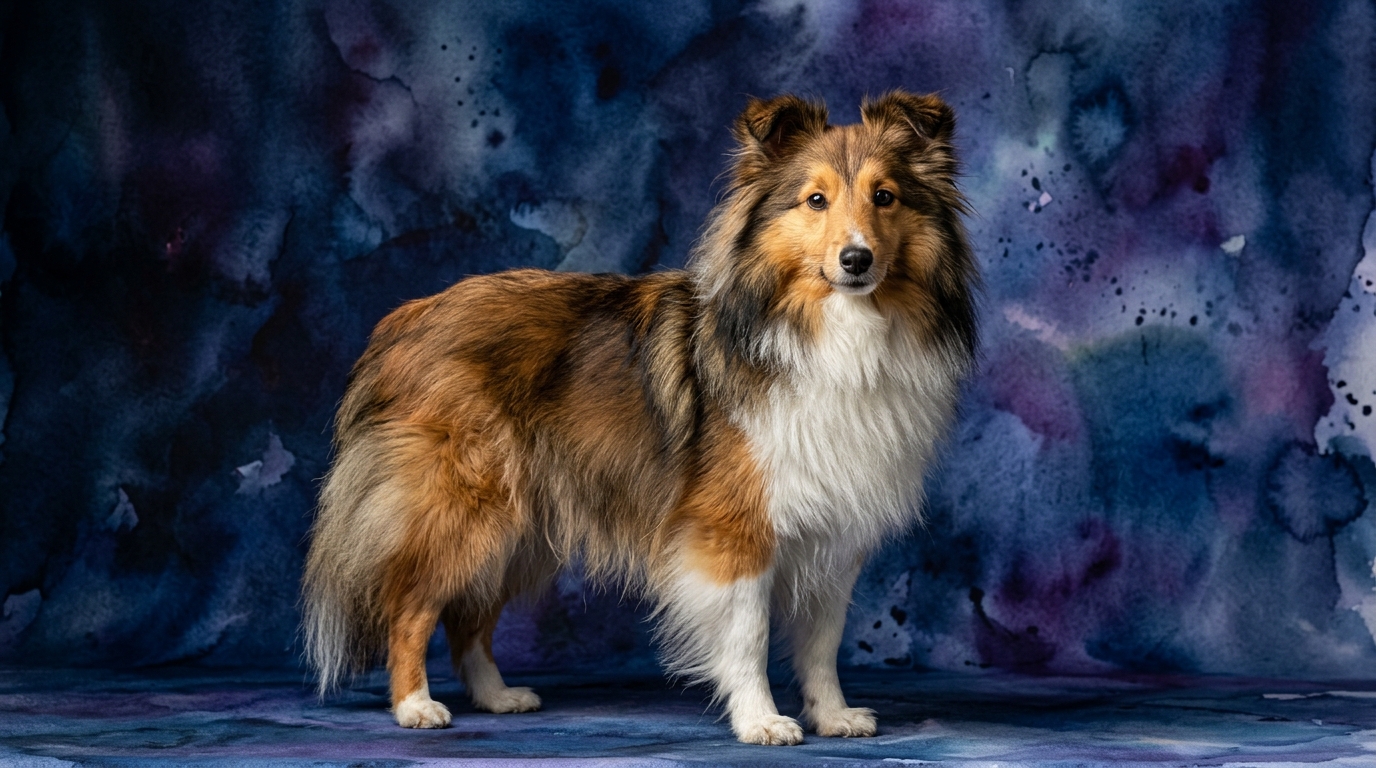
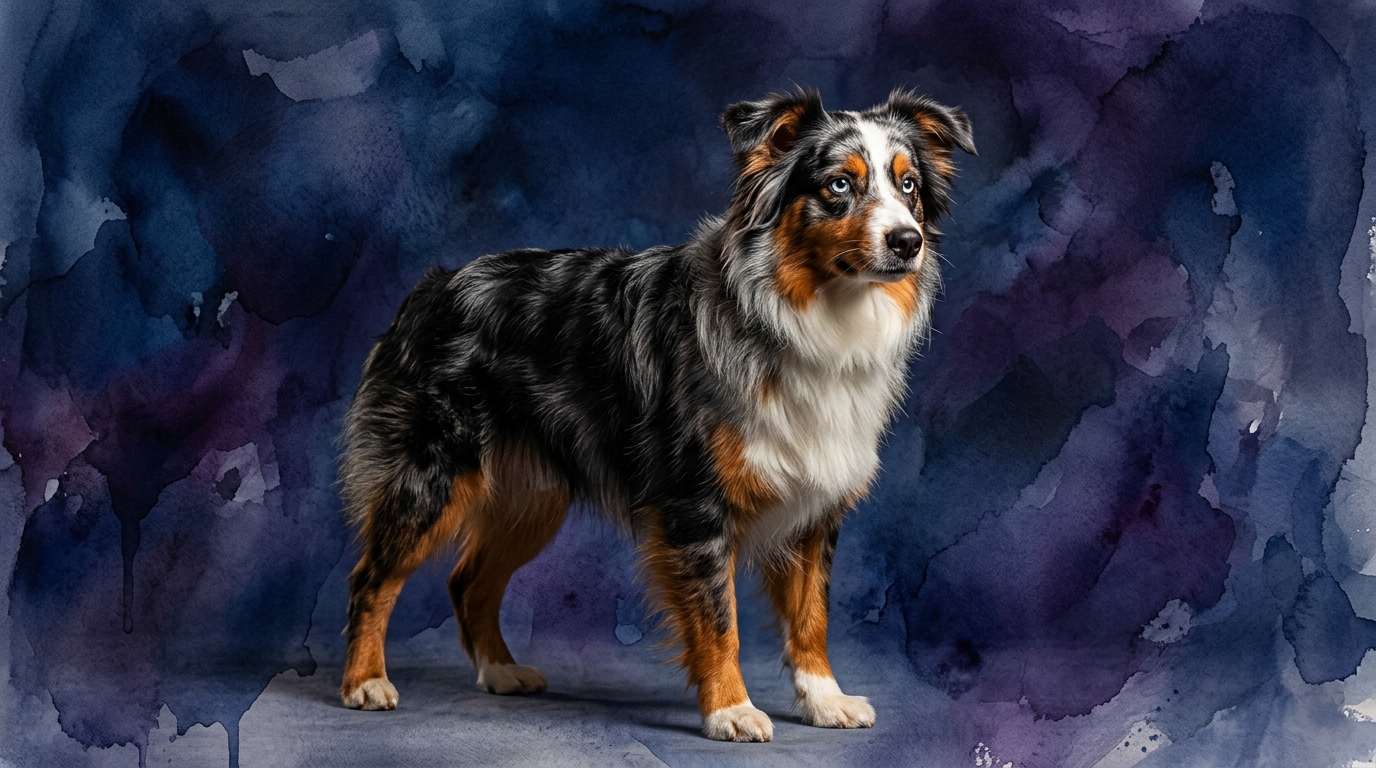
Side-by-Side IQ Profile: Sheltie vs. Mini American Shepherd
The Cosmic Pet Pet IQ Lab employs five key dimensions to evaluate a breed's cognitive architecture, providing a granular view beyond simple labels. For the Shetland Sheepdog, we observe a consistently elevated profile, while the Miniature American Shepherd presents a more moderated, yet still capable, set of scores.
**Problem Solving:** The Shetland Sheepdog scores a robust 4/5, indicating a strong capacity to analyze novel situations and devise effective solutions. This breed often demonstrates resourceful thinking when faced with challenges, from intricate puzzle toys to navigating complex environments. The Miniature American Shepherd, with a 3/5 in problem-solving, possesses a solid foundation for independent thought but might require more structured guidance or repetition to overcome new obstacles, preferring established methods over spontaneous innovation.
**Training Speed:** Here, the Shetland Sheepdog shines with a perfect 5/5. This breed absorbs new commands and routines with remarkable rapidity, often requiring only a handful of repetitions to achieve mastery. Their eagerness to engage and their sharp focus contribute significantly to this rapid learning curve. The Miniature American Shepherd, at 3/5, is certainly trainable, but their learning pace is more deliberate, necessitating greater patience and consistent reinforcement from their handler to solidify new behaviors.
**Social Intelligence:** The Shetland Sheepdog's 4/5 in social intelligence reflects their acute sensitivity to human emotions and cues. They are adept at reading body language, understanding vocal tones, and forming deep, empathetic bonds, often anticipating their owner's needs or moods. The Miniature American Shepherd's 3/5 suggests they are also capable of forming strong attachments and understanding social dynamics, but they may exhibit a more reserved or independent demeanor, potentially taking longer to warm up to strangers or expressing their social understanding in less overt ways.
**Instinctive Drive:** Both breeds hail from herding lineages, but their drives differ. The Shetland Sheepdog's 5/5 instinctive drive signifies an intense, pervasive urge to herd, chase, and work. This strong innate motivation means they thrive when given a purpose and are highly task-oriented. The Miniature American Shepherd, with a 3/5, possesses discernible herding instincts, but these are generally less intense and potentially more manageable within a typical pet home, allowing for a broader range of activities to satisfy their inherent urges.
**Memory:** A standout trait for the Shetland Sheepdog is their 5/5 memory. They retain a vast repertoire of commands, routines, and past experiences with exceptional fidelity, making advanced training and complex sequences second nature. The Miniature American Shepherd's 3/5 memory means they are capable of retaining information, but consistent practice and clear associations are more critical for long-term recall, and they might require occasional refreshers for less frequently used commands.
Where the Shetland Sheepdog Excels Cognitively
The Shetland Sheepdog's cognitive strengths are evident across the board, particularly highlighted by their Coren ranking as the 6th most obedient and intelligent dog breed. This ranking isn't just about raw processing power; it speaks to their consistent ability to understand and execute commands on the first or second try, reflecting superior working intelligence. Their perfect 5/5 score in both Training Speed and Memory means they are not only fast learners but also retain information with remarkable precision. This combination allows them to master intricate sequences of commands and complex tasks, making them prime candidates for advanced dog sports like agility, competitive obedience, and even service work where nuanced understanding and recall are paramount. For instance, a Sheltie can swiftly learn a multi-step retrieve task, remembering the specific object and location even after a period of distraction. Their 4/5 Problem Solving further empowers them to apply learned concepts to new situations, demonstrating a proactive cognitive approach rather than simply rote memorization. This manifests as an ability to figure out how to open childproof gates or solve complex puzzle toys, showcasing their capacity for independent thought and strategic planning.
Where the Miniature American Shepherd's Cognitive Profile Shines
While the Miniature American Shepherd's individual cognitive scores may be lower than the Sheltie's, their specific profile offers distinct advantages for certain owners and lifestyles, which can be seen as cognitive 'wins' in different contexts. Their 3/5 Instinctive Drive, for example, is a significant cognitive advantage for owners who appreciate the herding breed traits without the relentless, intense need for constant 'work' that a 5/5 drive demands. This moderated drive means their cognitive energy is less singularly focused on herding, potentially making them more adaptable to a variety of family activities without exhibiting the same level of frustration if a 'job' isn't provided daily. Furthermore, their 3/5 Social Intelligence can translate into a more self-reliant and less attention-demanding companion. While they form deep bonds, their cognitive processing of social interaction might lead to less overt 'clinginess' than a higher-scoring breed, suiting owners who appreciate a dog with a bit more personal space and independence. This doesn't mean they are aloof, but rather that their social cognition allows for a comfortable balance of affection and autonomy. Finally, their 3/5 Problem Solving and Training Speed, while slower, can actually be a cognitive benefit for novice owners. This moderated pace means they are less likely to 'outsmart' their human companions with complex, mischievous schemes or to pick up bad habits with the same lightning speed as a Sheltie. Their cognitive process is more straightforward, making their behavior patterns generally easier to predict and manage for those still learning the ropes of dog ownership and training.
Which is Easier to Train and Why
Based on their cognitive profiles, the Shetland Sheepdog is unequivocally the easier breed to train. Their perfect 5/5 Training Speed, coupled with a 5/5 Memory, means they grasp and retain commands with minimal repetition. This rapid assimilation is bolstered by their 4/5 Social Intelligence, which makes them highly attuned to human directives and eager to please, actively seeking to understand and comply. For example, a Sheltie will typically learn 'sit' or 'stay' in just a few short sessions, consistently performing the command thereafter. Their strong 5/5 Instinctive Drive also means they possess an inherent motivation to engage in structured activities, seeing training as a rewarding outlet for their energy. In contrast, the Miniature American Shepherd, with a 3/5 in both Training Speed and Memory, requires a more patient, consistent, and structured approach. While certainly capable of learning, they may need more repetitions to fully internalize commands and might occasionally display a more independent streak, requiring clearer motivation or redirection. Their 3/5 Social Intelligence implies they might not be as overtly 'eager to please' or as sensitive to subtle human cues, demanding a more direct and unambiguous training style. This isn't a deficit in ability, but rather a difference in their cognitive processing and motivational drivers, making the training journey a more deliberate process.
Suitability for Active vs. Relaxed Owners
The cognitive profiles of these two breeds offer clear guidance for matching them with appropriate owner lifestyles. For highly active owners, particularly those who thrive on consistent engagement and challenge, the Shetland Sheepdog is an ideal match. Their 5/5 Instinctive Drive and 4/5 Problem Solving demand a steady stream of mental and physical activities. Shelties flourish with owners dedicated to dog sports like agility, flyball, competitive obedience, or even mock herding trials, where their sharp memory and quick training speed can be fully utilized. They require a 'job' to prevent boredom and channel their considerable cognitive energy constructively. Conversely, for owners who are active but might prefer a slightly less intense daily commitment, the Miniature American Shepherd could be a more suitable choice. While still a herding breed requiring regular exercise and mental stimulation, their 3/5 Instinctive Drive suggests they can adapt to a more moderate activity schedule compared to the Sheltie. They enjoy walks, hikes, and engaging play sessions, but their cognitive demands for structured 'work' might be less relentless. This allows for a slightly more relaxed pace in daily life, without compromising their need for interaction and activity, making them a good fit for active families who enjoy outdoor adventures but perhaps don't plan on competing at the highest levels of dog sports.
The Verdict: When to Choose Each Breed
The Verdict
Choose the Shetland Sheepdog if you are an owner who relishes a highly responsive, lightning-fast learner eager for advanced training, complex dog sports, and constant, intricate mental engagement.
Opt for the Miniature American Shepherd if you seek a loyal, active herding companion with a slightly more independent cognitive streak, who benefits from consistent training but might thrive in a slightly less intensely structured environment.
🧠 Find Your Pet's IQ Score
Our Pet IQ Lab assessment covers 25+ tests across 5 cognitive dimensions — personalized to your breed.
Take the Full IQ Test →Frequently Asked Questions
Are Shetland Sheepdogs suitable for first-time dog owners?
Shetland Sheepdogs can be suitable for first-time owners who are prepared for their significant mental and physical exercise needs. Their high training speed makes them receptive to learning, but their strong drive requires consistent engagement to prevent boredom-related behaviors.
How much exercise does a Miniature American Shepherd need?
Miniature American Shepherds require a good amount of daily exercise, typically 60-90 minutes of vigorous activity. While their instinctive drive is 3/5, they are still a herding breed and need outlets for their energy, such as long walks, runs, or engaging play sessions.
Do their herding instincts manifest differently in a home environment?
Yes, their herding instincts can manifest differently. A Sheltie's 5/5 drive might lead to more persistent nipping at heels or attempts to 'herd' children or other pets, requiring careful management. A Miniature American Shepherd's 3/5 drive may still involve some herding behaviors, but they are generally less intense and potentially easier to redirect or manage in a typical family setting, making them adaptable companions.