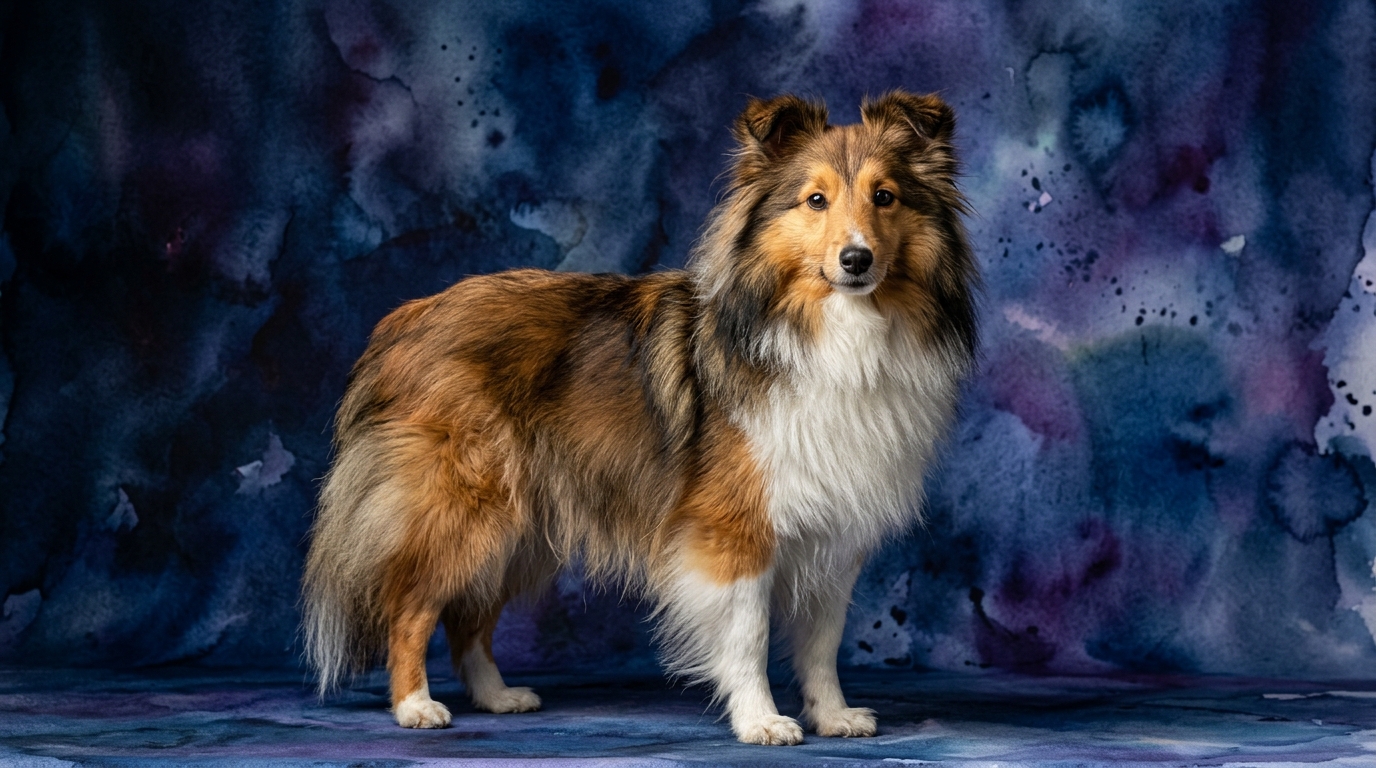

Side-by-Side Cognitive Profile: Sheltie vs. Rottweiler
At The Cosmic Pet Pet IQ Lab, we analyze canine intelligence across five key dimensions. For the Shetland Sheepdog, a Herding breed ranking #6 on Coren's scale, their Problem Solving is 4/5, indicating an aptitude for navigating complex tasks within established parameters. Their Training Speed is an exceptional 5/5, reflecting rapid command acquisition. Social Intelligence stands at 4/5, demonstrating strong empathetic connections. Instinctive Drive is a powerful 5/5, rooted in their herding heritage, and their Memory is a perfect 5/5, ensuring excellent recall and retention.
The Rottweiler, a Working breed ranked #9 by Coren, showcases a distinct cognitive profile. Their Problem Solving is an impressive 5/5, highlighting their capacity for independent analysis and strategic action in novel situations. Training Speed is 4/5, signifying efficient learning, though often requiring consistent motivation. Social Intelligence matches the Sheltie at 4/5, fostering deep bonds and an understanding of human cues. Their Instinctive Drive is a dominant 5/5, manifesting in strong working and protective behaviors, and their Memory is also a robust 5/5, crucial for complex tasks and loyalty.
Where the Shetland Sheepdog Shines Cognitively
The Shetland Sheepdog's primary cognitive advantage lies in its remarkable training speed, scoring a perfect 5/5. This isn't merely about rote learning; it signifies an acute ability to rapidly process new information, associate actions with consequences, and respond swiftly to commands. This quick uptake, bolstered by their 5/5 memory, makes them exceptionally adept at mastering intricate obedience routines, complex agility courses, and learning numerous tricks with minimal repetition. Their herding background instills a profound desire for cooperative work, making them highly receptive to handler guidance and quick to anticipate instructions, which gives them a distinct edge in precision-based learning environments.
Where the Rottweiler Excels Cognitively
The Rottweiler's standout cognitive strength is its superior problem-solving ability, earning a 5/5. While the Sheltie is capable, the Rottweiler's approach to challenges often involves a more independent and robust analytical process. They are less inclined to simply follow a learned sequence and more prone to assessing a novel situation, then devising a practical, often self-initiated, solution. This deep cognitive capacity, combined with their potent 5/5 instinctive drive for working and guarding, allows them to excel in roles demanding strategic thinking, such as protection work, tracking, or navigating complex search and rescue scenarios where dynamic decision-making is critical and independent action is valued.
Training Dynamics: Sheltie vs. Rottweiler
Based on our IQ metrics, the Shetland Sheepdog generally presents as easier to train due to their exceptional training speed (5/5). Their eagerness to please and high responsiveness means they pick up commands with fewer repetitions and retain them more consistently. This is evident in their typical performance in competitive obedience and agility, where precision and rapid learning are key. A Sheltie's inherent desire to work cooperatively with a handler, stemming from their herding lineage, makes them highly receptive to guidance, often appearing to anticipate their handler's next move.
The Rottweiler, with a training speed of 4/5, also learns efficiently, but their strong will and independent problem-solving nature can sometimes lead to a perceived stubbornness if training isn't consistently engaging or if the handler isn't confident. They require a firm, experienced hand that understands how to channel their profound instinctive drive (5/5) into productive tasks, often thriving with clear boundaries and purpose-driven training that appeals to their working heritage. While equally capable of mastering complex tasks, their learning style might involve more strategic engagement and less pure repetition to maintain focus and motivation.
Matching Canine Cognition to Owner Lifestyles
Both breeds demand a significant commitment from their owners, but their activity needs manifest differently, influenced by their cognitive profiles. The Shetland Sheepdog, with its instinctive drive (5/5) for herding and remarkable training speed (5/5), thrives with owners who can provide consistent mental stimulation and physical activity. They require daily engagement that taps into their desire to work, whether through herding games, agility, or advanced obedience. They suit active owners who enjoy structured activities and can dedicate ample time to training and interactive play, preventing boredom and potential anxiety that can arise from under-stimulation.
The Rottweiler, also boasting a 5/5 instinctive drive, requires an owner who understands their need for purpose and robust physical exercise. Their powerful build and protective instincts mean they need consistent, firm training and socialization from a young age. They are excellent companions for active owners who appreciate a strong, loyal partner for activities like hiking, weight pulling, or protection sports. While they can be calm indoors, their mental and physical well-being depends on regular, challenging outlets that engage their problem-solving abilities. Neither breed is suited for a truly 'relaxed' owner who prefers minimal engagement; both require dedicated attention to their cognitive and physical needs to flourish.
The Verdict
Choose the Shetland Sheepdog if you seek a highly responsive, cooperative canine partner for competitive obedience, agility, or a companion that quickly masters new tricks and thrives on intricate mental challenges. Their rapid learning makes them incredibly adaptable to diverse training regimes.
Opt for the Rottweiler if you desire a steadfast, protective companion with exceptional problem-solving skills, capable of independent thought in challenging situations and excelling in roles requiring purpose and robust physical engagement. They thrive with confident handlers who appreciate their strong working drive.
🧠 Find Your Pet's IQ Score
Our Pet IQ Lab assessment covers 25+ tests across 5 cognitive dimensions — personalized to your breed.
Take the Full IQ Test →Frequently Asked Questions
Do Shetland Sheepdogs and Rottweilers have similar social intelligence?
Both breeds score 4/5 in social intelligence, indicating a strong capacity to understand human cues and form deep bonds. However, the Sheltie's social nature often leans towards being more outwardly expressive and sensitive, particularly with family members, while the Rottweiler's social intelligence is often paired with a discerning and protective instinct towards their chosen family, making them more reserved with strangers.
How does their instinctive drive influence their suitability as family pets?
Both breeds have a 5/5 instinctive drive, but it manifests differently. The Sheltie's strong herding drive means they might try to 'herd' children or other pets, requiring supervision and redirection to appropriate outlets. The Rottweiler's working and guarding drive translates into a protective nature, making them devoted family members but necessitating early, consistent socialization and training to manage their natural territoriality and ensure appropriate behavior in various settings.
Is one breed inherently more 'independent' than the other in their cognitive approach?
While both are capable of independent thought, the Rottweiler's superior problem-solving (5/5) often involves more self-directed analysis and action, which can sometimes be perceived as independence or strong will during training if not properly channeled. The Sheltie's high training speed (5/5) and cooperative nature often make them appear more handler-focused and eager to please, though their strong herding instincts can lead to independent decision-making in specific, instinct-driven contexts.