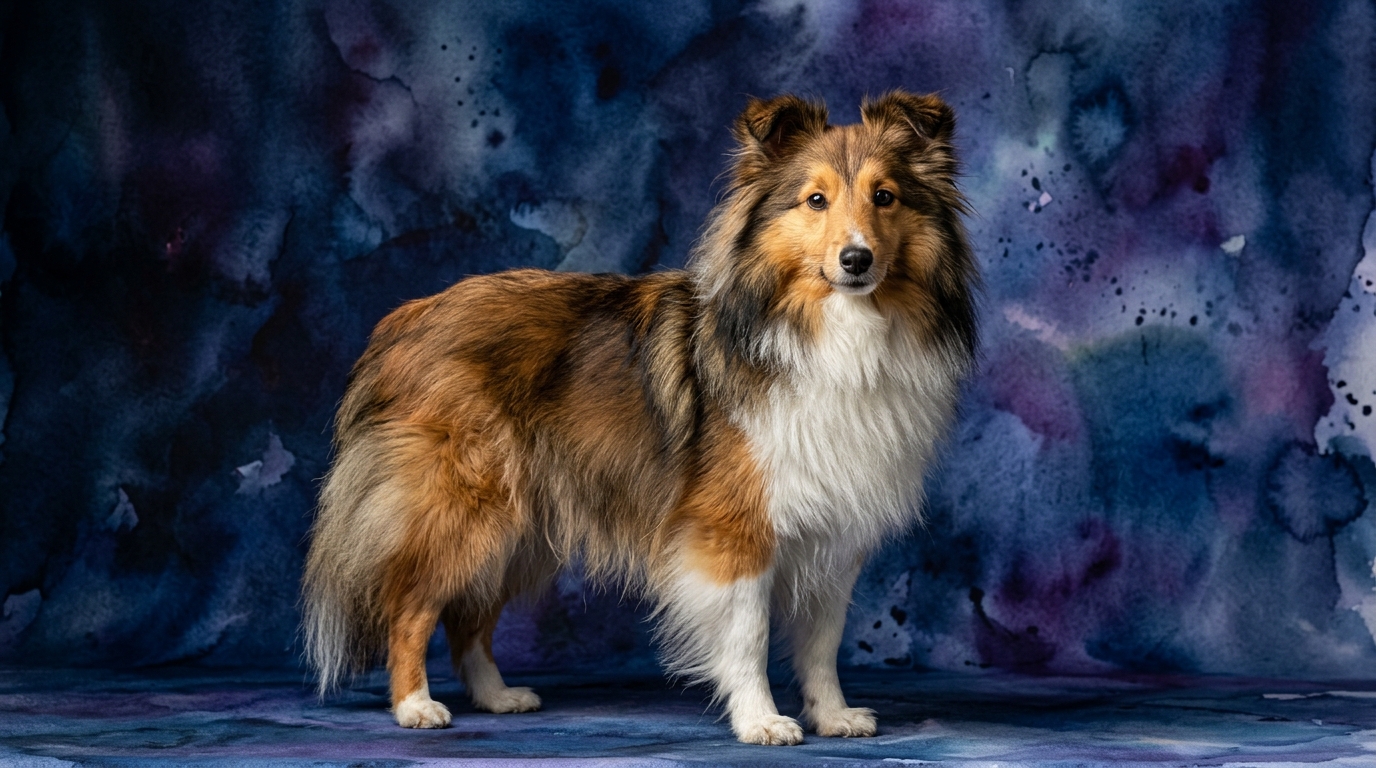

Side-by-Side Cognitive Profile: Shetland Sheepdog vs. Saint Bernard
To understand the unique intellectual makeup of these two breeds, The Cosmic Pet Pet IQ Lab employs a multi-dimensional assessment, examining five key cognitive areas alongside their general Coren Ranking. The Shetland Sheepdog, a Herding dog, boasts a Coren rank of #6, placing it among breeds that understand new commands quickly and obey them reliably. In contrast, the Working group's Saint Bernard holds a Coren rank of #65, suggesting a different, often more deliberate, approach to learning and command execution.
When assessing Problem Solving, the Shetland Sheepdog scores a robust 4/5. This indicates a dog capable of independently navigating novel situations, figuring out solutions to environmental challenges, and adapting its behavior based on experience. The Saint Bernard, with a 3/5 in Problem Solving, demonstrates a functional capacity for learning and overcoming obstacles, but perhaps with less spontaneous initiative or rapid adaptation compared to the Sheltie.
Training Speed is where a significant divergence appears. The Shetland Sheepdog excels with a perfect 5/5, signifying an exceptional ability to grasp new commands and routines with remarkable rapidity, often requiring minimal repetitions. This trait is deeply ingrained from generations of working closely with handlers. The Saint Bernard, however, scores 2/5 in Training Speed, suggesting a slower uptake for new instructions. Training a Saint Bernard requires more patience, consistency, and often more repetitions to solidify learned behaviors.
Social Intelligence measures a dog’s capacity to understand and respond to human emotions, intentions, and social cues. Interestingly, both breeds score an admirable 4/5 in this dimension. This highlights the Shetland Sheepdog’s responsiveness as a companion and working partner, and the Saint Bernard’s profound empathy and attunement to its human family, crucial for its historical role as a rescue dog and its current role as a gentle giant.
Instinctive Drive, reflecting innate, breed-specific behaviors, sees both breeds scoring a perfect 5/5, though their drives manifest differently. For the Shetland Sheepdog, this is an intense herding instinct, a powerful desire to gather, control, and move. For the Saint Bernard, it's a deep-seated protective and watchful drive, rooted in their history of search and rescue and guardianship, translating into a strong sense of duty and vigilance.
Finally, Memory assesses the ability to recall learned behaviors and experiences. The Shetland Sheepdog earns a 5/5, indicating an excellent capacity for retaining a vast repertoire of commands, routines, and past lessons, which aids in complex tasks and long-term training. The Saint Bernard scores 3/5, suggesting a functional memory that benefits from consistent reinforcement to ensure long-term recall, especially for less frequently practiced tasks.
Where the Shetland Sheepdog Excels Cognitively
The Shetland Sheepdog's cognitive strengths are evident in its exceptional Coren rank of #6, reflecting a breed that readily understands and executes commands. Their 5/5 Training Speed is a standout, meaning they typically grasp new commands within a handful of repetitions, making them incredibly swift learners. This rapid acquisition is a distinct advantage for owners keen on intricate obedience work or dog sports, where new sequences and rules are constantly introduced.
Furthermore, their 4/5 Problem Solving ability allows Shelties to adapt quickly to changing environments or unexpected scenarios, often devising solutions independently rather than waiting for explicit instructions. A Sheltie might, for instance, figure out how to open a child-proof gate or navigate a novel obstacle course with minimal prior guidance. Coupled with a 5/5 Memory score, once a Sheltie learns a task, it tends to stick, building an extensive and reliable behavioral repertoire. This cognitive agility enables them to process multiple cues simultaneously – a hand signal, a verbal command, and the position of an object – then execute the correct response swiftly and accurately, showcasing a nuanced understanding and retention that sets them apart.
Where the Saint Bernard Demonstrates Unique Aptitudes
While the Saint Bernard's Coren rank and scores in problem-solving and training speed are lower than the Sheltie's, its cognitive aptitudes lie in different, yet equally profound, domains. Their 4/5 Social Intelligence is a powerful strength, manifesting as an exceptional ability to discern human emotions and intentions. A Saint Bernard might not solve a complex puzzle as quickly as a Sheltie, but it excels at sensing distress in a family member or recognizing subtle shifts in its owner's mood, responding with a comforting presence or gentle nudge. This empathetic processing is a significant cognitive asset for a companion animal, fostering deep bonds.
The Saint Bernard's 5/5 Instinctive Drive, while different from herding, is equally potent. This translates into a deep-seated protective nature and a strong sense of responsibility, rooted in their history as Alpine rescue dogs. Their cognitive strength here is an unwavering focus on their perceived duty, whether it's monitoring their family's well-being or demonstrating remarkable endurance and steadfastness during a task they deem important, like guarding the home. They process their environment through a lens of safety and companionship, making them acutely aware of their surroundings in terms of who belongs and who might pose a threat, a specialized form of environmental and social vigilance. Their cognitive strengths emphasize loyalty, steadfastness, and gentle watchfulness over rapid, abstract problem-solving.
Training Dynamics: Sheltie's Swiftness vs. Saint Bernard's Steadfastness
When it comes to ease of training, the Shetland Sheepdog holds a distinct advantage. Their 5/5 Training Speed means they absorb new commands rapidly, often making teaching new behaviors a quick and engaging process. Their 4/5 Problem Solving helps them generalize learned behaviors to new contexts, meaning a command learned in the living room is likely understood in the park. The 5/5 Memory score ensures that once a lesson is learned, it is retained effectively. For example, teaching a Sheltie a complex multi-step trick might involve just a few guided repetitions before they grasp the sequence, thriving on the mental engagement and variety.
The Saint Bernard, conversely, requires a different approach due to its 2/5 Training Speed and 3/5 Memory. They learn best with short, positive reinforcement-based sessions, clear, consistent commands, and ample patience. While fully capable of learning, their process is more deliberate and might feel slower. Owners need to understand that the Saint Bernard's cognitive pace is not a deficiency but simply a different learning style. Teaching a Saint Bernard the same multi-step trick might require many more sessions, broken down into smaller, manageable steps, with success hinging on persistent, calm, and positive reinforcement rather than expecting rapid, independent acquisition.
Matching Canine Cognition to Owner Lifestyles
For active owners seeking a dynamic partner, the Shetland Sheepdog is an exceptional match. Their 5/5 Instinctive Drive (herding) and high Problem Solving capacity demand significant mental and physical engagement. Shelties excel in dog sports like agility, obedience, and herding trials, thriving on structured activities, complex puzzles, and regular, vigorous exercise. An owner who can provide these outlets will find a Sheltie a deeply rewarding and responsive companion, as their energetic minds require consistent stimulation to prevent them from inventing their own, potentially less desirable, forms of entertainment.
Conversely, the Saint Bernard generally suits more relaxed owners. While they require regular, moderate exercise to maintain health and manage their large size, their overall energy levels are typically lower once they mature past puppyhood. Their 5/5 Instinctive Drive focuses more on companionship and watchful presence than high-octane activity. A Saint Bernard is content with leisurely walks, extended family time, and being a calm, reassuring fixture in the home. A relaxed owner who appreciates a steady, affectionate giant and can accommodate their physical needs will find the Saint Bernard a perfect fit. Their strong social intelligence means they thrive on close family interaction and gentle companionship rather than demanding constant mental challenges or high-intensity tasks.
The Verdict: Choosing Your Canine Companion
The Verdict
If you seek a nimble, highly responsive companion for dog sports, complex obedience, or a partner that thrives on rapid learning and mental challenges, the Shetland Sheepdog's cognitive agility and exceptional training speed make it an ideal match.
Opt for the Saint Bernard if you desire a steadfast, empathetic, and gentle giant whose cognitive strengths lie in unwavering loyalty, social attunement, and a calm, protective presence, and you are prepared for a more deliberate training journey.
🧠 Find Your Pet's IQ Score
Our Pet IQ Lab assessment covers 25+ tests across 5 cognitive dimensions — personalized to your breed.
Take the Full IQ Test →Frequently Asked Questions
Does a Saint Bernard's lower problem-solving score mean it can't learn?
No, a 3/5 problem-solving score indicates Saint Bernards can certainly learn and adapt, but perhaps not with the spontaneous speed or independent insight of a Sheltie. They benefit from clear, consistent guidance and structured learning experiences rather than being expected to figure things out on their own rapidly.
How does the Shetland Sheepdog's 5/5 instinctive drive impact daily life?
A 5/5 instinctive drive in a Shetland Sheepdog translates to a strong innate desire to herd. In daily life, this might mean they try to gather family members, gently nip at heels, or chase moving objects. This drive requires appropriate outlets through training, herding games, or dog sports to channel their natural inclinations productively.
Is a Saint Bernard's 2/5 training speed a significant challenge for first-time owners?
While a 2/5 training speed means they learn at a slower pace, it's not insurmountable for first-time owners. It primarily demands extra patience, consistency, and positive reinforcement. Breaking commands into smaller steps and celebrating small successes will lead to a well-trained Saint Bernard, emphasizing a steady, calm approach over rapid learning.