
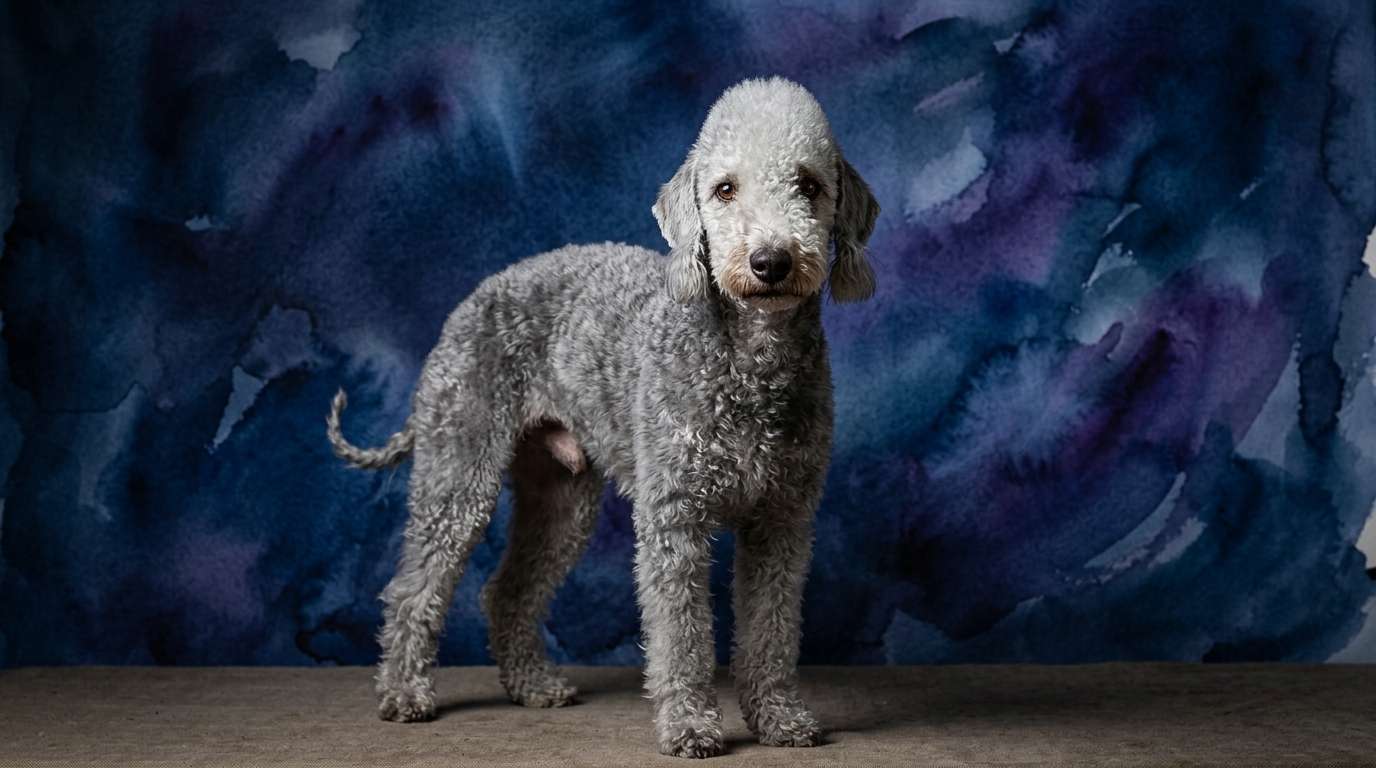
Side-by-Side Pet IQ Profile: Shih Tzu vs. Bedlington Terrier
The Cosmic Pet Pet IQ Lab employs a multi-dimensional framework to assess canine intelligence, moving beyond simplistic notions to explore five distinct cognitive faculties. Let's examine how the Shih Tzu and the Bedlington Terrier stack up in each dimension.
The **Shih Tzu**, a delightful Toy breed ranked #70 by Coren, exhibits a unique blend of companion-focused intellect. Their **Problem Solving** is rated at 3/5, indicating a moderate capacity for figuring out solutions, often applied to achieving personal comfort or gaining attention, such as navigating furniture to find the optimal sunbeam or cleverly 'asking' for a treat. Their **Training Speed** is 2/5, suggesting they can be slower to grasp new commands, a trait often attributed to their independent spirit and preference for social interaction over strict obedience. However, their **Social Intelligence** shines at a perfect 5/5; these dogs are exceptionally attuned to human emotions and social cues, making them masters of empathetic companionship. Their **Instinctive Drive** is low at 2/5, meaning they possess minimal prey drive or inherent working instincts, with their primary motivations typically revolving around their human family. Finally, their **Memory** stands at 3/5, allowing them to recall routines, favored individuals, and past positive or negative experiences, like the location of a hidden toy or the best spot for a belly rub.
In contrast, the **Bedlington Terrier**, a distinctive Terrier breed not formally ranked by Coren, displays a different cognitive blueprint shaped by its working heritage. Their **Problem Solving** also rates 3/5, but this intelligence is often channeled into more practical, goal-oriented tasks, such as devising ways to access an interesting scent or investigating a perceived burrow. Their **Training Speed** is a more responsive 3/5, indicating they can pick up new commands and routines efficiently, especially when motivated by engaging activities or rewards, though their terrier tenacity can sometimes lead to selective hearing. Their **Social Intelligence** is 3/5; while capable of forming deep bonds and understanding social hierarchies within their family, they may not display the same overt 'people-pleasing' nature as the Shih Tzu. A moderate **Instinctive Drive** of 3/5 means they possess a natural inclination to dig, chase small animals, and explore with purpose, reflecting their terrier roots. Their **Memory** is also 3/5, allowing them to retain training cues, boundaries, and memorable interactions, whether positive or challenging.
Where the Shih Tzu Wins Cognitively
The Shih Tzu's undisputed cognitive strength lies in its extraordinary Social Intelligence, scoring a perfect 5/5 compared to the Bedlington Terrier's 3/5. This isn't merely about being friendly; it's a deep-seated capacity to interpret nuanced human emotions, body language, and vocal tones, making them exceptionally empathetic companions. A Shih Tzu might intuit an owner's stress and offer a comforting presence, subtly nudging or resting their head, demonstrating a sophisticated understanding of emotional states. Their cognitive energy is often directed towards observing and engaging with their human family, mastering the art of companionship through keen social observation. This superior social acumen allows them to navigate complex household dynamics with grace, often charming their way into preferred positions or eliciting desired responses from their human caretners. Their understanding of social cues is so refined that they can often communicate their needs and desires without a single bark, relying instead on eye contact and subtle body language. This makes them profoundly intuitive pets, almost like living emotional support systems.
Where the Bedlington Terrier Wins Cognitively
The Bedlington Terrier demonstrates distinct cognitive advantages in areas tied to their working heritage, particularly in Training Speed (3/5 vs. Shih Tzu's 2/5) and Instinctive Drive (3/5 vs. Shih Tzu's 2/5). While both breeds share a similar Problem Solving score, the Bedlington's slightly quicker training acquisition means they generally process and internalize new commands and tasks more readily. This is often coupled with their moderate instinctive drive, which, when properly channeled, can make them highly engaged students in activities like agility, obedience, or scent work. For instance, a Bedlington's natural inclination to chase or dig can be redirected into fun, structured games that leverage their innate drives for cognitive enrichment. Their tenacity, a hallmark of the terrier group, means that once they understand a task and are motivated, they often pursue it with focused determination, demonstrating a different kind of problem-solving—one geared towards achieving a tangible outcome rather than social comfort. This combination of faster learning and a purpose-driven instinct allows them to excel in practical applications of their intelligence.
Which is Easier to Train, and Why?
When it comes to ease of training, the Bedlington Terrier generally holds an advantage over the Shih Tzu, primarily due to its higher Training Speed (3/5 vs. 2/5) and the nature of its Instinctive Drive. Bedlingtons tend to pick up new commands more efficiently, especially when training is engaging and taps into their natural terrier curiosity and drive to work. While they can exhibit terrier stubbornness, their intrinsic motivation to explore and achieve can be powerfully leveraged in training, making them responsive to clear expectations and reward-based methods. Their problem-solving skills, when combined with their drive, mean they often find satisfaction in successfully completing tasks.
In contrast, the Shih Tzu, with a lower Training Speed and a high Social Intelligence, often prioritizes comfort and social interaction over strict adherence to commands. Their independent streak and desire for companionship mean they might view training sessions as less urgent or might try to charm their way out of a command if they don't see an immediate social benefit. This isn't a lack of intelligence, but rather a different motivational framework; their cognitive energy is more geared towards understanding and manipulating social situations for their benefit. Owners will find that while Shih Tzus are certainly trainable, it requires greater patience, consistency, and a deep understanding of their unique personality, often needing to make training feel like a fun social game rather than a chore. Behavioral differences might include a Bedlington eagerly performing a 'stay' for a tossed toy, while a Shih Tzu might prefer to 'stay' on the couch next to their favorite human.
Which Suits Active Owners vs. Relaxed Owners?
The distinct cognitive profiles of these breeds make them suitable for very different owner lifestyles. The **Shih Tzu**, with its high Social Intelligence (5/5), low Instinctive Drive (2/5), and moderate Problem Solving (3/5), is an ideal match for **relaxed owners** who prioritize companionship and a calm home environment. Their cognitive energy is predominantly directed towards forming deep emotional bonds and observing their human family, thriving on intimate indoor interaction and gentle, leisurely strolls. They are content to be a devoted lap companion, offering comfort and soaking up attention, requiring minimal strenuous physical or mental exercise. Their preference is for a predictable routine centered around their people, making them perfect for those seeking a charming, low-maintenance emotional anchor.
Conversely, the **Bedlington Terrier**, with its moderate Instinctive Drive (3/5), quicker Training Speed (3/5), and moderate Problem Solving (3/5), is better suited for **active owners** who enjoy engaging in structured activities and providing consistent mental stimulation. These dogs benefit from regular exercise that goes beyond a casual walk, such as brisk hikes, interactive games, or participation in dog sports like agility or earthdog trials that channel their natural terrier instincts. Owners who appreciate a dog that is eager to learn and has a purpose will find the Bedlington's cognitive needs align well with their own active lifestyle, offering a rewarding partnership in exploration and task-oriented engagement. They require an owner who understands how to manage and direct their inherent drives into constructive outlets.
The Verdict
Opt for a Shih Tzu if your primary desire is a deeply emotionally connected companion who excels in social interaction, offers intuitive comfort, and thrives in a relaxed, comfort-oriented lifestyle with minimal demands for strenuous activity.
Select a Bedlington Terrier if you seek an engaging, moderately active partner who enjoys learning, has a natural inclination towards structured activities, and will benefit from consistent mental and physical challenges.
🧠 Find Your Pet's IQ Score
Our Pet IQ Lab assessment covers 25+ tests across 5 cognitive dimensions — personalized to your breed.
Take the Full IQ Test →Frequently Asked Questions
Are Shih Tzus good at learning tricks?
Shih Tzus can certainly learn tricks, but their training speed of 2/5 suggests it might require more patience and consistent positive reinforcement than with some other breeds. They often respond best when tricks are framed as fun social interactions, leveraging their high social intelligence, rather than strict, repetitive commands.
Do Bedlington Terriers need a lot of mental stimulation?
Yes, Bedlington Terriers benefit significantly from regular mental stimulation due to their moderate problem-solving skills and instinctive drive. Activities like puzzle toys, scent work, obedience training, or even agility can help channel their energy and keep them cognitively engaged and content.
How do their social intelligence differences manifest in a home environment?
A Shih Tzu's high social intelligence means they are often highly attuned to family dynamics, seeking proximity and offering intuitive comfort, acting as emotional barometers for their owners. Bedlington Terriers, with moderate social intelligence, will form strong bonds but might express affection and social engagement in a more independent, task-oriented manner, perhaps less overtly 'cuddly' but still deeply loyal and discerning in their interactions.