
Side-by-Side Cognitive Profiles
The Cosmic Pet Pet IQ Lab employs a five-dimensional framework to assess canine intelligence, moving beyond simple obedience to encompass a holistic view of a dog's mental capabilities. For the Shih Tzu, a breed often celebrated for its affectionate nature, its cognitive profile paints a picture of a socially astute companion. Ranked #70 by Coren, the Shih Tzu exhibits a Problem Solving score of 3/5, indicating a moderate ability to navigate novel situations and figure out solutions independently. Its Training Speed is rated 2/5, suggesting that while capable, this breed may require more repetition and patience to master new commands. Where the Shih Tzu truly shines is in Social Intelligence, scoring an impressive 5/5, reflecting an exceptional capacity to understand human emotions, intentions, and social cues. Instinctive Drive, measuring innate behaviors like hunting or herding, is 2/5, confirming its role as a dedicated companion rather than a working dog. Memory is assessed at 3/5, indicating a solid ability to recall past experiences and learned behaviors.
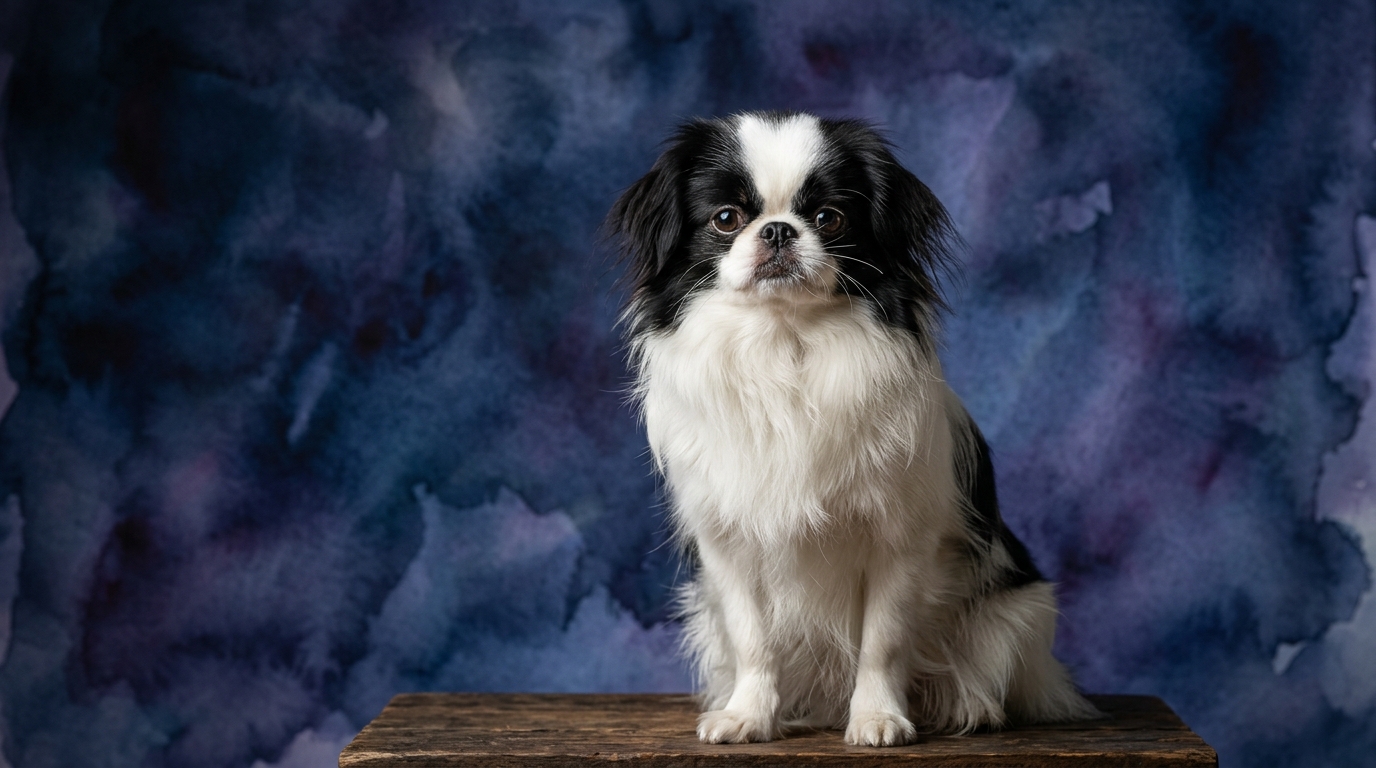
The Japanese Chin, though not specifically ranked by Coren, presents a distinct yet equally engaging cognitive makeup. This breed consistently scores 3/5 across four out of five dimensions, suggesting a balanced and adaptable intellect. Its Problem Solving ability is 3/5, mirroring the Shih Tzu's capacity for independent thought. Training Speed is 3/5, indicating a slightly quicker grasp of new instructions compared to the Shih Tzu, potentially making training sessions a bit more efficient. Social Intelligence for the Japanese Chin is 3/5, meaning it is affectionate and responsive to its family, though perhaps not with the same profound depth of human-attunement seen in the Shih Tzu. Instinctive Drive is also 3/5, suggesting a moderate inclination towards play and engagement with its environment, a step up from the Shih Tzu's lower drive. Finally, its Memory score is 3/5, on par with the Shih Tzu, demonstrating a reliable ability to retain information over time.
Where the Shih Tzu Excels Cognitively
The Shih Tzu's standout cognitive strength lies in its exceptional Social Intelligence, scoring a perfect 5/5. This isn't merely about being friendly; it reflects a profound capacity to read and respond to human emotional states and social contexts. A Shih Tzu can often anticipate its owner's mood, offering comfort during distress or joining in joyful moments without explicit cues. Their ability to integrate seamlessly into a household's social fabric, adapting their behavior to different family members and routines, is a testament to this high social acumen. This trait makes them incredibly empathetic companions, often forming deep, intuitive bonds that feel almost telepathic to their owners.
This high social intelligence also contributes to their adaptability in various social settings, from quiet evenings at home to bustling family gatherings. They are adept at understanding boundaries and social expectations within a human household, learning quickly what elicits positive responses and what might be met with disapproval, not through strict training but through keen observation of human interaction. This makes them remarkably easy to live with for individuals who appreciate a dog that is deeply attuned to their presence and emotional landscape.
Where the Japanese Chin Shows Cognitive Strengths
The Japanese Chin's cognitive strengths are found in its balanced yet slightly elevated Training Speed (3/5) and Instinctive Drive (3/5) compared to the Shih Tzu. While not dramatic differences, these scores indicate a dog that might pick up new tricks and commands with a bit more alacrity and maintain engagement during training sessions more readily. Their moderate instinctive drive means they possess a natural curiosity and a greater inclination towards interactive play and exploration, which can be leveraged in structured learning environments.
This balanced profile suggests the Japanese Chin is a bit more self-motivated to engage with its environment and learn through interaction. Owners might find them more inclined to initiate playful games or explore new toys, using their problem-solving skills (3/5) to figure out how things work. This makes them a delightful companion for those who enjoy a dog with a playful spark and a willingness to participate actively in a variety of mental enrichment activities, from puzzle toys to short obedience routines.
Training Dynamics: Shih Tzu vs. Japanese Chin
When considering ease of training, the differences between these two breeds become apparent. The Shih Tzu's Training Speed of 2/5 suggests that owners will need to exercise considerable patience and consistency. While they are certainly capable of learning, their attention may wander more quickly, and they might require more repetitions to solidify a command. Their high social intelligence means they are motivated by pleasing their human, but their lower instinctive drive means they might not find the act of 'working' for a reward as intrinsically motivating. Training a Shih Tzu often relies heavily on positive reinforcement delivered with warmth and affection, leveraging their desire for social connection rather than an innate drive to perform tasks.
The Japanese Chin, with its Training Speed of 3/5 and Instinctive Drive of 3/5, generally proves to be a slightly more receptive student. Their moderate drive means they can be more easily motivated by toys, treats, or engaging games during training. They might grasp concepts a bit faster and maintain focus for slightly longer periods. While still a companion breed, their behavioral predisposition leans towards a more active participation in learning, making them potentially more rewarding for owners who enjoy regular, short training sessions focused on basic obedience or fun tricks. Their problem-solving ability (3/5) also means they can figure out what's expected of them with a reasonable amount of guidance.
Lifestyle Suitability: Active vs. Relaxed Owners
The cognitive profiles of these breeds offer clear guidance on which might best suit different owner lifestyles. The Shih Tzu, with its paramount Social Intelligence (5/5) and lower Instinctive Drive (2/5), is an ideal match for relaxed owners seeking a devoted, empathetic, and low-key companion. They thrive in environments where they can be close to their human, observing and participating in the quiet rhythms of home life. Their contentment often comes from social proximity rather than strenuous activity or constant mental challenges. They are perfectly content to be a lap dog, a quiet observer, or a gentle presence, making them suitable for individuals who prefer a less demanding canine partner and appreciate a dog's profound emotional connection.
The Japanese Chin, with its balanced scores, particularly its 3/5 Training Speed and 3/5 Instinctive Drive, tends to suit owners who are moderately active and enjoy engaging with their pets in gentle, interactive ways. While not requiring extensive exercise, the Chin appreciates opportunities for structured play, short walks, and mental stimulation through training or puzzle toys. Their moderate social intelligence means they are affectionate but might also enjoy some independent exploration. Owners who enjoy teaching new tricks, engaging in short bursts of play, and providing consistent, positive reinforcement for learning will find the Japanese Chin a responsive and rewarding companion that strikes a balance between cuddles and playful engagement.
The Verdict
Choose the Shih Tzu if your priority is an exceptionally empathetic and socially attuned companion who thrives on deep emotional connection and a relaxed home environment.
Opt for the Japanese Chin if you appreciate a dog with a balanced intellect, a slightly quicker grasp of training, and a playful inclination that enjoys moderate interactive engagement.
🧠 Find Your Pet's IQ Score
Our Pet IQ Lab assessment covers 25+ tests across 5 cognitive dimensions — personalized to your breed.
Take the Full IQ Test →Frequently Asked Questions
Which breed is more affectionate?
Both breeds are affectionate, but the Shih Tzu's 5/5 Social Intelligence suggests a more profound, almost intuitive connection with humans, making them highly attuned to their owner's emotions and needs. The Japanese Chin is also loving but perhaps expresses its affection in a more balanced, less intensely focused manner.
Are Shih Tzus difficult to house train?
Shih Tzus can be somewhat challenging to house train due to their 2/5 Training Speed and lower instinctive drive, requiring consistent, patient, and positive reinforcement methods. Their smaller bladder size also means more frequent potty breaks are necessary during training.
Does the Japanese Chin need a lot of exercise?
The Japanese Chin does not require extensive exercise; its 3/5 Instinctive Drive suggests it enjoys moderate activity. Short daily walks and interactive play sessions are usually sufficient to keep them physically and mentally stimulated.