
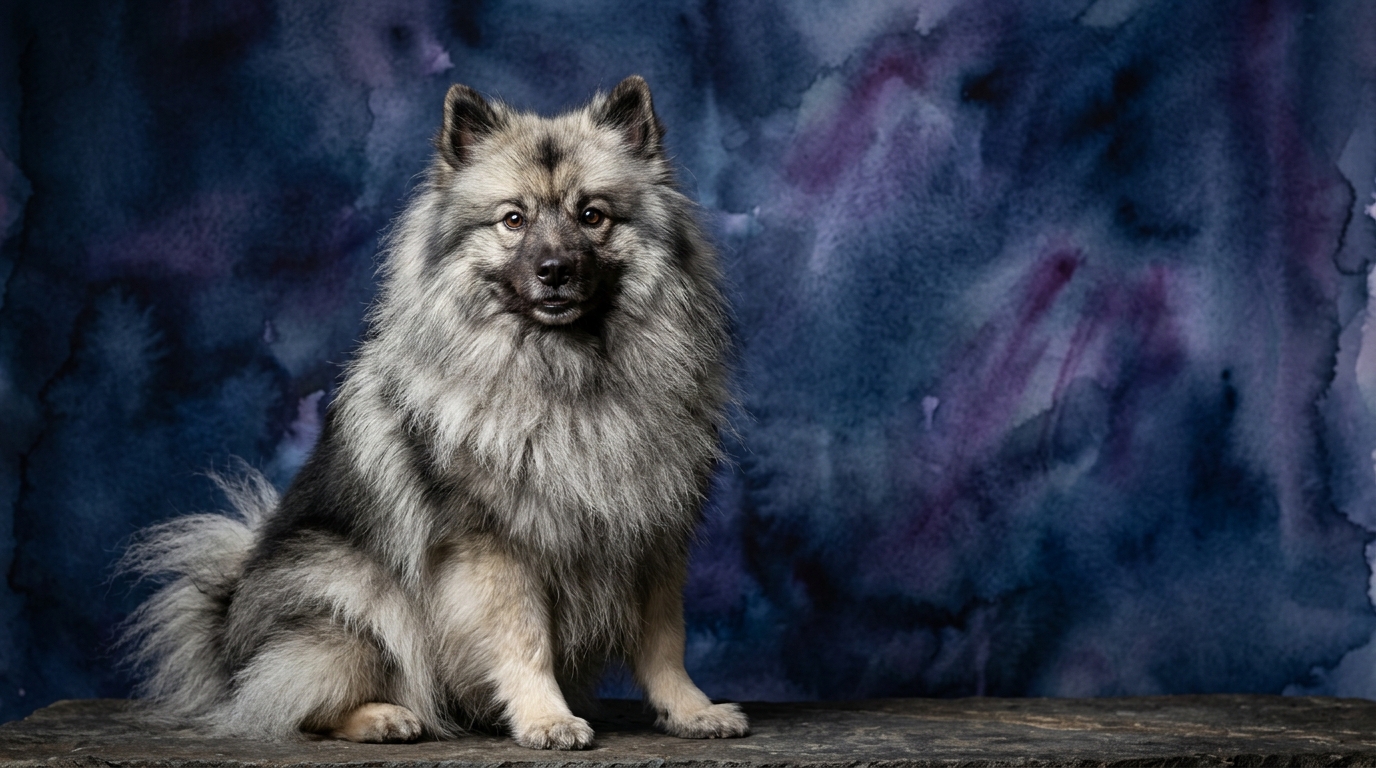
Side-by-Side Cognitive Profile: Shih Tzu vs. Keeshond
The Cosmic Pet Pet IQ Lab employs a comprehensive five-dimensional framework to assess canine intelligence, offering a nuanced view beyond simple obedience. For the Shih Tzu, ranked #70 by Coren, and the Keeshond, a more highly ranked #16, these dimensions paint distinct pictures of their mental landscapes.
The Shih Tzu's Problem Solving score of 3/5 suggests a moderate capacity for independent thought and navigating novel challenges. They are capable of figuring things out but may not consistently seek out complex mental puzzles. Training Speed at 2/5 indicates they learn new commands at a slower pace, often requiring more repetition and patience from their human companions. Their Social Intelligence, however, is exceptional at 5/5, meaning they are incredibly perceptive of human emotions and social cues, forming deep, empathetic bonds. Instinctive Drive, at 2/5, is relatively low, implying less motivation for tasks rooted in ancestral working behaviors like herding or guarding. Finally, their Memory score of 3/5 suggests a reasonable ability to recall learned information and experiences, though perhaps not with the unwavering precision of some other breeds.
In contrast, the Keeshond demonstrates a stronger aptitude across several cognitive areas. Their Problem Solving score of 4/5 indicates a more pronounced ability to tackle new situations and learn through observation and trial-and-error. Training Speed, at a robust 4/5, means they generally pick up new commands and routines with efficiency and enthusiasm. Social Intelligence for the Keeshond stands at 3/5; while friendly and engaging, they might be less acutely tuned into the subtle emotional fluctuations of their human counterparts compared to the Shih Tzu. An Instinctive Drive of 3/5 shows a moderate inclination towards their historical roles as watchdogs and companions, giving them a more purpose-driven engagement with their environment. Most notably, the Keeshond excels in Memory with a perfect 5/5, suggesting an outstanding ability to retain learned behaviors, recognize routines, and remember past interactions with remarkable clarity.
Where the Shih Tzu Excels Cognitively
The Shih Tzu's primary cognitive strength lies in their unparalleled Social Intelligence, scoring a perfect 5/5. This isn't merely about being friendly; it signifies a profound ability to read human body language, tone of voice, and even subtle emotional states. A Shih Tzu can often sense when their owner is upset or needs comfort, responding with intuitive affection and presence. This makes them exceptional emotional support animals and deeply attuned companions, thriving on close interaction and reciprocal emotional connection. Their moderate Problem Solving, coupled with low Instinctive Drive, means they are generally content with a less structured routine and derive satisfaction from companionship rather than complex tasks, making them perfectly suited to a life centered around human interaction.
Where the Keeshond Shows Cognitive Dominance
The Keeshond's cognitive profile showcases a distinct advantage in areas requiring retention and application of learned information. Their 5/5 Memory score is a standout feature, enabling them to quickly master complex sequences, recall commands even after long periods, and consistently apply past lessons to new scenarios. This robust memory, combined with a 4/5 in both Problem Solving and Training Speed, means Keeshonds are highly capable learners who enjoy mental engagement. They thrive on challenges that allow them to utilize their quick wit and excellent recall, making them adept at advanced obedience, agility, or even learning intricate tricks. Their moderate Instinctive Drive also provides a sustained motivation for engagement and purpose, underpinning their drive to learn and perform.
Ease of Training: Behavioral Differences Revealed
When it comes to ease of training, the Keeshond generally presents a more straightforward experience due to their higher Training Speed (4/5) and exceptional Memory (5/5). They tend to grasp new commands quickly and retain them over time, often eager to participate in training sessions. Their moderate Instinctive Drive also means they can be motivated by tasks and a sense of purpose. Conversely, the Shih Tzu's Training Speed of 2/5 indicates that training may require more patience, repetition, and creative motivation techniques. While they are highly social and desire to please, their lower drive and moderate memory can lead to slower progress and a tendency to 'forget' commands if not consistently reinforced. A Shih Tzu might be more inclined to use their considerable social intelligence to charmingly divert attention rather than strictly adhere to a task, whereas a Keeshond is more likely to focus intently on the lesson at hand.
Matching Breeds to Lifestyles: Active vs. Relaxed Owners
The cognitive profiles of these two breeds offer clear guidance for matching them with appropriate owner lifestyles. The Shih Tzu, with its lower Instinctive Drive (2/5) and moderate Problem Solving (3/5), is an ideal companion for relaxed owners or those seeking a devoted indoor pet. They do not require extensive mental stimulation or physical exertion to be content; their primary need is close human companionship and affection, which aligns perfectly with their superior Social Intelligence. An owner who values quiet cuddles, gentle walks, and a dog deeply attuned to their emotional state will find the Shih Tzu a perfect fit.
The Keeshond, on the other hand, with its higher scores in Problem Solving (4/5), Training Speed (4/5), and Memory (5/5), combined with a moderate Instinctive Drive (3/5), thrives with more active and engaged owners. These dogs benefit significantly from regular mental challenges such as puzzle toys, advanced training classes, or dog sports like agility. Their excellent memory and problem-solving skills mean they will quickly become bored and potentially disruptive if their minds are not regularly exercised. Owners who enjoy teaching new tricks, engaging in structured play, or participating in outdoor adventures will find the Keeshond an enthusiastic and capable partner.
The Verdict: When to Choose Each Breed
The Verdict
Choose a Shih Tzu if your priority is an emotionally intuitive, highly social companion content with a relaxed lifestyle and offering profound emotional connection.
Opt for a Keeshond if you seek an intelligent, trainable, and mentally engaged partner who thrives on learning, challenges, and an active, structured routine.
🧠 Find Your Pet's IQ Score
Our Pet IQ Lab assessment covers 25+ tests across 5 cognitive dimensions — personalized to your breed.
Take the Full IQ Test →Frequently Asked Questions
Are Shih Tzus difficult to train?
Shih Tzus are not inherently difficult, but their Training Speed of 2/5 means they learn at a slower pace than many breeds. Owners should be prepared for consistent, patient, and positive reinforcement training, often requiring more repetition to solidify commands.
Do Keeshonds require a lot of mental stimulation?
Yes, Keeshonds, with their 4/5 Problem Solving and 5/5 Memory, benefit greatly from regular mental engagement. Without sufficient mental challenges, they can become bored, potentially leading to undesirable behaviors, so puzzle toys and training are highly recommended.
Which breed is better for first-time dog owners?
For first-time owners seeking a more straightforward training experience and a dog that quickly picks up commands, the Keeshond might be an easier choice due to its higher Training Speed and Memory. However, a Shih Tzu's exceptional Social Intelligence makes them very forgiving and adaptable, which can also be beneficial for novices willing to invest extra patience in training.