
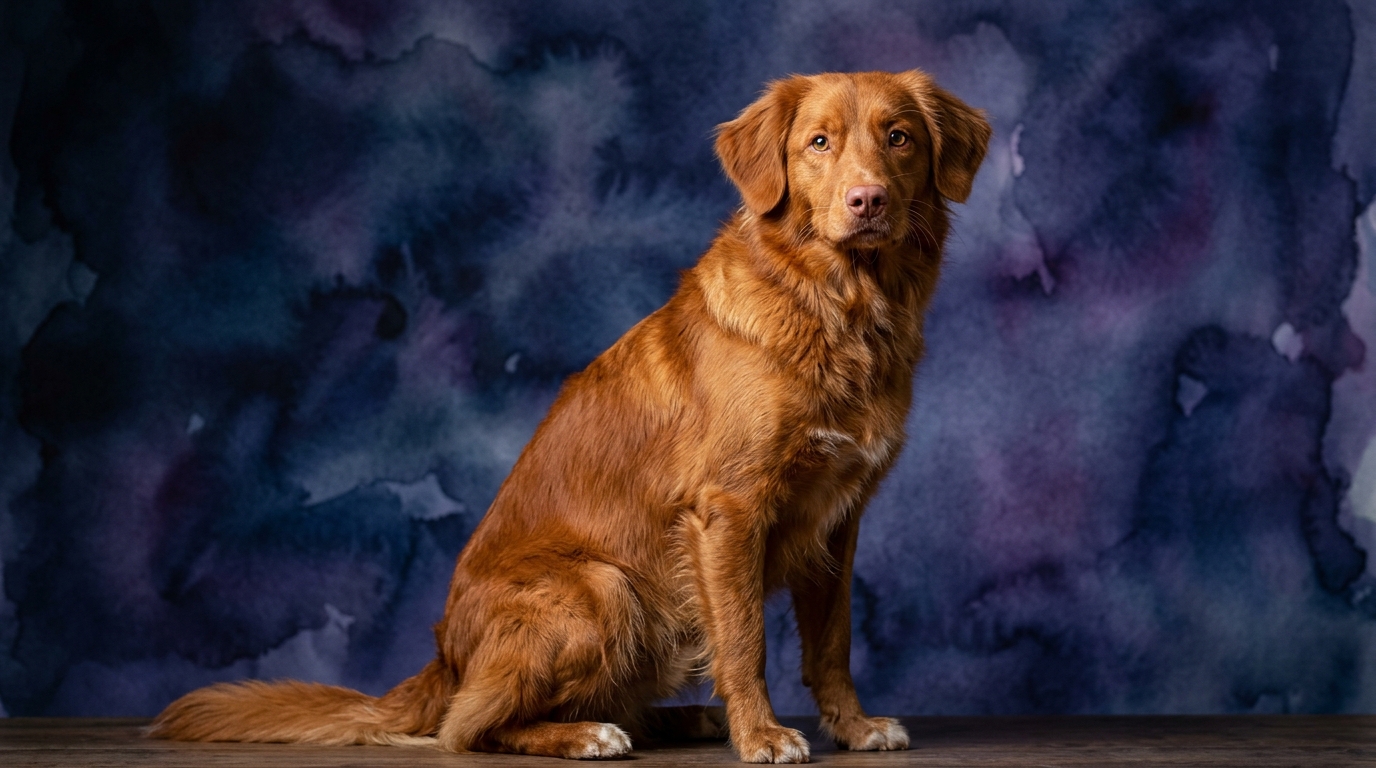
Side-by-Side IQ Profile: Shih Tzu vs. Nova Scotia Duck Tolling Retriever
The Cosmic Pet Pet IQ Lab's assessment offers a granular view into the cognitive makeup of these two distinct breeds. The Shih Tzu, ranked #70 by Coren, demonstrates a balanced cognitive profile with particular strengths in social interaction. Their problem-solving ability scores a modest 3/5, suggesting they can navigate common household challenges but may not excel at complex puzzles requiring abstract thought. Training speed is rated 2/5, indicating that consistent, patient methods are crucial for effective learning, often requiring more repetition. However, their social intelligence shines at 5/5, making them exceptionally adept at reading human emotions and integrating into family dynamics. Instinctive drive is low at 2/5, reflecting their history as pampered companions rather than working dogs, and their memory is a solid 3/5, allowing them to retain learned behaviors and routines effectively.
The Nova Scotia Duck Tolling Retriever (Toller), though not Coren-ranked, presents a more uniformly capable cognitive profile. Their problem-solving ability is a competent 3/5, enabling them to figure out practical tasks and overcome obstacles in their environment. Training speed is a notable 3/5, indicating they generally pick up new commands and routines with reasonable efficiency and less repetition than a Shih Tzu. Social intelligence is rated 3/5, meaning they are generally good-natured and interactive but may not possess the same intuitive empathy as a Shih Tzu. Their instinctive drive is a robust 3/5, a testament to their heritage as active retrievers, giving them a natural inclination for work and engagement. Memory also stands at 3/5, ensuring they reliably recall training and experiences over time.
Where the Shih Tzu Wins Cognitively
The Shih Tzu's primary cognitive advantage lies in its exceptional social intelligence, rated 5/5. This isn't just about being friendly; it reflects a profound capacity to interpret human cues, moods, and intentions with remarkable accuracy. A Shih Tzu can often sense when a family member is distressed, offering comfort, or can subtly manipulate situations to get attention or treats through charming behaviors. This acute social awareness makes them highly adaptable to various household environments and particularly skilled at forming deep, intuitive bonds with their human companions. Their ability to read a room and understand social dynamics far surpasses many other breeds, allowing them to navigate complex family interactions with grace and often, a touch of playful mischief. This strength also contributes to their role as excellent emotional support animals, as they naturally attune to human emotional states and respond with appropriate, soothing presence.
Where the Nova Scotia Duck Tolling Retriever Wins Cognitively
The Nova Scotia Duck Tolling Retriever demonstrates a balanced cognitive profile where its instinctive drive and moderate training speed give it a distinct edge in active, task-oriented scenarios. With an instinctive drive of 3/5, Tollers possess a natural inclination for purposeful activity, stemming directly from their history as waterfowl retrievers. This drive translates into a willingness to engage in tasks, a keen interest in exploring their environment, and a sustained focus on retrieving or scent work. Coupled with a training speed of 3/5, they are generally quicker to grasp new commands and sequences than a Shih Tzu, especially when the training involves movement, problem-solving, or a reward for completion. This combination makes them highly proficient in dog sports like agility, obedience, and especially retrieving games, where their natural instincts align perfectly with the required cognitive engagement and physical exertion. Their problem-solving at 3/5 also supports their ability to strategize during complex tasks, like finding a hidden toy or navigating an obstacle course, making them adept at independent problem-solving within a structured activity.
Which is Easier to Train and Why
When considering ease of training, the Nova Scotia Duck Tolling Retriever generally holds an advantage over the Shih Tzu, primarily due to differences in training speed and instinctive drive. Tollers have a training speed rating of 3/5, indicating they are reasonably quick to learn new commands and routines, often requiring fewer repetitions to solidify a behavior. Their 3/5 instinctive drive means they naturally enjoy engaging in tasks and have a higher motivation to work alongside their human partners, especially when the training involves fetching, scent games, or physical activity. This inherent willingness to participate and their ability to stay focused for longer periods makes them responsive to positive reinforcement and consistent instruction, readily accepting new challenges.
In contrast, the Shih Tzu’s training speed is 2/5, suggesting a slower uptake of new concepts. Their lower instinctive drive (2/5) means they might lack the inherent motivation for structured training sessions and can be more easily distracted or perceive training as less engaging, often preferring to do things on their own terms. While they are certainly trainable, their learning often requires more patience, shorter, more frequent sessions, and a greater emphasis on making training feel like a game rather than a task, leveraging their social intelligence to build a strong bond that motivates compliance. For example, a Toller might quickly learn a multi-step retrieve sequence, while a Shih Tzu might require more repetition to master a simple 'sit' and 'stay' in a distracting environment, often needing the incentive of close human interaction or a highly valued treat.
Which Suits Active Owners vs. Relaxed Owners
The distinction between these two breeds in terms of suitability for active versus relaxed owners is quite clear, largely driven by their differing instinctive drives and physical needs. The Nova Scotia Duck Tolling Retriever, with its 3/5 instinctive drive, thrives with active owners who can provide ample physical exercise and mental stimulation. These dogs excel in environments where they can engage in long walks, runs, hiking, swimming, or participate in dog sports like agility, dock diving, or obedience trials. Their cognitive satisfaction comes from having a 'job' to do, whether it's retrieving a ball repeatedly or learning complex tricks. A Toller with insufficient outlets for its energy and drive can become bored, potentially leading to destructive behaviors or excessive vocalization, indicating their need for purposeful engagement.
Conversely, the Shih Tzu, with its lower instinctive drive of 2/5, is an ideal companion for relaxed owners. Their exercise needs are moderate, typically satisfied by short daily walks and indoor play sessions that are more focused on interaction than strenuous activity. Their social intelligence (5/5) means they are content to spend much of their time close to their human companions, enjoying cuddles and quiet companionship. While they enjoy play, it's usually less intense and shorter-lived than a Toller's, making them perfect for apartment living or homes with less outdoor space. A Shih Tzu fits seamlessly into a more sedentary lifestyle, valuing comfort and close human interaction above rigorous physical activity or demanding tasks, finding contentment in simply being near their family.
The Verdict
Choose a Shih Tzu if you prioritize a deeply bonded companion who excels at social interaction, requires moderate exercise, and thrives in a relaxed, indoor-centric lifestyle, valuing emotional connection over task-oriented engagement.
Opt for a Nova Scotia Duck Tolling Retriever if you lead an active lifestyle, are eager to engage in dog sports or outdoor adventures, and seek a driven, task-oriented partner who learns quickly and thrives on physical and mental challenges.
🧠 Find Your Pet's IQ Score
Our Pet IQ Lab assessment covers 25+ tests across 5 cognitive dimensions — personalized to your breed.
Take the Full IQ Test →Frequently Asked Questions
Is a Shih Tzu difficult to train?
While a Shih Tzu's training speed is rated 2/5, indicating they may take longer to grasp new concepts than some breeds, they are certainly trainable with patience and consistent positive reinforcement. Their strong social intelligence means they respond well to bond-based training and thrive on positive interaction.
Do Nova Scotia Duck Tolling Retrievers require a lot of mental stimulation?
Yes, with a 3/5 problem-solving ability and 3/5 instinctive drive, Tollers thrive on mental stimulation. They benefit from puzzle toys, regular training sessions, and activities that challenge their minds, preventing boredom and channeling their energy constructively into purposeful tasks.
Which breed is better with children, based on intelligence?
The Shih Tzu's 5/5 social intelligence makes them exceptionally adept at understanding social cues, which can translate to gentle and patient interactions with children, often adapting their play style. Tollers (3/5 social intelligence) are generally good with children but may require more supervision due to their higher energy and drive, which could be overwhelming for very young kids who might not understand their enthusiastic play.