
Side-by-Side Cognitive Profiles
The Cosmic Pet Pet IQ Lab employs a five-dimensional framework to assess canine cognition, providing a granular view of each breed's mental makeup. For the Shih Tzu, a member of the Toy group and holding a Coren rank of #70, its profile highlights a strong social orientation. Its Problem Solving is rated 3/5, indicating an adequate capacity for navigating daily challenges without exceptional ingenuity. Training Speed stands at 2/5, suggesting that learning new commands requires patience and consistent reinforcement. However, its Social Intelligence shines at 5/5, demonstrating an extraordinary ability to read and respond to human emotions and social cues. Instinctive Drive is low at 2/5, reflecting its primary role as a companion rather than a working dog, and Memory is 3/5, sufficient for retaining routines and basic commands.
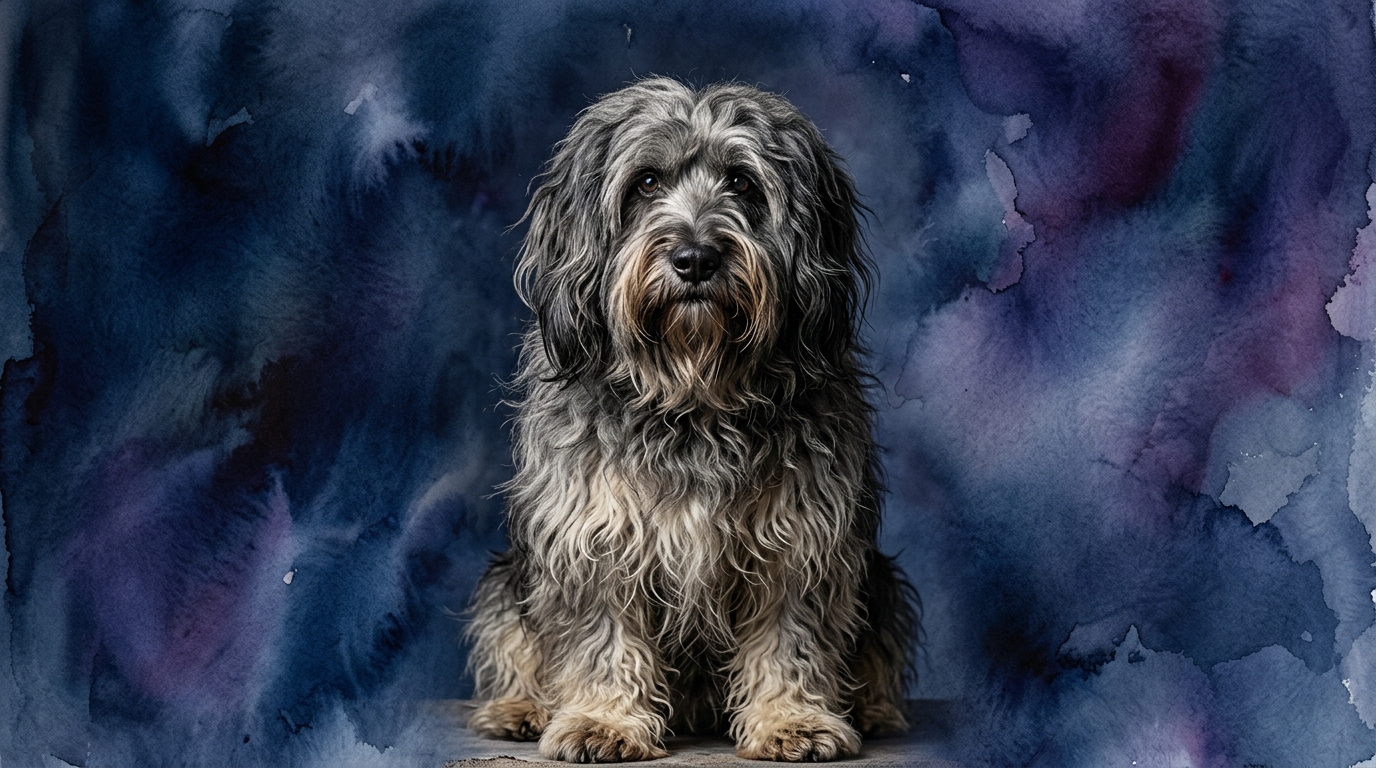
In contrast, the Polish Lowland Sheepdog, a robust Herding breed unranked by Coren but with a distinct working heritage, presents a more balanced cognitive spread. Its Problem Solving is also 3/5, indicating a practical intelligence often applied to real-world tasks. Training Speed is 3/5, suggesting a moderate ability to grasp new concepts, particularly when motivated by a clear purpose. Social Intelligence is 3/5, meaning it forms strong bonds with its family but can be more reserved or discerning with strangers. Its Instinctive Drive is 3/5, reflecting its inherent herding behaviors and a natural inclination towards managing its environment or flock. Memory is also 3/5, allowing it to retain complex sequences and experiences vital for its working role.
Where the Shih Tzu Excels Cognitively
The Shih Tzu's undeniable cognitive strength lies overwhelmingly in its exceptional Social Intelligence, scoring a perfect 5/5. This breed possesses an uncanny ability to interpret nuanced human emotions, intentions, and social dynamics. They are masters of non-verbal communication, often seemingly anticipating their owner's moods or desires. This high social acumen allows them to seamlessly integrate into family life, providing comfort, companionship, and emotional support without explicit instruction. Their cognitive processes are finely tuned to foster human-animal bonds, making them incredibly empathetic and responsive companions. This isn't merely about affection; it's a sophisticated understanding of their social environment and their place within it, enabling them to adapt their behavior to maintain harmony and connection. For instance, a Shih Tzu might instinctively offer comfort when detecting distress or engage playfully when sensing an invitation, all without a specific command.
Where the Polish Lowland Sheepdog Excels Cognitively
The Polish Lowland Sheepdog's cognitive edge emerges from a practical, purposeful intelligence, particularly in its combined Problem Solving (3/5), Training Speed (3/5), and Instinctive Drive (3/5). While not scoring an extreme high in any single dimension, their balanced profile makes them adept at real-world application and independent thought, especially within a task-oriented framework. Their herding background means they are wired to observe, analyze, and react to dynamic situations, often making decisions without direct human intervention. This problem-solving capability is less about abstract puzzles and more about navigating an environment, managing livestock, or understanding territory. Their moderate training speed is often amplified by their innate drive to have a 'job,' making them receptive to learning when the task has a clear purpose. For example, they can quickly learn complex obedience sequences or agility courses because these activities tap into their inherent desire for structure and accomplishment, demonstrating a functional cognitive capacity geared towards utility and independence.
Training Dynamics: Shih Tzu vs. Polish Lowland Sheepdog
When considering ease of training, the raw IQ scores for Training Speed (Shih Tzu 2/5, Polish Lowland Sheepdog 3/5) offer a starting point, but real behavioral differences paint a fuller picture. The Shih Tzu, with its lower training speed, often requires a more patient, positive, and game-oriented approach. Their independent spirit, combined with a high social intelligence, means they thrive when training feels like an interactive social activity rather than a rigid command session. They can be prone to 'selective hearing' if they perceive no immediate reward or if the training isn't engaging. Consistency is paramount, and owners must leverage their desire for companionship, making training an enjoyable bonding experience. Behavioral challenges like house-training might take longer due to their smaller bladder and sometimes less urgent drive to please through obedience.
The Polish Lowland Sheepdog, while possessing a slightly faster training speed, brings a different set of considerations. Their working dog heritage instills a desire for purpose and structure, which can make them eager learners for tasks they understand. However, their strong will and independent problem-solving nature mean they require a confident, consistent handler who can establish clear expectations. They might challenge boundaries if they perceive a lack of leadership. Training should be varied and mentally stimulating to prevent boredom, which can lead to unwanted behaviors. While they learn commands efficiently, ensuring compliance requires a deeper understanding of their herding instincts and channeling that drive into constructive activities. For instance, a Polish Lowland Sheepdog might quickly pick up 'stay,' but its inherent urge to patrol or herd might make holding the stay challenging without consistent reinforcement and engagement.
Suitability for Active vs. Relaxed Lifestyles
The distinct cognitive and instinctive profiles of these two breeds naturally align them with different owner lifestyles. The Shih Tzu, with its low instinctive drive (2/5) and exceptional social intelligence, is an ideal fit for relaxed owners. Their energy requirements are modest, content with short daily strolls and ample indoor playtime. Their primary need is for consistent social interaction and companionship, thriving in environments where they can be close to their human family. They are well-suited for apartment living or homes where extensive outdoor adventures are not a daily priority. Their cognitive focus on social cues means they are experts at fitting into a quiet, companion-oriented household, offering gentle affection and presence.
Conversely, the Polish Lowland Sheepdog, with its balanced cognitive scores and moderate instinctive drive (3/5), is better suited for active owners. This breed requires significant physical exercise and, crucially, mental stimulation to prevent boredom and channel its working instincts constructively. Long walks, hiking, dog sports like agility or obedience, and even opportunities for supervised 'herding' games are beneficial. Owners who enjoy an outdoor, engaged lifestyle and can provide consistent training and purposeful activities will find the Polish Lowland Sheepdog a rewarding partner. Without adequate stimulation, their problem-solving skills and drive can manifest in less desirable behaviors, as they will find their own 'jobs' around the house or yard.
The Cosmic Pet Verdict
Understanding the nuanced cognitive differences between the Shih Tzu and the Polish Lowland Sheepdog is key to selecting a canine companion that truly complements your lifestyle and expectations. These breeds, while both dogs, represent divergent evolutionary paths and specialized mental aptitudes.
The Shih Tzu's cognitive blueprint emphasizes social connection and emotional responsiveness. Their strength lies not in complex problem-solving or rapid task acquisition, but in their profound ability to navigate and enrich human social environments. They are masters of companionship, offering intuitive comfort and adapting their behaviors to foster harmonious coexistence. This makes them superb choices for individuals or families seeking a devoted, low-impact companion whose primary 'job' is to be a loving presence.
The Polish Lowland Sheepdog, on the other hand, embodies a more utilitarian and independent cognitive style. Their balanced scores in problem-solving, training speed, and instinctive drive reflect a history of purposeful work. They thrive on mental engagement and physical activity, demonstrating a practical intelligence geared towards understanding and executing tasks. Their social intelligence, while present, is often expressed through loyalty to their immediate family rather than universal affability. For owners who are prepared to provide consistent structure, stimulating activities, and appreciate a dog with a strong sense of purpose and independent thought, the Polish Lowland Sheepdog offers a deeply engaging partnership.
The Verdict
Opt for the Shih Tzu if your lifestyle prioritizes a highly socially attuned companion who thrives on close human interaction and requires less structured activity, fitting perfectly into a relaxed household environment.
Select the Polish Lowland Sheepdog if you're an active owner seeking a dog with a balanced cognitive profile, capable of purposeful work and independent thought, who will flourish with consistent mental and physical challenges.
🧠 Find Your Pet's IQ Score
Our Pet IQ Lab assessment covers 25+ tests across 5 cognitive dimensions — personalized to your breed.
Take the Full IQ Test →Frequently Asked Questions
Do Shih Tzus understand human emotions well?
Yes, Shih Tzus exhibit exceptional social intelligence, scoring 5/5 in this dimension. They are highly adept at interpreting subtle human cues, responding empathetically, and forming deep emotional connections with their family members.
What kind of mental stimulation does a Polish Lowland Sheepdog need?
The Polish Lowland Sheepdog, with its herding heritage, benefits from activities that engage its problem-solving and instinctive drive. This includes obedience training, puzzle toys, herding games, or agility to satisfy their need for purposeful engagement.
Is a Shih Tzu or a Polish Lowland Sheepdog better for a first-time dog owner?
A Shih Tzu often presents fewer challenges for a first-time owner due to their lower exercise needs and generally adaptable nature. The Polish Lowland Sheepdog's strong will and need for consistent, structured training might be more demanding for someone new to dog ownership.