
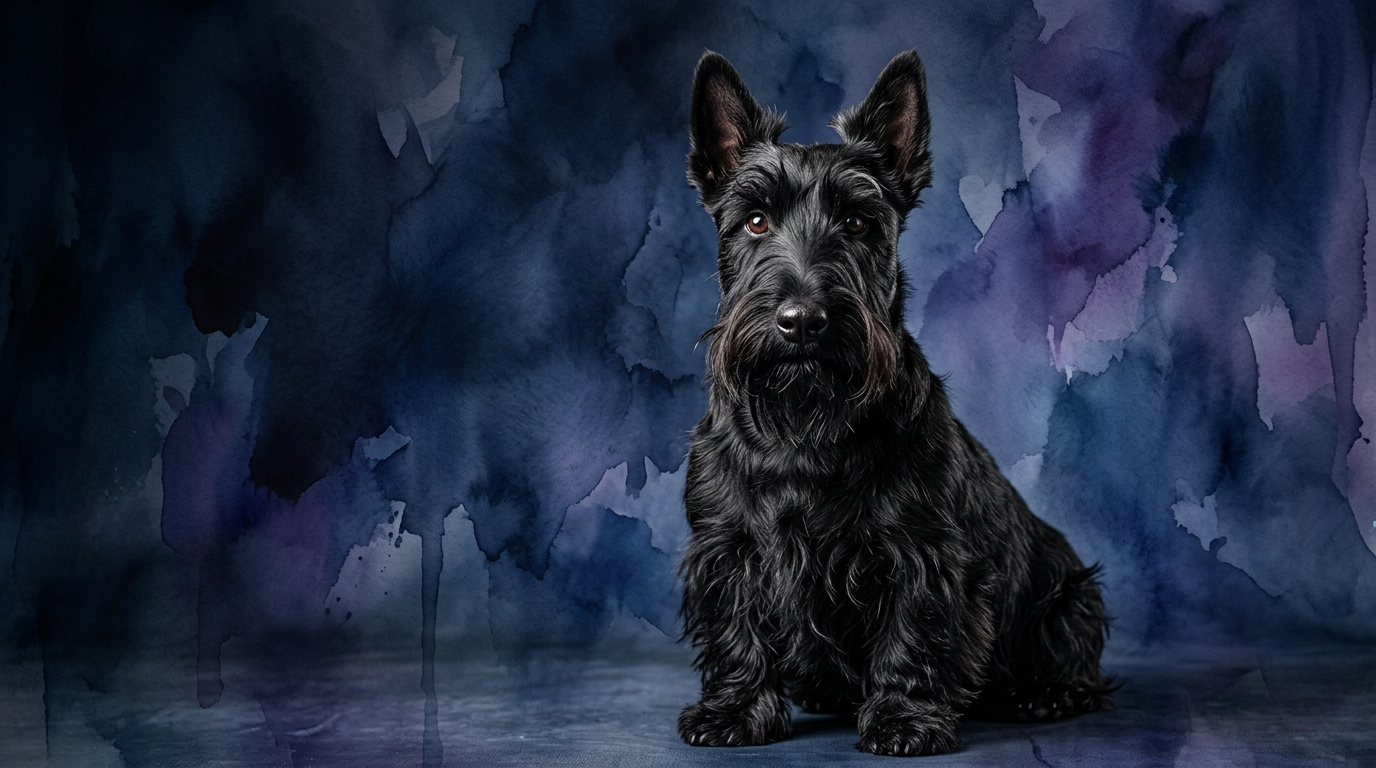
Side-by-Side IQ Profile: Shih Tzu vs. Scottish Terrier
**Shih Tzu (Toy Group, Coren Rank #70)**
**Problem Solving (3/5):** The Shih Tzu shows an average capacity for navigating household challenges and learning routines. They often leverage observation of human behavior rather than complex logical deduction to figure things out.
**Training Speed (2/5):** Learning new commands can be a slower process for a Shih Tzu. Their independent spirit and preference for comfort mean training demands significant patience, consistency, and highly motivating rewards.
**Social Intelligence (5/5):** This is the Shih Tzu's standout strength. They possess an exceptional ability to read human emotions, adapt to social cues, and form deep, intuitive bonds. Their capacity for empathy and companionship is outstanding.
**Instinctive Drive (2/5):** Bred primarily for companionship, the Shih Tzu exhibits a low instinctive drive. They have minimal prey drive and are not typically motivated by hunting or guarding tasks, preferring a relaxed, indoor lifestyle.
**Memory (3/5):** Shih Tzus have an average memory, capable of retaining learned commands and routines over time, though not always with perfect recall for complex sequences.
**Scottish Terrier (Terrier Group, Coren Rank #65)**
**Problem Solving (3/5):** The Scottish Terrier also scores an average 3/5. Their approach is often characterized by determined persistence; they will work at a task, like a puzzle toy, with single-minded focus until successful.
**Training Speed (3/5):** With a slightly higher score, the Scottish Terrier shows average training speed. They learn commands effectively, but their independent, sometimes stubborn, terrier nature means consistent execution requires a firm yet fair hand.
**Social Intelligence (3/5):** Scottish Terriers possess average social intelligence. While forming strong bonds with family, they are often less overtly demonstrative and more reserved with strangers, valuing independence alongside companionship.
**Instinctive Drive (3/5):** As a true terrier, the Scottish Terrier retains a noticeable instinctive drive. This manifests as a moderate prey drive, an enjoyment of digging, and a watchful nature, thriving when given outlets for these behaviors.
**Memory (3/5):** Scottish Terriers exhibit an average memory, similar to the Shih Tzu. They remember training and routines, with any perceived "forgetfulness" often stemming from their strong-willed personality rather than a cognitive deficit.
Where the Shih Tzu Wins Cognitively
The Shih Tzu's preeminent cognitive strength lies unequivocally in their social intelligence, scoring a perfect 5 out of 5. This breed possesses an extraordinary capacity to perceive and respond to human emotions and social dynamics, making them unparalleled companions. They are masters at reading subtle cues, offering comfort, and adapting their behavior to the household's mood. This isn't just affection; it’s a sophisticated understanding of their human environment, allowing them to integrate seamlessly and provide profound emotional support. Their charm is a powerful cognitive tool, enabling them to navigate their world by influencing human behavior with subtle requests and endearing displays.
Where the Scottish Terrier Wins Cognitively
The Scottish Terrier demonstrates its cognitive advantages primarily in training speed and a more pronounced instinctive drive. While both breeds score similarly in problem-solving and memory, the Scottie’s 3/5 training speed, coupled with its Coren rank of #65, indicates a quicker aptitude for formal obedience learning. Their terrier tenacity, a facet of their instinctive drive, translates into a determined focus that can be channeled effectively in training for worthwhile tasks. This drive also means they are more inclined to engage with activities satisfying natural inclinations for exploration, scent work, or playful "hunting" games, offering a different kind of mental engagement.
Which is Easier to Train and Why
Between these two breeds, the Scottish Terrier generally presents as easier to train for obedience tasks, largely due to its slightly higher training speed score (3/5 vs. Shih Tzu's 2/5) and its Coren rank. Scottish Terriers, while independent, possess a drive to engage in purposeful activities, which can be harnessed during training. They respond well to clear, consistent instruction and can learn a range of commands with moderate repetition. In contrast, the Shih Tzu’s lower training speed score reflects a breed that often prioritizes comfort and social interaction over strict adherence to commands. Their independent nature and tendency to be easily distracted by their surroundings or desire for cuddles mean that training requires exceptional patience, highly motivating rewards, and a lighthearted, persistent approach to overcome their inherent inclination to do things on their own terms.
Which Suits Active Owners vs. Relaxed Owners
The Shih Tzu is an ideal match for relaxed owners or those seeking a devoted companion who thrives in a calmer, indoor environment. Their low instinctive drive and preference for comfort make them content with shorter, leisurely strolls and ample lap time, adapting wonderfully to apartment living. They are perfectly suited for individuals or families who value quiet companionship and emotional connection over vigorous outdoor adventures. The Scottish Terrier, conversely, appeals to slightly more active owners who appreciate a dog with a spirited personality and a need for engaging mental and physical outlets. While not requiring marathon runs, they benefit from regular, structured walks, opportunities for scent work, and puzzle toys to satisfy their moderate instinctive drive and problem-solving tendencies. They are best for those who enjoy channeling a dog's inherent tenacity into constructive activities.
The Verdict
Choose a Shih Tzu if your lifestyle prioritizes deep emotional connection, a calm home environment, and a companion adept at social nuances.
Opt for a Scottish Terrier if you appreciate a spirited, independent companion who thrives on purposeful engagement and moderate activity.
🧠 Find Your Pet's IQ Score
Our Pet IQ Lab assessment covers 25+ tests across 5 cognitive dimensions — personalized to your breed.
Take the Full IQ Test →Frequently Asked Questions
Do Shih Tzus and Scottish Terriers get along with other pets?
Shih Tzus, with their high social intelligence, generally adapt well to other pets, often seeking harmonious coexistence. Scottish Terriers can be more selective; while they can live peacefully with other animals, their terrier instincts might make them more assertive, especially with smaller creatures.
How much mental stimulation do these breeds need daily?
Shih Tzus benefit from daily interaction, short training sessions, and puzzle toys that engage their social cleverness, often satisfied with 30 minutes of focused mental play. Scottish Terriers require slightly more structured mental challenges, such as advanced training, scent games, or interactive toys, for about 45-60 minutes daily to keep their determined minds engaged.
Are Shih Tzus or Scottish Terriers better for first-time dog owners?
Shih Tzus are often more forgiving for first-time owners due to their adaptable social nature and lower exercise requirements, though their training can test patience. Scottish Terriers, while trainable, may be more challenging for novices due to their independent streak and need for consistent, firm guidance to manage their terrier personality effectively.