
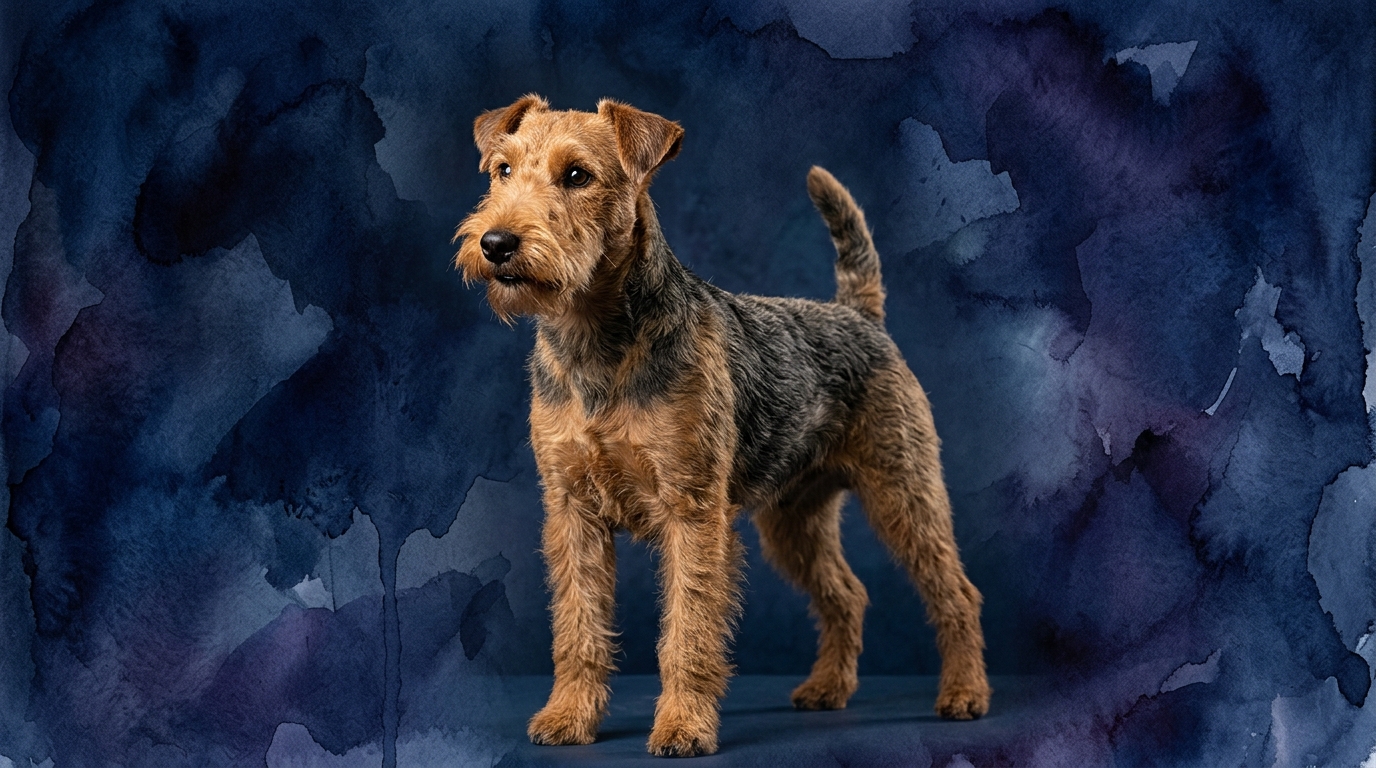
Side-by-Side IQ Profile: Shih Tzu vs. Welsh Terrier
The Cosmic Pet IQ Lab assesses canine intelligence across five key dimensions, offering a nuanced view beyond simple obedience. For the Shih Tzu and Welsh Terrier, while their overall problem-solving capacity registers similarly, their cognitive profiles diverge significantly in other areas, painting distinct pictures of their inner workings.
**Shih Tzu (Coren Rank #70)**
**Problem Solving (3/5):** The Shih Tzu demonstrates a moderate ability to navigate everyday challenges, often relying on learned routines or direct observation. They are proficient at figuring out pathways to comfort or how to manipulate their environment for attention, but less inclined towards complex, abstract problem-solving scenarios that don't directly benefit their immediate well-being or social goals.
**Training Speed (2/5):** Learning new commands can be a gradual process for the Shih Tzu, requiring consistent, positive reinforcement and a patient approach. Their independent nature and preference for leisure mean trainers must make lessons highly engaging and rewarding to overcome their occasional disinterest in performing tasks that aren't inherently linked to comfort or affection.
**Social Intelligence (5/5):** This is where the Shih Tzu truly shines. They possess an exceptional capacity to read and respond to human emotions, understanding subtle social cues and forming profoundly empathetic bonds. They often anticipate their owner's moods and needs, offering comfort or seeking interaction with remarkable intuition, making them intuitive emotional companions.
**Instinctive Drive (2/5):** The Shih Tzu exhibits a low intrinsic drive for traditional working dog tasks like hunting, herding, or guarding. Their instincts are primarily geared towards companionship, maintaining a comfortable domestic existence, and social interaction, rather than vigorous outdoor pursuits or task-oriented behaviors.
**Memory (3/5):** Shih Tzus have a moderate memory, reliably recalling familiar routines, people, and the layout of their home environment. They can retain learned commands with regular practice, though less frequently reinforced tasks might require refreshers due to their moderate retention for non-socially driven information.
**Welsh Terrier (Not Coren-Ranked)**
**Problem Solving (3/5):** The Welsh Terrier shows a solid, practical approach to problem-solving, often using persistence and trial-and-error to achieve its goals, especially when motivated by curiosity or a reward. They are adept at figuring out how to access interesting objects or navigate physical barriers, demonstrating a resourceful intelligence in their immediate environment.
**Training Speed (3/5):** With a moderate training speed, Welsh Terriers are generally receptive to learning new commands and tricks. They respond well to varied, engaging training sessions that tap into their energetic and inquisitive nature, though their inherent terrier stubbornness means consistency and clear boundaries are crucial for effective instruction.
**Social Intelligence (3/5):** Welsh Terriers possess a moderate level of social intelligence, capable of forming strong, affectionate bonds with their families and understanding human communication. While they appreciate interaction and play, their expressions of affection might be more activity-based rather than overtly empathetic or anticipatory of emotional states, compared to some companion breeds.
**Instinctive Drive (3/5):** This breed retains a distinct terrier instinctive drive, characterized by a keen interest in digging, chasing, and exploring. This inherent curiosity and drive to investigate, rooted in their working heritage, makes them engaging companions for active pursuits but also requires management to prevent unwanted behaviors like persistent digging.
**Memory (3/5):** Welsh Terriers demonstrate a reliable memory for learned commands, routines, and environmental details, especially when these are reinforced through consistent training and positive experiences. They can effectively recall past lessons and navigate familiar territories, applying their memory to practical situations.
Where the Shih Tzu Wins Cognitively
The Shih Tzu's unparalleled social intelligence (5/5) truly sets it apart in the cognitive landscape. They possess an exceptional ability to interpret subtle human cues, emotional states, and even unspoken desires, making them remarkably attuned companions. This isn't merely about cuddling; it's a sophisticated capacity for emotional resonance, allowing them to offer comfort or solicit attention with uncanny timing. Their problem-solving, while moderate (3/5), often manifests in socially clever ways, like finding the optimal spot for affection or subtly nudging an owner for a treat, demonstrating their focus on interaction. This deep social awareness means they navigate complex human household dynamics with grace, often acting as intuitive emotional barometers for their families. Their moderate memory (3/5) is particularly strong for social routines and the people they cherish, reinforcing their role as empathetic companions.
Where the Welsh Terrier Wins Cognitively
The Welsh Terrier's cognitive strengths lie in its balanced package of problem-solving (3/5), training speed (3/5), and instinctive drive (3/5). While its problem-solving matches the Shih Tzu, the Welsh Terrier often applies it with more tenacious persistence, particularly when a goal, like a hidden toy or a potential digging spot, is in sight. Their training speed, a point higher than the Shih Tzu, suggests a slightly quicker grasp of new commands, coupled with a stronger inclination to engage in structured learning activities. This breed's instinctive drive, reflecting its terrier heritage, empowers it with a curiosity and exploratory nature that the Shih Tzu lacks. This translates into a dog eager to investigate, track scents, and engage with its environment in a more physical and investigative manner, utilizing its memory (3/5) to recall interesting locations or past challenges.
Which is Easier to Train, and Why?
Based on their respective 'training speed' scores, the Welsh Terrier (3/5) generally presents as somewhat easier to train than the Shih Tzu (2/5). The Shih Tzu’s independent streak, coupled with its strong preference for comfort and social interaction over rigorous task engagement, often necessitates more patience and highly enticing rewards during training. They might understand a command, but their motivation to perform a learned behavior consistently can waver if they deem it less appealing than lounging or soliciting attention. For instance, a Shih Tzu might understand 'sit' but choose not to execute it if it perceives no immediate benefit, or if it finds the process tedious, reflecting their strong social and comfort drives.
In contrast, the Welsh Terrier's moderate training speed and balanced instinctive drive mean it's often more receptive to structured learning. While they possess terrier stubbornness, their inherent drive to engage and explore can be channeled into training exercises. They are often more motivated by challenges and the opportunity to work alongside their human, making them more consistent in responding to commands once learned. A Welsh Terrier might be more inclined to master a retrieve command because it aligns with its playful and active nature, whereas a Shih Tzu might prefer to watch the toy from the comfort of a lap, showcasing their differing motivations.
Suited for Active vs. Relaxed Owners
For owners seeking a more relaxed, companion-focused lifestyle, the Shih Tzu is often the more suitable choice. Their lower instinctive drive (2/5) and profound social intelligence (5/5) mean they thrive on close human interaction, comfort, and a generally calmer pace of life. They are content with moderate indoor play and shorter, gentle strolls, preferring to spend much of their time in the company of their family, offering quiet companionship. Their cognitive profile aligns perfectly with an owner who values emotional connection and a less demanding physical routine.
Conversely, the Welsh Terrier caters to more active owners who appreciate a dog with a zest for exploration and engagement. Its balanced instinctive drive (3/5) and moderate social intelligence (3/5) mean it benefits from regular physical activity, stimulating games, and opportunities to investigate its surroundings. They are excellent partners for brisk walks, hikes, or even dog sports, and their problem-solving (3/5) is often applied to figuring out new challenges in an active setting. Owners who enjoy outdoor adventures and can provide consistent mental and physical stimulation will find a rewarding match in the Welsh Terrier.
The Verdict
Choose the Shih Tzu if your priority is an emotionally intuitive companion who excels at social bonding and thrives in a relaxed, comfort-oriented household, valuing deep connection over rigorous activity.
Opt for the Welsh Terrier if you seek an engaging, moderately active partner eager for structured play and exploration, aligning with an owner who can provide consistent stimulation and channel its spirited terrier drives.
🧠 Find Your Pet's IQ Score
Our Pet IQ Lab assessment covers 25+ tests across 5 cognitive dimensions — personalized to your breed.
Take the Full IQ Test →Frequently Asked Questions
Do Shih Tzus get bored easily if not mentally stimulated?
Shih Tzus, with their lower instinctive drive, are less prone to boredom from a lack of complex mental challenges compared to working breeds. However, they do require consistent social interaction and can become lonely or seek attention if their emotional needs aren't met, using their high social intelligence to communicate this.
How does the Welsh Terrier's instinctive drive manifest in daily life?
The Welsh Terrier's instinctive drive often manifests as a strong urge to explore, dig, and chase small critters, reflecting its terrier heritage. This means they benefit from secure yards, leashed walks, and puzzle toys that satisfy their innate curiosity and need for engagement.
Is one breed more prone to destructive behavior if under-stimulated?
The Welsh Terrier, with its higher instinctive drive and need for activity, is more likely to engage in destructive behaviors like digging or chewing if under-stimulated mentally or physically. The Shih Tzu, primarily driven by social needs, might become clingy or vocal if neglected emotionally, rather than physically destructive.