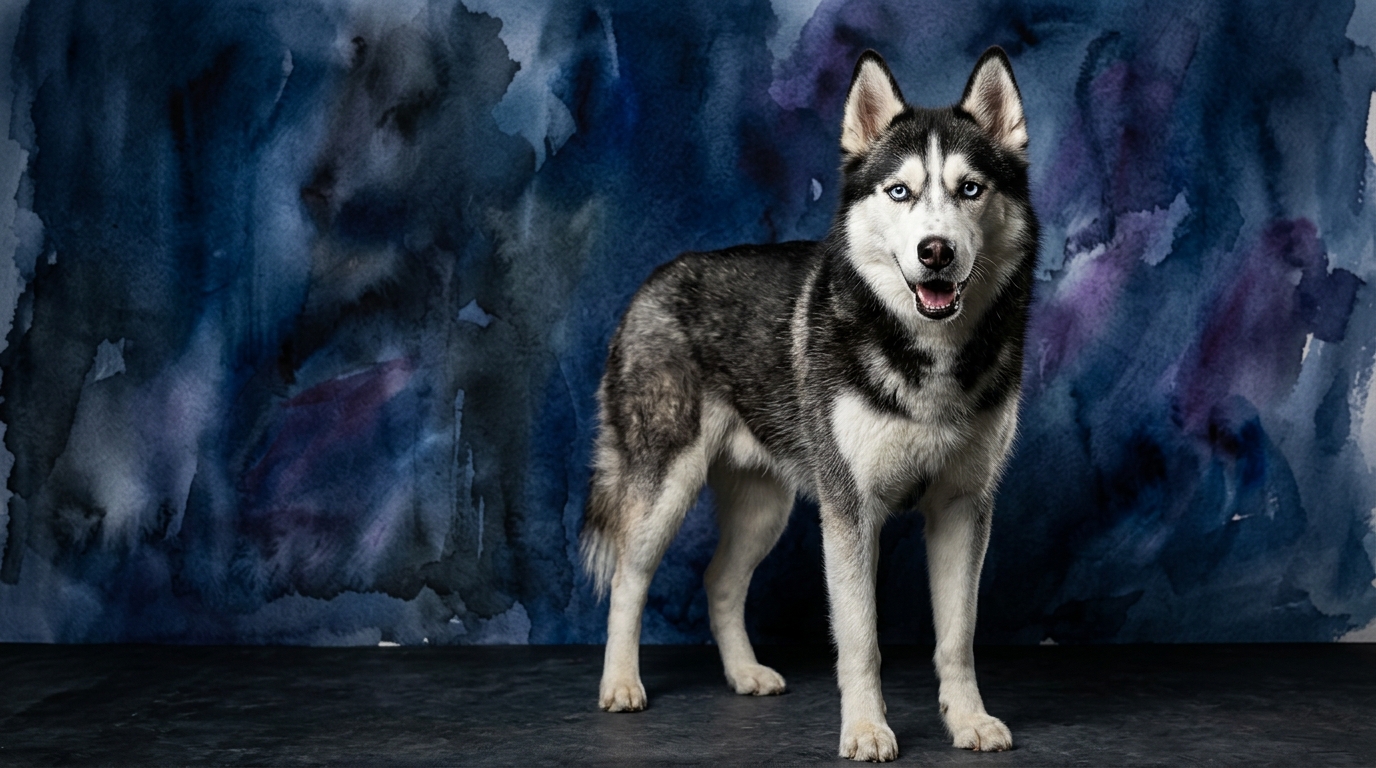
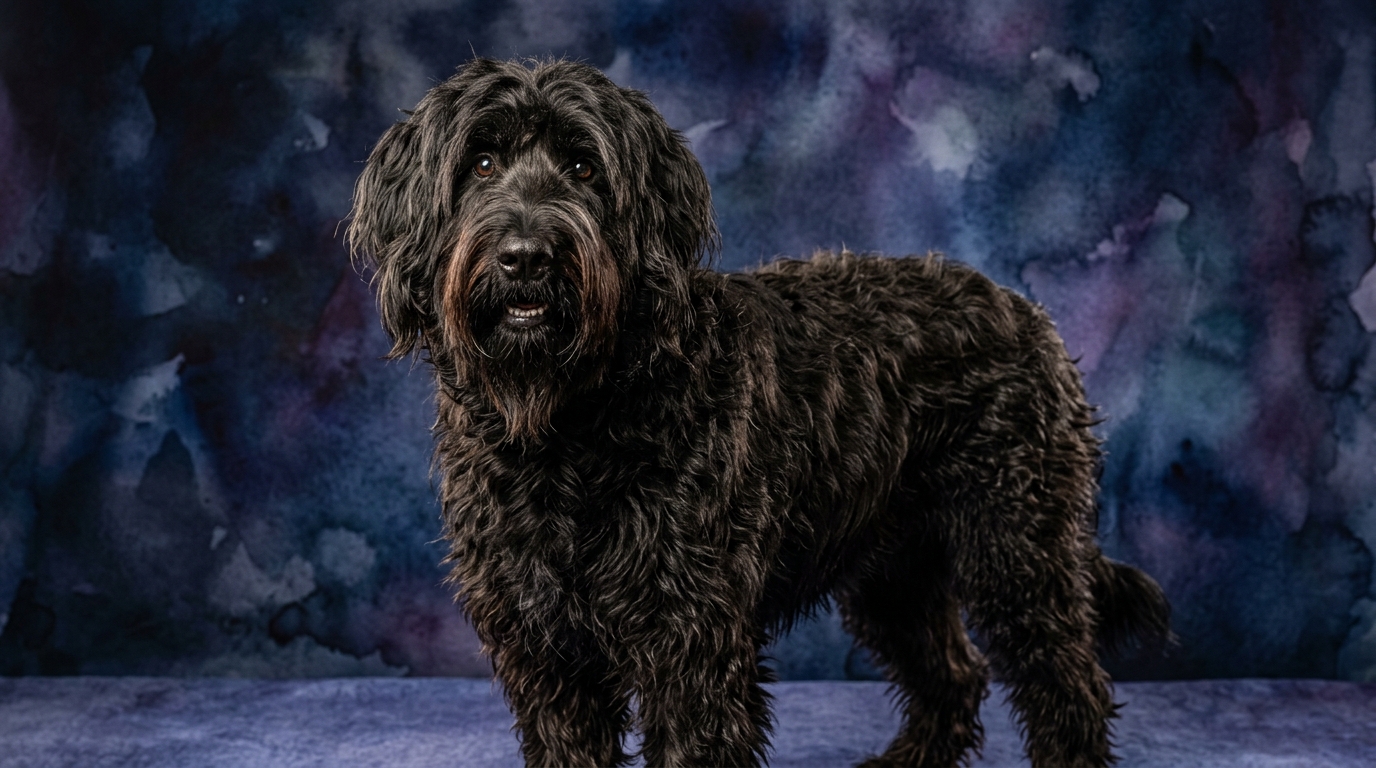
Side-by-Side IQ Profile: Husky vs. Briard
The Cosmic Pet Pet IQ Lab employs a five-dimensional framework to assess canine intelligence, offering a nuanced view beyond simple rankings. For the Siberian Husky, a Working group dog with a Coren rank of #45, its profile showcases a unique blend of independence and adaptability. Its Problem Solving is rated at 4/5, reflecting its resourcefulness in challenging environments and its ability to navigate complex situations without constant human direction. Training Speed, however, stands at 2/5, indicating a strong-willed nature that requires patience and engaging methods. Social Intelligence is 3/5, as Huskies generally interact well with both people and other dogs, often displaying a pack mentality rather than intense handler focus. Its Instinctive Drive is a powerful 5/5, fueled by an inherent urge to run, pull, and explore. Finally, its Memory is 4/5, enabling it to retain routes, routines, and past experiences with remarkable clarity.
In contrast, the Briard, a Herding group dog ranked #30 by Coren, presents a different cognitive emphasis. Its Problem Solving also scores 4/5, but this manifests in strategic thinking for guarding and herding tasks, assessing situations and adapting its approach. Training Speed is notably higher at 4/5, suggesting a greater eagerness to engage and a quicker grasp of commands. Social Intelligence is 3/5, characterized by deep devotion to its family but often a reserved or watchful demeanor with strangers. Its Instinctive Drive is a moderate 3/5, encompassing its protective and herding tendencies in a more controlled manner than the Husky. Like the Husky, its Memory is 4/5, allowing it to retain learned behaviors, recognize family members, and anticipate routines effectively.
Where the Siberian Husky Excels Cognitively
The Siberian Husky's cognitive strengths are deeply rooted in its heritage as an endurance sled dog. Its 4/5 Problem Solving ability shines brightest in scenarios demanding self-reliance and environmental mastery. Huskies are adept at navigating complex terrains, remembering intricate routes over long distances, and making independent decisions to ensure the team's progress or safety, even in the absence of direct human instruction. This breed demonstrates exceptional resourcefulness in finding solutions to physical obstacles, whether it's figuring out how to bypass a barrier on a trail or ingeniously escaping an enclosure. Their 5/5 Instinctive Drive, specifically the powerful urge to explore and cover ground, is coupled with a cognitive capacity to assess risks and opportunities in dynamic outdoor environments. Their memory for the lay of the land and past experiences allows them to operate with a remarkable degree of autonomy, a trait crucial for survival and performance in harsh conditions.
Where the Briard Excels Cognitively
The Briard's cognitive advantages are evident in its role as a perceptive herding and guardian dog. Its 4/5 Problem Solving capability manifests as strategic thinking in managing livestock or protecting its family, where it can assess threats and react with measured, appropriate responses. The Briard's superior Training Speed (4/5) compared to the Husky allows it to grasp and apply complex command sequences with relative quickness and consistency, making it highly amenable to structured learning. This breed exhibits a nuanced social understanding, particularly within its family unit, often anticipating needs and providing comfort or protection without explicit cues. Their memory, also 4/5, combined with their desire for purposeful engagement, enables them to build a robust repertoire of learned behaviors and routines, making them highly responsive and adaptable partners in tasks requiring precision and focus.
Which is Easier to Train and Why
When comparing ease of training, the Briard distinctly holds an advantage over the Siberian Husky. The Briard's Training Speed of 4/5, coupled with its moderate Instinctive Drive (3/5), indicates a breed generally eager to engage with its handler and quick to understand commands. Briards often find motivation in pleasing their owners and thrive on structured interaction, making positive reinforcement highly effective. Their herding background instills a responsiveness to direction and a desire for a 'job,' which translates into a more cooperative attitude during training sessions.
Conversely, the Siberian Husky's Training Speed of 2/5 and powerful Instinctive Drive of 5/5 present a different training challenge. Huskies are independent thinkers, and their strong drive to run, explore, and chase often takes precedence over immediate compliance. They may understand a command perfectly but choose not to execute it if it conflicts with their perceived interests or natural inclinations. Training a Husky demands exceptional patience, creativity, and consistency, focusing on making the desired behavior more rewarding than their independent impulses. Their 'selective hearing' is less about a lack of understanding and more about a calculated decision to prioritize their own agenda, requiring an owner to be a compelling leader rather than a mere instructor.
Suitability for Active vs. Relaxed Owners
The Siberian Husky is unequivocally suited for highly active owners. Their 5/5 Instinctive Drive manifests as an immense need for physical exercise, often involving running, hiking, or even specialized activities like sledding or canicross. They thrive when given structured outlets for their exploratory nature and boundless energy. A relaxed or sedentary owner would likely find themselves overwhelmed by a Husky's energy levels, which, if not channeled appropriately, can lead to destructive behaviors or persistent attempts to escape and fulfill their innate drives independently. They need owners who can commit to significant daily activity and embrace their adventurous spirit.
The Briard, while not requiring the same marathon-level running as a Husky, also needs active owners who can provide consistent mental and physical stimulation. They are not a breed for truly relaxed individuals. Their Herding group background means they benefit from purposeful activities, regular walks, training sessions, and interactive play. Owners who enjoy engaging in dog sports, advanced obedience, or simply long, structured walks where the Briard can 'work' alongside them will find this breed a rewarding companion. Their activity needs are more about consistent engagement and purpose rather than raw, uncealed endurance, making them suitable for owners who enjoy a partnership in activities.
The Verdict: When to Choose Each Breed
The Verdict
Choose a Siberian Husky if you admire independent problem-solvers, can commit to extensive physical outlets, and appreciate a breed that thinks for itself, even if it means training requires extra patience and creativity.
Opt for a Briard if you seek a devoted, trainable companion who excels in structured learning, enjoys a 'job' within the family, and offers a perceptive, protective presence.
🧠 Find Your Pet's IQ Score
Our Pet IQ Lab assessment covers 25+ tests across 5 cognitive dimensions — personalized to your breed.
Take the Full IQ Test →Frequently Asked Questions
Do Siberian Huskies learn commands slower than Briards?
Yes, based on our data, Siberian Huskies typically exhibit a slower training speed (2/5) compared to Briards (4/5). This isn't due to a lack of understanding, but rather their strong independent streak and tendency to prioritize their own instincts and interests over immediate compliance, requiring more consistent and engaging training methods.
Which breed is more likely to develop separation anxiety?
While both breeds can develop separation anxiety, Briards, with their deep devotion to their families and protective instincts, may be more prone if not properly socialized and habituated to alone time. Huskies, being more independent and pack-oriented, might cope better, though they can become destructive if bored or under-exercised.
How do their problem-solving abilities differ in daily life?
A Siberian Husky's problem-solving often manifests in finding ways to overcome physical barriers or navigate complex environments, like escaping a yard or finding the quickest route on a walk. A Briard's problem-solving is more often seen in strategic situations, such as assessing a new person or situation and deciding on a protective response, or figuring out a complex training sequence.