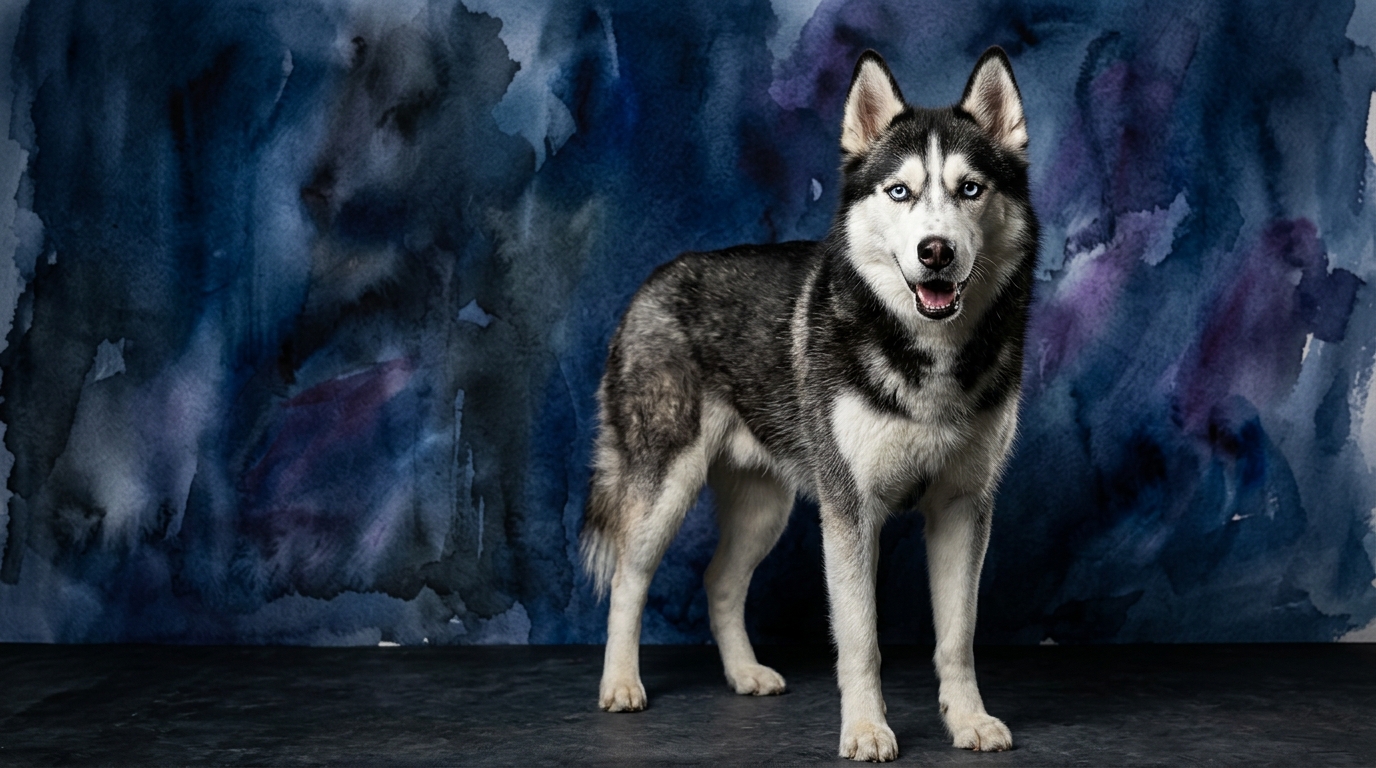
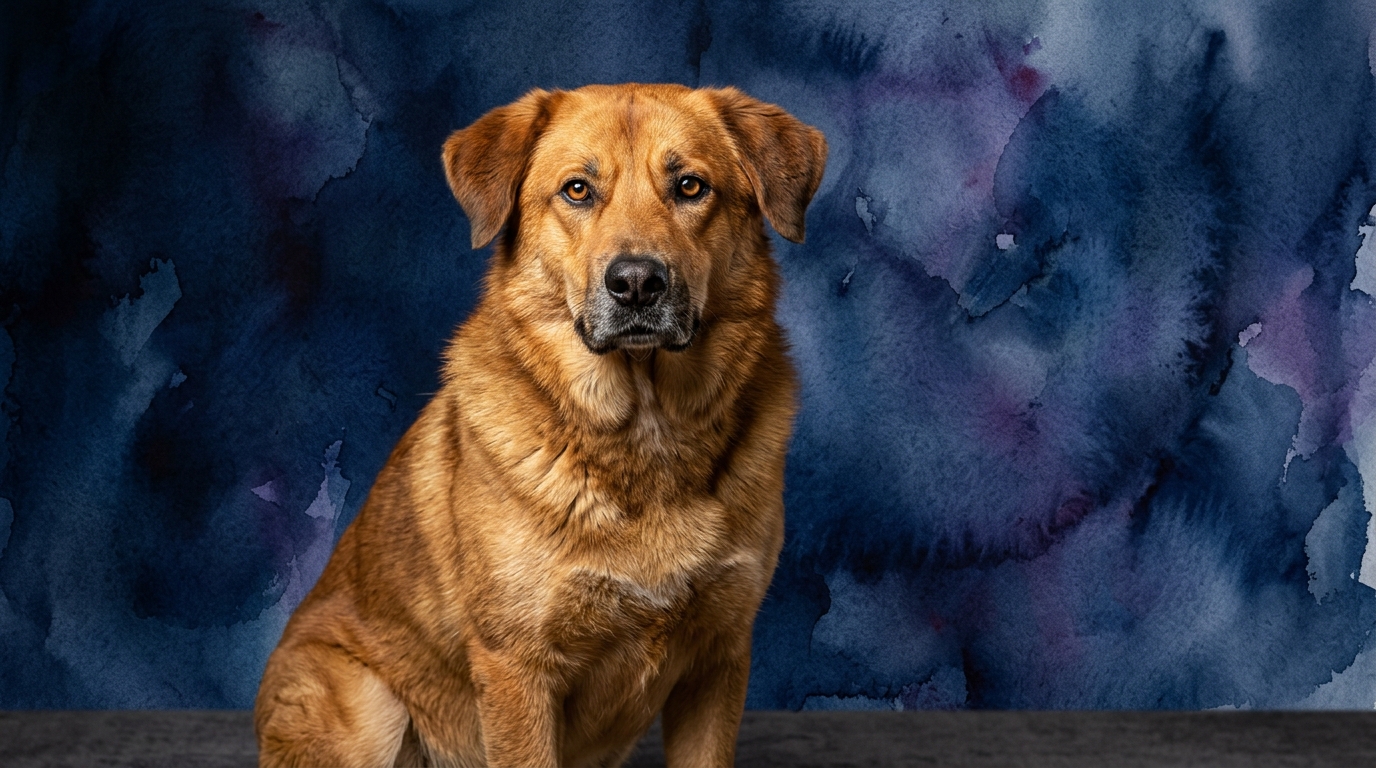
Side-by-Side IQ Profile
The Cosmic Pet Pet IQ Lab employs a multi-dimensional approach to assess canine intelligence, moving beyond simple obedience to encompass a dog's full cognitive landscape. For the Siberian Husky, ranked #45 by Coren for working and obedience intelligence, their profile paints a picture of rugged independence. They score 4/5 in Problem Solving, indicating a strong capacity to navigate complex situations and devise solutions autonomously. Their Training Speed is 2/5, suggesting a more deliberate or selective approach to learning human-directed tasks. Social Intelligence stands at 3/5, reflecting a moderate ability to interpret human cues and adapt to social contexts. A standout 5/5 in Instinctive Drive highlights their profound innate motivation for activities like pulling and exploring, while their Memory, at 4/5, points to a strong retention of learned experiences and spatial information.
In contrast, the Chinook, a breed not yet ranked by Coren, presents a more balanced, albeit slightly less extreme, cognitive profile. Their Problem Solving is rated 3/5, demonstrating competence in navigating challenges but perhaps with less independent innovation than the Husky. Training Speed is 3/5, suggesting a more moderate and consistent willingness to engage with training instructions. Social Intelligence also registers 3/5, indicating a similar aptitude for understanding and responding to social environments. Their Instinctive Drive is 3/5, reflecting a solid, yet less overwhelming, internal motivation for traditional working dog tasks. Finally, their Memory is 3/5, showing reliable recall of information and experiences, though perhaps not with the same depth as their Siberian counterparts. These profiles reveal two distinct cognitive blueprints, each with unique implications for their behavior and suitability as companions.
Where the Siberian Husky Wins Cognitively
The Siberian Husky undeniably shines in areas demanding raw independence and innate drive. Their 4/5 Problem Solving score, coupled with a formidable 5/5 Instinctive Drive, means they possess an exceptional ability to assess situations and act on their own initiative, often with a clear, self-determined purpose. This manifests in their legendary escape artistry, where they can ingeniously figure out how to open gates, climb fences, or even unlatch crates. This isn't just mischief; it's a display of formidable cognitive prowess directed towards achieving a goal, whether it's exploring or joining a 'pack' beyond their yard. Their high instinctive drive also means they are incredibly self-motivated for activities like running and pulling, often needing little external encouragement once they grasp the concept.
Furthermore, the Husky's 4/5 Memory score complements their problem-solving and drive. They can recall complex routes and past successful strategies for obtaining desired outcomes, making them formidable navigators and persistent in their endeavors. For instance, a Husky who once found a shortcut on a hiking trail is likely to remember and attempt that route again, even months later. This combination of robust problem-solving, intense inherent motivation, and strong memory makes the Siberian Husky a breed that excels when allowed to utilize its cognitive faculties for independent exploration and task completion, often requiring owners to be equally clever in channeling these traits positively.
Where the Chinook Wins Cognitively
While the Husky excels in independent problem-solving and drive, the Chinook's cognitive strengths lie in areas that foster a more cooperative and human-centric partnership. Their most notable advantage in this comparison is their Training Speed, rated at 3/5, which is a full point higher than the Siberian Husky's 2/5. This higher score indicates a greater willingness and aptitude for learning and executing human-directed commands and tasks. Chinooks are generally more receptive to instruction and less prone to independent decision-making when an owner's directive is clear. This translates into a dog that often learns new cues and routines more readily and with fewer repetitions, making the initial stages of obedience training a smoother experience.
The Chinook's balanced 3/5 scores across Problem Solving, Social Intelligence, Instinctive Drive, and Memory contribute to a more predictable and adaptable companion. While they may not exhibit the Husky's extreme ingenuity in breaking out of confined spaces, their moderate problem-solving is sufficient for everyday challenges without leading to constant independent adventures. Their consistent social intelligence allows them to integrate well into family dynamics and respond appropriately to various social cues, fostering a strong bond. This overall balance makes the Chinook a breed that is often more consistently engaged with their human partners, seeking to understand and participate in shared activities rather than constantly pursuing their own agenda.
Which is Easier to Train and Why
When it comes to ease of training, the Chinook generally holds an advantage over the Siberian Husky, primarily due to their respective Training Speed scores. The Chinook's 3/5 Training Speed indicates a more amenable and responsive nature to learning human commands. They tend to be more focused on their handler during training sessions, eager to please, and less likely to be sidetracked by their own internal motivations or environmental distractions. Their moderate instinctive drive means they are less compelled to follow their nose or pursue independent adventures when an owner is giving instructions, leading to more consistent and efficient learning.
The Siberian Husky, with its 2/5 Training Speed, often presents a greater challenge. Their exceptional 5/5 Instinctive Drive for running and exploring, combined with their 4/5 Problem Solving, means they are often thinking for themselves and prioritizing their own desires over human directives. A Husky might understand a command perfectly but choose not to execute it if something more interesting or instinctively rewarding presents itself. Their independence requires a trainer to be exceptionally patient, creative, and consistent, often needing to make training feel like a game or an intrinsically rewarding activity to capture their attention and cooperation. While capable of learning, their motivation often needs to be carefully managed and channeled, making 'ease' a relative term that often depends on the owner's experience and dedication.
Which Suits Active Owners vs. Owners Seeking a Predictable Companion
For owners with an intensely active lifestyle and a desire for a partner who thrives on independent, physically demanding tasks, the Siberian Husky is often the ideal match. Their 5/5 Instinctive Drive means they require substantial physical exercise, often enjoying long runs, hikes, or sledding activities for hours. Their 4/5 Problem Solving and 4/5 Memory ensure they are mentally engaged by these challenges, remembering trails and strategizing how to navigate obstacles. These dogs are best suited for individuals or families who can dedicate significant time daily to meeting these profound physical and mental demands, and who appreciate a dog with a strong, often independent, personality. They are not for the faint of heart or those seeking a dog content with minimal activity.
Conversely, for owners who appreciate an active dog but prioritize a more predictable, cooperative, and responsive companion, the Chinook presents a compelling option. With a moderate 3/5 Instinctive Drive, they still enjoy and require regular exercise, but they are less likely to become destructive or restless if they miss an occasional high-intensity workout. Their 3/5 Training Speed and balanced overall cognitive profile make them more adaptable to various activities, from hiking to obedience, without the same level of independent willfulness seen in Huskies. They are well-suited for owners who enjoy consistent training, walks, and family activities, and who value a dog that integrates smoothly into a household without constant, extreme demands for independent mental and physical stimulation.
The Verdict
Choose the Siberian Husky if you are an experienced, highly active owner seeking an independent, clever problem-solver with immense endurance and a strong will, prepared to meet their significant physical and mental demands.
Opt for the Chinook if you desire a cooperative, trainable, and moderately active companion that integrates smoothly into family life, offering a more predictable and responsive partnership for consistent engagement.
🧠 Find Your Pet's IQ Score
Our Pet IQ Lab assessment covers 25+ tests across 5 cognitive dimensions — personalized to your breed.
Take the Full IQ Test →Frequently Asked Questions
Are Siberian Huskies truly stubborn during training?
Their 2/5 Training Speed, combined with a 5/5 Instinctive Drive and 4/5 Problem Solving, often makes Huskies appear stubborn. They are capable of understanding commands but frequently choose to prioritize their own internal motivations or perceived more rewarding activities, requiring creative and persistent training methods.
What kind of work do Chinooks excel at given their IQ profile?
With balanced scores, particularly a 3/5 Training Speed and 3/5 Instinctive Drive, Chinooks excel in roles requiring cooperation and moderate activity, such as companion dog sports like obedience, agility, and therapy work, or as reliable hiking and family adventure partners.
How do their social intelligence scores impact their family life?
Both breeds score 3/5 in Social Intelligence, indicating a good capacity to understand human cues and integrate into family dynamics. They are generally adaptable companions, though the Husky's higher independent drive means they might occasionally prioritize their own interests over constant human interaction, while the Chinook is often more consistently engaged with family members.