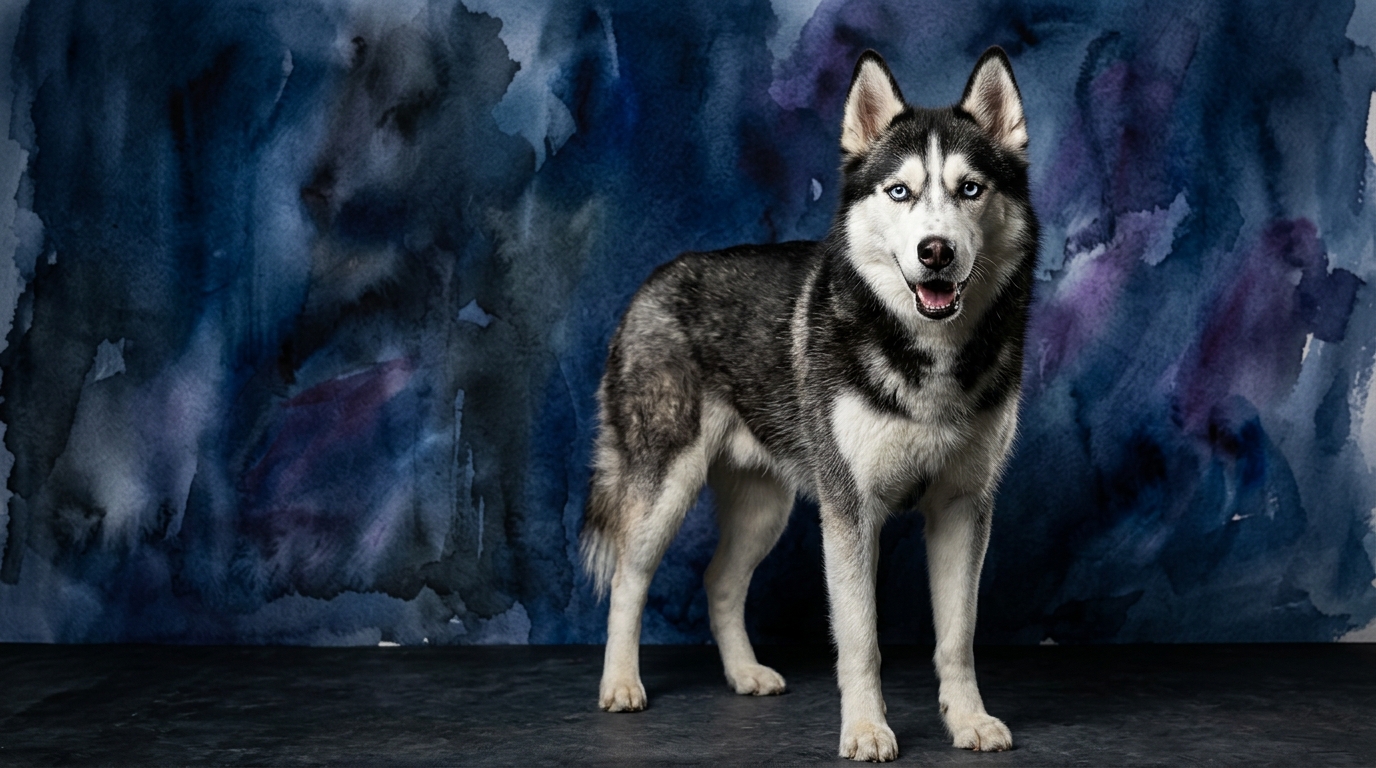
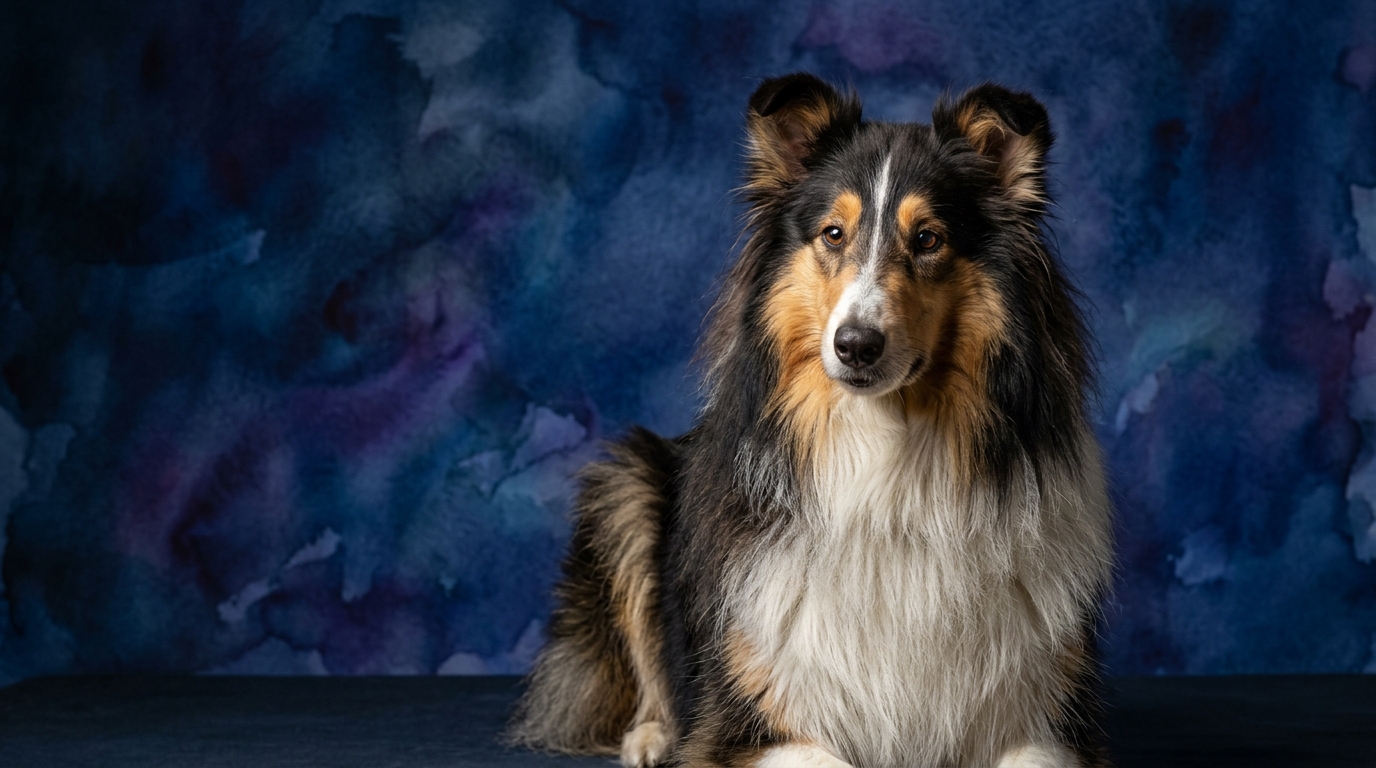
Side-by-Side Cognitive Profiles: Husky vs. Collie (Rough)
Delving into the cognitive landscape of these two breeds offers a nuanced understanding beyond mere anecdotal observations. The Cosmic Pet Pet IQ Lab employs a five-dimensional framework to assess canine intelligence: Problem Solving, Training Speed, Social Intelligence, Instinctive Drive, and Memory. These metrics, alongside their Coren rankings, provide a robust comparison of their innate capacities and behavioral tendencies.
The Siberian Husky, a Working breed with a Coren rank of #45, demonstrates a robust cognitive profile tailored for endurance and independent action. Their Problem Solving score of 4/5 indicates a strong capacity for navigating complex situations, often creatively. Training Speed is rated 2/5, suggesting a slower acquisition of commands. Social Intelligence stands at 3/5, reflecting a moderate responsiveness to human cues, while their Instinctive Drive is an impressive 5/5, underpinning their powerful motivation. Finally, their Memory at 4/5 allows them to retain important information about their environment and experiences.
In contrast, the Collie (Rough), a Herding breed with a significantly higher Coren rank of #16, presents a profile geared towards cooperative work and rapid learning. They share the Siberian Husky's Problem Solving score of 4/5, indicating similar capacities for cognitive challenges. However, their Training Speed is notably higher at 4/5, signifying a quicker grasp of new instructions. Social Intelligence is also 3/5, similar to the Husky. Their Instinctive Drive is 3/5, a moderate level that allows for focus on handler direction, and their Memory is an exceptional 5/5, enabling them to recall vast amounts of information and learned behaviors.
Where the Siberian Husky’s Cognition Shines
The Siberian Husky's cognitive strengths are deeply rooted in their heritage as endurance sled dogs, demanding self-sufficiency and persistent motivation. Their Instinctive Drive, scoring a perfect 5/5, is a dominant cognitive trait, manifesting as an almost boundless internal motivation for exploration and physical exertion. This high drive means they are consistently propelled to move, investigate, and overcome obstacles in their path, rather than waiting for human direction. This isn't just about physical stamina; it's a cognitive engine that fuels their persistence in achieving self-directed goals, whether that's covering miles of trail or finding a creative way out of a securely fenced yard.
Complementing this powerful drive are their Problem Solving (4/5) and Memory (4/5) scores. A Husky's problem-solving ability, combined with their strong memory, allows them to navigate intricate environments, learn escape routes, or remember the location of interesting scents or buried treasures with remarkable efficiency. They excel at practical, often physically demanding, challenges where independent thought and persistent effort are key. This combination makes them adept at figuring out how to achieve their objectives, even if those objectives differ from their owner's, and remembering successful strategies for future use. Their cognitive framework is one of resilient, self-directed ingenuity in dynamic settings.
Where the Collie (Rough)’s Cognition Excels
The Collie (Rough) demonstrates cognitive strengths ideally suited for cooperative work and intricate task execution. Their Training Speed, rated 4/5, is a clear advantage over the Husky's 2/5, indicating a significantly faster ability to grasp and understand new commands and concepts. This rapid learning curve is foundational for their traditional herding roles, where quick comprehension of complex instructions is paramount. They quickly form associations between cues and actions, making them highly responsive partners in structured training scenarios.
This rapid training speed is powerfully amplified by their exceptional Memory, scoring a perfect 5/5. A Collie's capacity for recall means they can store and retrieve a vast repertoire of commands, routines, and experiences. This superior memory allows them to perform long, complex sequences of actions with precision, whether it's navigating an agility course or executing multiple herding commands in sequence. Their cognitive strength lies in their ability to absorb and retain detailed information, making them consistent and reliable in learned behaviors.
Furthermore, the Collie (Rough)'s Problem Solving (4/5) and Social Intelligence (3/5), combined with their superior training speed and memory, enable them to excel in tasks requiring both independent thought and close collaboration with a handler. Their Coren rank of #16, compared to the Husky's #45, directly reflects this superior capacity for understanding and executing commands quickly and reliably. They are adept at understanding human intent and adapting their behavior accordingly, making them highly effective partners in tasks that demand nuanced communication and precise execution.
Training Dynamics: Effort and Engagement
When it comes to training, the differences in their Cosmic Pet Pet IQ Lab scores paint a clear picture of divergent dynamics. The Siberian Husky's Training Speed of 2/5 suggests that owners will need patience, creativity, and highly motivating rewards. They don't absorb new commands as rapidly and often require more repetitions and varied approaches to solidify learning. Their strong Instinctive Drive (5/5) means they are often more interested in pursuing their own internal motivations, such as exploring or running, than in focusing on a training session, leading to what can be perceived as stubbornness or selective hearing.
Conversely, the Collie (Rough)'s Training Speed of 4/5 indicates a much quicker uptake of new commands. They tend to be eager to please and find satisfaction in cooperative learning with their human partners. This is further supported by their exceptional Memory (5/5), which allows them to retain a large vocabulary of commands and complex sequences of actions, making advanced training and performance sports a natural fit. Their moderate Instinctive Drive (3/5) means they are less likely to be distracted by external stimuli compared to a Husky, allowing for more focused training sessions.
Real-world behavioral differences often stem from these cognitive profiles. A Husky might understand a command but choose not to execute it if a more compelling instinctual drive intervenes, such as spotting a squirrel or a perceived escape opportunity. Their problem-solving skills are often applied to circumventing rules they deem inconvenient. A Collie, on the other hand, typically shows a strong desire for partnership; their problem-solving tends to be directed towards understanding and fulfilling the handler's request, making them highly responsive and predictable once a command is learned.
Lifestyle Compatibility: Active vs. Integrated Owners
The cognitive profiles of these breeds also dictate their ideal living environments and owner compatibility. For the Siberian Husky, their 5/5 Instinctive Drive mandates an extremely active owner who can consistently provide outlets for their endurance and exploration. This breed thrives with owners who enjoy long runs, hiking, sledding, or other high-energy outdoor activities. Their problem-solving and memory, combined with their drive, mean they require significant mental stimulation to prevent them from inventing their own, potentially destructive, entertainment. They are excellent companions for owners who view their dog as a partner in rigorous adventures.
The Collie (Rough), while still requiring regular exercise, is better suited for owners seeking a more integrated companion whose activity needs are often met through structured play, training sessions, and social interaction. Their moderate Instinctive Drive (3/5) means they are less compelled by an overwhelming urge to cover vast distances independently and are generally content with a varied routine that includes walks, yard play, and mental enrichment. They are often happier participating in family activities and thrive on consistent human interaction rather than purely independent exploration.
While both breeds score 3/5 in Social Intelligence, the nature of their desired companionship differs. A Husky appreciates a companion who facilitates their adventures and understands their need for independence, often showing affection on their own terms. A Collie, however, tends to seek a more cooperative and attentive partnership, thriving on reciprocal interaction and often demonstrating a strong desire to be involved in all aspects of family life. They are more likely to be found at their owner's side, ready for the next command or comforting presence, whereas a Husky might be surveying the horizon for the next challenge.
The Verdict
Opt for a Siberian Husky if your lifestyle embraces extensive outdoor activity and you appreciate a companion with robust independence and a profound drive for exploration and endurance.
Select a Collie (Rough) if you seek a highly trainable, attentive partner for structured activities, performance sports, and a strong cooperative bond within a family setting.
🧠 Find Your Pet's IQ Score
Our Pet IQ Lab assessment covers 25+ tests across 5 cognitive dimensions — personalized to your breed.
Take the Full IQ Test →Frequently Asked Questions
Which breed is better for first-time dog owners?
The Collie (Rough), with its higher training speed and cooperative nature, generally presents a more straightforward learning curve for first-time dog owners. Siberian Huskies require a more experienced hand to manage their intense drive and independent problem-solving tendencies.
Are Siberian Huskies truly difficult to train?
The Cosmic Pet Pet IQ Lab rates Siberian Husky training speed at 2/5, indicating they learn more slowly and require consistent, engaging methods. Their high instinctive drive means training often competes with their natural urges for exploration or independent action.
How does the Coren rank relate to the IQ scores?
Coren ranks primarily reflect a breed's ability to understand and obey commands quickly, aligning closely with The Cosmic Pet Pet IQ Lab's 'Training Speed' metric. A lower Coren number, like the Collie's #16, signifies faster command acquisition and retention compared to the Husky's #45.