
The Cosmic Pet Pet IQ Lab: Side-by-Side Cognitive Profiles
At The Cosmic Pet Pet IQ Lab, we analyze canine cognition across five key dimensions, providing a granular view of each breed’s unique mental aptitudes. For the Siberian Husky, a Coren ranking of #45 places them in a category of solid working intelligence, while the Flat-Coated Retriever, at Coren #17, demonstrates a higher degree of adaptive obedience. However, these rankings are just the start; our detailed IQ scores reveal where their true cognitive differences lie.
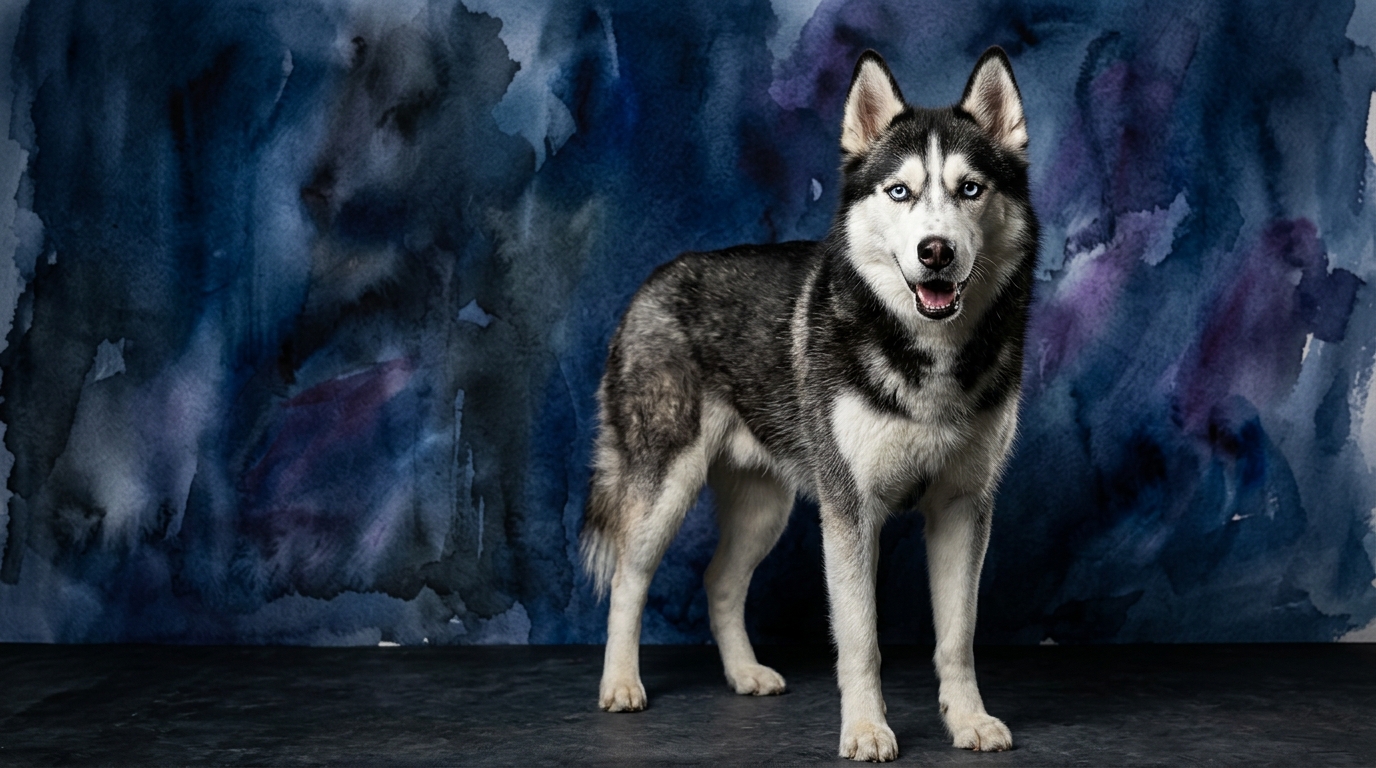
The Siberian Husky exhibits a Problem Solving score of 4/5, indicating a strong capacity for independent thought and finding solutions to environmental challenges, often without direct human instruction. Their Training Speed, however, is rated 2/5, reflecting their independent nature and a tendency to prioritize their own motivations over immediate compliance. Social Intelligence stands at 3/5, meaning they can form bonds and understand social cues, but might not always be driven to please. Their Instinctive Drive is exceptionally high at 5/5, underpinning their endurance and purpose-driven nature, while Memory at 4/5 suggests a robust ability to recall past experiences and learned patterns, especially those tied to their drives.
In contrast, the Flat-Coated Retriever also scores 4/5 in Problem Solving, showcasing a similar aptitude for navigating complex situations, though often with a greater inclination towards cooperative solutions. Their Training Speed is significantly higher at 4/5, highlighting their eagerness to learn and retain commands, making them more responsive to structured training. Social Intelligence matches the Husky at 3/5, indicating a sociable nature capable of forming strong connections. Their Instinctive Drive is 3/5, geared towards retrieving and partnership rather than independent exploration, and their Memory is outstanding at 5/5, allowing them to recall vast amounts of information and experiences with precision, which greatly aids in their training and work.
Where the Siberian Husky's Cognition Excels
The Siberian Husky truly shines in scenarios demanding self-reliance and an unwavering pursuit of a goal, primarily driven by their formidable Instinctive Drive (5/5). This isn't merely about physical stamina; it's a cognitive engine that fuels their intrinsic motivation to explore, cover ground, and solve problems related to their environment. For example, a Husky presented with a new, complex trail might not wait for guidance but will instead use its problem-solving acumen (4/5) to independently navigate obstacles and find the most efficient path forward. This manifests as a remarkable ability to find their way home over long distances or to strategize ways to overcome perceived barriers, such as a fence or a closed gate, if it stands between them and a compelling scent or an open field.
Their strong Memory (4/5) works in tandem with their problem-solving skills, allowing them to recall successful past strategies for navigating terrain or escaping enclosures. A Husky remembers which gate latch was easier to manipulate or which segment of a fence was weakest. This cognitive strength is less about performing a trick on cue and more about adaptive learning within their environment, driven by their powerful internal compass and desire for freedom. While their Training Speed is lower, their capacity for independent thought and persistent, self-directed problem-solving is a hallmark of their breed's cognitive design.
Where the Flat-Coated Retriever's Cognition Excels
The Flat-Coated Retriever's cognitive strengths are deeply rooted in their capacity for cooperative learning and impressive retention, primarily highlighted by their excellent Training Speed (4/5) and unparalleled Memory (5/5). These traits make them exceptionally adept at absorbing and recalling complex sequences of commands and tasks. A Flat-Coat can quickly learn a multi-step retrieve, remembering the location of multiple fallen birds and the order in which to retrieve them, demonstrating not just obedience but sophisticated mental mapping and task management.
Their Problem Solving (4/5) is often applied within a framework of partnership, meaning they are skilled at figuring out how to achieve a goal that aligns with their human's objectives. Whether it's navigating dense cover to find a hidden item or understanding subtle hand signals from a distance, the Flat-Coat uses their cognitive abilities to collaborate effectively. Their superior memory means that once a lesson is learned, it is deeply ingrained, making them highly reliable partners in activities that require consistent, precise execution over time, such as competitive obedience, agility, or their traditional role as a gundog.
Training Dynamics: Biddability vs. Independence
When it comes to ease of training, the Flat-Coated Retriever generally presents a more straightforward path for most owners due to their significantly higher Training Speed (4/5) and Memory (5/5). They possess an innate desire to please and a natural inclination towards partnership, making them highly receptive to positive reinforcement and structured lessons. Their lower Instinctive Drive (3/5, compared to the Husky's 5/5) means their focus is less likely to be diverted by external stimuli when engaged in a training session, allowing for quicker and more consistent learning of commands and desired behaviors. They thrive on the interaction and the mental stimulation of learning new tasks with their handler.
The Siberian Husky, with a Training Speed of 2/5, presents a different training challenge. Their powerful Instinctive Drive (5/5) and strong independent problem-solving often mean they evaluate whether a command aligns with their own interests before complying. This isn't a lack of understanding, but rather a strong will and a historical role that valued independent decision-making over strict obedience. Training a Husky requires immense patience, creativity, and a deep understanding of their motivations. Owners often need to make training feel like a game or a challenge they choose to engage in, rather than a directive. Their high drive can make off-leash reliability particularly challenging, as a compelling scent or visual stimulus can easily override even well-established commands. While they remember what they've learned (Memory 4/5), their willingness to apply it on command is often conditional.
Owner Suitability: High-Intensity Engagement vs. Cooperative Partnership
Choosing between a Siberian Husky and a Flat-Coated Retriever involves understanding not just their physical needs but their distinct cognitive and motivational profiles, which dictate the type of engagement they thrive on. Owners seeking a canine partner for high-intensity, self-directed engagement and who appreciate an independent spirit will find a profound connection with the Siberian Husky. These dogs require owners who can provide outlets for their immense Instinctive Drive (5/5) through activities like sledding, skijoring, long-distance hiking, or secure, extensive off-leash exploration where their independent problem-solving skills can be utilized. Their mental stimulation comes from navigating varied environments and making their own choices, rather than constant instruction.
Conversely, owners who value a cooperative partnership, eager responsiveness, and a dog that thrives on learning and performing tasks alongside them will likely find the Flat-Coated Retriever a more suitable match. These dogs excel in structured activities like retrieving games, competitive obedience, agility, and scent work, where their high Training Speed (4/5) and exceptional Memory (5/5) are fully utilized. They seek mental stimulation through interaction with their owner, learning new skills, and executing complex routines. While both breeds are active, the Flat-Coat's activity is often more centered around collaborative tasks and sustained engagement with their human, making them a joyful partner for those who love to teach and work closely with their dog.
The Verdict
Choose the Siberian Husky if you are an experienced owner prepared to embrace a dog's independent spirit, high drive for exploration, and need for self-directed mental and physical challenges.
Opt for the Flat-Coated Retriever if you desire a highly biddable, eager-to-please companion for cooperative activities, structured training, and a strong partnership built on mutual engagement.
🧠 Find Your Pet's IQ Score
Our Pet IQ Lab assessment covers 25+ tests across 5 cognitive dimensions — personalized to your breed.
Take the Full IQ Test →Frequently Asked Questions
Are Siberian Huskies difficult to train?
Siberian Huskies are not 'difficult' in the sense of lacking capacity, but their training requires a different approach due to their independent nature and strong instinctive drives. They respond best to positive reinforcement, consistency, and training that feels like a game or a choice, rather than strict commands, which can make them seem less biddable than other breeds.
Do Flat-Coated Retrievers require a lot of mental stimulation?
Yes, Flat-Coated Retrievers absolutely require significant mental stimulation, leveraging their high training speed and memory. They thrive on learning new commands, participating in dog sports, and engaging in interactive games that challenge their problem-solving abilities and reinforce their cooperative nature. Without it, they can become bored or restless.
Which breed is better for a first-time dog owner?
For a first-time dog owner, the Flat-Coated Retriever is generally a more forgiving choice due to their higher training speed and eagerness to please, which simplifies the learning curve for both dog and owner. The Siberian Husky's strong independence and specific needs often benefit from an owner with prior experience in managing high-drive, self-willed breeds.