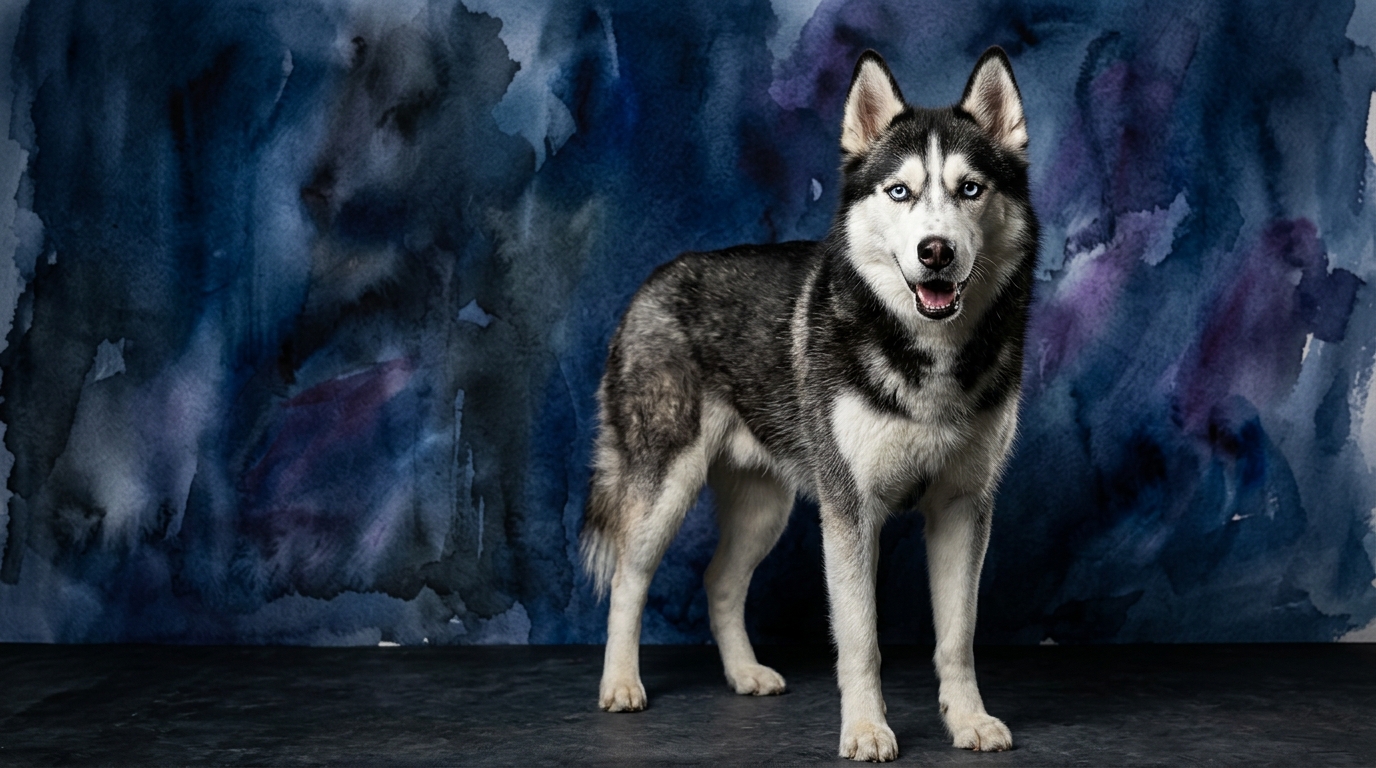
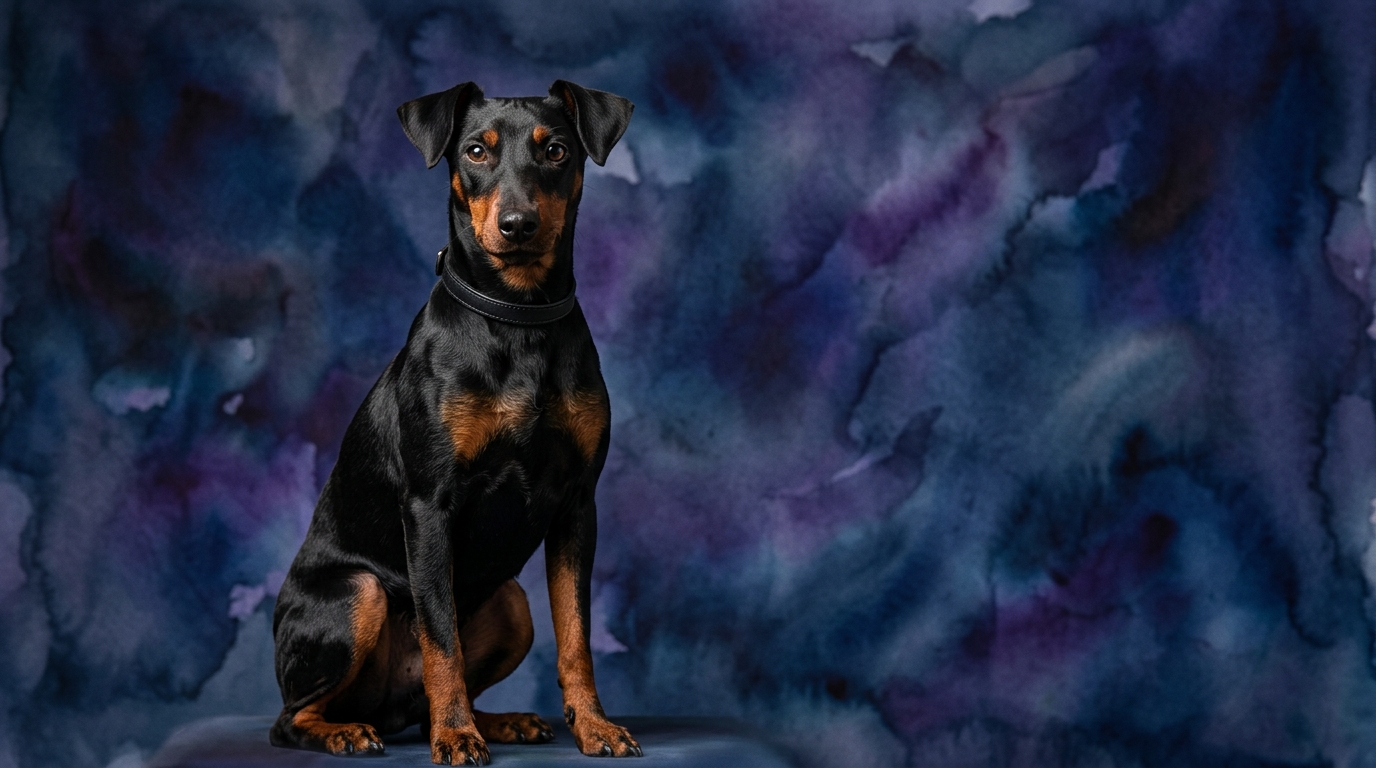
Side-by-Side Cognitive Profiles
**Siberian Husky:** This Working breed, Coren-ranked #45, exhibits a robust cognitive makeup tailored for endurance and independence. Their **Problem Solving (4/5)** is characterized by an independent streak, often finding creative solutions to obstacles like escaping enclosures or reaching forbidden items, reflecting a history of navigating complex Arctic environments. **Training Speed (2/5)** is modest; while capable of learning, Huskies are known for prioritizing their own motivations over human commands, making consistent, rapid training a challenge requiring patience and compelling incentives. Their **Social Intelligence (3/5)** shows moderate understanding, generally engaging well with humans and other dogs, with pack origins fostering a sense of belonging though independence can sometimes override a desire to please. **Instinctive Drive (5/5)** is intense, driven by a powerful desire to pull, run, and explore, with strong prey drive and wanderlust deeply ingrained as a legacy of their sled-dog heritage. Finally, **Memory (4/5)** demonstrates robust retention for routines, locations, and learned behaviors, especially those associated with positive or negative experiences, often remembering how to outsmart companions.
**Manchester Terrier:** As a Terrier breed, the Manchester Terrier, though not Coren-ranked, possesses a distinct set of cognitive strengths. Their **Problem Solving (3/5)** displays a respectable capacity for figuring things out, particularly when accessing something interesting or pursuing a small critter, with terrier tenacity often fueling persistent efforts. **Training Speed (3/5)** is generally responsive; they learn new commands at a moderate pace, with their desire to please combined with a quick wit making them trainable, though a stubborn streak can emerge. **Social Intelligence (3/5)** shows moderate awareness, typically forming strong bonds with family while being somewhat reserved with strangers, adapting to household dynamics but perhaps not being overtly gregarious. **Instinctive Drive (3/5)** carries a moderate urge for chasing and digging, rooted in their past as ratters. While present, it's generally less all-consuming than the Husky's drives and more manageable domestically. Lastly, **Memory (3/5)** possesses solid retention for commands and routines, recalling past interactions and training cues with reasonable accuracy.
Where the Siberian Husky Excels Cognitively
The Siberian Husky's cognitive advantages are deeply tied to its original purpose. Their **Instinctive Drive (5/5)** represents a profound cognitive program for sustained, purpose-driven action. This isn't just about physical energy; it's an enduring motivation for long-distance travel and pack cooperation, manifesting as a powerful urge to *do* something, often independently, that few other breeds can match in sheer intensity and endurance.
With a **Problem Solving (4/5)** score, Huskies often exhibit a more independent and resourceful approach. This involves autonomously navigating complex situations, such as finding escape routes from enclosures or locating distant scent sources. This showcases a cognitive flexibility and cleverness born from the necessities of survival and work in challenging environments, where independent thought was crucial.
A **Memory (4/5)** score indicates the Husky retains information, particularly spatial and experiential details, with impressive clarity. They remember escape tactics, hidden items, and the consequences of past actions, contributing to their clever, self-reliant nature. This strong recall contributes to their ability to learn complex patterns and environments, even if their application of that learning isn't always human-directed.
Where the Manchester Terrier Excels Cognitively
The Manchester Terrier's cognitive strengths lean towards cooperative engagement and teachability. Their **Training Speed (3/5)**, notably higher than the Husky's 2/5, offers a significant advantage in terms of teachability. This breed typically shows a greater willingness to engage with human instruction and a quicker grasp of new commands, making initial obedience training often smoother and more immediately rewarding for their owners.
While possessing instinctive drives, the Manchester Terrier tends to apply its cognitive resources with more **Focused Intent** when directed by a human. Their **Problem Solving (3/5)** is often channeled into efficiently achieving specific, human-approved goals, like retrieving a toy or completing agility tasks, rather than primarily independent exploration. This focus makes them more amenable to structured learning and task completion.
Ease of Training: Behavioral Differences
The Manchester Terrier generally presents an easier training journey. Their 3/5 training speed and moderate instinctive drive (3/5) mean they are often more inclined to pay attention to their handler and form associations between commands and actions more readily. Their historical role as ratters required a degree of cooperation, leading to a more amenable training disposition, often motivated by praise and treats. They tend to seek interaction and direction from their primary human, making them responsive students.
The Siberian Husky, with a 2/5 training speed and a powerful 5/5 instinctive drive, offers a more challenging training experience. Their independence and strong desire to follow their own instincts – to run, pull, and explore – often override a desire to comply with human commands. They require an extremely patient, consistent, and creative trainer who can make training feel like a game or effectively harness their natural drives. What might be perceived as stubbornness is often a breed-specific cognitive preference for self-directed action over human-directed obedience, making them less 'easy' but certainly not less capable of learning in their own unique way.
Ideal Owners: Active vs. Relaxed Lifestyles
**Siberian Husky:** This breed is unequivocally suited for highly active owners. Their immense instinctive drive (5/5) for running and pulling necessitates a lifestyle providing copious physical and mental stimulation. Owners who enjoy long-distance running, hiking, mushing, or can commit to daily, vigorous exercise will find a compatible partner. Their intelligence also demands engaging mental challenges to prevent boredom-induced destructive behaviors. A relaxed owner will quickly find themselves overwhelmed by an under-stimulated Husky's energy and resourcefulness, potentially leading to escape attempts or household damage.
**Manchester Terrier:** The Manchester Terrier, while certainly energetic and athletic, falls into a more moderate activity requirement range. Their 3/5 instinctive drive means they appreciate regular walks, playtime, and perhaps some dog sports like agility, but they don't possess the relentless endurance of a Husky. They can adapt well to owners who enjoy daily activity but also appreciate downtime. While not a couch potato, they can thrive with owners who are active but not necessarily extreme athletes, enjoying structured exercise combined with relaxed indoor companionship.
The Verdict
Opt for a Siberian Husky if you are an exceptionally active, patient individual prepared to harness a powerful independent spirit and provide extensive physical outlets for their deep-seated drives.
Select a Manchester Terrier if you seek a responsive, moderately energetic companion who learns readily and enjoys a blend of structured activity and relaxed family time.
🧠 Find Your Pet's IQ Score
Our Pet IQ Lab assessment covers 25+ tests across 5 cognitive dimensions — personalized to your breed.
Take the Full IQ Test →Frequently Asked Questions
Are Siberian Huskies difficult to live with due to their independence?
Huskies are indeed independent, a trait reflected in their 2/5 training speed and strong problem-solving skills. This means they require consistent training and management, but for owners who understand and appreciate their self-reliant nature, they can be wonderful companions. Their independence is part of their charm, not a flaw to be overcome.
How do the instinctive drives of these breeds impact their behavior in a home setting?
The Husky's 5/5 instinctive drive means a strong urge to run and explore, which can lead to escape attempts if not managed with secure fencing and ample exercise. The Manchester Terrier's 3/5 drive might manifest as chasing small animals or digging, but these behaviors are generally less intense and more easily redirected with training within a domestic environment.
Does Coren's ranking affect the practical intelligence of a dog like the Manchester Terrier?
Coren's ranking primarily assesses 'working and obedience intelligence,' focusing on how quickly a dog learns human commands. While the Manchester Terrier isn't Coren-ranked, its 3/5 training speed suggests a respectable ability to learn. Its practical intelligence, especially in problem-solving and social understanding, remains valuable even without a specific Coren placement, demonstrating its own distinct cognitive strengths.