Side-by-Side Cognitive Profiles: Siberian Husky vs. Mastiff
At The Cosmic Pet Pet IQ Lab, we analyze canine intelligence across five key dimensions to provide a nuanced understanding of each breed's cognitive landscape. For the Siberian Husky and Mastiff, these profiles reveal distinct mental architectures shaped by their histories and roles.
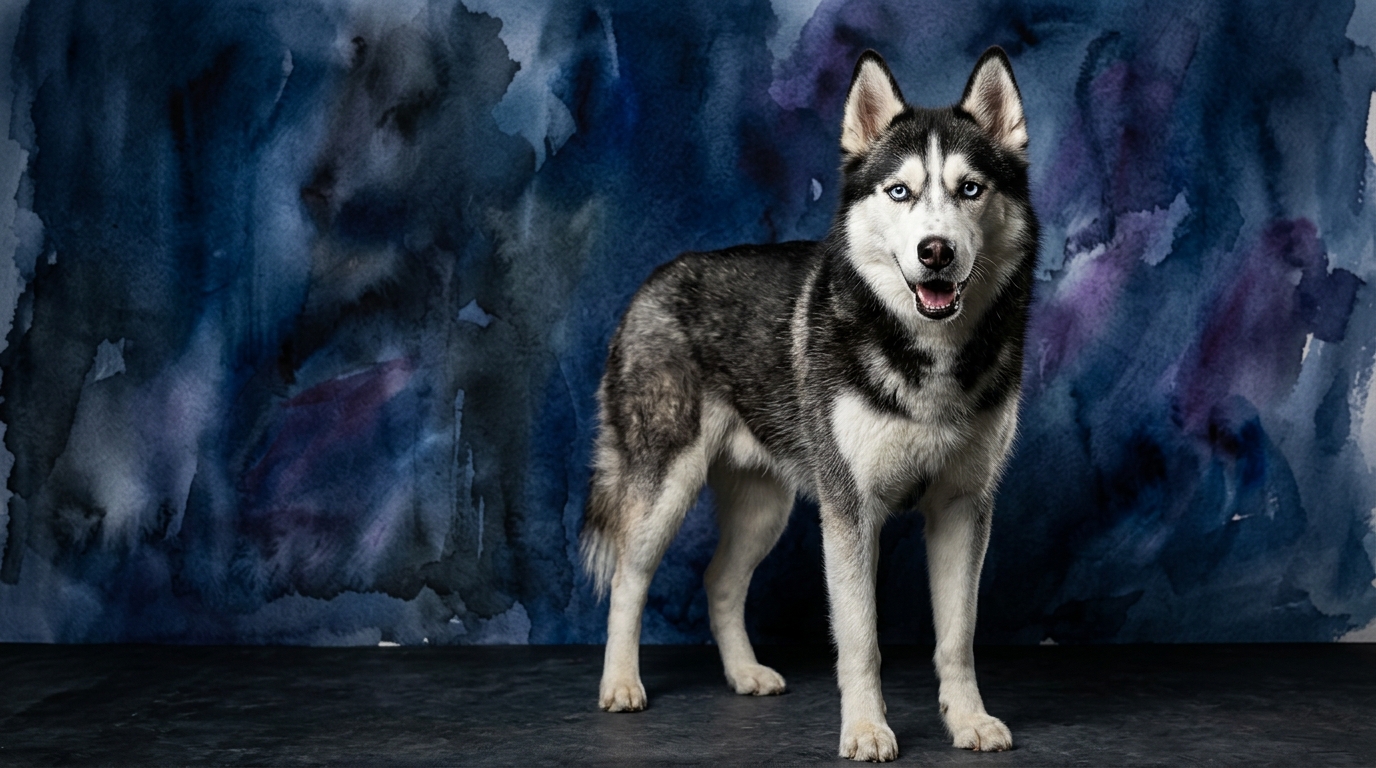
The **Siberian Husky** exhibits a cognitive profile tailored for endurance and independent action:
**Problem Solving (4/5):** The Siberian Husky demonstrates a remarkable capacity for independent thought and creative solutions to environmental challenges. This isn't just about figuring out a puzzle toy; it's about devising escape routes from secure enclosures, navigating complex trail systems, or finding novel ways to achieve a desired outcome, often without direct human instruction. Their minds are constantly assessing and strategizing.
**Training Speed (2/5):** While intelligent, the Husky's training speed score of 2/5 reflects a common trait: a strong independent streak and a tendency to prioritize their own motivations over human directives. They understand commands readily but often require consistent, highly engaging reinforcement to comply reliably, especially if an alternative, more appealing activity presents itself. Their learning isn't slow, but their application of learned behaviors can be selective.
**Social Intelligence (3/5):** Huskies possess a moderate level of social intelligence, allowing them to form strong bonds with their human families and interact appropriately within a pack structure. They can read basic human cues and respond to emotional states, but they are not typically as attuned to subtle human desires as some other breeds. Their social interactions often lean towards camaraderie rather than deep, empathetic understanding.
**Instinctive Drive (5/5):** This is where the Siberian Husky truly shines. A perfect 5/5 in instinctive drive speaks to their powerful innate urges for activities like pulling, chasing, and exploring vast territories. This drive is a deep-seated cognitive program that fuels their endurance and purpose, making them tireless workers when engaged in breed-appropriate tasks. It's a driving force behind much of their behavior, both desired and challenging.
**Memory (4/5):** Huskies demonstrate a robust memory, particularly for spatial information, past experiences, and learned routines. They remember places, people, and specific events with clarity. This strong recall contributes to their ability to navigate complex environments and retain training, even if their application of that training is sometimes voluntary.
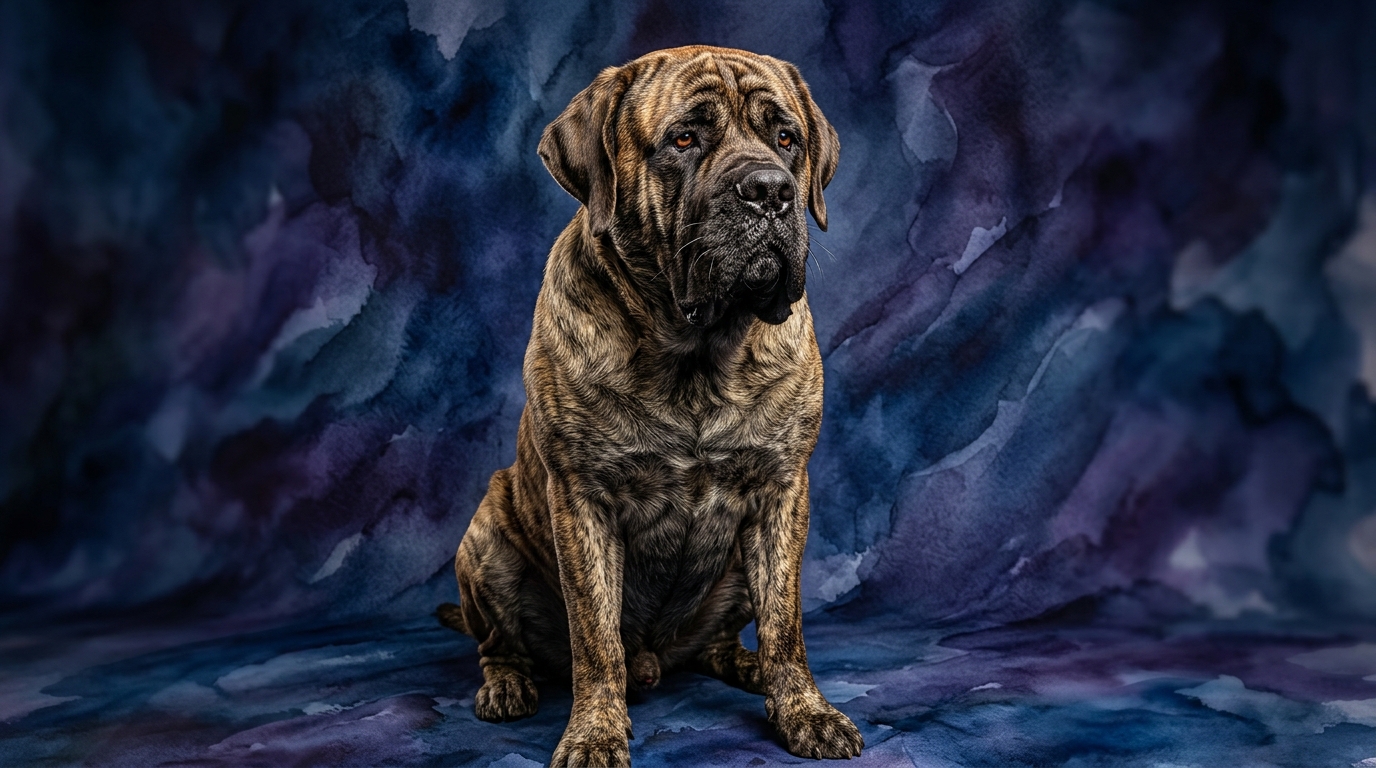
The **Mastiff**, in contrast, presents a cognitive profile emphasizing calm vigilance and steady companionship:
**Problem Solving (3/5):** The Mastiff's problem-solving ability, rated at 3/5, indicates a practical and steady approach. They can tackle moderately complex tasks and learn from experience, but they are less inclined to innovate or pursue solutions independently without clear direction. Their method is often one of patient observation and trial-and-error within a defined framework.
**Training Speed (3/5):** With a training speed of 3/5, Mastiffs are generally considered receptive learners. They absorb new commands and routines at a reasonable pace, especially when training methods are consistent, positive, and gentle. While not lightning-fast, their willingness to cooperate often makes the training process smoother than for more independent breeds.
**Social Intelligence (3/5):** Mastiffs share the Husky's 3/5 social intelligence rating, but it manifests differently. Their social understanding is often characterized by a calm, observant nature, allowing them to discern the moods and intentions of their family members. They are typically gentle giants, highly attuned to the dynamics within their immediate human “pack,” fostering a sense of protective companionship.
**Instinctive Drive (3/5):** The Mastiff's instinctive drive at 3/5 is moderate, reflecting their historical role as guardians rather than active hunters or haulers. While they possess protective instincts, they are not typically driven by an overwhelming urge to chase, pull, or endlessly explore. Their drives are more focused on territorial awareness and family protection, manifesting as calm vigilance.
**Memory (3/5):** Mastiffs have a solid memory, rated 3/5. They remember people, places, and learned behaviors reliably. This memory supports their training and allows them to maintain consistent routines. While not as acutely detailed as some breeds, it serves their steady and predictable nature well.
Where the Siberian Husky Excels Cognitively
The Siberian Husky's cognitive advantages are most apparent in scenarios demanding independent thought and sustained physical exertion. Their 4/5 problem-solving skill enables them to navigate challenging terrains, figure out latches, or outsmart conventional barriers, making them adept at tasks requiring ingenuity and self-reliance. This is coupled with their exceptional 5/5 instinctive drive, which provides an unparalleled mental and physical stamina for activities like sledding, canicross, or long-distance hiking, where their minds are engaged in the task for hours. Furthermore, their 4/5 memory for spatial layouts and past experiences allows them to recall complex routes and previous solutions, making them excellent companions for adventurers who appreciate a dog capable of remembering a path or a hidden treat spot with precision.
Where the Mastiff Shines Cognitively
The Mastiff's cognitive strengths lie in areas prioritizing calm consistency and social attunement within a structured environment. Their 3/5 training speed, combined with a more moderate 3/5 instinctive drive, means they are often more amenable to learning and adhering to household rules without the persistent urge to pursue independent ventures. This cognitive blend makes them particularly adept at understanding and respecting boundaries, leading to a more predictable and harmonious home life. While their social intelligence is rated 3/5, it often manifests as a deep, quiet understanding of family dynamics, allowing them to provide a steady, comforting presence and respond appropriately to the emotional states of their human companions, making them exceptional family guardians who are sensitive to the needs of their loved ones. Their practical problem-solving helps them adapt to routines with less fuss.
Ease of Training: Husky vs. Mastiff
When evaluating ease of training, the Mastiff generally presents a smoother experience than the Siberian Husky. The Mastiff's training speed of 3/5, combined with its moderate 3/5 instinctive drive, means it is typically more focused on its handler during training sessions and less distracted by external stimuli or its own independent agenda. They are eager to please and respond well to positive reinforcement, often showing a steady, if not rapid, progression in learning commands. In contrast, the Siberian Husky’s 2/5 training speed is directly influenced by its formidable 5/5 instinctive drive and strong problem-solving ability. While Huskies grasp concepts quickly, their independent nature often leads them to question the *value* of performing a command if their instincts suggest a more exciting alternative, like exploring a scent or attempting to escape. This requires an owner with exceptional patience, creativity, and consistency to keep the Husky engaged and motivated to comply, making them more challenging for novice trainers.
Matching Cognitive Profiles to Lifestyles: Active vs. Relaxed Owners
For owners who thrive on high-energy activities and outdoor adventures, the Siberian Husky is an ideal cognitive match. Their 5/5 instinctive drive demands extensive physical and mental stimulation, making them perfect partners for long runs, hikes, sledding, or competitive dog sports where their problem-solving skills and endurance can be fully utilized. They require an owner who can consistently engage their sharp minds and robust bodies, otherwise, their ingenuity might be channeled into less desirable behaviors. Conversely, the Mastiff's more moderate 3/5 instinctive drive and steady temperament make it a better fit for relaxed owners who appreciate a calm, devoted companion. While they still require regular, moderate exercise to stay healthy, their cognitive makeup is geared more towards quiet companionship, gentle walks, and being a watchful presence within the home, rather than constantly seeking intense physical or mental challenges.
The Verdict
Choose the Siberian Husky if you are an active, experienced owner seeking a highly independent, problem-solving companion for demanding outdoor adventures and thrive on consistent, engaging training challenges.
Opt for the Mastiff if you desire a calm, devoted, and more easily trainable giant whose protective instincts and social intelligence create a steady, comforting presence in a relaxed home environment.
🧠 Find Your Pet's IQ Score
Our Pet IQ Lab assessment covers 25+ tests across 5 cognitive dimensions — personalized to your breed.
Take the Full IQ Test →Frequently Asked Questions
Do Siberian Huskies or Mastiffs make better guard dogs?
While both breeds possess protective instincts, they manifest differently. Mastiffs (instinctive drive 3/5) are natural guardians, exhibiting calm vigilance and a formidable presence that deters intruders. Siberian Huskies (instinctive drive 5/5) are more driven by exploration and less by territorial guarding, often being friendly with strangers, making them less traditional guard dogs.
Are Siberian Huskies difficult to live with due to their problem-solving skills?
The Siberian Husky's 4/5 problem-solving ability can be both a joy and a challenge. While it makes them adaptable and clever, it also means they excel at figuring out how to open gates, escape yards, or access forbidden items if their mental and physical needs aren't adequately met. Consistent mental engagement and secure environments are crucial.
How does the Mastiff's social intelligence compare to its protective nature?
The Mastiff's 3/5 social intelligence allows them to be highly attuned to their family's emotions and dynamics, fostering deep bonds. This social understanding complements their protective instincts, ensuring they are gentle and discerning with loved ones while remaining watchful and imposing towards perceived threats, making them excellent family protectors.