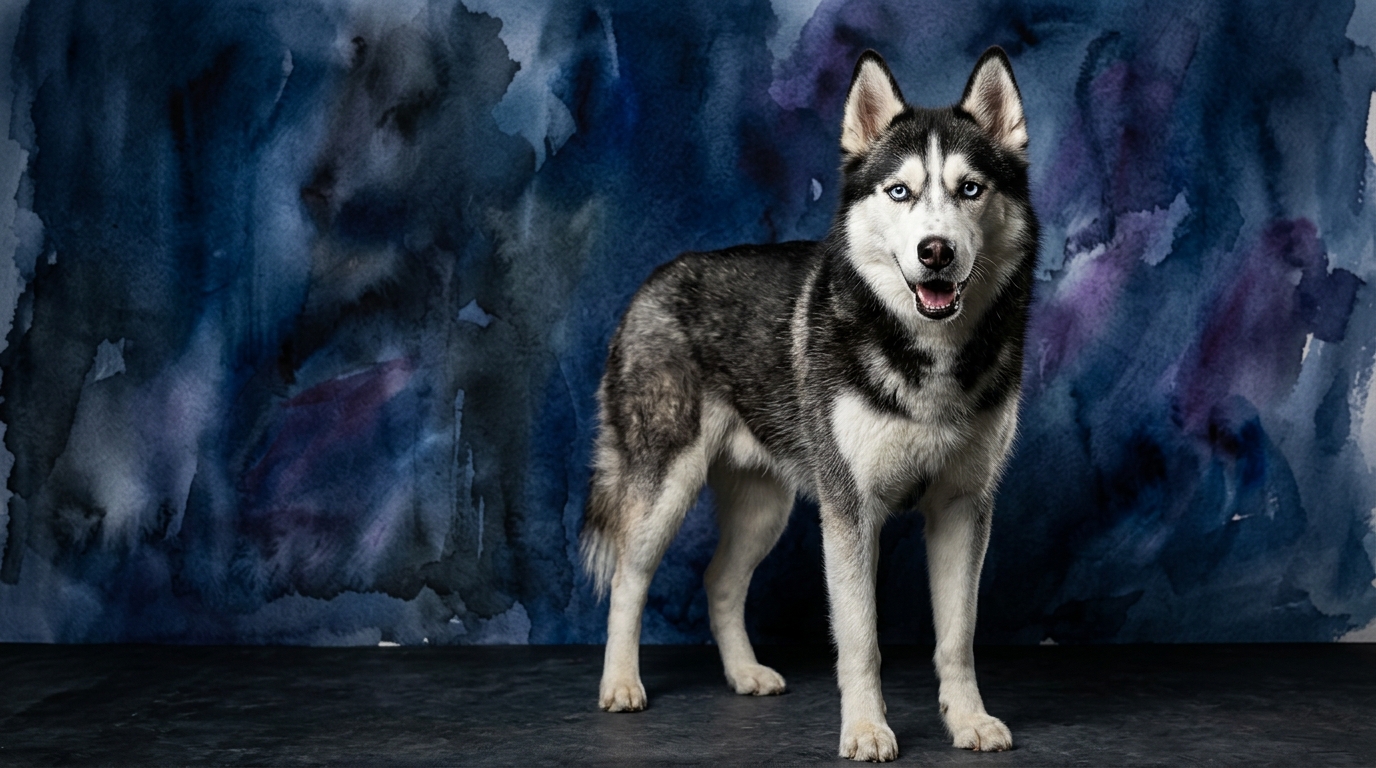
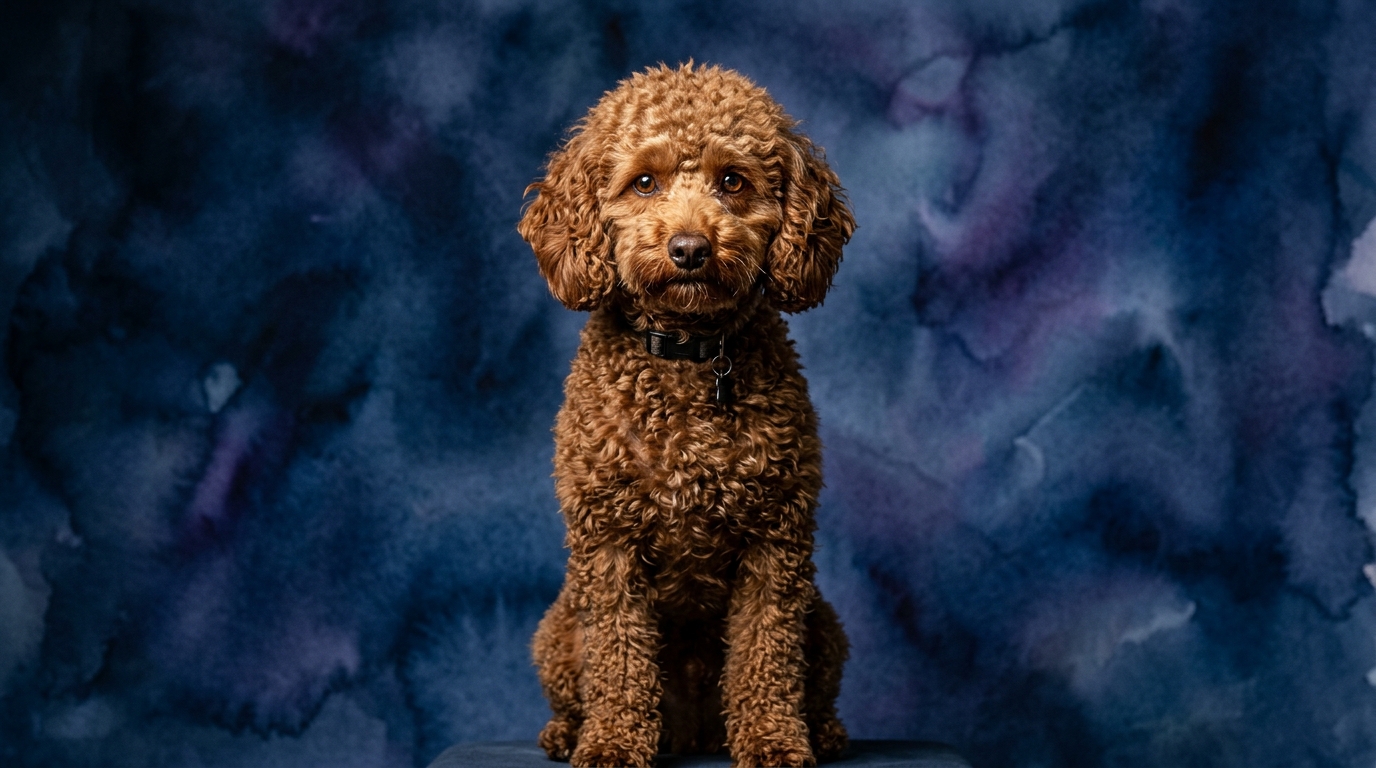
Side-by-Side IQ Profile: Husky vs. Poodle
The Coren ranking system positions the Miniature Poodle at an impressive #2, indicating exceptional working and obedience intelligence, while the Siberian Husky stands at #45, often characterized by a more independent cognitive style. Our detailed Pet IQ Lab dimensions offer a deeper understanding beyond a single rank, examining Problem Solving, Training Speed, Social Intelligence, Instinctive Drive, and Memory for each breed.
The Siberian Husky, with a Problem Solving score of 4/5, demonstrates competence in figuring out complex environmental challenges, particularly those related to their innate drives like escape or navigation. Their Training Speed is 2/5, reflecting a selective responsiveness to human directives, often prioritizing their own agenda over immediate compliance. Social Intelligence, at 3/5, suggests they understand social cues but might not always be driven to conform, maintaining a degree of aloofness. Their Instinctive Drive is a powerful 5/5, fueling their endurance, exploratory behavior, and self-sufficiency. Finally, their Memory, rated 4/5, allows them to recall complex routes and past experiences, aiding in their working roles.
In contrast, the Miniature Poodle earns a perfect 5/5 in Problem Solving, showcasing a remarkable capacity to analyze situations and devise solutions, whether it's figuring out puzzle toys or understanding complex commands. Their Training Speed is also 5/5, indicating an eagerness and ability to grasp new concepts and commands with minimal repetition. Social Intelligence, matching the Husky at 3/5, means they are attuned to human emotions and intentions but, like the Husky, retain a distinct personality rather than being purely subservient. Their Instinctive Drive is 3/5, present but more adaptable and less dominant than the Husky's, often channeled into performance tasks rather than pure survival. A perfect 5/5 Memory allows them to retain vast repertoires of learned behaviors and experiences with precision.
Where the Siberian Husky Wins Cognitively
The Siberian Husky's cognitive strengths truly shine in environments that demand self-reliance and robust instinctive application. Their 5/5 Instinctive Drive isn't just about physical stamina; it's a deep-seated cognitive framework that prioritizes survival, navigation, and resourcefulness. This drive manifests as an exceptional ability to maintain focus on a distant goal, such as pulling a sled over vast distances, independently assessing risks, and making decisions without constant human direction. Their Problem Solving at 4/5, combined with this drive, enables them to methodically work through environmental obstacles, like figuring out how to open gates or scale fences to explore, driven by an internal compass rather than external rewards.
Furthermore, their 4/5 Memory is particularly adept at recalling complex spatial information and sequences related to their working tasks. A Husky can remember intricate trail patterns, the location of resources, or the layout of an escape route with remarkable accuracy. This cognitive attribute is crucial for a breed historically tasked with navigating challenging terrains and making independent judgments far from human guidance, solidifying their status as masters of autonomous, task-oriented cognition.
Where the Miniature Poodle Wins Cognitively
The Miniature Poodle's cognitive superiority is evident in their rapid acquisition of new skills and their profound capacity for abstract learning. Their perfect 5/5 in Training Speed highlights an extraordinary ability to form associations quickly, understand complex verbal cues, and execute multi-step commands with precision. This isn't merely rote learning; it's a testament to their exceptional cognitive flexibility and eagerness to engage in cooperative tasks. Their Problem Solving, also rated 5/5, allows them to excel in intricate puzzle toys, agility courses, and even creative problem-solving scenarios, often finding novel solutions rather than relying on trial and error.
Coupled with a 5/5 Memory, the Miniature Poodle can retain a vast repertoire of commands, tricks, and routines over long periods, making them exceptional candidates for advanced obedience, rally, and performance sports. This combination of swift learning, analytical thinking, and enduring recall enables them to adapt seamlessly to new situations and demonstrate consistent, high-level performance, showcasing a cognitive profile optimized for intricate human-canine collaboration and intellectual engagement.
Which is Easier to Train and Why
When it comes to ease of training, the data clearly favors the Miniature Poodle, with a Training Speed of 5/5 compared to the Siberian Husky's 2/5. This stark difference is a primary factor in their respective Coren ranks, where the Poodle's #2 position reflects a dog that understands new commands in fewer than five repetitions and obeys the first command 95% of the time or better. The Poodle’s eagerness to please and inherent drive for cooperative engagement make them exceptionally receptive students, readily absorbing complex instructions and performing them reliably.
The Siberian Husky, conversely, presents a more significant training challenge. Their 2/5 Training Speed means they require considerably more repetitions to learn new commands and may only obey the first command 30% of the time. This isn't due to a lack of cognitive capacity, but rather their powerful 5/5 Instinctive Drive and independent cognitive style. Huskies were bred to work independently, making decisions on a sled team without constant human oversight. This manifests as a strong will and a tendency to prioritize their own motivations—like exploring scents or seeking adventure—over immediate human directives. Their problem-solving might be applied to finding ways to avoid training or escape, rather than solving the training task itself.
Real behavioral differences underscore this. A Miniature Poodle typically seeks handler engagement and finds satisfaction in performing tasks correctly, making positive reinforcement highly effective. A Husky, while capable of learning, often requires immense patience, creativity, and a deep understanding of their unique motivators. Their focus may easily shift, and they might perceive repetitive drills as tedious, preferring to engage their cognitive abilities in activities that align with their strong innate drives. Effective Husky training often involves channeling their independent spirit and endurance into structured activities that they find intrinsically rewarding.
Which Suits Active Owners vs. Engaged Owners
For owners seeking an active, adventurous companion, the Siberian Husky is a compelling choice, though “relaxed” is not a descriptor that aligns with their needs. Their 5/5 Instinctive Drive translates into an insatiable need for physical exertion and mental engagement. This breed thrives on long runs, hikes, sledding, or skijoring, and their problem-solving skills (4/5) are often applied to finding outlets for their energy, which can include creative escape attempts if not adequately stimulated. An owner must be prepared to integrate significant daily exercise and stimulating activities into their routine, channeling the Husky’s endurance and independent spirit into constructive pursuits.
The Miniature Poodle, while not demanding the sheer physical output of a Husky, is far from a “relaxed” couch potato in terms of cognitive needs. Their 5/5 Problem Solving and 5/5 Memory mean they require substantial mental engagement to remain content. They excel in activities like agility, obedience, trick training, and even scent work, all of which provide crucial mental stimulation. While they can enjoy quiet time with their family, neglecting their cognitive needs can lead to boredom and undesirable behaviors. Therefore, they suit engaged owners who are committed to interactive play, consistent training, and providing opportunities for their dog to use their sharp intellect, rather than owners seeking a purely passive companion.
The Verdict
Choose the Siberian Husky if you are an active, experienced owner prepared for a strong-willed, independent companion who thrives on intense physical activity and embraces challenges with resourceful determination. They are for those who appreciate a partner with a deep, primal connection to endurance and exploration, willing to invest significant time in understanding and channeling their unique drives.
Opt for the Miniature Poodle if you seek a highly trainable, versatile companion eager to engage in cooperative learning and mental challenges, thriving on consistent interaction and structured activities. They are ideal for owners who enjoy teaching complex tasks, participating in dog sports, and appreciate a dog that consistently seeks to understand and perform.
🧠 Find Your Pet's IQ Score
Our Pet IQ Lab assessment covers 25+ tests across 5 cognitive dimensions — personalized to your breed.
Take the Full IQ Test →Frequently Asked Questions
Is a Siberian Husky difficult to train?
Siberian Huskies can be challenging to train due to their strong independent streak and high instinctive drive, scoring 2/5 in training speed. They often prioritize their own motivations, like exploring, over immediate compliance, requiring patient, creative, and consistent methods focused on positive reinforcement and channeling their natural instincts.
Are Miniature Poodles just "show dogs" or are they truly bright?
Miniature Poodles are indeed very bright, scoring 5/5 in both problem-solving and training speed, and ranking #2 in Coren's intelligence scale. They excel in various canine sports and activities, demonstrating exceptional cognitive abilities, quick learning, and a strong capacity for complex tasks beyond their elegant appearance.
Which breed is better for a first-time dog owner?
For a first-time dog owner, the Miniature Poodle is generally a more manageable choice due to their high trainability (5/5 training speed) and eagerness to please. The Siberian Husky's independent nature and intense exercise requirements (5/5 instinctive drive) often prove overwhelming for those new to dog ownership.