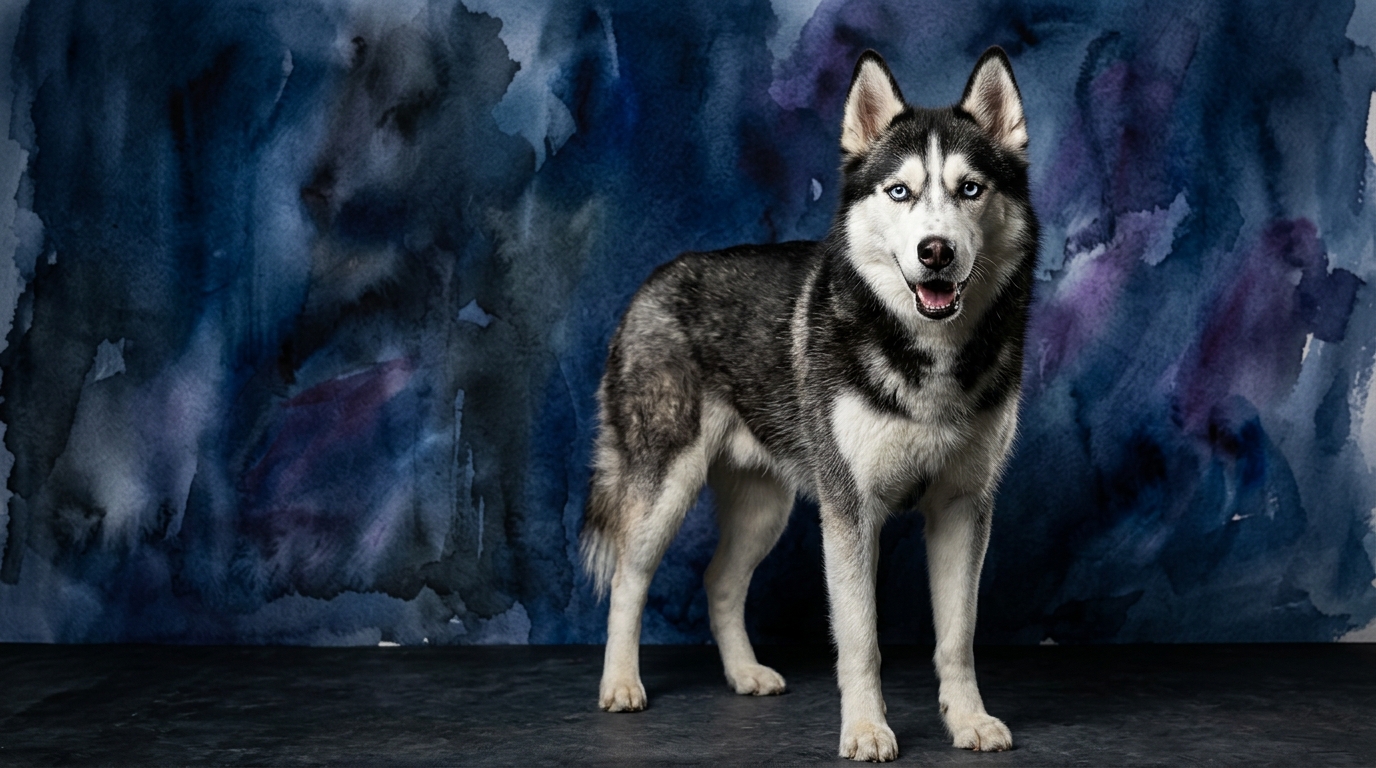

Side-by-Side IQ Profile: Husky vs. OES
The Siberian Husky, ranked #45 by Coren, presents a unique cognitive blueprint. Their Problem Solving is rated 4/5, indicating a strong capacity for independent thought and figuring out complex situations, often to their own advantage. However, their Training Speed is a modest 2/5, reflecting a selective willingness to comply and a tendency towards self-direction rather than immediate obedience. Social Intelligence stands at 3/5, signifying an ability to interact well within a pack or family, but often with an independent streak. A towering Instinctive Drive of 5/5 underscores their powerful urge to run, pull, and explore, deeply influencing their decision-making. Lastly, their Memory is strong at 4/5, allowing them to recall routes and past experiences with remarkable accuracy.
In contrast, the Old English Sheepdog, just one rank higher at #44 on the Coren scale, offers a different cognitive emphasis. Their Problem Solving is 3/5, suggesting a capable mind that often seeks guidance from a handler to navigate challenges, rather than purely independent solutions. Training Speed is rated 3/5, indicating a moderate pace of learning and a generally cooperative spirit, making them more receptive to instruction. Like the Husky, their Social Intelligence is 3/5, but it manifests in a watchful, family-oriented manner, attuned to the dynamics of their human “flock.” Their Instinctive Drive is 3/5, primarily focused on herding and guarding, a drive that is strong but less overwhelming in its need for constant physical output than the Husky’s. A robust Memory of 4/5 ensures they retain commands and routines, contributing to their reliability.
Where the Siberian Husky Wins Cognitively
The Siberian Husky truly excels in independent problem-solving, scoring a notable 4/5 in this dimension. This translates into a dog that can ingeniously figure out how to open latches, scale fences, or navigate complex terrain, often driven by their own curiosity or desire for adventure. While sometimes perceived as “stubborn,” this is often a manifestation of their strong internal logic and capacity to think for themselves, rather than merely following instructions. Their unparalleled Instinctive Drive, rated 5/5, is another cognitive strength, manifesting as an incredible endurance and focus for tasks that align with their natural urges, such as pulling sleds or running vast distances. This drive fuels their ability to make quick, decisive choices in dynamic environments, prioritizing survival and movement. Huskies often demonstrate a remarkable spatial memory, allowing them to remember trails and navigate back to familiar places even after long journeys, a testament to their inherent exploratory intelligence.
Where the Old English Sheepdog Wins Cognitively
The Old English Sheepdog demonstrates a cognitive advantage in terms of trainability and cooperative intelligence. With a Training Speed of 3/5 compared to the Husky's 2/5, the OES is generally more eager to please and quicker to grasp new commands, making them more amenable to structured learning. Their slightly higher Coren rank of #44 further supports their capacity for obedience and working intelligence. Their problem-solving, while rated 3/5, is often directed towards the welfare of their family or “flock,” showcasing a protective and watchful cognitive style. This means they are adept at assessing situations within their familiar environment and responding with appropriate herding or guarding behaviors, often looking to their handler for cues. Their social intelligence, while also 3/5, is often more attuned to human emotional states and family dynamics, making them excellent companions who respond well to gentle guidance and form deep, cooperative bonds.
Which is Easier to Train and Why
When it comes to ease of training, the Old English Sheepdog generally presents a more straightforward path for most owners. Their moderate Training Speed (3/5) and a more cooperative Instinctive Drive (3/5) mean they are typically more responsive to traditional positive reinforcement methods and are genuinely motivated to work alongside their human companions. An OES often thrives on having a “job” within the family structure and is content to follow direction, making them reliable in learning house rules and basic obedience commands. In contrast, the Siberian Husky, with a Training Speed of 2/5 and an overwhelming Instinctive Drive of 5/5, can be significantly more challenging. Their problem-solving abilities are often applied to circumventing rules or finding independent solutions, rather than adhering strictly to commands. Training a Husky requires immense patience, creativity, and a deep understanding of their independent, often nomadic nature; they respond best to engaging, varied training that appeals to their inherent drives, rather than repetitive drills. Their strong prey drive and wanderlust mean consistent recall training is paramount but can be an uphill battle against their natural inclinations.
Active Owners vs. Relaxed Owners: The Right Fit
For truly active owners, the Siberian Husky is an ideal match, provided those owners are prepared for the commitment. Their extreme Instinctive Drive (5/5) and high energy levels demand substantial daily exercise, often requiring several hours of vigorous activity like running, hiking, or dog sports that mimic their natural inclination to pull or explore. This breed thrives with owners who can channel their problem-solving intelligence and physical prowess into structured activities, preventing boredom and destructive behaviors. Conversely, the Old English Sheepdog is better suited for owners who desire a more balanced lifestyle, offering a blend of activity and companionship. While they certainly need regular exercise to stay healthy and happy, their requirements are moderate compared to a Husky, often satisfied with daily walks, playtime in a secure yard, and mental stimulation through training and family interaction. They are adaptable to a somewhat more relaxed pace, valuing their time spent with family and often content to observe and guard their home environment.
The Verdict
Choose a Siberian Husky if you are an experienced, highly active owner who values an independent, resourceful, and resilient companion for demanding outdoor adventures and dog sports, and you are prepared for a lifelong commitment to consistent, creative training.
Opt for an Old English Sheepdog if you seek a loyal, amiable, and trainable family companion who thrives on cooperative interaction and moderate activity, offering a watchful presence and a gentler, more predictable temperament.
🧠 Find Your Pet's IQ Score
Our Pet IQ Lab assessment covers 25+ tests across 5 cognitive dimensions — personalized to your breed.
Take the Full IQ Test →Frequently Asked Questions
Are Huskies truly stubborn, or is there another explanation for their training challenges?
Huskies aren't necessarily stubborn in a negative sense; their training challenges stem more from their strong independence and high problem-solving capacity. They often assess if a command aligns with their own goals or if there's a more efficient way to achieve something, which can be perceived as resistance rather than a lack of understanding.
Do Old English Sheepdogs require extensive grooming due to their long, shaggy coat?
Yes, Old English Sheepdogs absolutely require extensive and regular grooming to maintain their distinctive coat. Their thick, double coat mats easily without daily brushing, and professional grooming every 6-8 weeks is often necessary to prevent tangles, skin issues, and keep them comfortable.
Which breed, the Siberian Husky or Old English Sheepdog, is generally better suited for families with young children?
While both breeds can be good with children with proper socialization and training, the Old English Sheepdog is often considered a slightly more natural fit for families with young children due to their watchful, gentle, and patient nature, often viewing children as part of their “flock” to be protected. Huskies can be great with kids but their high energy and independent play style might require more supervision with very young children.