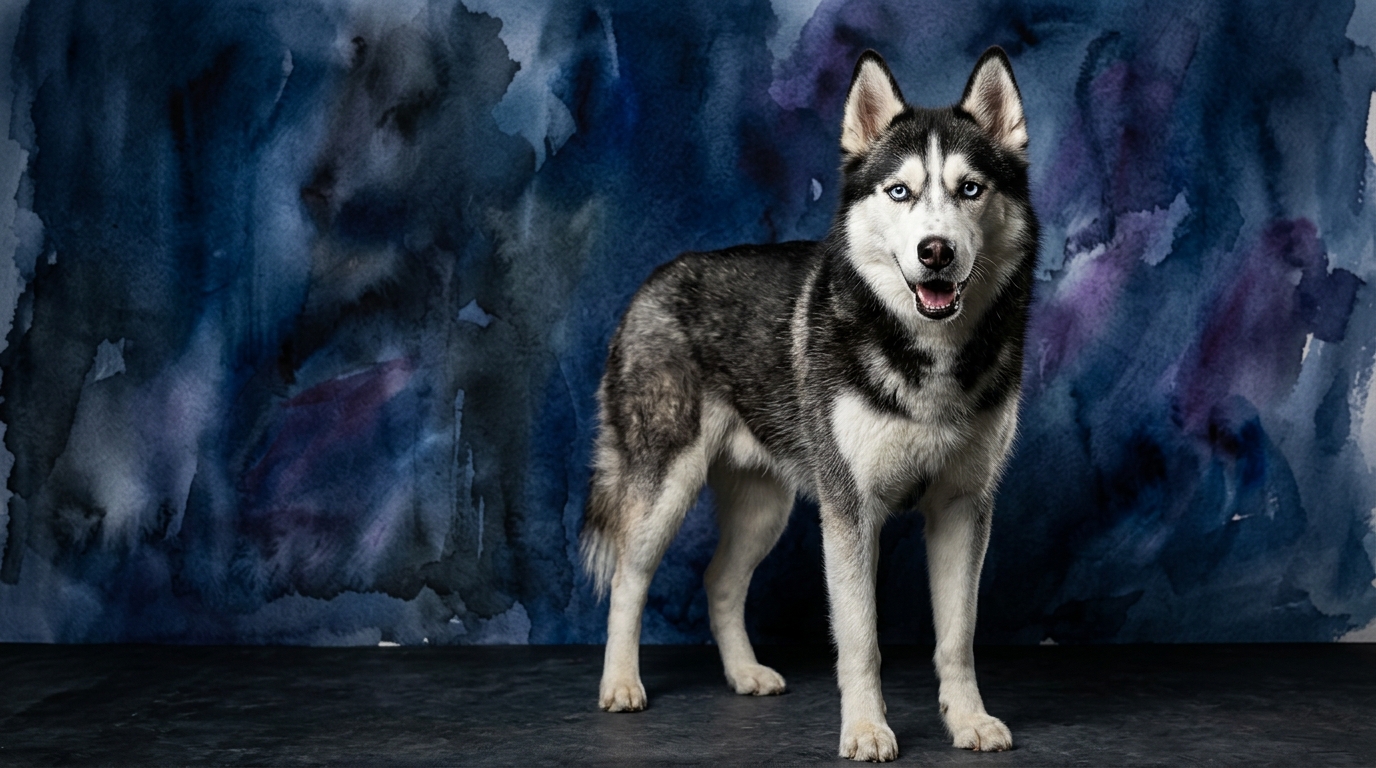
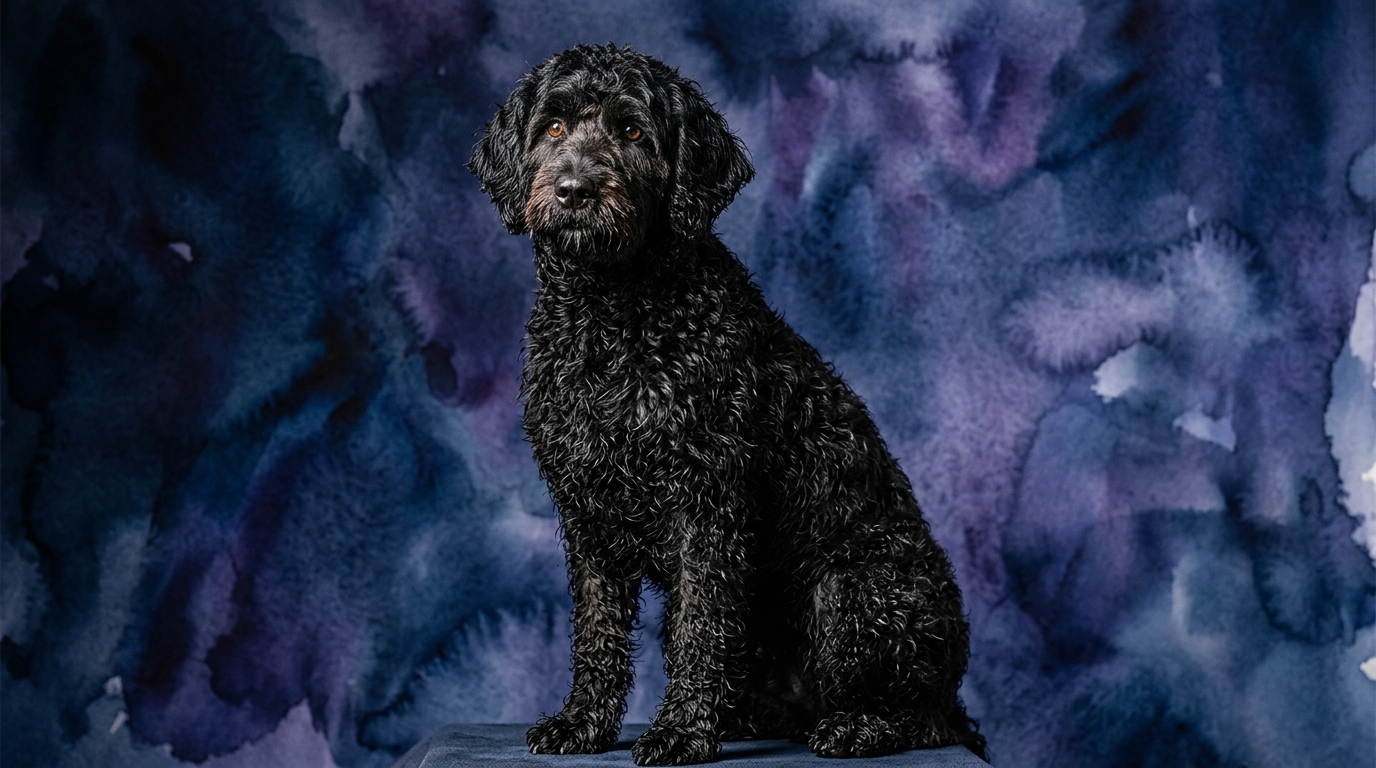
Side-by-Side IQ Profile: Siberian Husky vs. Portuguese Water Dog
The Siberian Husky, ranked #45 by Coren for working intelligence, presents a cognitive profile sculpted by centuries of demanding sled work. Their Problem Solving is rated at 4/5, indicating a strong capacity for independent thought and devising creative solutions to obstacles, whether it's navigating complex terrain or outwitting a containment strategy. However, this independent streak translates to a Training Speed of 2/5, meaning they often require extensive repetition and a compelling reason to comply with commands. Social Intelligence for Huskies stands at 3/5; they form bonds but often maintain a degree of self-reliance, understanding pack dynamics but not always seeking constant human interaction or emotional mirroring. Their Instinctive Drive is exceptionally high at 5/5, fueled by an innate need to run, pull, and explore, making them perpetual motion machines. Finally, their Memory is strong at 4/5, allowing them to recall routes, routines, and past experiences with impressive accuracy, crucial for long-distance travel.
The Portuguese Water Dog, while not Coren-ranked, offers a different yet equally compelling cognitive makeup, honed for assisting fishermen. Their Problem Solving is rated 3/5, demonstrating a solid ability to learn complex tasks and adapt, though often with a preference for human guidance rather than purely independent invention. This cooperative nature contributes to a Training Speed of 3/5, suggesting they learn at a moderate, consistent pace and are generally eager to engage in structured learning activities. Their Social Intelligence is also 3/5; PWDs are typically outgoing, forming close attachments to their families and often displaying a keen awareness of human moods, thriving on participation and interaction. Instinctive Drive for the PWD is 3/5, centered around their aquatic heritage, manifesting as a strong inclination towards water activities, retrieving, and working closely alongside people, but without the extreme, independent wanderlust of a Husky. Their Memory is rated 3/5, allowing them to consistently recall commands, routines, and learned behaviors, supporting their roles as adaptable working companions.
Where the Siberian Husky Wins Cognitively
The Siberian Husky's cognitive strengths primarily lie in their remarkable independent problem-solving and profound instinctive drive. With a Problem Solving score of 4/5, they possess an inherent ability to assess situations and formulate solutions without constant human direction. This manifests in their capacity to find escape routes, navigate unfamiliar environments, or even orchestrate complex strategies to obtain desired objects, a trait invaluable for their historical role as self-sufficient sled dogs. This resourcefulness means they are not easily deterred by challenges and will often persist until they find a way to achieve their objective, showcasing a mental resilience that is truly distinctive.
Furthermore, their Instinctive Drive, a perfect 5/5, represents an unparalleled internal motivation for physical exertion and exploration. This isn't just about speed; it’s about endurance, purpose, and an unwavering desire to move and work. This intense drive is a cognitive asset in environments requiring sustained effort and self-direction over vast distances, where a dog must rely on its own internal compass and motivation rather than constant external cues. Their superior Memory (4/5) also complements this, allowing them to effectively recall complex routes and tasks, reinforcing their aptitude for independent, long-haul endeavors.
Where the Portuguese Water Dog Wins Cognitively
The Portuguese Water Dog's cognitive advantages are rooted in its balanced profile and cooperative learning style, particularly its more consistent Training Speed. While its individual scores might not reach the Husky's peak in every dimension, the PWD's 3/5 Training Speed is a significant win, indicating a greater readiness and willingness to absorb and apply human instruction. This means PWDs are generally more receptive to structured learning environments, making the process of teaching new commands and complex tasks a more predictable and often more rewarding experience for owners.
Moreover, the PWD's moderate Instinctive Drive (3/5), while lower than the Husky's, can be considered a cognitive advantage for many owners. It signifies a strong drive to work and engage, but one that is typically more focused on collaborative tasks with humans, such as retrieving or water work, rather than an overwhelming urge for independent, long-distance exploration. This more manageable drive, combined with its solid Problem Solving (3/5) and Memory (3/5), means the PWD is often more inclined to apply its intelligence under human direction, making it an excellent partner for specific, task-oriented activities where collaboration is key.
Which Is Easier to Train and Why?
When comparing trainability, the Portuguese Water Dog generally presents a less challenging experience than the Siberian Husky. The PWD's Training Speed of 3/5 indicates a moderate learning curve, meaning they typically pick up new commands and routines within a reasonable number of repetitions. Their eagerness to please and focus on human engagement, stemming from their history as close working partners with fishermen, makes them more amenable to instruction. They respond well to positive reinforcement and consistency, often viewing training as a collaborative game.
In contrast, the Siberian Husky's Training Speed is a lower 2/5, reflecting their deeply ingrained independence. Huskies often require more repetitions and a compelling 'why' to perform a command. Their high Problem Solving (4/5) means they are constantly evaluating if a task is worth their effort or if there's a more efficient, self-directed way to achieve a goal. This cognitive trait, coupled with their powerful Instinctive Drive (5/5) to run and explore, means that while they are capable of learning, their motivation is often internal rather than external, making them less inclined to immediate obedience purely for human gratification. Owners must be exceptionally patient, creative, and consistent to overcome this inherent self-determination.
Which Suits Active Owners vs. Relaxed Owners?
For the truly active owner seeking a partner for endurance activities and a mentally engaging challenge, the Siberian Husky is an ideal match. Their Instinctive Drive of 5/5 means they possess an almost insatiable need for vigorous physical activity, thriving on long runs, hikes, or sledding. These dogs are built for sustained effort and require owners who can consistently meet this high demand for exercise, not just physically but also mentally. Their 4/5 Problem Solving also necessitates an owner who can provide varied mental stimulation and is prepared for a dog that might try to outsmart them, making them unsuitable for those seeking a low-maintenance companion.
The Portuguese Water Dog, while also an active breed, suits owners who are active but perhaps prefer more structured, collaborative activities over independent endurance feats. With an Instinctive Drive of 3/5, they enjoy plenty of exercise, especially activities involving water, retrieving, or agility, but their drive is typically more manageable and less independently focused than a Husky's. PWDs thrive on being involved in family activities and appreciate owners who can provide consistent training and mental engagement through games and tasks. They are better suited for active owners who want a close working bond and a dog that is consistently willing to participate in shared endeavors, rather than an owner seeking a more relaxed, sedentary lifestyle.
The Verdict: When to Choose Each
Ultimately, the choice between a Siberian Husky and a Portuguese Water Dog hinges on an owner's lifestyle, experience level, and what they seek in a canine companion's cognitive makeup. Both breeds demand engagement, but their cognitive strengths manifest in different ways, leading to distinct partnership dynamics. Understanding these nuances is key to a harmonious relationship.
The Verdict
Choose a Siberian Husky if you are a highly experienced, active owner who thrives on independent, resilient canine minds, prepared to consistently meet their extreme physical demands and navigate their resourceful problem-solving with patience and creativity.
Opt for a Portuguese Water Dog if you are an active owner seeking a cooperative, trainable partner for structured activities and a close bond, appreciating a dog with a manageable drive that excels in collaborative learning and engagement.
🧠 Find Your Pet's IQ Score
Our Pet IQ Lab assessment covers 25+ tests across 5 cognitive dimensions — personalized to your breed.
Take the Full IQ Test →Frequently Asked Questions
Is a Siberian Husky's high problem-solving ability a disadvantage for owners?
A Husky's 4/5 problem-solving can be a challenge for owners, as it often means they will ingeniously figure out ways to achieve their own goals, which might include escaping enclosures or manipulating situations. It requires consistent, intelligent management and proactive environmental security rather than being a pure disadvantage.
Does the Portuguese Water Dog's moderate instinctive drive mean it's less active?
No, a PWD's 3/5 instinctive drive doesn't mean it's inactive; it simply means its drive is more focused on activities like retrieving, swimming, and working with its human, rather than the Husky's intense, independent endurance running. PWDs still require significant daily exercise and mental stimulation to thrive.
How does the Coren ranking affect this comparison?
Coren's ranking primarily assesses 'working intelligence' based on trainability and obedience, placing the Husky at #45. The PWD is not Coren-ranked, but The Cosmic Pet Pet IQ Lab's multi-dimensional assessment provides a broader cognitive picture, showing that the PWD's 3/5 training speed is actually more cooperative than the Husky's 2/5, despite the Coren difference.