
Side-by-Side IQ Profile: Siberian Husky vs. Russian Toy
At The Cosmic Pet Pet IQ Lab, we analyze canine cognition across five key dimensions, providing a granular view of each breed's mental strengths. Understanding these profiles helps prospective owners align with a companion whose cognitive makeup complements their lifestyle and expectations.
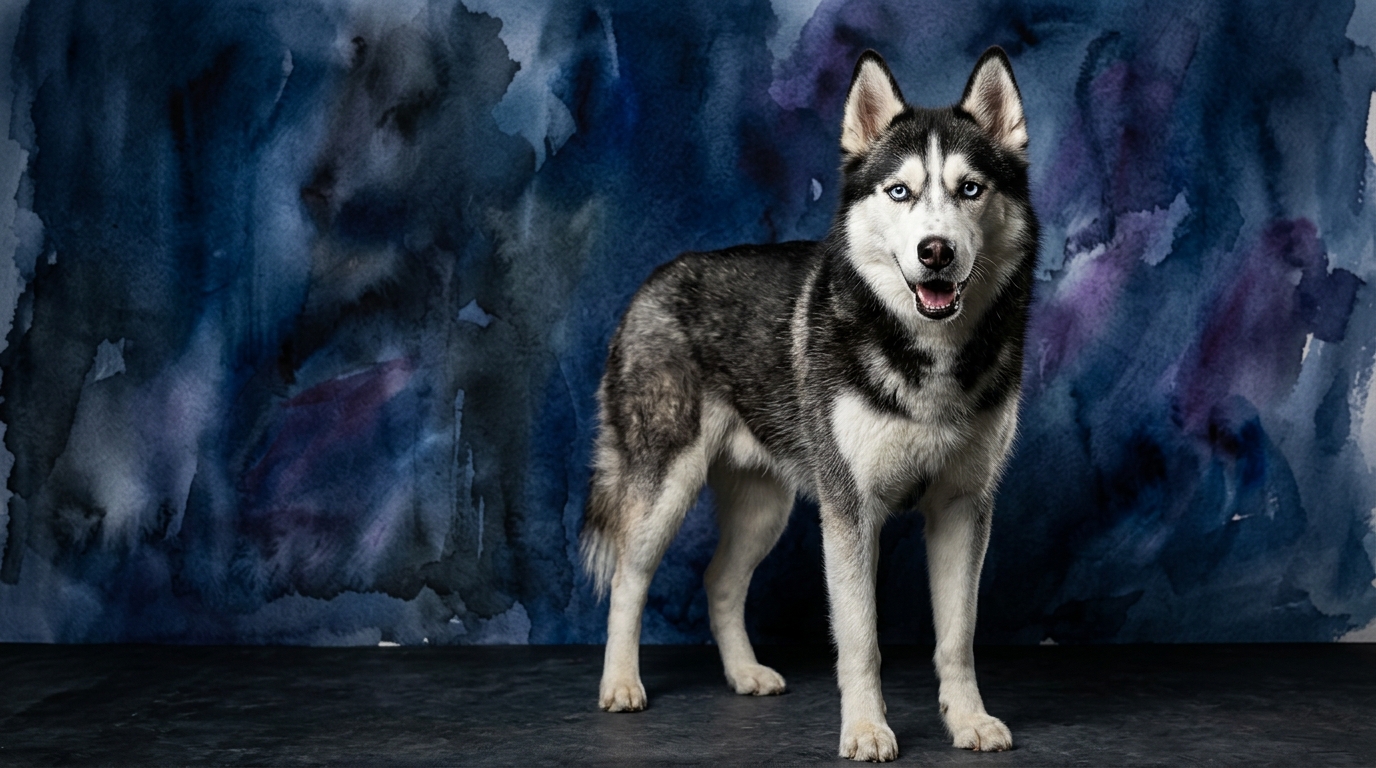
The Siberian Husky, a dog of the Working group, carries a Coren rank of #45, indicating a respectable capacity for obedience learning, though not among the quickest. Their IQ profile is marked by Problem Solving 4/5, Training Speed 2/5, Social Intelligence 3/5, Instinctive Drive 5/5, and Memory 4/5. This suggests a dog with significant mental agility for navigating challenges and a powerful internal motivation.
In contrast, the Russian Toy, a delicate member of the Toy group, does not feature on Coren's ranking, which primarily assesses obedience intelligence. Their IQ scores reveal a different cognitive emphasis: Problem Solving 3/5, Training Speed 3/5, Social Intelligence 3/5, Instinctive Drive 3/5, and Memory 3/5. These scores point to a balanced but less intensely driven cognitive makeup compared to their larger counterpart.
For the Siberian Husky, a Problem Solving score of 4/5 reflects their adeptness at figuring out how to achieve goals, like navigating complex terrains or outsmarting enclosures, often employing clever strategies rather than brute force. Their Instinctive Drive, a perfect 5/5, underpins a powerful urge to run, pull, and explore, deeply ingrained from their sled dog heritage, influencing many behaviors. A Memory of 4/5 means they exhibit strong recall for routines, locations, and past experiences, especially those associated with positive or negative outcomes. However, their Training Speed of 2/5 and Social Intelligence of 3/5 highlight an independent nature; while capable of learning and generally good with others, their obedience is often a negotiation, less driven by a desire to please and more by their own interests.
The Russian Toy's Problem Solving at 3/5 indicates they are capable of solving moderate challenges, such as navigating puzzle toys or learning complex sequences, often through observation and trial-and-error, though their world often presents fewer grand-scale problems. Their Training Speed of 3/5 means they are generally eager to please their primary human, leading to a moderate pace of learning new commands and tricks, responding well to positive reinforcement. Social Intelligence also at 3/5 suggests they can be quite social with familiar people and other small, respectful dogs, though their small size can lead to timidity around larger, boisterous animals. An Instinctive Drive of 3/5 means while they retain some prey drive (chasing small objects), it's far less pronounced than a Husky's, with primary drives often revolving around companionship and comfort. Finally, their Memory of 3/5 means they possess a decent recall for routines, learned behaviors, and people, contributing to their trainability.
Where the Siberian Husky Wins Cognitively
The Siberian Husky truly excels in self-directed problem-solving, particularly when fueled by their profound instinctive drives. Their exceptional ability to figure out how to achieve goals, especially those related to exploration or 'escape,' is a direct consequence of their historical role requiring independent decision-making in vast, challenging environments. A Husky might ingeniously figure out how to unlatch a gate, climb a fence, or open a cupboard to satisfy their wanderlust or curiosity, demonstrating a strategic application of their cognitive faculties driven by an internal urge to move and investigate. This proactive, independent thought process, combined with a robust memory for successful strategies, gives them an edge in navigating and manipulating their physical world in pursuit of their desires.
Where the Russian Toy Wins Cognitively
While not built for grand feats of independent problem-solving in the wilderness, the Russian Toy's cognitive strength lies in their nuanced engagement with their human companions and their relatively higher training speed. Their capacity to quickly assimilate and respond to human-initiated commands and routines (Training Speed 3/5) indicates a greater attunement to social cues and a readiness to engage in structured learning activities. Their cognitive efforts are more readily directed towards pleasing and interacting with their human family, which is a significant advantage in a domestic setting. This eagerness to participate in human-centric tasks means they often pick up new tricks and house rules with greater consistency and less internal debate than a Husky, making them highly adaptable to a home environment focused on companionship.
Which is Easier to Train and Why
The Russian Toy is generally easier to train for obedience and basic manners, primarily due to their higher Training Speed score (3/5 vs. Husky's 2/5) and their intrinsic motivation to please their owner. Their cognitive energy is often directed towards understanding and complying with human expectations, especially when positive reinforcement is applied. This makes them quicker to acquire commands and more consistent in their performance, as their internal drives are less likely to override their learned behaviors. For example, a Russian Toy might learn to 'stay' in a few dedicated sessions, motivated by praise and a small treat, and reliably hold the command in various settings.
Conversely, the Siberian Husky’s training journey is often more demanding. Their powerful Instinctive Drive (5/5) and robust Problem Solving (4/5) mean they frequently weigh commands against their own desires, such as the urge to explore or chase. While they remember commands (Memory 4/5), their independent nature means they may choose not to obey if a more compelling stimulus is present or if they perceive a better alternative. Training a Husky requires immense patience, creativity, and consistency, often feeling like a continuous negotiation where the owner must consistently prove that compliance is more rewarding than following their own agenda. They learn, but they also evaluate.
Which Suits Active Owners vs. Relaxed Owners
The Siberian Husky is unequivocally suited for active owners. Their profound Instinctive Drive (5/5) for running, exploring, and pulling necessitates an owner who can provide extensive physical and mental stimulation daily. Their cognitive abilities thrive when given opportunities to solve problems during long hikes, engage in scent work, or participate in dog sports like canicross or sledding. An owner with a relaxed lifestyle would quickly find themselves overwhelmed by a Husky's unmet needs, potentially leading to destructive behaviors, excessive vocalization, or relentless escape attempts as the dog seeks outlets for their powerful urges. They require an owner who enjoys being outdoors and can commit to their high energy demands.
The Russian Toy, while still benefiting from regular play and mental engagement, is a better fit for more relaxed owners. Their lower Instinctive Drive (3/5) and smaller physical needs mean they are content with shorter walks, indoor games, and learning tricks within the home environment. Their problem-solving and memory skills are well-exercised through interactive toys and companionship, making them adaptable to apartment living and a more sedate pace, as long as their need for human interaction and moderate mental enrichment is met. They thrive on close companionship and are generally less demanding in terms of requiring intense physical exertion, making them excellent companions for those with a quieter lifestyle.
The Verdict
Choose a Siberian Husky if you thrive on a challenge, desire a companion for rigorous outdoor adventures, and appreciate a dog that thinks independently and requires significant mental and physical engagement.
Opt for a Russian Toy if you seek a devoted, trainable companion that enjoys close human interaction, adapts well to a more contained environment, and provides cheerful companionship without demanding extreme physical exertion.
🧠 Find Your Pet's IQ Score
Our Pet IQ Lab assessment covers 25+ tests across 5 cognitive dimensions — personalized to your breed.
Take the Full IQ Test →Frequently Asked Questions
Do Siberian Huskies really try to escape often?
Yes, their high instinctive drive for exploration and problem-solving skills often manifest as a strong desire to venture beyond boundaries. They are notably adept at finding weaknesses in fences or gates, driven by an innate wanderlust that requires secure containment.
Are Russian Toys difficult to socialize given their small size?
While their small stature can make them timid, proper early socialization is crucial for Russian Toys to develop confidence. Exposing them gently to various people, sounds, and well-behaved, calm dogs from a young age helps them become well-adjusted, confident companions.
Does Coren's ranking apply to all breeds?
Stanley Coren's ranking primarily assesses 'working and obedience intelligence,' which measures how quickly a dog learns and obeys commands. Breeds not included, like the Russian Toy, might excel in other cognitive areas such as adaptive intelligence or specific problem-solving, which are not captured by this specific metric.