Side-by-Side IQ Profile: Unpacking Canine Cognition
The Cosmic Pet Pet IQ Lab employs a five-dimensional framework to assess canine cognition, offering a granular view beyond simple labels. For the Siberian Husky and Saluki, these dimensions illuminate their distinct mental architectures, shaped by centuries of selective breeding for specific roles.
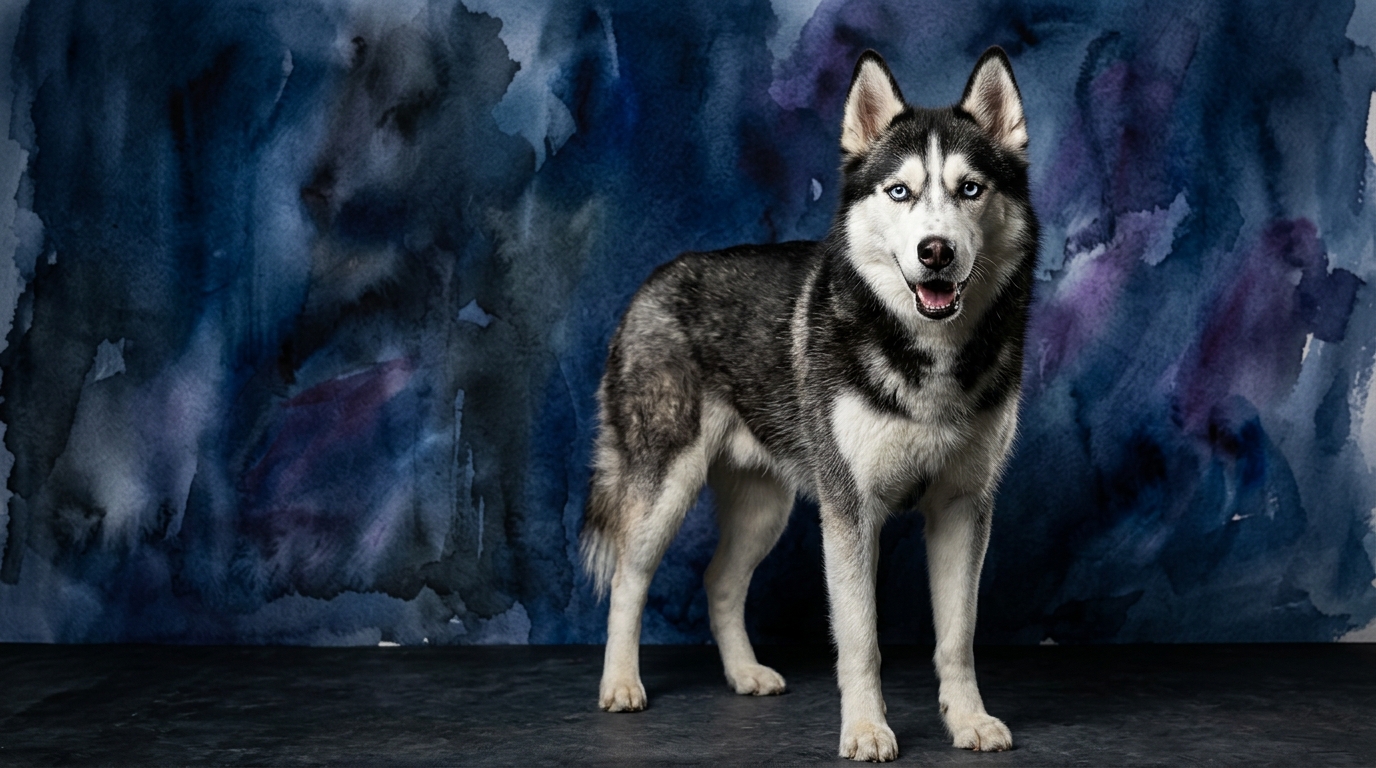
Siberian Husky:
Problem Solving (4/5): These dogs exhibit a strong capacity for independent thought, often devising their own solutions to obstacles, whether it's finding a way out of an enclosure or strategizing how to reach a coveted item. Their history as sled dogs required them to make decisions in challenging environments, fostering a resourceful mindset.
Training Speed (2/5): While capable of learning, the Husky's independent spirit and strong will can translate into a slower training progression. They often require consistent, engaging methods and a clear 'what's in it for me' motivation, as rote obedience isn't always their priority.
Social Intelligence (3/5): Huskies generally possess good social skills, interacting well with both humans and other dogs, often displaying a playful and tolerant demeanor. Their pack-oriented heritage means they understand social hierarchies and cues, though they might not always prioritize human directives over their own desires.
Instinctive Drive (5/5): This breed excels in natural, instinct-driven behaviors, particularly their powerful prey drive and an innate urge to run and pull. Their high instinctive drive is a core part of their identity, manifesting in a strong desire to explore, track, and engage in vigorous physical activity.
Memory (4/5): Huskies demonstrate good memory, remembering commands, routes, and experiences over time. This recall aids in their ability to learn complex tasks and navigate familiar territories, even if their application of learned behaviors can be selective based on motivation.
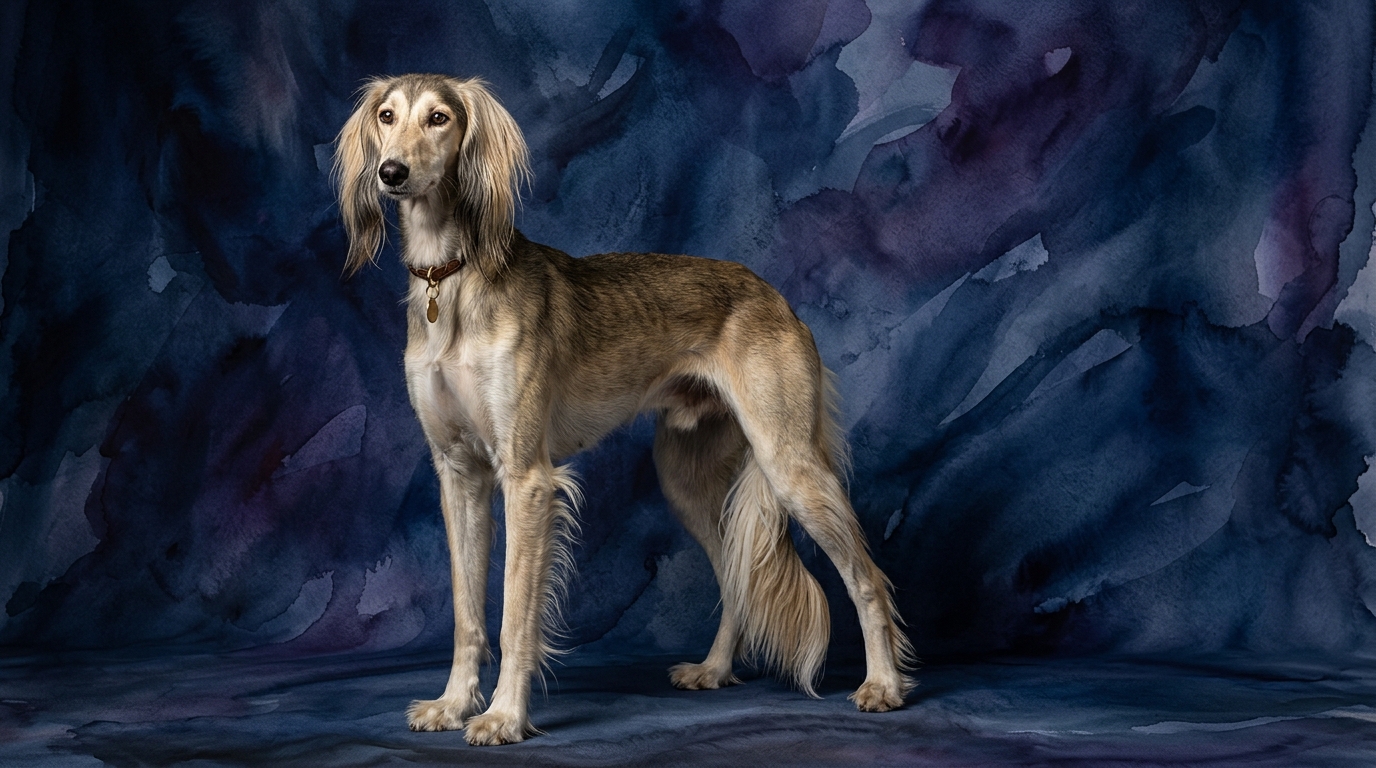
Saluki:
Problem Solving (3/5): Salukis show moderate problem-solving abilities, capable of navigating their environment and understanding simple causal relationships. Their solutions are often direct and less prone to the complex, multi-step strategies seen in some working breeds, focusing more on efficient outcomes.
Training Speed (3/5): Salukis learn at a moderate pace, responding well to positive reinforcement and gentle, patient instruction. While not as overtly stubborn as some sighthounds, their independent nature means they can be easily bored by repetitive drills, requiring varied and engaging training sessions.
Social Intelligence (3/5): These elegant hounds generally exhibit a reserved yet polite social intelligence, often forming deep bonds with their chosen family members but remaining aloof with strangers. They navigate canine social dynamics with quiet dignity, preferring calm interactions over boisterous play.
Instinctive Drive (3/5): The Saluki's primary instinctive drive is their powerful prey drive, honed for centuries to spot and chase fast-moving objects over vast distances. While strong in this specific area, their overall instinctive drive is less generalized than a Husky's, not extending to pulling or extensive digging.
Memory (3/5): Salukis possess a functional memory, recalling familiar routines, people, and locations. They retain learned behaviors and cues adequately, though their memory isn't typically highlighted for exceptional complexity or long-term recall of intricate sequences.
Where the Siberian Husky Shines Cognitively
The Siberian Husky's cognitive strengths lean heavily into independent problem-solving and a profound instinctive drive, both rated 4/5 and 5/5 respectively. Their historical role as sled dogs demanded autonomous decision-making in vast, often featureless, landscapes, fostering a breed that can assess situations and act without constant human direction. This manifests in a remarkable ability to figure out escape routes from yards, open latches, or strategize how to reach food on a counter, showcasing a resourceful, self-directed intellect. Their memory, at 4/5, supports this by allowing them to retain complex spatial information and learned sequences, enabling them to navigate and adapt effectively to their environment. This combination makes them adept at tasks requiring ingenuity and a strong internal compass, rather than strict adherence to commands.
Where the Saluki Holds Its Own Cognitively
The Saluki, while not as overtly 'problem-solving' in the Husky's independent sense, excels in its own unique cognitive domain, particularly within its specialized hunting instincts. Its training speed and social intelligence are both rated 3/5, indicating a balanced and adaptable cognitive profile that belies its aloof reputation. Unlike the Husky's broad instinctive drives, the Saluki's 3/5 instinctive drive is intensely focused on sight-hunting, requiring precise visual processing and rapid decision-making in pursuit. This specialized intelligence allows them to process visual stimuli with exceptional speed and accuracy, making instantaneous judgments about prey movement and trajectory over long distances. Their moderate training speed suggests they are receptive to learning when the motivation aligns with their nature, often preferring engagement over repetitive drills.
Training: A Tale of Two Temperaments
Training a Siberian Husky (training speed 2/5) often presents a unique set of challenges due to their formidable independence and selective hearing, which are direct consequences of their problem-solving nature and high instinctive drive. They are not inherently disobedient but rather possess a strong internal compass and a drive to fulfill their own perceived needs, often prioritizing exploration or chasing over adhering to a 'sit' command. Effective Husky training demands creativity, consistency, and a deep understanding of their motivations, often leveraging positive reinforcement and making training feel like a collaborative game rather than a strict command-and-response session. Owners must be prepared for a dog that will constantly test boundaries and requires ongoing mental engagement to prevent boredom and destructive behaviors.
In contrast, the Saluki (training speed 3/5) can be more receptive to training, though they are far from automatons. Their moderate training speed is coupled with a reserved temperament; they respond best to gentle, patient methods and can become shut down by harsh corrections. While they possess an independent streak typical of sighthounds, it often manifests as a quiet disinterest in repetitive tasks rather than overt defiance. Real behavioral differences include the Saluki's tendency to be less food-motivated than many breeds, requiring owners to find other high-value rewards like praise or short play sessions. Their inherent desire for comfort and quiet companionship means they are less likely to actively seek out trouble or engage in persistent boundary-pushing, making them easier to manage in a home environment once basic manners are established.
Active Owners vs. Relaxed Owners: Matching Lifestyles
For the active owner, the Siberian Husky is an undeniable fit. Their instinctive drive (5/5) to run, explore, and engage in vigorous activity demands an owner who can consistently provide outlets for their boundless energy. These dogs thrive on long runs, hiking, sledding, or skijoring, and require significant daily physical and mental stimulation to remain content and well-adjusted. An owner who embraces an outdoor, adventurous lifestyle and can dedicate several hours a day to exercise and interactive play will find a loyal and enthusiastic companion in a Husky. Their high problem-solving capacity also means they need engaging activities beyond just physical exertion, such as puzzle toys or advanced trick training, to prevent boredom.
Conversely, the Saluki, while requiring regular exercise to maintain its athletic physique and satisfy its sighthound instincts, is better suited for an owner who appreciates a more relaxed, though still active, daily rhythm. Their moderate instinctive drive (3/5) means they need opportunities for safe, off-leash running in a securely fenced area to stretch their legs and indulge their chase instinct, but they are equally content to spend significant time lounging indoors. A Saluki owner should be prepared for bursts of high-speed activity followed by long periods of serene repose. They are not suited for owners seeking a dog for intense, prolonged endurance activities like a Husky, but rather one that enjoys a good sprint and then gracefully transitions to quiet companionship on the sofa. Their reserved social intelligence (3/5) also means they are less demanding of constant social interaction than some breeds, making them a good match for individuals who enjoy quiet companionship.
The Verdict
Select a Siberian Husky if you are an experienced, highly active owner eager for a challenge, capable of providing extensive physical exercise, mental stimulation, and consistent, creative training for an independent, resourceful companion.
Opt for a Saluki if you seek an elegant, independent companion for a moderately active lifestyle, valuing quiet companionship, gentle training, and providing secure spaces for their distinctive sighthound bursts of speed.
🧠 Find Your Pet's IQ Score
Our Pet IQ Lab assessment covers 25+ tests across 5 cognitive dimensions — personalized to your breed.
Take the Full IQ Test →Frequently Asked Questions
Is a Siberian Husky difficult to train?
A Siberian Husky's training speed is rated 2/5, indicating they can be challenging. Their independent nature and strong problem-solving skills mean they often prioritize their own agenda, requiring highly consistent, engaging, and reward-based training methods to maintain focus and motivation. Owners need patience and creativity to work with their strong will.
Do Salukis need a lot of exercise?
Salukis require regular exercise, particularly opportunities for safe, off-leash running in a securely fenced area to satisfy their sighthound instincts. While they enjoy bursts of high-speed activity, they are also content with significant periods of rest indoors, making their exercise needs different from a high-endurance breed.
Which breed is better with other pets?
Both breeds have a strong prey drive, making careful introductions and supervision essential with smaller pets. Siberian Huskies (instinctive drive 5/5) generally have a higher generalized prey drive, while Salukis (instinctive drive 3/5) have a highly specialized chase instinct for fast-moving objects, meaning both require vigilant management around cats or small animals.