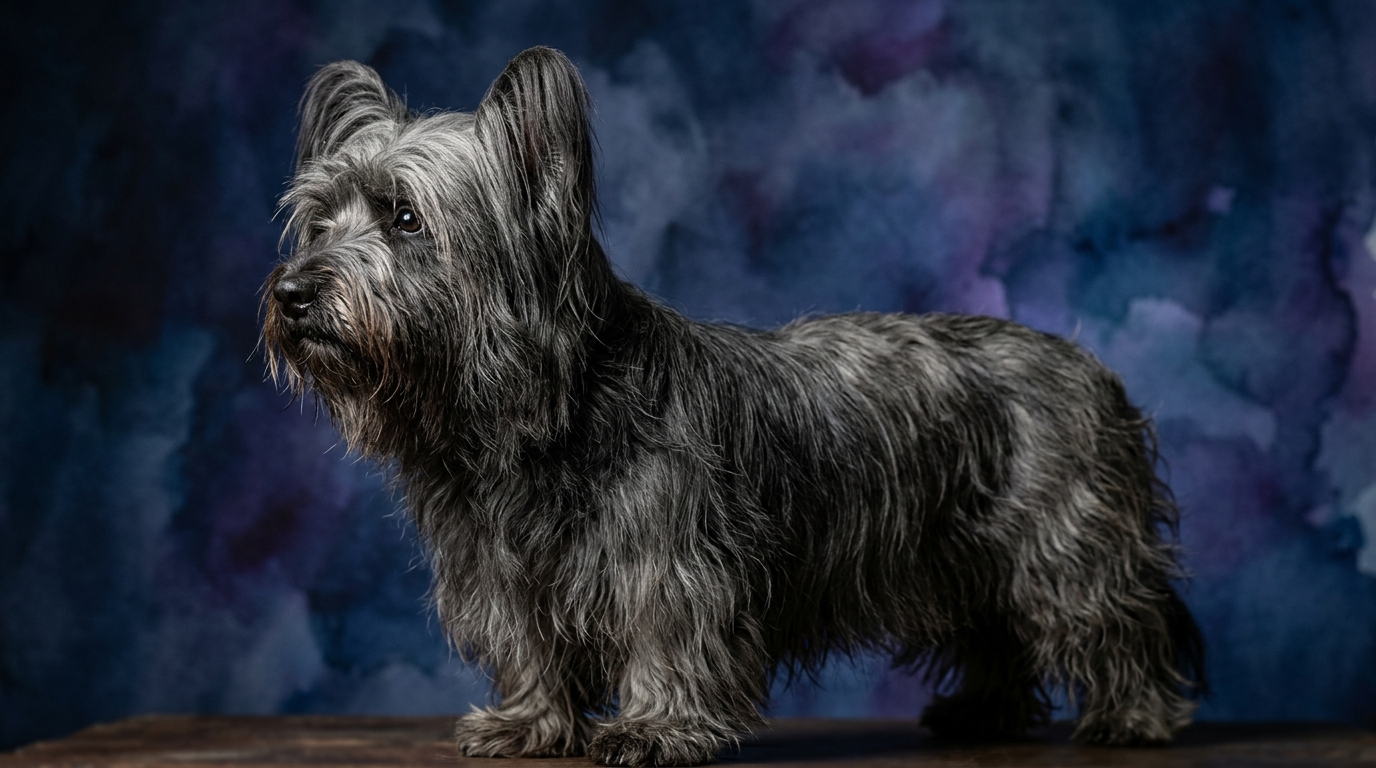
Side-by-Side IQ Profile: Skye Terrier
**Problem Solving (3/5):** This breed excels at practical, independent problem-solving, often related to navigating complex terrain or outsmarting small prey. Their solutions are typically direct and determined, reflecting their history as working terriers who needed to think on their feet in challenging environments, such as figuring out how to bypass an obstacle to reach a desired location.
**Training Speed (3/5):** Skye Terriers possess the capacity to learn quickly, but their strong will and independent nature mean they often evaluate the perceived value of a command before complying. Their learning speed is high when motivated, but their compliance speed can vary based on their personal agenda, requiring consistent, engaging reinforcement and a clear understanding of what's being asked.
**Social Intelligence (3/5):** Deeply loyal and affectionate with their chosen family, Skye Terriers demonstrate a nuanced understanding of their human companions' moods and routines. However, their social circle is often tightly defined; they can be reserved or discerning with strangers, requiring patient and early socialization to broaden their comfort zone and encourage acceptance.
**Instinctive Drive (3/5):** Their instinctual toolkit is robust, featuring a strong prey drive, a keen desire to dig, and a watchful territoriality. This drive manifests as an intense focus when something piques their interest, whether it's a rustle in the bushes or an unfamiliar sound, reflecting their heritage as vermin hunters with a purpose.
**Memory (3/5):** Skye Terriers exhibit good recall for routines, boundaries, and past experiences, both positive and negative. They remember effective strategies for achieving their goals and can hold onto learned behaviors, making consistency in training crucial for solidifying desired actions and avoiding the reinforcement of undesired ones.
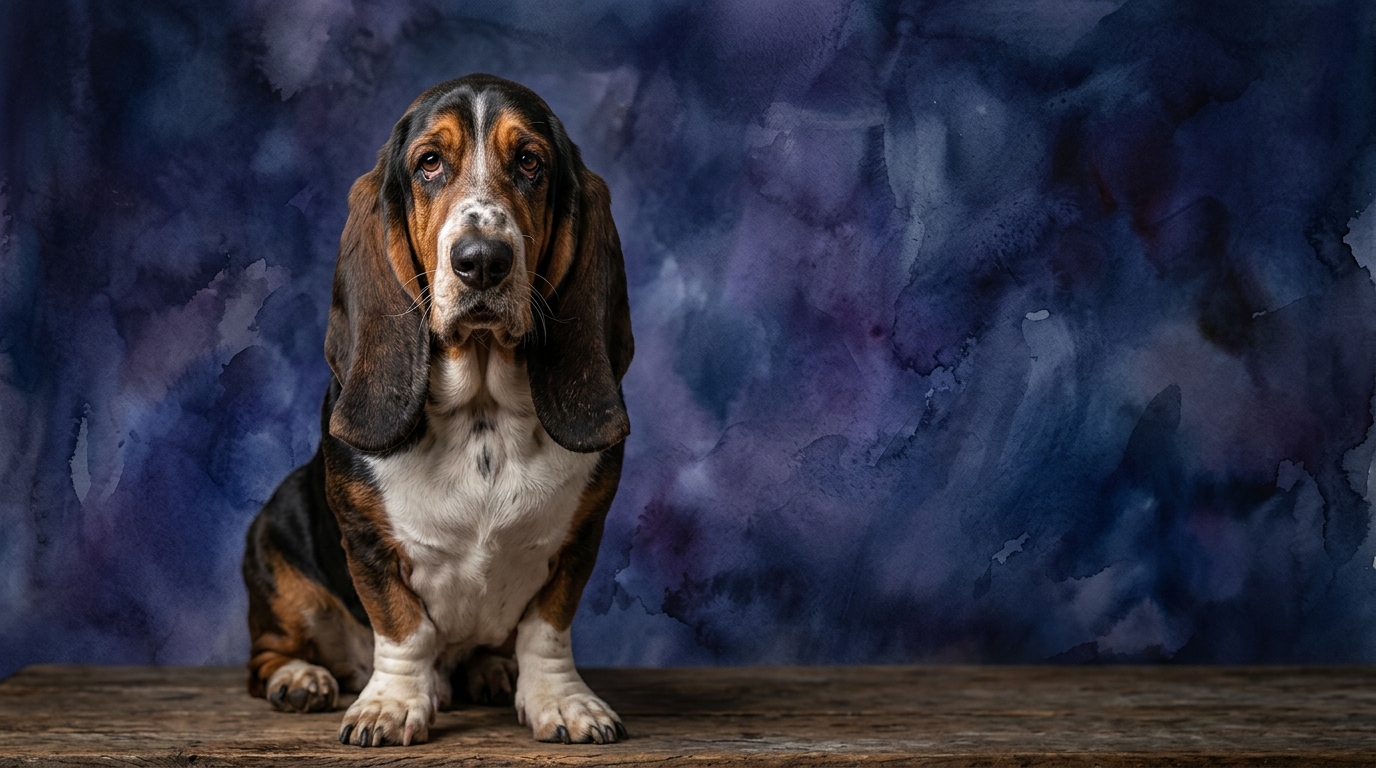
Side-by-Side IQ Profile: Basset Hound
**Problem Solving (3/5):** The Basset Hound's problem-solving prowess is deeply rooted in their incredible olfactory abilities. They excel at deciphering complex scent trails, navigating obstacles by nose, and persistently working to locate a hidden object or source of smell. Their solutions are often methodical and driven by sensory input, rather than overt physical agility, demonstrating a unique form of cognitive mapping.
**Training Speed (3/5):** While capable of learning at a moderate pace, Basset Hounds can present a training challenge due to their single-minded focus on scent and their inherent amiability, which can sometimes translate into a relaxed disregard for commands. Their learning is most effective when paired with high-value rewards and when distractions, particularly scent-based ones, are minimized, making consistency vital.
**Social Intelligence (3/5):** Basset Hounds are renowned for their placid and friendly disposition, often demonstrating a broad social understanding that extends to strangers and other animals. They readily form bonds and use their charming demeanor to elicit affection or treats, indicating a sophisticated, if subtle, grasp of social dynamics and how to leverage them.
**Instinctive Drive (3/5):** The Basset's lifeblood is their powerful scent drive. This instinct compels them to follow a trail with unwavering persistence, often deaf and blind to their surroundings once a compelling scent is engaged. This drive is a core part of their being, defining much of their behavior and interaction with the world, from walks to playtime.
**Memory (3/5):** Basset Hounds possess an excellent memory for scent pathways, the location of favored treats, and established routines that benefit them. They can recall specific scent profiles over long periods and remember where an interesting smell was last detected, showcasing a memory tied strongly to their primary sensory input and its rewards.
Where Skye Terrier Wins Cognitively
Despite identical overall scores, the Skye Terrier often demonstrates an edge in independent initiative and self-directed problem-solving, particularly in novel situations requiring quick, unassisted action. Their terrier heritage imbues them with a drive to assess and overcome obstacles with minimal human prompting, especially when a 'mission' is at hand. This manifests as a sharper cognitive flexibility in adapting to unforeseen environmental challenges or figuring out complex mechanisms, like latches, to achieve a desired outcome. While a Basset might patiently track a scent around a barrier, a Skye is more likely to attempt to dismantle or bypass it directly, showcasing a different kind of cognitive agility focused on immediate, tangible results rather than prolonged sensory pursuit.
Where Basset Hound Wins Cognitively
The Basset Hound's cognitive strengths shine brightest in areas demanding sustained focus and meticulous analysis of sensory information, specifically scent. Their ability to process and differentiate an intricate tapestry of odors, remember specific scent profiles, and follow a faint trail with unwavering devotion is unparalleled. This isn't merely instinct; it's a complex cognitive process involving selective attention, working memory for scent patterns, and persistent problem-solving to reconstruct a path. A Basset can mentally map an environment based solely on olfaction, demonstrating a sensory intelligence that far surpasses many breeds, allowing them to navigate and understand their world through an entirely different, deeply intricate lens. While a Skye might quickly assess a visual threat, a Basset can methodically deconstruct an entire narrative from a single sniff.
Which is Easier to Train and Why
Determining which breed is 'easier' to train is less about raw learning capacity and more about managing inherent behavioral differences. The Basset Hound, with its amiable nature and strong motivation for food rewards, can be quite receptive to training, provided the environment is free from distracting scents. Their placid temperament means they are less likely to challenge authority directly, often responding well to patient, positive reinforcement. However, their single-minded focus on scent can make recall challenging in an open environment, as their drive to follow a trail often overrides learned commands. The Skye Terrier, conversely, learns quickly but often couples this with a strong independent streak and a 'what's in it for me?' attitude. They require firm, consistent, and engaging training that appeals to their desire for purpose and their intelligent nature. While they might grasp a command faster, their willingness to execute it reliably depends heavily on the trainer's ability to maintain their interest and establish clear boundaries. A Basset might be slow to move but generally willing; a Skye might be quick to understand but selective in obedience.
Which Suits Active Owners vs Relaxed Owners
For owners seeking a companion for more relaxed, measured activities, the Basset Hound often proves an excellent match. While they require daily walks to maintain health and satisfy their olfactory needs, these are typically leisurely explorations focused on sniffing out the world. Their calm, unhurried demeanor makes them ideal for quiet evenings at home, content with a comfortable couch and the occasional gentle play; they are not built for intense agility or endurance sports. The Skye Terrier, while not a marathon runner, possesses a more active and curious mind that thrives on engaging activities. They benefit from consistent mental stimulation, structured play, and opportunities to 'work' or solve puzzles. Their tenacity and moderate energy levels suit owners who enjoy purposeful walks, interactive games, and consistent training challenges, rather than just casual strolls. They require an owner who appreciates their independent spirit and can channel their cognitive drive.
The Verdict
Opt for a Skye Terrier if you appreciate an independent, tenacious companion who thrives on mental engagement, consistent training, and offers deep loyalty to their chosen few.
Select a Basset Hound if you desire a placid, amiable companion who finds immense joy in exploring the world through scent, and whose gentle nature complements a more relaxed household.
🧠 Find Your Pet's IQ Score
Our Pet IQ Lab assessment covers 25+ tests across 5 cognitive dimensions — personalized to your breed.
Take the Full IQ Test →Frequently Asked Questions
Do Skye Terriers and Basset Hounds learn at the same pace?
While both breeds score 3/5 in training speed, their learning styles differ. Skye Terriers can grasp concepts quickly but may be selective in compliance due to independence, whereas Basset Hounds learn steadily but can be easily distracted by scents, requiring focused environments.
Which breed is better with children or other pets?
Basset Hounds are generally more amiable and tolerant with children and other pets, thanks to their placid social nature. Skye Terriers, while loyal to family, can be more reserved and may require careful socialization to ensure harmonious multi-pet or multi-child households.
How do their problem-solving skills differ with the same IQ rating?
Both score 3/5, but Skye Terriers excel at practical, independent problem-solving to overcome physical obstacles or pursue goals directly. Basset Hounds, conversely, are masters of olfactory problem-solving, meticulously deciphering complex scent trails and navigating their world through their superior sense of smell.