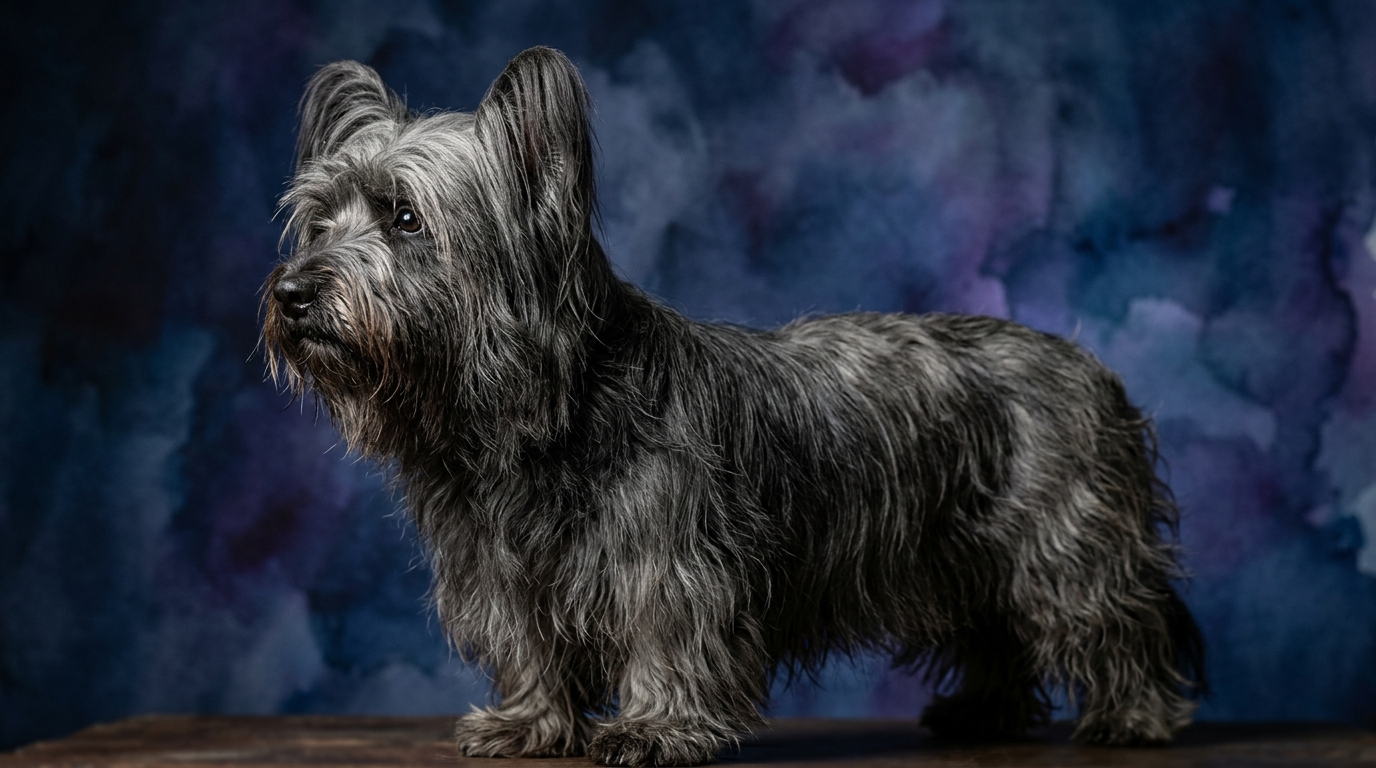
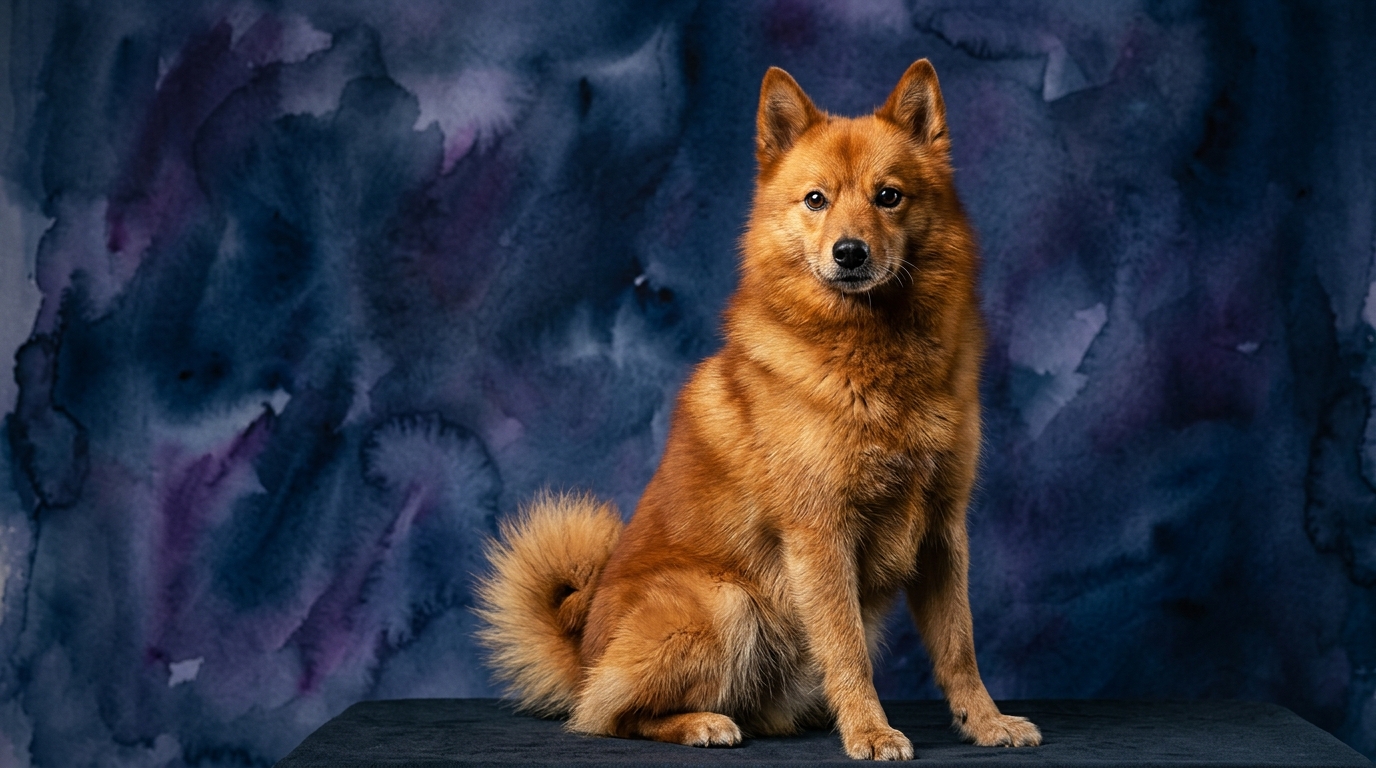
Side-by-Side IQ Profile: Skye Terrier vs. Finnish Spitz
The Cosmic Pet Pet IQ Lab assesses five key cognitive dimensions, and both the Skye Terrier and Finnish Spitz register a consistent 3/5 across the board. This numerical parity, however, masks considerable differences in how these breeds apply their mental faculties, shaped by centuries of selective breeding for specific tasks. Understanding these nuances requires looking beyond the numbers to the inherent nature of each breed.
For the Skye Terrier, a 3/5 in Problem Solving reflects a tenacious, independent approach to overcoming obstacles, particularly those related to their terrier instinct for digging out vermin or navigating confined spaces. Their Training Speed at 3/5 suggests they can learn new commands at a moderate pace, but their inherent terrier willfulness often dictates the context and motivation required. Social Intelligence at 3/5 indicates they are capable of forming strong bonds and reading human cues, yet they often maintain a discerning reserve, choosing their intimates carefully. An Instinctive Drive of 3/5 strongly points to their deep-seated urge to hunt, chase, and dig, a primal aspect of their cognitive makeup. Finally, their Memory at 3/5 implies they retain learned behaviors and experiences adequately, particularly those tied to routines or significant events, but may not have the instant recall of breeds bred for complex, multi-stage commands.
The Finnish Spitz, also scoring 3/5 in Problem Solving, applies this ability differently, demonstrating self-reliance and ingenuity in their traditional role as a barking bird dog. Their solutions often involve independent decision-making in a natural environment, rather than direct human collaboration. Training Speed at 3/5 for the Finnish Spitz indicates they can grasp concepts, but their independent spirit means they require patient, consistent methods that appeal to their intrinsic motivations, rather than rote obedience. Social Intelligence at 3/5 suggests they are perceptive of their human family's emotions and intentions, yet they retain a certain aloofness with strangers, characteristic of many spitz breeds. Their Instinctive Drive at 3/5 is heavily centered on their vocalization (barking) and tracking abilities, essential for their hunting heritage, making them highly attuned to environmental stimuli. Their Memory, also 3/5, allows them to recall hunting locations, successful strategies, and learned routines, but their focus is often on the task at hand, not necessarily complex sequences of commands.
Where the Skye Terrier Wins Cognitively
The Skye Terrier's cognitive strengths often manifest in their unwavering focus on a task once engaged, a hallmark of their terrier lineage. While their Problem Solving is rated 3/5, their tenacity, when directed towards a goal, can make them exceptionally effective at tasks requiring persistence and a singular drive to succeed. This isn't about raw processing speed, but about the application of their mental energy with a determined, almost stubborn, resolve that can outlast many other breeds in specific contexts. For example, a Skye Terrier might spend hours figuring out how to retrieve a buried toy or navigate a complex scent trail, demonstrating a focused mental endurance.
Furthermore, their Social Intelligence, while rated 3/5, is underpinned by a deep, discerning loyalty to their chosen family. This means they are highly attuned to the subtle cues and emotional states of their inner circle, often anticipating needs or reacting to moods with a sensitivity that belies their independent nature. This isn't about generalized gregariousness, but a profound, almost intuitive, understanding of their trusted human companions, allowing for a unique, unspoken communication that can be highly rewarding for those who earn their devotion.
Where the Finnish Spitz Wins Cognitively
The Finnish Spitz excels in cognitive domains related to independent decision-making and environmental awareness, reflecting their heritage as a self-sufficient hunting partner. Their Problem Solving, rated 3/5, is particularly strong in scenarios where they must analyze a situation and act without constant human direction, such as locating game or navigating varied terrain. This self-reliance means they are adept at making their own judgments and adapting their strategy on the fly, a cognitive strength that makes them less reliant on explicit commands and more on their innate understanding of their environment.
Their Instinctive Drive, also 3/5, is a finely tuned instrument for communication and detection. The 'barking bird dog' isn't just a nickname; it's a description of a highly specific cognitive function. A Finnish Spitz uses its vocalizations not randomly, but as a deliberate means to alert hunters to game, demonstrating a sophisticated form of communicative intelligence tied to their primary purpose. This precise application of instinct, combined with acute sensory perception, allows them to process and respond to subtle environmental cues that might go unnoticed by other breeds, showcasing a unique cognitive specialization.
Which is Easier to Train and Why
Despite both breeds scoring 3/5 in Training Speed, the practical experience of training a Skye Terrier versus a Finnish Spitz can differ significantly due to their behavioral predispositions. The Skye Terrier's terrier nature often translates into a strong will and an independent streak that can be interpreted as stubbornness. While they are capable of learning, their motivation is key; they respond best to positive reinforcement and methods that make training feel like a game or a challenge they can 'win.' They are not typically a breed that thrives on repetitive drills or unquestioning obedience, preferring to engage their minds on their own terms. Their natural inclination to pursue small animals also means a strong recall must be established early and consistently reinforced, as their instinctive drive can easily override learned commands.
The Finnish Spitz, similarly, presents a training challenge rooted in its independent hunting dog heritage. Their problem-solving abilities are geared towards autonomy, meaning they often assess situations and decide on a course of action rather than automatically deferring to human commands. They are not difficult to train because they lack intelligence, but because they are bred to think for themselves. Consistency, patience, and understanding their intrinsic motivations – particularly their love for vocalization and tracking – are crucial. While they can learn commands at a moderate pace, achieving a high degree of precision or off-leash reliability requires an owner who can consistently engage their independent spirit and make training a collaborative, rather than purely directive, experience. Their strong vocal drive means owners must also be prepared to manage their barking through training, as it's a deeply ingrained behavioral trait.
Which Suits Active Owners vs. Relaxed Owners
For owners seeking a more active, engaged companion who enjoys focused activities, the Skye Terrier can be a surprisingly good fit, despite their somewhat sedate appearance. While they are not typically high-energy dogs in the sense of needing to run miles daily, they thrive on mental stimulation and structured activities that tap into their terrier instincts. This includes puzzle toys, scent work, earthdog trials, or agility tailored to their body type. Their discerning social intelligence means they form deep bonds and appreciate owners who understand their need for both companionship and independent exploration. Owners who enjoy consistent, engaging training sessions and can channel their terrier drive will find them rewarding companions, even if daily physical exercise is moderate.
The Finnish Spitz, conversely, might appeal more to owners who appreciate a dog with a strong connection to nature and a more independent, self-directed approach to activity. While they do require regular exercise to satisfy their hunting instincts and maintain physical health, their activities often involve exploring outdoor environments, tracking scents, and expressing their natural vocalizations. They are not necessarily looking for constant human direction in their play; rather, they enjoy opportunities to engage their senses and make their own decisions in a safe, stimulating environment. An owner who enjoys long walks in varied terrain, is prepared for their vocal nature, and respects a dog's independent spirit will find a fulfilling partnership with a Finnish Spitz. They are less suited for entirely relaxed owners who prefer a perpetually quiet, low-maintenance companion.
The Verdict: When to Choose Each Breed
The Verdict
Choose the Skye Terrier if you appreciate a discerning, deeply loyal companion who thrives on mental engagement and focused problem-solving tasks, and you are prepared for their tenacious, sometimes willful, terrier spirit. They are best for owners who value a profound, understated bond and are willing to invest in consistent, positive training that respects their independence.
Opt for the Finnish Spitz if you are drawn to a self-reliant, vocal companion with a strong connection to natural environments and a unique communicative intelligence. They suit owners who appreciate independent thinkers, are prepared for their distinctive barking and need for outdoor exploration, and can provide patient, consistent training that respects their autonomous nature.
🧠 Find Your Pet's IQ Score
Our Pet IQ Lab assessment covers 25+ tests across 5 cognitive dimensions — personalized to your breed.
Take the Full IQ Test →Frequently Asked Questions
Do Skye Terriers get along with other pets?
Skye Terriers, with their 3/5 social intelligence and strong instinctive drive, can be discerning with other animals. While they can coexist with other pets, especially if raised together, their terrier instinct means small, furry animals might be viewed as prey, requiring careful supervision and early socialization to foster peaceful cohabitation.
How much exercise does a Finnish Spitz need daily?
A Finnish Spitz requires moderate to high levels of daily exercise to satisfy their 3/5 instinctive drive and maintain well-being. This typically involves at least 45-60 minutes of varied activity, such as long walks, off-leash exploration in secure areas, or engaging in scent work, allowing them to use their natural tracking and exploratory instincts.
Are Skye Terriers good for first-time dog owners?
Skye Terriers, while forming strong bonds, are not typically recommended for first-time dog owners due to their independent will and specific training needs stemming from their 3/5 training speed and problem-solving. Their tenacity requires an owner with patience, consistency, and a clear understanding of terrier traits to guide them effectively, making them better suited for those with some prior dog experience.