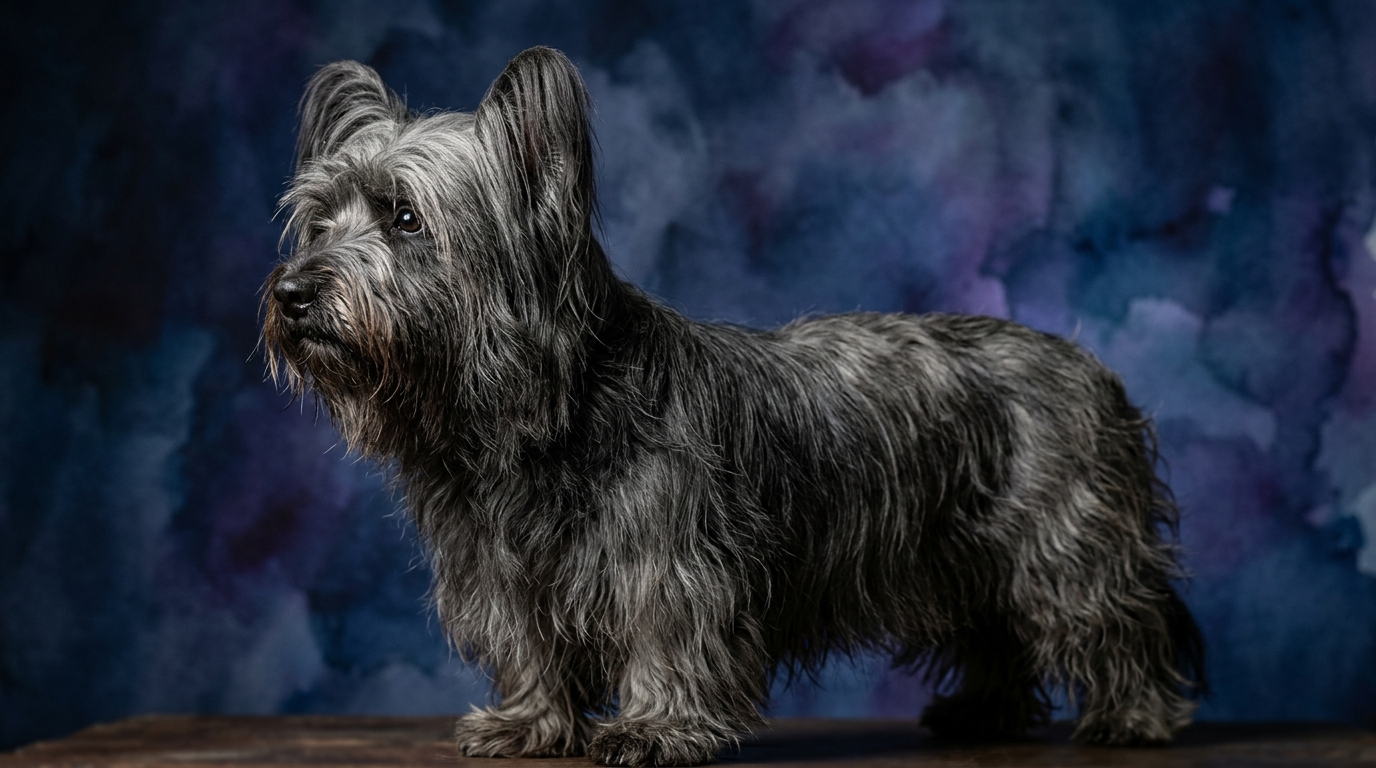
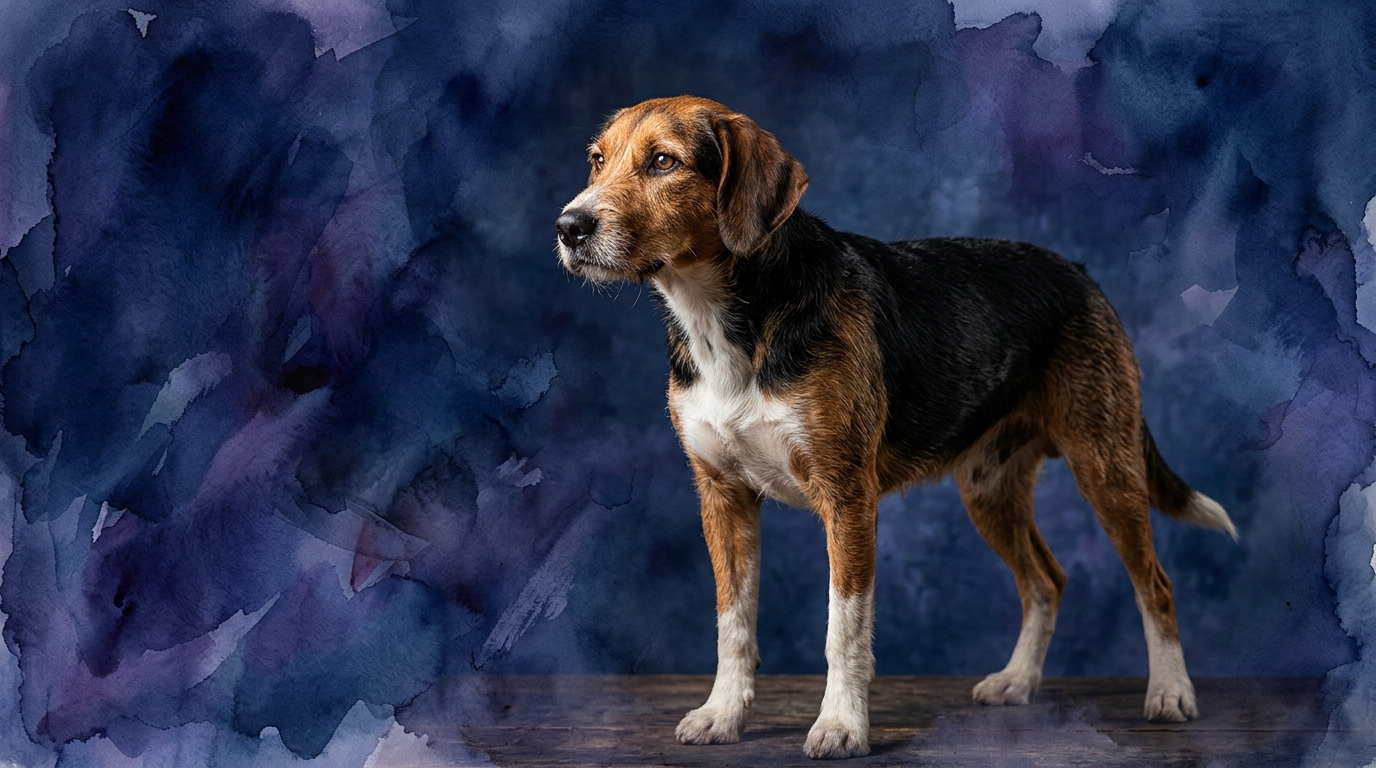
Side-by-Side IQ Profile: Unpacking Identical Scores
At first glance, the identical 3/5 ratings across all five cognitive dimensions for both the Skye Terrier and the Harrier might suggest parity. However, true insight comes from interpreting these scores through the lens of each breed's historical purpose and inherent temperament, revealing nuanced differences in their cognitive strengths and applications. These scores reflect not a universal 'smartness,' but rather a balanced capacity within their respective breed groups.
For the Skye Terrier, a 3/5 in problem-solving reflects their historical role as tenacious vermin hunters. This isn't about abstract puzzles, but practical, persistent application of effort to achieve a goal, like navigating dense undergrowth or digging relentlessly to flush out prey. Their 3/5 instinctive drive is profoundly tied to this, manifesting as an unwavering focus on scent and movement, coupled with a deep-seated desire to pursue and corner, which was essential for their survival and function.
A 3/5 training speed for a Skye Terrier means they grasp commands, but their inherent independence, a trait vital for working alone, often means they weigh the command against their own inclinations. Their 3/5 social intelligence typically presents as devoted loyalty to their inner circle, yet a reserved and discerning approach to strangers, rather than a broad desire to engage all comers. Memory at 3/5 allows them to recall routines and learned behaviors, but also to remember grievances or challenging past experiences, influencing their future responses.
The Harrier, also scoring 3/5 in problem-solving, showcases this ability through an unparalleled capacity for tracking. Their cognitive strength lies in their methodical and relentless pursuit of a scent trail, piecing together a complex tapestry of olfactory information across varied terrain and conditions. This form of problem-solving is deeply intertwined with their 3/5 instinctive drive, which is almost entirely dominated by their profound scenting ability and the inherent urge to follow and work in a pack.
A 3/5 training speed for the Harrier indicates they are capable of learning, especially with positive reinforcement centered around their drives, yet their intense focus on external stimuli like scent can easily override learned commands. Their 3/5 social intelligence shines in a pack environment, demonstrating cooperation and communication with other dogs, and generally a friendly demeanor towards people, though sometimes their independence when on a trail can overshadow their desire for human interaction. Memory at 3/5 serves them well for recalling vast scent maps and hunting patterns, alongside remembering learned cues, though the immediacy of a fresh scent can momentarily eclipse even well-established commands.
Where the Skye Terrier Wins Cognitively
When we delve into the specific manifestations of their identical 3/5 scores, certain cognitive strengths of the Skye Terrier become apparent, particularly in situations that align with their terrier nature. These are not instances of superior raw intelligence, but rather specific applications where their cognitive profile provides an advantage.
The Skye Terrier's problem-solving, while rated 3/5, carries a distinct edge in situations demanding sheer, unyielding tenacity. Their historical role required them to overcome physical barriers, whether digging under roots or squeezing through tight spaces, to reach their quarry. This translates into a focused, almost obsessive determination when confronted with a tangible objective they deem worthwhile, making them particularly effective at tasks requiring sustained, independent effort against obstacles.
While their social intelligence is also 3/5, the Skye Terrier excels in discernment and loyalty within a close-knit family unit. Their reserved nature with strangers isn't a deficit but a selective application of their social awareness; they are highly attuned to their immediate human companions, often anticipating needs and moods with a quiet sensitivity. This creates an incredibly deep, almost telepathic bond with their chosen people, making them exceptional confidantes who prioritize their inner circle above all else.
Their 3/5 memory is particularly robust for recalling specific routines, the layout of their territory, and the nuances of their owner's habits. This contextual memory allows them to establish predictable patterns, offering a sense of security and structure. They remember training cues, but also the consequences of past actions, which can be leveraged in consistent training approaches, where they remember what works (or doesn't) to achieve their own aims within the household structure.
Where the Harrier Wins Cognitively
Similarly, the Harrier's 3/5 cognitive scores manifest in unique strengths, particularly in areas reflecting their heritage as a pack hunting hound. Their victories lie in specific applications of their problem-solving and social faculties that are deeply ingrained in their breed's purpose.
The Harrier's 3/5 problem-solving truly shines in the realm of olfactory deduction. Their ability to interpret, follow, and differentiate complex scent trails across varied terrain is a cognitive feat that goes far beyond simple tracking. They don't just follow; they analyze, making sophisticated judgments about scent age, direction, and concentration, effectively 'solving' the puzzle of a lost trail with an unmatched olfactory analysis system. This makes them unparalleled in tasks requiring sustained focus on a non-visual cue.
While both breeds have a 3/5 instinctive drive, the Harrier's strength lies in its collaborative nature for pursuit. Bred to work in a pack, their drive is not solely individualistic but also geared towards coordinated effort. This means they possess an innate understanding of working alongside others, whether canine or human, towards a common goal, making them exceptional partners in activities like scent work or group sports where cooperation enhances the overall outcome.
The Harrier's 3/5 social intelligence manifests as a broad, generally friendly disposition towards a wider circle of individuals and other dogs. Their pack origins foster an openness and eagerness to engage, making them highly adaptable to various social settings and generally more welcoming to new faces. This affability means they are often more forgiving of social faux pas and quicker to integrate into new groups, valuing companionship and shared activity.
Which is Easier to Train and Why
Despite both breeds having a 3/5 rating for training speed, the real-world experience of training a Skye Terrier versus a Harrier can feel remarkably different due to their underlying behavioral traits and the specific ways their instincts influence learning and compliance. The ease of training isn't just about how quickly they grasp a command, but how consistently they choose to execute it.
Training a Skye Terrier can feel more challenging due to their independent nature and terrier stubbornness. They understand commands, but often weigh them against their own strong will and ingrained instincts. For instance, a 'stay' command might be perfectly understood, but if a squirrel darts by, their 3/5 instinctive drive for pursuit is likely to momentarily override compliance. Their memory (3/5) also means they quickly learn what they can get away with, requiring exceptional consistency and patience from the owner to prevent ingrained undesirable habits.
Harriers also have a 3/5 training speed, but their primary hurdle stems from their all-consuming scent drive. They can learn commands quickly, particularly when motivation is high (e.g., food, positive reinforcement), but maintaining focus in an environment rich with olfactory stimuli is a constant battle. A 'recall' command, while learned, can be completely ignored if a compelling scent trail (part of their 3/5 instinctive drive) captures their attention. Their social intelligence (3/5) makes them eager to please people they know, but this desire is often secondary to their nose when outdoors.
Therefore, neither breed is inherently 'easier' in a straightforward sense. The Skye Terrier demands a trainer who respects their independence and can establish clear boundaries through consistent, firm, but fair methods, channeling their problem-solving (3/5) into desired behaviors. The Harrier requires a trainer who understands and manages their powerful scent drive, utilizing it in training through scent games, and working diligently on recall in highly distracting environments, leveraging their social intelligence (3/5) for cooperation when their nose isn't otherwise engaged.
Ultimately, for an average owner, the Harrier might *appear* easier to train in a home setting due to their generally more affable nature, but their outdoor training presents significant challenges due to their scent drive. The Skye Terrier's training demands a more nuanced understanding of their independent spirit from the outset, making them potentially more challenging for novice owners who aren't prepared for their terrier resolve and selective obedience.
Which Suits Active Owners vs Relaxed Owners
The suitability of each breed for active versus relaxed owners hinges on more than just physical stamina; it involves matching their mental and instinctive needs with an owner's lifestyle. Their 3/5 scores across the board mean they all require engagement, but the *type* of engagement varies significantly.
The Skye Terrier, while not requiring the same vast exercise as some larger breeds, still benefits from regular, moderate activity. Their 3/5 instinctive drive for exploration and their problem-solving (3/5) through investigation mean they need mental stimulation as much as physical. A relaxed owner might find their capacity for quiet companionship appealing indoors, but must be prepared for their outdoor tenacity and need for engaging walks and structured play. They are suitable for owners who enjoy purposeful walks and engagement, but not necessarily marathon runs or hours of high-intensity activity.
The Harrier, conversely, is unequivocally suited for active owners. Their history as a pack hunting hound means they possess boundless stamina and a profound need for extensive physical exercise. Their 3/5 instinctive drive for scenting and running, combined with their 3/5 problem-solving applied to tracking, means they thrive on long walks, runs, hikes, or scent-based activities that engage both their body and mind. A relaxed owner would quickly find a Harrier's unfulfilled energy manifesting in undesirable behaviors, as their need for physical and mental exertion is considerable and non-negotiable.
Both breeds require mental stimulation, but the *type* differs. The Skye Terrier benefits from puzzle toys, short training sessions, and opportunities to 'hunt' for treats indoors, catering to their individual problem-solving and independent nature. The Harrier needs expansive outdoor exploration, scent work, and opportunities to engage their tracking abilities, leveraging their social intelligence in group activities or sports. Therefore, the activity level isn't just about physical output, but also about the cognitive engagement offered to satisfy their specific drives.
The Verdict
Choose the Skye Terrier if you are a patient owner seeking a deeply loyal, discerning companion who thrives on purposeful engagement and appreciates a reserved, independent spirit. They are ideal for those who can provide consistent training and enjoy a dog with distinct opinions, offering a profound bond within their close circle.
Choose the Harrier if you are an active owner looking for an outgoing, friendly, and tireless companion eager for extensive outdoor adventures and scent-based activities. They are best suited for individuals or families who can dedicate significant time to physical exercise and mental stimulation, managing their powerful scent drive with enthusiasm and consistency.
🧠 Find Your Pet's IQ Score
Our Pet IQ Lab assessment covers 25+ tests across 5 cognitive dimensions — personalized to your breed.
Take the Full IQ Test →Frequently Asked Questions
Do Skye Terriers and Harriers have similar energy levels?
While both are active, their energy manifests differently. Skye Terriers have bursts of investigative energy and need consistent walks, but also enjoy quiet time indoors. Harriers possess immense stamina and require extensive daily exercise, thriving on long runs and scent work to fulfill their hound nature and prevent restlessness.
Which breed is better with children?
Harriers, with their generally outgoing and tolerant pack nature, tend to be more broadly affable and forgiving with children, especially when well-socialized and adequately exercised. Skye Terriers are devoted to their family but can be reserved and less tolerant of boisterous play from unfamiliar children, preferring older, respectful interactions within their trusted circle.
Are Skye Terriers or Harriers more prone to barking?
Both breeds can be vocal, but for different reasons. Skye Terriers may bark as an alert or to express their independent opinions, particularly if bored or left alone for extended periods. Harriers are hounds, and their instinct to 'give tongue' during tracking or when excited can lead to frequent baying and barking, especially if their exercise and mental stimulation needs aren't adequately met.