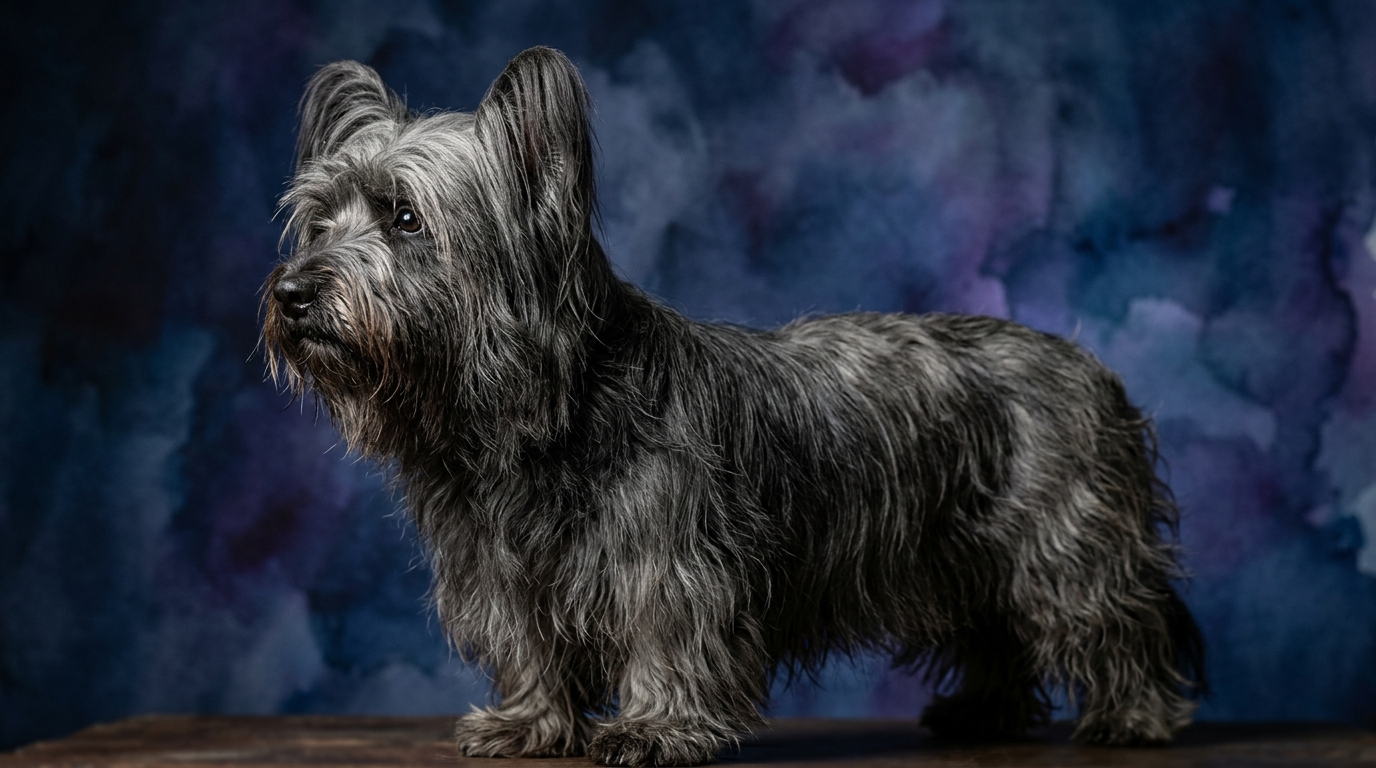
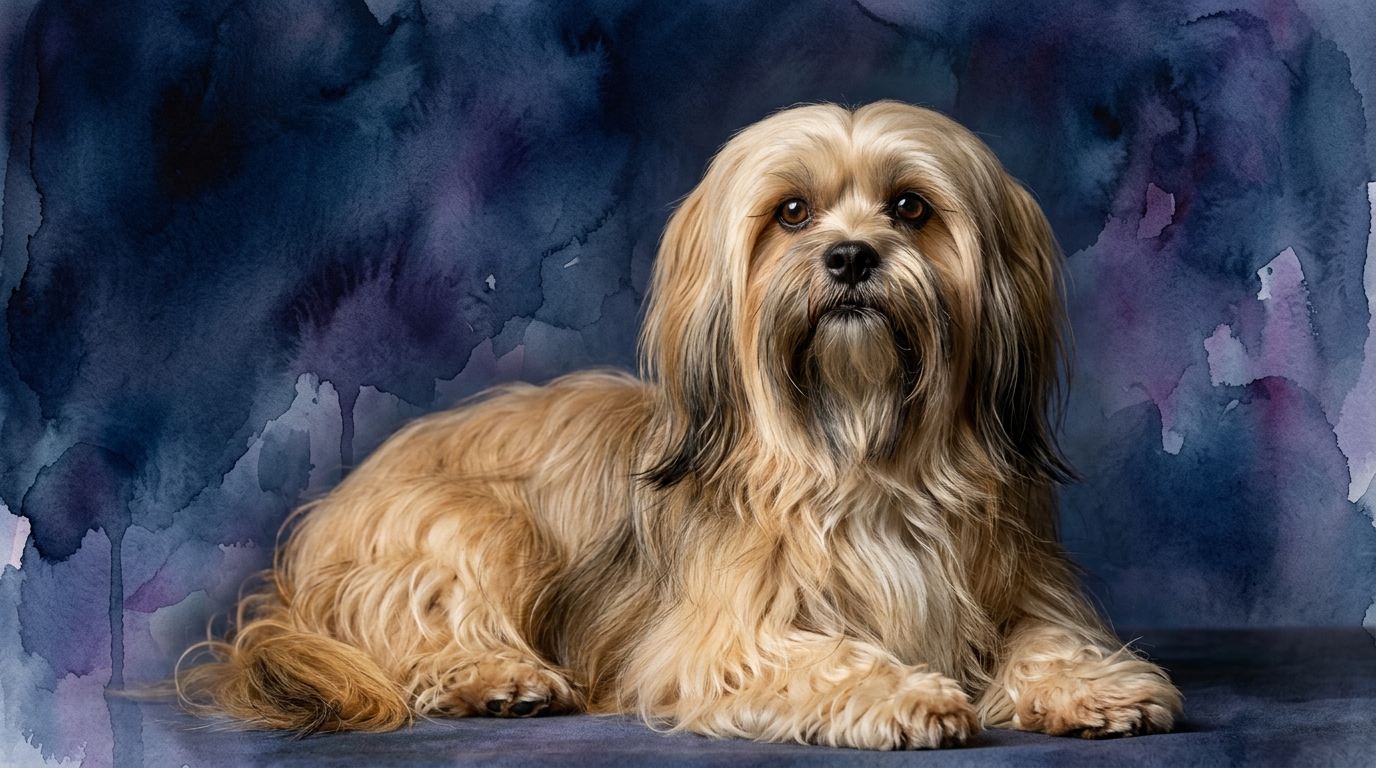
Side-by-Side Cognitive Profile: Skye Terrier vs. Lhasa Apso
For the Skye Terrier, with a 3/5 in Problem Solving, challenges are approached with independent tenacity, often devising its own solutions, characteristic of its earthdog origins. Training Speed, also 3/5, indicates they learn at a moderate pace, but their self-reliant nature means motivation must be compelling and consistent. Social Intelligence at 3/5 reflects a discerning loyalty, forming deep bonds with family while maintaining a reserved stance with strangers. Their Instinctive Drive, 3/5, is a strong, persistent urge to pursue and investigate, rooted in their hunting heritage. Memory, 3/5, supports their ability to retain complex environmental layouts and learned strategies for achieving goals.
The Lhasa Apso's 3/5 Problem Solving often manifests as keen observational skills and strategic alerting, crucial for their historical role as sentinels. Their Training Speed, also 3/5, is moderate, requiring consistent, patient methods to navigate their independent and often opinionated spirit. Social Intelligence at 3/5 highlights their profound devotion to their family, coupled with a watchful, sometimes aloof, demeanor towards outsiders. Instinctive Drive, 3/5, is primarily expressed as strong territoriality and an acute awareness of their surroundings. Memory, 3/5, allows them to quickly learn and retain household routines, familiar individuals, and the specific boundaries of their territory.
Where the Skye Terrier Excels Cognitively
The Skye Terrier truly shines in cognitive tasks demanding persistent, independent problem-solving and a focused, unyielding drive. Their 3/5 problem-solving score, when viewed through the lens of their earthdog heritage, means they excel at tasks requiring them to figure things out on their own, like navigating complex scent trails or extracting items from confined spaces. This isn't about rapid obedience, but rather about a sustained, self-directed effort to achieve a goal. Their instinctive drive, also 3/5, translates into an unwavering determination; once they've fixated on a 'prey' – be it a squeaky toy under the couch or a scent in the garden – their cognitive resources are channeled entirely towards that objective. This tenacity is a specific cognitive advantage, allowing them to complete tasks that might frustrate breeds with less intrinsic drive or a greater reliance on human direction. Their memory supports this by retaining successful strategies for overcoming specific types of physical or environmental barriers.
Where the Lhasa Apso Excels Cognitively
The Lhasa Apso's cognitive strengths lean into their historical role as discerning protectors and companions, even with a 3/5 across all categories. Their social intelligence, at 3/5, allows for an exceptionally nuanced understanding of their human family's moods and routines, often anticipating needs or reacting to subtle shifts in household dynamics. This isn't just about bonding; it’s a sophisticated form of social cognition that enables them to act as sensitive emotional barometers. Their problem-solving, while not about digging, excels in environmental awareness and strategic alerting; they are adept at identifying and reacting appropriately to novel stimuli within their territory, a critical skill for a sentinel dog. Their memory, also 3/5, reinforces this by allowing them to quickly learn and retain the 'normal' parameters of their home, making them highly effective at noticing and remembering anything out of place. This combination of social acuity, observational problem-solving, and strong environmental memory gives them a distinct cognitive edge in roles requiring vigilance and a deep understanding of their immediate social and physical world.
Training Dynamics: Which is Easier and Why
When considering ease of training, both breeds present a moderate challenge with their 3/5 training speed, but the underlying reasons differ, making neither definitively 'easier' without understanding their unique motivations. The Skye Terrier's independence and strong self-will, characteristic of many terriers, mean they often question the necessity of a command or prefer to follow their own agenda. Training them requires immense consistency, engaging methods that tap into their problem-solving nature (like scent work or puzzle toys), and a clear understanding of what motivates them, such as high-value treats or a favorite game. Their moderate training speed is less about an inability to learn and more about a deliberate choice not to comply if the reward isn't compelling enough or if they perceive a more interesting 'job' to do.
The Lhasa Apso, while also scoring 3/5 for training speed, brings a different set of challenges. Their heritage as revered companions and guardians has instilled a certain self-importance and an opinionated streak. They are loyal but often require a strong, confident leader who can consistently communicate expectations. Training a Lhasa Apso often involves patience, positive reinforcement, and making them believe that performing the desired action was their idea all along. They can be particularly sensitive to harsh corrections, which can make them withdraw or become more resistant. Therefore, while both require dedication, training a Skye Terrier often involves redirecting their tenacious drive, whereas training a Lhasa Apso often involves convincing them to participate willingly and consistently. Neither is for the faint of heart, but Skye Terriers might respond better to structured 'work,' while Lhasa Apsos thrive on positive reinforcement and clear, calm guidance.
Matching Breeds to Lifestyles: Active vs. Relaxed Owners
The distinction between active and relaxed ownership for these breeds isn't simply about physical exertion but also mental engagement. The Skye Terrier, despite its moderate size, requires an owner who is 'active' in terms of providing consistent mental stimulation and structured training. Their instinctive drive and problem-solving skills mean they thrive when given tasks or puzzles to solve, even if it's not a daily marathon. An owner who enjoys consistent training sessions, interactive games, and regular, purposeful walks that allow for sniffing and exploration would be a good match. They are not necessarily looking for a jogging partner, but they do need their terrier energy channeled productively to prevent boredom-driven behaviors.
The Lhasa Apso, while content with a more relaxed physical routine of moderate daily walks, still requires an 'active' owner in a different sense: one who is actively engaged in their social and mental well-being. Their deep social intelligence and sentinel instincts mean they thrive on being part of the family's activities and require consistent, gentle leadership to prevent them from becoming overly protective or dominant. A relaxed owner for a Lhasa Apso is someone who enjoys quiet companionship, is content with shorter, regular walks, but is also prepared to engage in consistent, positive reinforcement training and ensure their dog feels secure and understood within the home environment. They are excellent companions for those seeking a loyal, watchful presence without the demands of a high-energy sporting breed, provided their need for mental engagement and clear social structure is met.
The Verdict
Choose the Skye Terrier if you appreciate a tenacious, independent thinker who thrives on engaging problem-solving tasks and a dedicated partner for structured, mentally stimulating activities. They are best for owners who understand and can channel their deep-seated terrier drive.
Opt for the Lhasa Apso if you seek a loyal, perceptive companion with a keen sense of observation and a strong protective instinct, suitable for a home that values quiet companionship and consistent, gentle leadership. They flourish with owners who provide clear structure and appreciate their discerning social intelligence.
🧠 Find Your Pet's IQ Score
Our Pet IQ Lab assessment covers 25+ tests across 5 cognitive dimensions — personalized to your breed.
Take the Full IQ Test →Frequently Asked Questions
Do Skye Terriers and Lhasa Apsos learn commands at the same rate?
Both breeds score 3/5 for Training Speed, indicating a moderate learning pace. However, the Skye Terrier's independence might make them appear slower if not properly motivated, while the Lhasa Apso's opinionated nature requires consistent, positive reinforcement to encourage willing participation.
Which breed is better at understanding human emotions?
While both have a 3/5 Social Intelligence, the Lhasa Apso, with its history as a companion and sentinel, often displays a more nuanced understanding of family dynamics and emotional cues, acting as a sensitive barometer of household moods. The Skye Terrier's social intelligence is more rooted in discerning loyalty.
How does their problem-solving ability differ despite similar scores?
The Skye Terrier's 3/5 Problem Solving is often about physical tenacity and independent strategy to overcome obstacles, like digging. The Lhasa Apso's 3/5 manifests as keen observational problem-solving, identifying and reacting to environmental changes or potential threats through vigilance and strategic alerting.