Side-by-Side IQ Profile: Diving Deeper into 3/5 Scores
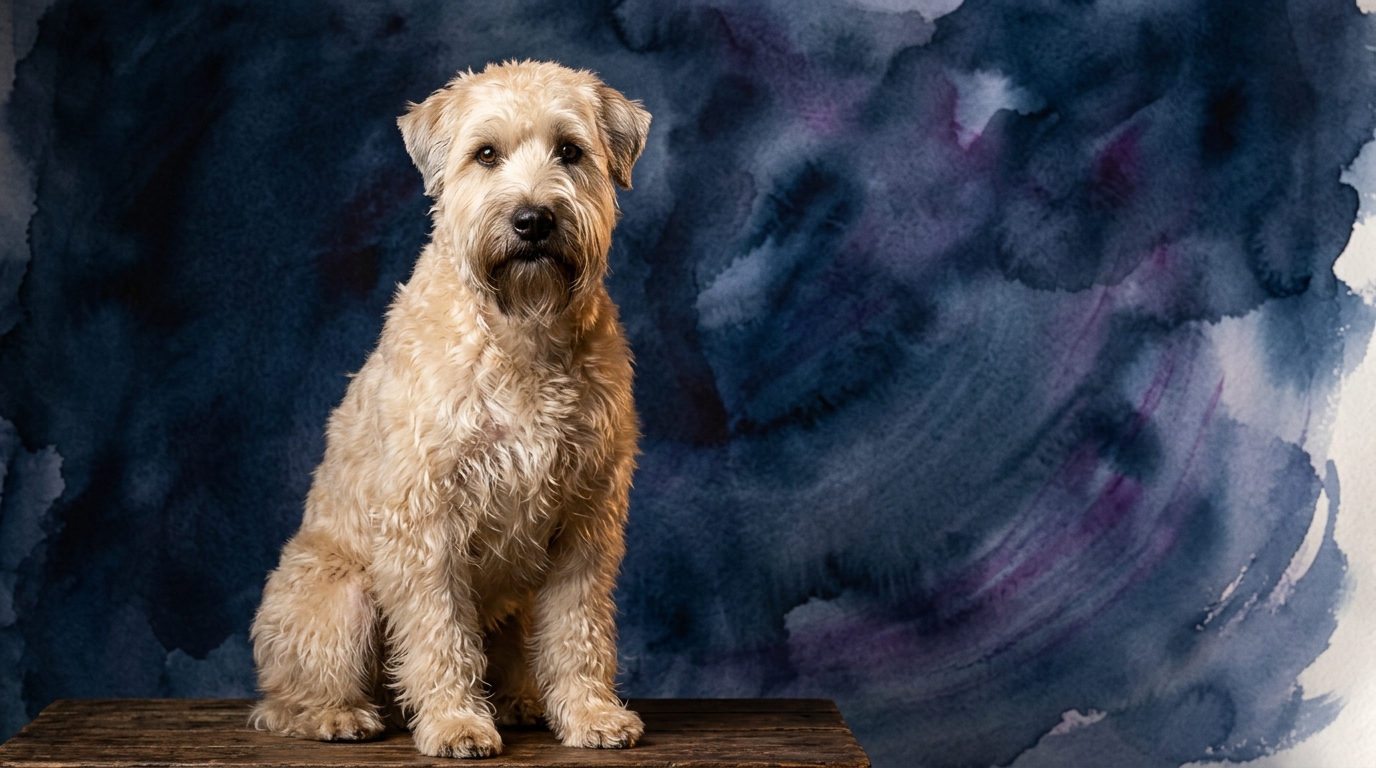
The Soft Coated Wheaten Terrier, originating from Irish farms, was bred as a versatile working dog tasked with herding, guarding, and vermin control. This history imbued them with a practical, hands-on approach to their environment, making their cognitive profile a blend of tenacity and adaptable intelligence.
For the Wheaten, a 3/5 in Problem Solving reflects their capacity to navigate everyday challenges and figure out how to retrieve a favored toy from a tricky spot or bypass a simple barrier. While not abstract thinkers, their terrier persistence often drives them to repeatedly attempt solutions until they succeed, which can sometimes be misread as advanced conceptual problem-solving when it's more about sheer determination.
A 3/5 in Training Speed indicates they learn at a moderate pace, responding well to consistent, positive reinforcement. Their 'wheaten greetin'' exuberance and occasional terrier stubbornness mean training requires patience and a fun approach, but they are generally keen to engage with their human companions and grasp new commands over time.
Their 3/5 Social Intelligence highlights a generally friendly and engaging nature, allowing them to form strong bonds with their families and often interact positively with strangers. They are reasonably adept at picking up on human emotional cues, though their boisterous enthusiasm might sometimes overshadow subtle social signals, especially in novel situations.
The Wheaten's 3/5 in Instinctive Drive primarily encompasses their inherent terrier prey drive for small animals and a residual herding instinct. This drive can manifest as chasing squirrels or a strong desire to 'manage' their family members, influencing their focus and requiring appropriate outlets to channel these natural urges constructively.
A 3/5 in Memory for the Wheaten means they retain commands, routines, and experiences effectively. They remember their favorite people and places, and once a task is learned, it tends to stick, though like many breeds, occasional refreshers ensure commands remain crisp and reliable.
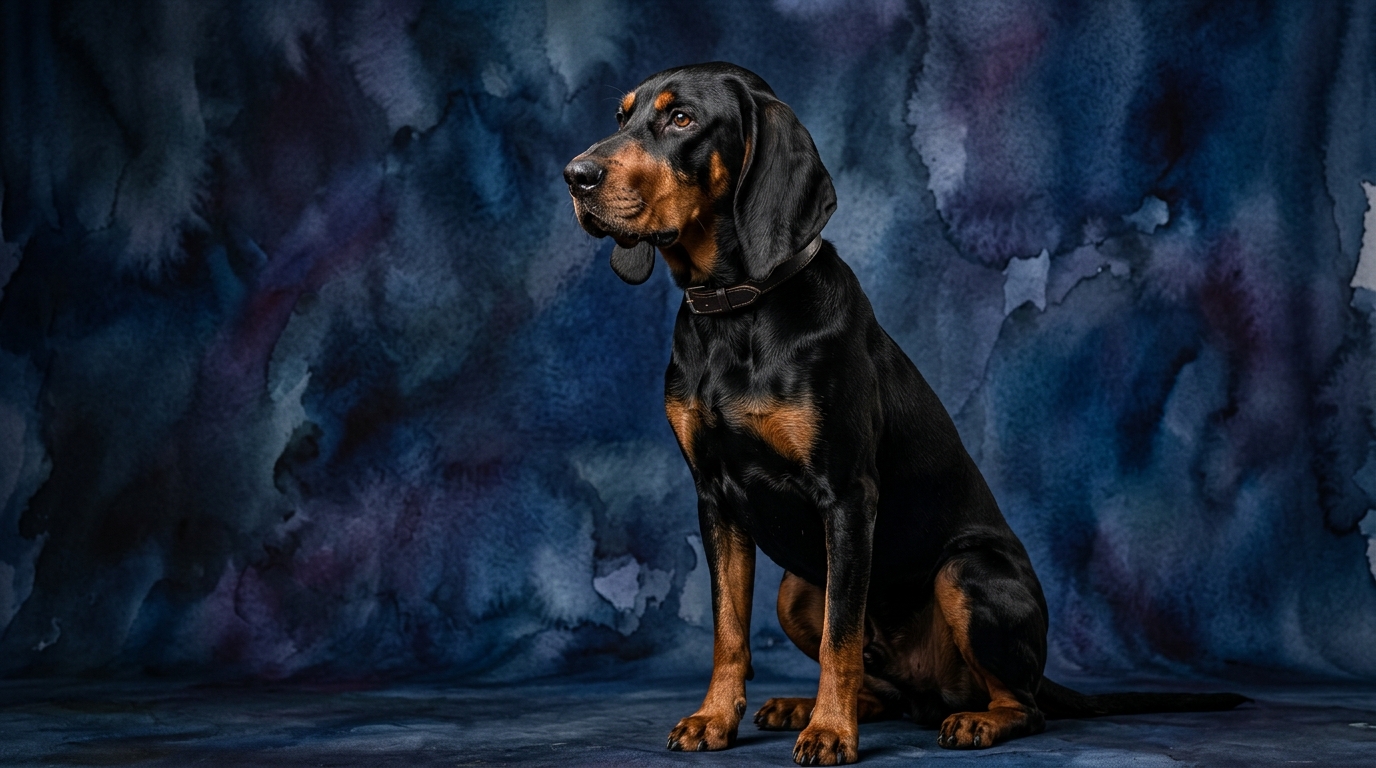
The Black and Tan Coonhound, conversely, was meticulously developed in the American South as a specialized scent hound, purpose-bred to track raccoons and other game over vast, complex terrains. Their cognitive strengths are deeply rooted in this singular, highly refined sensory pursuit, shaping an intelligence that is profoundly task-specific.
A 3/5 in Problem Solving for the Coonhound is almost entirely centered on their unparalleled ability to follow and interpret intricate scent trails. They excel at deciphering complex environmental cues to locate their quarry, solving the 'problem' of where a particular scent leads, even if it traverses diverse landscapes. This form of problem-solving is highly specialized and less about abstract puzzles.
Their 3/5 Training Speed reflects a capacity to learn, but often at a pace dictated by their independent, scent-driven nature. While they can understand commands, their profound focus on olfactory input means that external stimuli, particularly compelling scents, can easily override learned behaviors, making consistent recall a significant training challenge requiring immense patience.
The Coonhound's 3/5 Social Intelligence denotes a generally amiable and tolerant disposition, often displaying a calm and friendly demeanor with their family and familiar individuals. However, their primary focus is often external, particularly on scent, which can make them seem more aloof or less intensely engaged in human-centric social interactions compared to breeds bred for constant companionship.
This breed's 3/5 in Instinctive Drive is overwhelmingly dominated by their exceptional scenting ability and an unwavering prey drive. This instinct is so powerful that it acts as their primary motivator, compelling them to follow a trail relentlessly, often to the exclusion of all other stimuli, defining much of their behavioral and cognitive landscape.
For the Coonhound, a 3/5 in Memory translates to an exceptional recall for scent trails, mapping out familiar hunting grounds, and remembering the 'feel' of a successful chase. Their memory for human commands is also present, but it might be selectively accessed when a more potent, instinct-driven memory (like a fresh scent) takes precedence, requiring robust and consistent reinforcement.
Where Soft Coated Wheaten Terrier Wins Cognitively
Despite identical numerical scores, the Wheaten Terrier demonstrates a cognitive advantage in general adaptability to varied domestic environments. Their historical role as an all-around farm dog required them to switch between tasks like herding, guarding, and pest control, fostering a more generalized problem-solving approach that readily applies to the diverse demands of a modern household.
Furthermore, their cognitive strength lies in their versatility in learning a broader spectrum of human-centric activities. A Wheaten is often more engaged in interactive games, agility, or obedience training that doesn't rely solely on one sensory input. They tend to be more attuned to human direction in a wider array of novel situations, showing greater impulse control when not driven by a specific, intense instinct like scent.
Where Black and Tan Coonhound Wins Cognitively
The Black and Tan Coonhound shines with an unparalleled cognitive superiority in its specialized domain: scent discrimination and tracking. Their 3/5 in Problem Solving, while numerically matching the Wheaten, is profoundly different in its application, allowing them to process and interpret complex olfactory information with an acuity few breeds can rival. This isn't just following a scent; it's a sophisticated analysis of scent age, direction, and intensity across varied terrains.
Their cognitive victory also lies in their unwavering focus and endurance when engaged in their primary instinctive drive. Once a Coonhound locks onto a scent, their memory and problem-solving abilities coalesce into a powerful, sustained effort to complete the task. This sustained cognitive engagement over long periods, often ignoring environmental distractions, is a specific form of mental fortitude where they truly excel.
Which is Easier to Train and Why
For the average owner, the Soft Coated Wheaten Terrier is generally easier to train. While they possess a characteristic terrier willfulness, their inherent desire to be involved with their human family often translates into a greater willingness to please and a more consistent focus during training sessions. Their 3/5 Training Speed, combined with their broader social engagement, means they are typically more receptive to learning a diverse range of commands and tricks without being overwhelmingly distracted by external stimuli.
In contrast, training a Black and Tan Coonhound presents a unique set of challenges rooted in their powerful instinctive drive. Their 3/5 Training Speed is heavily influenced by their singular focus on scent. When a compelling odor is present, their cognitive processing prioritizes that sensory input, often making them 'selectively deaf' to commands. Achieving reliable recall or off-leash obedience requires immense patience, a deep understanding of hound psychology, and often specialized training methods that either leverage their drive or meticulously manage it. Their independence, while endearing, often means they are training *with* you, rather than *for* you.
Which Suits Active Owners vs. Relaxed Owners
The Soft Coated Wheaten Terrier generally suits active owners who are prepared for consistent engagement and mental stimulation. Their moderate energy levels and need for interaction mean they thrive with daily exercise, interactive play, and training that keeps their minds busy. Owners who enjoy dog sports like agility, rally, or even just long, engaging walks will find a Wheaten a rewarding companion. A relaxed owner might find their energetic 'wheaten greetin'' and need for activity overwhelming, potentially leading to boredom-driven behaviors.
The Black and Tan Coonhound, despite its calm demeanor indoors, is best suited for active owners who understand and are willing to cater to its profound need for scent-driven activity. This means extensive opportunities for long walks, off-leash exploration in secure areas (where legal and safe), or participation in scent work, tracking, or hunting. A truly relaxed owner who cannot provide these outlets will likely face challenges with a bored, restless Coonhound whose powerful instincts are unfulfilled, potentially leading to baying, roaming, or destructive behaviors. Their activity is often more about pursuing a scent than engaging in human-directed play.
The Verdict
Choose the Soft Coated Wheaten Terrier if you seek a versatile, engaging family companion who thrives on interaction and can adapt to various activities, provided you offer consistent mental and physical outlets to channel their balanced drives.
Opt for the Black and Tan Coonhound if you are an owner passionate about scent work, long outdoor adventures, or hunting, appreciating an independent, good-natured hound and prepared to manage their powerful, specialized instinctive drives.
🧠 Find Your Pet's IQ Score
Our Pet IQ Lab assessment covers 25+ tests across 5 cognitive dimensions — personalized to your breed.
Take the Full IQ Test →Frequently Asked Questions
Do Soft Coated Wheaten Terriers bark a lot?
Wheatens can be vocal, often using barks to alert or express excitement, especially during their enthusiastic 'wheaten greetin'.' Consistent training from a young age can help manage their vocal tendencies, but they are generally not considered silent dogs.
Are Black and Tan Coonhounds good with children?
Black and Tan Coonhounds are typically known for their good-natured and tolerant temperament, making them generally suitable for families with children. Their calm demeanor indoors and patience can make them good companions, though supervision is always recommended with any dog and child.
Which breed is better for apartment living?
Neither breed is ideally suited for small apartment living without significant commitment to exercise. The Soft Coated Wheaten Terrier can adapt if given ample daily walks and mental stimulation. The Black and Tan Coonhound's need for extensive outdoor scent work makes them less ideal for apartments, as their baying and roaming instincts can be problematic without sufficient space.