
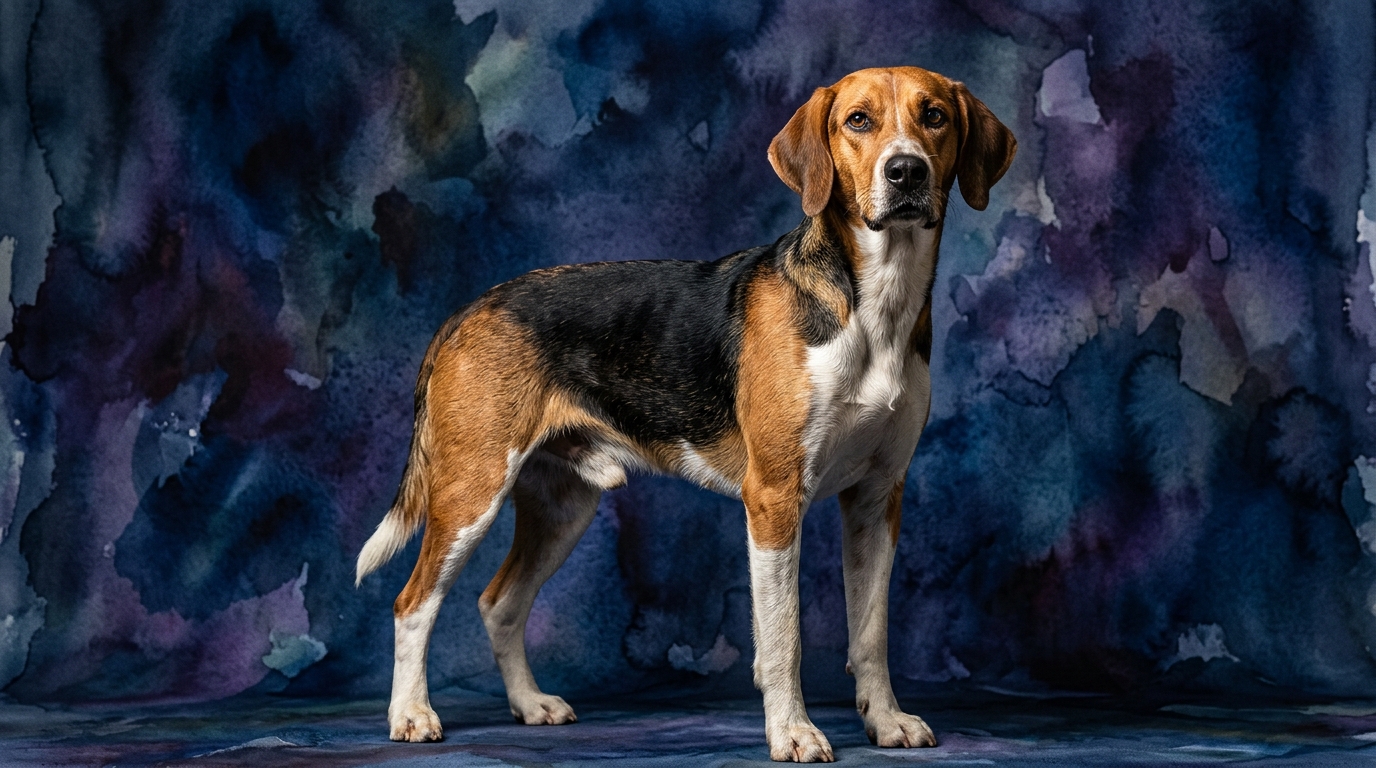
Side-by-Side Cognitive Profile
At The Cosmic Pet Pet IQ Lab, we evaluate canine intelligence across five key dimensions, each rated on a scale of 1 to 5. Interestingly, both the Soft Coated Wheaten Terrier and the English Foxhound consistently score a 3/5 in every category, suggesting a baseline of cognitive competence that, while numerically identical, is expressed through vastly different behavioral lenses due to their breed-specific predispositions and historical roles. Understanding these underlying expressions is crucial for appreciating their unique mental makeups.
The Soft Coated Wheaten Terrier, a lively member of the Terrier group, approaches cognitive tasks with an independent spirit. Their Problem Solving (3/5) often involves clever, sometimes mischievous, attempts to achieve a goal, utilizing their agility and persistence to figure out how to access a forbidden toy or navigate a complex environment. Training Speed (3/5) sees them responsive to positive reinforcement, quickly grasping new commands, yet their inherent terrier determination means they might choose to comply only if adequately motivated or if they perceive a benefit to themselves. Their Social Intelligence (3/5) manifests as a warm, engaging interaction with people, often reading human emotions with a keen sensitivity, though they can be discerning in their canine friendships. Instictive Drive (3/5) for Wheatens is a moderate blend of curiosity and a desire to explore, often involving playful chasing or digging, but generally manageable within a domestic setting. Finally, their Memory (3/5) is robust for routines, learned commands, and the locations of interesting items or people, making them adept at remembering past interactions and experiences.
The English Foxhound, a dedicated member of the Hound group, interprets these same scores through the lens of their specialized hunting heritage. Their Problem Solving (3/5) is primarily geared towards scent-based challenges, where they display an unparalleled ability to methodically follow a trail, often for extended periods, using their nose as their primary cognitive tool. They might struggle with abstract, non-scent-related puzzles, prioritizing their olfactory senses above all else. Training Speed (3/5) for a Foxhound means they can learn commands, but their formidable instinctive drive often takes precedence; distractions from compelling scents can significantly impede their ability to focus on human instructions, requiring immense patience and high-value rewards. Their Social Intelligence (3/5) is rooted in pack dynamics, making them generally amiable and tolerant with other dogs, but they can be somewhat independent or aloof with humans, especially when on a scent. The Instictive Drive (3/5) of a Foxhound is overwhelmingly powerful, centered on tracking and pursuit, leading to exceptional stamina and an unwavering focus when engaged in scent work. Their Memory (3/5) is particularly strong for scents and routes, allowing them to recall where intriguing smells were found and to retrace complex paths, though their recall of human commands might be secondary to a strong olfactory stimulus.
Where Soft Coated Wheaten Terrier Wins Cognitively
The Wheaten Terrier's cognitive strengths often shine in their adaptability to diverse domestic settings and their nuanced social engagement with human companions. While both breeds score 3/5 in problem-solving, the Wheaten tends to approach novel, non-scent-based challenges with a more direct and sometimes inventive persistence, often attempting various methods until success. Their 3/5 social intelligence manifests as a keen awareness of human emotional states and a desire for interactive play, making them adept at reading subtle cues from their family members and adjusting their behavior accordingly. This allows for a more reciprocal and interactive companionship, where their cognitive efforts are often directed towards understanding and engaging with their human family.
Where English Foxhound Wins Cognitively
Conversely, the English Foxhound's cognitive prowess is deeply rooted in its specialized hunting heritage, particularly in areas where sustained focus and sensory processing are paramount. Their 3/5 instinctive drive, while numerically equivalent to the Wheaten's, is channeled with singular intensity towards scent work, allowing them to follow complex trails with unwavering determination and exceptional endurance. This translates into superior performance in tasks requiring methodical, long-duration sensory engagement, where their ability to filter out non-olfactory distractions is remarkable. Their pack-oriented 3/5 social intelligence also means they excel in environments with other dogs, understanding and adhering to group dynamics with an inherent ease that can sometimes be less pronounced in the more independently-minded terrier.
Which Is Easier to Train and Why
Determining which breed is 'easier' to train is less about raw learning capacity and more about managing inherent drives and motivations. The Soft Coated Wheaten Terrier, with its 3/5 training speed, often proves more amenable to domestic obedience training because its focus, while sometimes independent, is more readily directed towards human interaction and reward. Their 3/5 social intelligence means they are generally keen to please their people, provided the training is engaging and consistent, helping them overcome their occasional terrier 'selective hearing.' They respond well to positive reinforcement and can master a variety of commands and tricks with patient guidance, making them a rewarding training partner for many owners.
In contrast, the English Foxhound, despite also scoring 3/5 in training speed, presents a different set of challenges. Their formidable 3/5 instinctive drive for scent is a powerful, often overriding force. When a compelling scent enters their environment, their ability to concentrate on human commands diminishes significantly, as their cognitive resources are almost entirely dedicated to tracking. Training a Foxhound requires immense patience, understanding of their deep-seated drives, and a commitment to making training highly rewarding and stimulating to compete with the allure of a trail. Their pack-oriented nature means they respond well to clear, consistent leadership, but their independent hunting focus means they are not always looking to their handler for direction, especially outdoors. Consistent recall training is paramount but can be particularly challenging given their propensity to follow their nose.
Suitability for Active vs. Relaxed Owners
When considering lifestyle compatibility, the divergence between these two breeds becomes clearer, despite their matching cognitive scores. The Soft Coated Wheaten Terrier, while possessing a moderate 3/5 instinctive drive, can be a suitable companion for active owners who enjoy regular walks, interactive play, and engaging their dog in various activities. Their adaptability and desire for human companionship mean they can thrive in diverse home environments, provided their needs for mental and physical stimulation are met through structured play sessions, puzzle toys, and consistent outdoor excursions. They appreciate a good romp in the yard followed by indoor family time, making them a versatile companion for moderately active families.
The English Foxhound, however, is unequivocally suited for highly active owners who are prepared to accommodate a dog with an exceptionally strong 3/5 instinctive drive for tracking. Their endurance and need for extensive, often scent-driven, exercise are profound. They are not content with short walks; they require long, sustained periods of outdoor activity, ideally in secure areas where they can explore scents freely or participate in activities like canicross or scent work. Relaxed owners who cannot commit to providing this level of physical and mental outlet will likely find a Foxhound challenging, as boredom and pent-up energy can lead to destructive behaviors, persistent barking, and attempts to escape in pursuit of a captivating smell. They are dogs built for the field, and their cognitive makeup reflects this deep-seated need for purpose-driven, vigorous activity.
The Verdict
Choose the Soft Coated Wheaten Terrier if you seek an interactive and adaptable companion who thrives on family engagement and moderate, varied activity. They are best for owners who appreciate a dog that brings a lively, personable presence into the home and enjoys participating in family life.
Opt for the English Foxhound if you lead a highly active, outdoor-centric lifestyle and are prepared to provide extensive, consistent exercise that satisfies a powerful, inherent scent drive. They are ideal for owners who understand their independent, methodical nature and can channel their remarkable endurance into purposeful activities.
🧠 Find Your Pet's IQ Score
Our Pet IQ Lab assessment covers 25+ tests across 5 cognitive dimensions — personalized to your breed.
Take the Full IQ Test →Frequently Asked Questions
Do Soft Coated Wheaten Terriers bark a lot?
Wheatens can be quite vocal, often using barks to express excitement, alert their owners to visitors, or demand attention. Consistent training from a young age can help manage their tendency to 'woo woo' or bark excessively, but it's part of their lively terrier personality that expresses their engagement with their environment.
Are English Foxhounds good with children?
English Foxhounds are generally good-natured and tolerant, making them suitable companions for families with children, especially if raised together. Their pack mentality means they often integrate well into a family unit, though their size and boisterousness during play require supervision with very young children to prevent accidental knocks during enthusiastic interactions.
What kind of exercise do English Foxhounds need?
English Foxhounds require substantial and consistent exercise, ideally at least an hour or two of vigorous activity daily, often more. Their strong scent drive means off-leash running in secure, fenced areas or long, purposeful walks where they can follow scents are essential to their well-being, satisfying both their physical and mental needs to explore and track.