
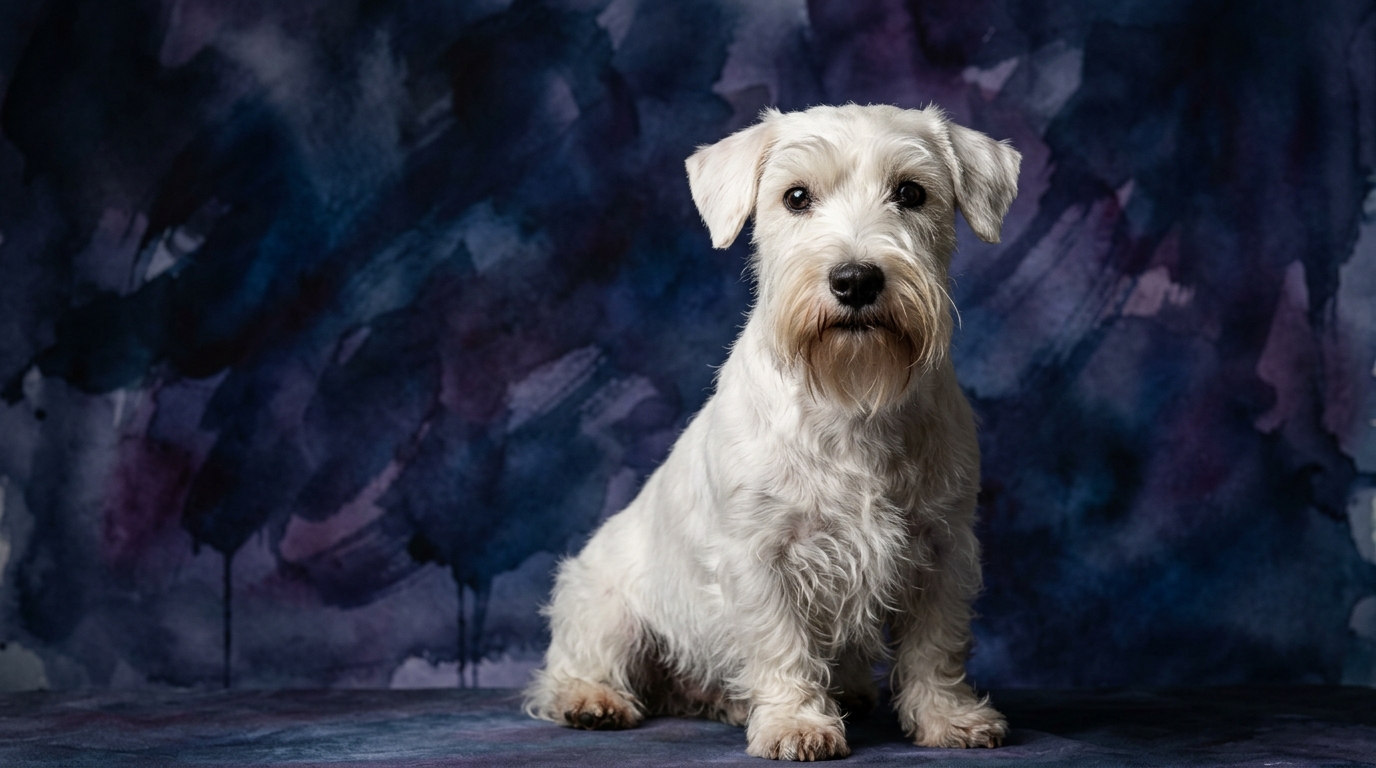
Side-by-Side IQ Profile: Unpacking the 3/5 Score
While both the Soft Coated Wheaten Terrier and the Sealyham Terrier register identical 3/5 scores across all five cognitive dimensions in The Cosmic Pet Pet IQ Lab, understanding these scores requires looking at how each breed typically manifests these abilities.
**Soft Coated Wheaten Terrier:** This breed exhibits a moderate capacity for **problem solving (3/5)**, often driven by their desire for interaction or access to interesting stimuli, manifesting as cleverly opening cabinets to retrieve toys or finding creative ways to initiate play. Their **training speed (3/5)** is moderate, thriving with positive reinforcement, though their enthusiastic nature can lead to joyful distraction, requiring consistency. Wheatens demonstrate a good understanding of social cues, displaying **social intelligence (3/5)** by being eager to engage with people and often adept at reading human emotions, responding with affection. Possessing a moderate prey drive and historical farm dog instincts, their **instinctive drive (3/5)** is often channeled into playful pursuits rather than intense hunting. Wheatens have a solid **memory (3/5)** for commands, routines, and the people they love, retaining learned behaviors reliably.
**Sealyham Terrier:** Sealyhams also show a moderate aptitude for **problem solving (3/5)**, often applying a tenacious and determined approach to puzzles or obstacles, echoing their historical role of methodically working to extract prey from tight spaces. Like Wheatens, their **training speed (3/5)** is moderate, but their independent terrier spirit can make them appear more stubborn during training, necessitating consistency and clear expectations. Sealyhams possess a moderate **social intelligence (3/5)**, forming deep bonds with their immediate family and being perceptive observers of their human companions, understanding routines with quiet attentiveness, though they can be more reserved with strangers. The Sealyham’s **instinctive drive (3/5)** is notably influenced by their tenacious hunting heritage, manifesting as a strong desire to dig, explore, and pursue small critters. Sealyhams exhibit a reliable **memory (3/5)** for learned commands, routines, and the layout of their territory, contributing to their confident and self-assured demeanor.
Where Soft Coated Wheaten Terrier Wins Cognitively
Despite identical numerical scores, the Wheaten’s expression of its 3/5 cognitive abilities often shines in scenarios demanding adaptable social engagement and joyful responsiveness. Their 'social intelligence 3/5' is frequently expressed through an almost intuitive understanding of how to elicit positive human interaction, making them adept at charming their way into attention or comfort. While both breeds have 'problem solving 3/5,' a Wheaten might employ theirs to cleverly manipulate situations for play or affection, such as "accidentally" dropping a toy to initiate a game or figuring out how to get closer to a favorite person. Their generally more effusive nature means their cognitive capacities are often directed outwards, fostering a dynamic and engaging presence in a family setting.
Where Sealyham Terrier Wins Cognitively
The Sealyham Terrier, with its equally rated 3/5 cognitive profile, often excels in situations requiring focused persistence and independent thought, a direct echo of its working origins. Their 'problem solving 3/5' is frequently demonstrated in a methodical, determined approach to tasks, whether it's figuring out how to retrieve a buried toy or navigating a complex scent trail. While their 'instinctive drive 3/5' is shared, the Sealyham’s manifestation often leans towards a more intense, sustained focus on a goal, such as exploring every nook of a yard for interesting smells. This breed's quiet observational skills, a facet of their 'social intelligence 3/5,' allow them to process their environment and human companions with a thoughtful, less overtly demonstrative, understanding.
Which is Easier to Train and Why
Both breeds register a "training Speed 3/5," indicating a moderate learning curve. However, their behavioral nuances create different training experiences. The Soft Coated Wheaten Terrier's exuberance and desire for interaction can make them eager participants, but also prone to distraction. Their joyful "wheaten greetin'" can be charming but requires consistent redirection to prevent jumping or over-excitement during formal training. They respond exceptionally well to positive reinforcement, especially when training feels like a fun game. The Sealyham Terrier, while equally capable of learning, brings a more independent and tenacious spirit to the training arena. Their "training Speed 3/5" is influenced by a strong will and a history of working alone, meaning they might question commands or require more motivation to comply if they don't see the immediate value. Consistency, patience, and making training feel like a partnership rather than a command-and-obey dynamic are crucial for the Sealyham. Neither is inherently "easier," but the Wheaten's enthusiasm might make initial engagement quicker, while the Sealyham's determination requires a more nuanced, persistent approach.
Which Suits Active Owners vs Relaxed Owners
For active owners seeking a dynamic companion, the Soft Coated Wheaten Terrier often aligns beautifully. Their "instinctive Drive 3/5" is frequently expressed through a love for vigorous play, long walks, and engaging family activities, making them enthusiastic partners for hiking or agility. Their "social Intelligence 3/5" means they thrive on being central to family life and participating in adventures. A Wheaten's moderate energy needs are best met with consistent outlets that channel their joyful spirit and prevent boredom.
The Sealyham Terrier, while not a couch potato, might be a better fit for owners who prefer a more relaxed yet still engaged routine. Their "instinctive Drive 3/5" is often satisfied with purposeful explorations, scent games, and moderate daily walks rather than constant high-impact activity. Their "social Intelligence 3/5" manifests as a devoted, observant companion who enjoys quiet companionship as much as a good romp in the yard. Owners who appreciate a dog with a sturdy, self-possessed character and are willing to engage their terrier's methodical curiosity will find a strong bond with a Sealyham.
The Verdict
Opt for a Wheaten if you desire a joyful, effusive companion eager to be at the heart of family activities, thriving on social interaction and adaptable play. They are an excellent choice for owners who appreciate a dog that openly expresses affection and is ready for engaging adventures.
Select a Sealyham if you appreciate a tenacious, thoughtful, and devoted companion with a charmingly independent streak, who enjoys purposeful exploration and forms deep, quiet bonds. They are ideal for owners who value a sturdy, self-assured terrier and can provide consistent, patient guidance.
🧠 Find Your Pet's IQ Score
Our Pet IQ Lab assessment covers 25+ tests across 5 cognitive dimensions — personalized to your breed.
Take the Full IQ Test →Frequently Asked Questions
Are Soft Coated Wheaten Terriers good with children?
Soft Coated Wheaten Terriers often possess a playful and affectionate nature, making them generally good companions for children, especially when raised together. Their exuberance, however, means supervision is important to ensure gentle interactions, as their joyful greetings can sometimes be a bit boisterous for very young kids.
Do Sealyham Terriers require a lot of grooming?
Sealyham Terriers do require regular grooming to maintain their distinctive harsh coat. This typically involves weekly brushing to prevent matting and professional hand-stripping a few times a year to preserve coat texture and color, which is more involved than the Wheaten's soft coat care.
How do their barking tendencies compare?
Both terriers have the potential for barking, a common terrier trait. Soft Coated Wheaten Terriers might bark out of excitement or to "greet" visitors, while Sealyham Terriers might bark more persistently when alerting to perceived intruders or when focused on a scent or something they want to investigate. Consistent training can help manage barking in both breeds.