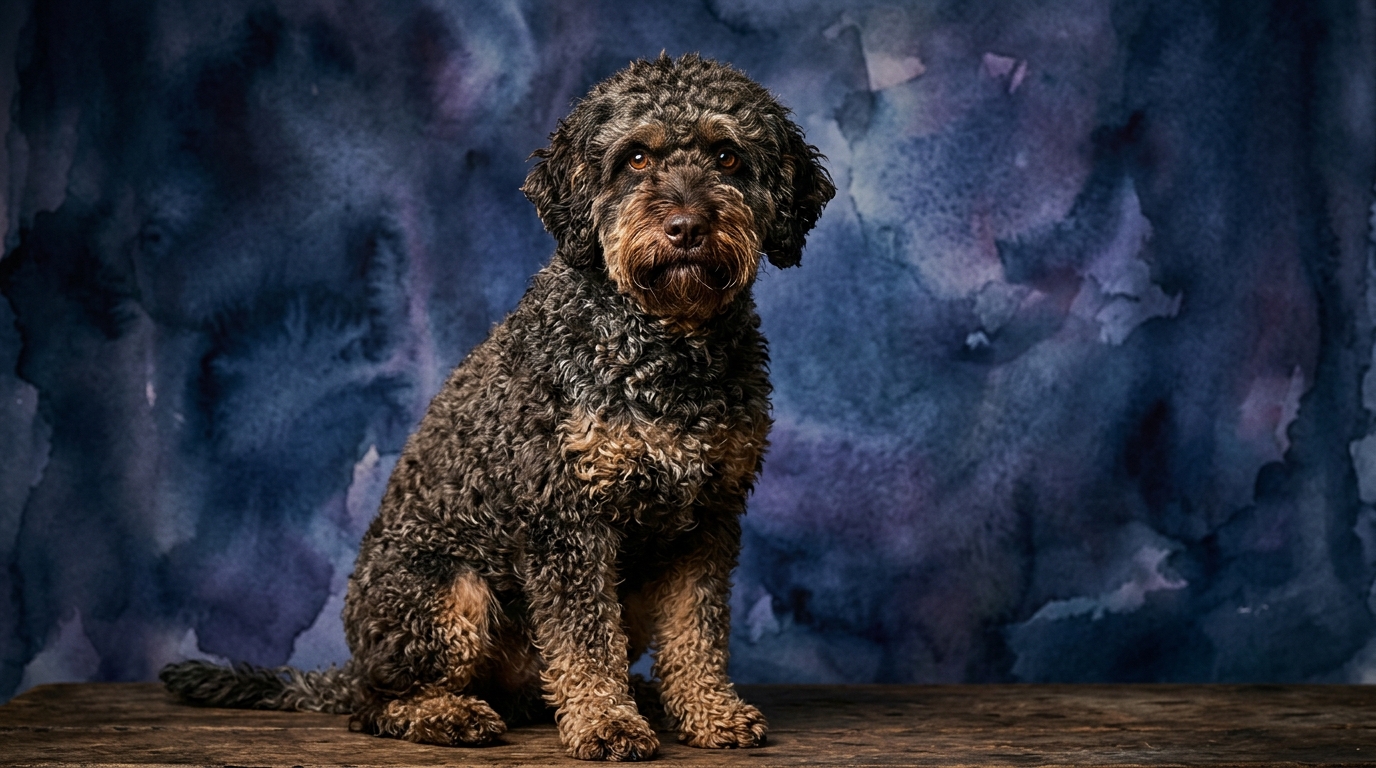
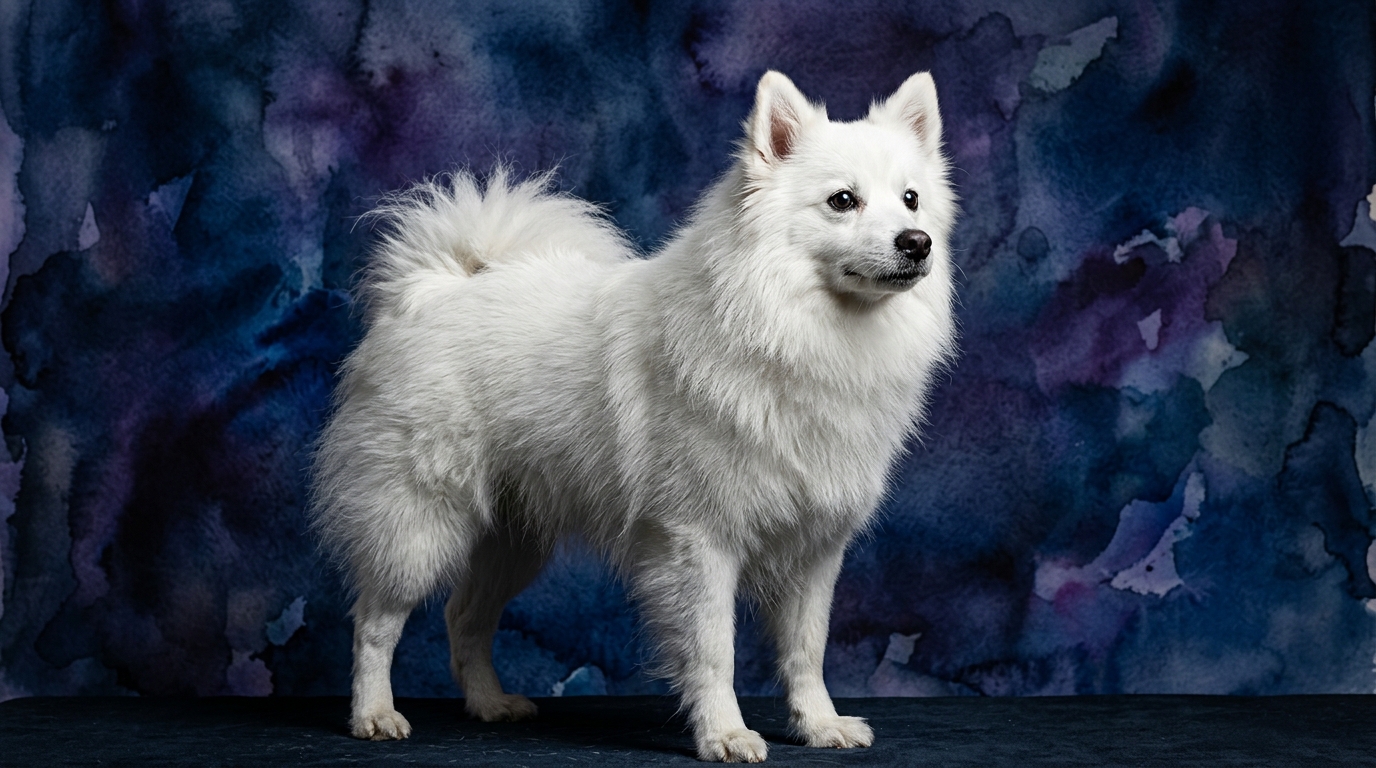
Side-by-Side Cognitive Profiles
While both the Spanish Water Dog (SWD) and the American Eskimo Dog (AED) register a consistent 3/5 across The Cosmic Pet Pet IQ Lab's five cognitive dimensions, the manifestation of these aptitudes differs significantly due to their distinct breed histories and primary roles. Understanding these nuances is key to appreciating their individual cognitive strengths.
For the **Spanish Water Dog**, a breed rooted in herding and water retrieval, their Problem Solving (3/5) is expressed through practical, dynamic challenges, such as strategizing how to move a flock or locating a lost animal in varied terrain. This isn't about abstract puzzles, but about real-time, environmental assessment and adaptive action. Their Training Speed (3/5) reflects an eagerness for purposeful work, learning quickly when tasks are engaging and contribute to a perceived 'job,' though their independent nature means they might test boundaries. Social Intelligence (3/5) is often directed within their trusted human and animal 'pack,' showing a profound understanding of familiar cues but often reservedness with strangers. Instinctive Drive (3/5) is strongly tied to their herding and retrieving heritage, manifesting as a persistent desire to work and a natural inclination to organize or gather. Their Memory (3/5) is robust for retaining complex sequences of commands related to their work, remembering specific locations, and recalling past experiences in their environment.
The **American Eskimo Dog**, originating as a companion and performer, applies its cognitive capacities in a more human-centric and social context. Their Problem Solving (3/5) often translates to navigating domestic environments with cleverness, perhaps figuring out how to access a desired item or learning intricate multi-step routines during performance training; their ingenuity is less about wilderness survival and more about social and environmental manipulation within a human household. Training Speed (3/5) is bolstered by an eagerness to please and a high responsiveness to positive reinforcement, allowing them to pick up new commands and tricks with relative swiftness, especially when it involves interaction. Social Intelligence (3/5) shines in their acute awareness of human emotions and family dynamics, often using vocalizations to communicate their needs and understanding subtle social cues within their household. Instinctive Drive (3/5) is primarily expressed as a strong desire for interaction, companionship, and a tendency towards watchdog barking, less about specific utilitarian tasks and more about social engagement. Their Memory (3/5) is excellent for recalling learned tricks, routines, and the details of social interactions, allowing for long-term retention of people and experiences.
Where the Spanish Water Dog Excels Cognitively
The Spanish Water Dog truly excels in cognitive areas demanding independence and adaptability within dynamic, task-oriented environments. Their Problem Solving, while rated 3/5, is particularly strong in scenarios where they must make autonomous decisions away from direct human instruction, such as guiding livestock or searching for objects in complex settings. This reflects a cognitive flexibility geared towards real-world, often unpredictable, challenges.
Furthermore, their Instinctive Drive, also 3/5, is a powerful cognitive asset for owners seeking a working partner. This drive manifests as an intrinsic motivation to engage in purposeful activities, making them highly attuned to tasks that leverage their herding and retrieving heritage. This isn't merely physical energy; it's a cognitive predisposition to seek out and engage with 'jobs,' which can be channeled into advanced obedience, agility, or scent work, where their focus and determination shine.
Where the American Eskimo Dog Excels Cognitively
The American Eskimo Dog's cognitive strengths lie in their nuanced social engagement and their capacity for learning complex, human-directed behaviors. Their Social Intelligence, rated 3/5, allows them to be exceptionally attuned to human emotions and family dynamics, often anticipating needs or reacting appropriately to subtle shifts in household moods. This makes them highly interactive and communicative companions, adept at forming deep social bonds.
Their Problem Solving and Training Speed, both 3/5, are particularly effective in learning and executing intricate performance routines or tricks. The AED's desire to please and their cleverness in figuring out how to earn rewards make them standout pupils in formal training settings, especially those involving sequential commands or novel behaviors. This cognitive aptitude for human-centric learning allows them to excel in areas like canine freestyle, obedience competitions, or even therapy work where their social perceptiveness is an advantage.
Training Dynamics: SWD vs. AED
When considering ease of training, the identical 'Training Speed' score of 3/5 for both breeds belies important behavioral differences. The Spanish Water Dog, with its independent herding background, often approaches training with a 'what's in it for me?' attitude. While they learn quickly, they require consistent, firm, and engaging methods, often testing boundaries to see what they can get away with. Their strong instinctive drive means training must channel this energy into productive outlets; simply repeating commands without purpose can lead to boredom and disengagement.
The American Eskimo Dog, conversely, tends to be more eager to please and responsive to positive reinforcement, making them generally perceived as 'easier' for basic obedience and trick training. Their social intelligence means they thrive on interaction and praise, often making them highly motivated to cooperate. However, their vocal nature and potential for sensitivity mean that harsh training methods can be counterproductive, leading to reluctance or anxiety. While both learn at a similar pace, the AED's inherent desire for human approval often makes the training journey feel smoother for many owners.
Matching Breeds to Lifestyles: Active vs. Relaxed Owners
The activity requirements of these two breeds diverge significantly, making them suitable for different owner lifestyles. The Spanish Water Dog is unequivocally suited for active owners. Their high instinctive drive and herding heritage demand substantial physical and mental engagement. They thrive when given a 'job,' whether that's participating in dog sports like agility, dock diving, or herding trials, or accompanying owners on long hikes, runs, or swims. A sedentary lifestyle will quickly lead to boredom, frustration, and potentially destructive behaviors, as their problem-solving skills might be redirected towards undesirable activities.
The American Eskimo Dog fits a moderately active owner profile. While they enjoy regular walks, playtime, and mental stimulation through training and games, they generally do not require the same intense, purpose-driven activity as an SWD. Their social intelligence means they are content to be involved in family activities and enjoy being the center of attention, adapting well to apartment living if their daily exercise and mental enrichment needs are met. They appreciate engagement and interaction but aren't typically driven by the same profound need for a 'working' role.
The Verdict
Choose the Spanish Water Dog if you are an active, experienced owner seeking a resilient, independent partner for outdoor adventures and dog sports, valuing a dog with a strong work ethic and dynamic problem-solving skills.
Opt for the American Eskimo Dog if you desire a highly interactive, clever companion who thrives on social engagement, enjoys learning tricks, and can integrate seamlessly into a moderately active family lifestyle.
🧠 Find Your Pet's IQ Score
Our Pet IQ Lab assessment covers 25+ tests across 5 cognitive dimensions — personalized to your breed.
Take the Full IQ Test →Frequently Asked Questions
Are Spanish Water Dogs good with children?
SWDs can be excellent family dogs, forming strong bonds with their pack. However, their herding instincts might lead them to 'herd' children, so early socialization and supervision are key to gentle interactions and teaching appropriate boundaries.
Do American Eskimo Dogs bark a lot?
American Eskimo Dogs are known for being vocal, often using barking to communicate or alert their owners, a trait stemming from their watchdog tendencies. This can be managed with consistent training and redirection from a young age, teaching them appropriate times to 'speak'.
How much exercise do these breeds need daily?
Spanish Water Dogs require significant daily exercise, often needing an hour or more of vigorous activity like running or swimming, plus mental stimulation. American Eskimo Dogs need moderate exercise, typically 30-60 minutes of walks and playtime, supplemented with engaging mental games and training sessions.