
Side-by-Side Cognitive Profile
The Spanish Water Dog, a robust herding breed, exhibits a balanced yet practical cognitive profile. Their Problem Solving is rated at 3/5, indicating a capacity for finding solutions to moderate, often physical, challenges within their environment, though perhaps not through highly abstract reasoning. Training Speed also sits at 3/5, suggesting they learn new commands and routines at a steady pace, requiring consistent and clear instruction to solidify behaviors.
Their Social Intelligence is marked at 3/5, meaning they are capable of understanding cues within their familiar social group, forming strong bonds, but may not be overly sensitive to nuanced human emotions beyond their immediate circle. Instinctive Drive, also 3/5, points to a moderate presence of innate behaviors, primarily tied to their herding heritage, which can manifest as a desire to gather or control, requiring appropriate outlets. Finally, their Memory is rated 3/5, indicating they retain commands and routines, but consistent reinforcement helps prevent skills from fading over time.
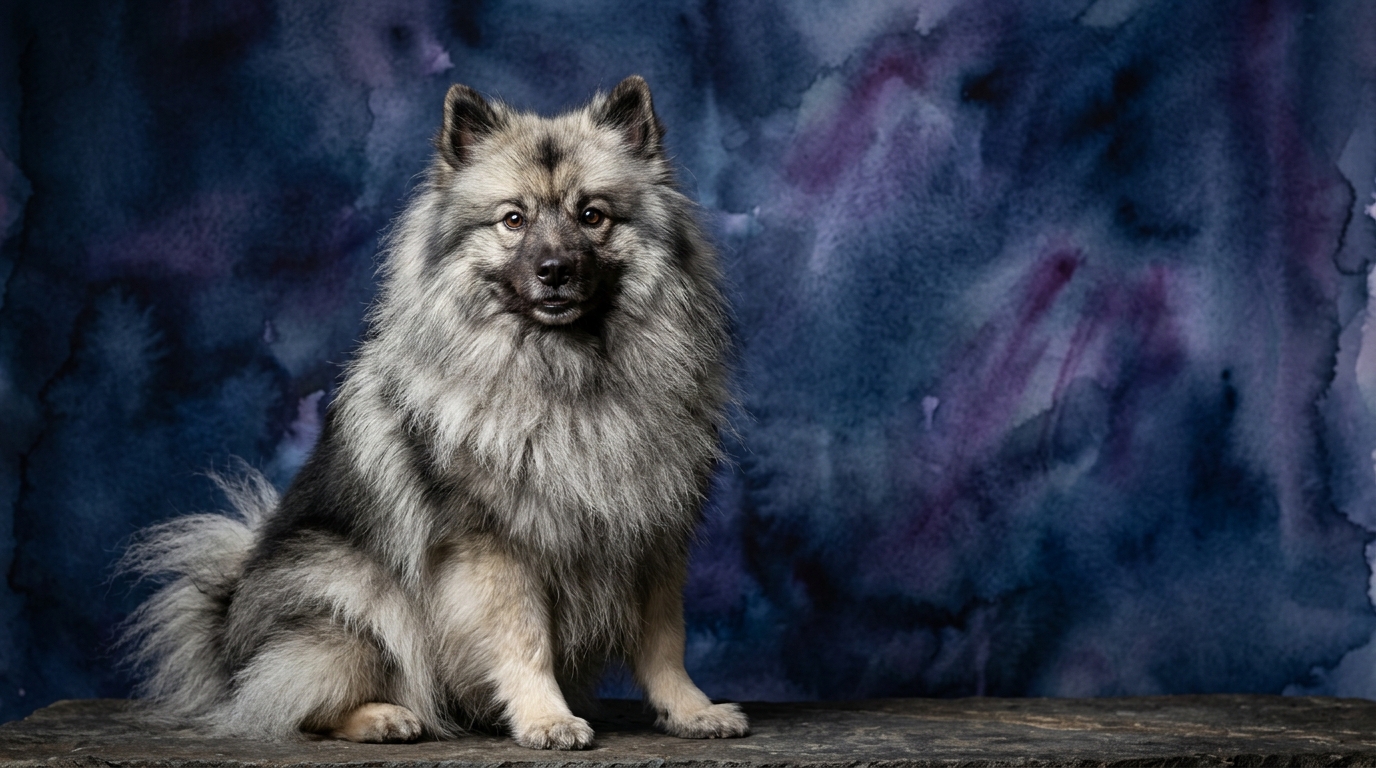
In contrast, the Keeshond, a member of the Non-Sporting group, showcases a cognitive profile geared towards companionship and structured learning, notably ranking #16 in Stanley Coren's assessment of working and obedience intelligence. Their Problem Solving capability is a strong 4/5, demonstrating an aptitude for independent thought and creative solutions to obstacles, often involving manipulating objects or understanding sequences to achieve a goal. Training Speed is also 4/5, meaning they pick up new commands and routines with remarkable quickness, requiring fewer repetitions than many breeds.
The Keeshond's Social Intelligence, like the Spanish Water Dog, is rated 3/5; they are adept at connecting with their human family and understanding social structures within their pack. Their Instinctive Drive is likewise 3/5, typically manifesting as a watchful nature and a desire to be involved with family activities rather than intense working drives. The most striking difference lies in their Memory, which is an exceptional 5/5, indicating an extraordinary capacity to retain a vast repertoire of commands, experiences, and associations over long durations, making them highly consistent once a behavior is learned.
Where the Spanish Water Dog Wins Cognitively
While the Spanish Water Dog doesn't boast higher individual scores in most cognitive dimensions compared to the Keeshond, its balanced profile of 3/5 across all categories represents a unique cognitive strength: robust, practical adaptability. Their problem-solving (3/5) is less about abstract puzzles and more about navigating dynamic, real-world challenges. This cognitive framework is specifically advantageous in environments requiring physical dexterity, environmental awareness, and an intuitive understanding of movement, such as herding livestock or traversing varied outdoor terrains, where their physical prowess and mental processing work in tandem.
The Spanish Water Dog's moderate instinctive drive (3/5), rooted in its herding background, means their cognitive engagement is often tied to purposeful activity. They excel when given a “job” that allows them to apply their practical problem-solving skills in a tangible way. This isn't an overwhelming drive that makes them difficult to live with, but rather a consistent internal motivation that, when channeled appropriately, results in a highly engaged and cooperative partner for active pursuits that mimic their historical roles.
Their uniform scores also suggest a mental equilibrium, making them less prone to extreme sensitivities or obsessive behaviors in any single cognitive area. This balanced mental state translates into a dog that is consistently competent and less likely to be overwhelmed by environmental stimuli or complex social demands. Owners seeking a versatile companion that is neither overly driven by a single instinct nor prone to overthinking simple tasks will find the Spanish Water Dog's practical and steady cognitive approach highly rewarding.
Where the Keeshond Wins Cognitively
The Keeshond's cognitive profile demonstrates clear advantages in several key areas, most notably its exceptional Memory (5/5). This superior recall means they can retain a vast array of commands, experiences, and routines over extended periods, making them remarkably consistent in their behavior once a skill is learned. Owners will find that once a Keeshond has grasped a concept, it is likely to stick, minimizing the need for constant re-teaching and building a deep, reliable foundation for complex training.
Complementing their memory is their swift Training Speed (4/5) and strong Problem Solving (4/5). This combination allows Keeshonds to absorb new information rapidly and apply independent thought to novel situations. They are adept at figuring out how things work, whether it's manipulating a puzzle toy to get a treat or understanding a complex sequence of actions to achieve a desired outcome. This cognitive flexibility means they can adapt quickly to new routines and environments, often anticipating their owner's next move and demonstrating a predictive intelligence that streamlines communication.
These cognitive strengths make the Keeshond particularly adept at structured canine sports and activities that require precision, a large repertoire of commands, and the ability to generalize learning. Their quick grasp of concepts and reliable recall make them excellent candidates for obedience, rally, and trick training, where they can continuously learn and perform with enthusiasm. This capacity for advanced learning offers a rewarding experience for owners who enjoy engaging in progressive training and intellectual challenges with their canine companions.
Which is Easier to Train and Why
Without a doubt, the Keeshond generally presents an easier and more fluid training experience due to its superior Training Speed (4/5) and exceptional Memory (5/5). They absorb new commands rapidly, often requiring fewer repetitions to solidify a behavior, and once learned, these behaviors are retained with remarkable long-term recall. This means a Keeshond can progress through obedience levels quickly, master intricate trick sequences, and reliably perform complex tasks, making them a rewarding choice for owners who enjoy consistent, advanced training. Their problem-solving acumen also helps them generalize learned behaviors to new situations, further simplifying the training process.
Keeshonds respond very well to positive reinforcement methods; their eagerness to please combined with their quick cognitive processing means they thrive on praise, treats, and engaging training sessions. They are often motivated by the opportunity to learn and interact, which helps maintain focus and enthusiasm. Their capacity to remember a wide range of commands and rules also contributes to their overall consistency, leading to fewer instances of 'selective hearing' or forgotten lessons.
Conversely, the Spanish Water Dog, with its moderate Training Speed (3/5) and Memory (3/5), requires a more patient and persistent approach to training. While certainly capable of learning, they necessitate more frequent repetitions and consistent reinforcement to ingrain commands deeply. Owners must be prepared for a longer learning curve and understand the importance of regular practice to prevent learned behaviors from fading. Their inherent instinctive drive (3/5), while moderate, can sometimes lead to independent decision-making, requiring an owner to be clear, firm, and inventive in channeling their energy and focus during training sessions, perhaps finding motivation in tasks that mimic their herding heritage. This isn't to say they are difficult, but rather that their learning style demands a more dedicated and consistent training regimen.
Which Suits Active Owners vs. Relaxed Owners
For the truly active owner seeking a partner for rigorous outdoor pursuits and mentally stimulating 'work,' the Spanish Water Dog is the more fitting choice. Their Herding group background, combined with a moderate but present instinctive drive (3/5) and practical problem-solving (3/5), means they thrive on consistent physical activity and purposeful engagement. Activities like agility, dock diving, hiking, or even mock herding trials provide crucial outlets for their energy and cognitive design, preventing boredom and potential behavioral issues. They are not content to be mere couch potatoes and require an owner committed to providing regular, robust exercise and mental challenges that align with their working heritage.
A Spanish Water Dog's mental and physical well-being is deeply tied to having an outlet for their drives. An owner who can incorporate their moderate herding instincts into daily life, perhaps through structured play or specific dog sports, will find them a cooperative and content companion. Owners with a more relaxed lifestyle who cannot provide this consistent engagement may find the Spanish Water Dog's needs challenging, potentially leading to unmet cognitive and physical demands that could manifest as undesirable behaviors.
The Keeshond, while certainly enjoying activity, offers a more balanced profile that can suit both moderately active and more relaxed owners, provided their cognitive needs are met. With a similar instinctive drive (3/5) but superior problem-solving (4/5) and memory (5/5), they excel in structured activities like obedience, rally, or canine freestyle that leverage their quick learning and recall, without demanding the same intense physical output as a herding breed. Daily walks, engaging playtime, and regular training sessions, perhaps incorporating puzzle toys, are typically sufficient to keep them content. They are highly adaptable companions, capable of enjoying an energetic hike one day and a relaxed evening indoors the next, making them suitable for owners who appreciate flexibility in their lifestyle.
The Verdict
Opt for a Spanish Water Dog if you are an active individual or family seeking a versatile, robust companion for outdoor adventures and structured canine sports that tap into their practical problem-solving and moderate herding instincts. They thrive with consistent engagement and a clear 'job.'
Select a Keeshond if you desire a highly trainable, memorable companion who excels in obedience and enjoys learning new things, offering both affectionate companionship and moderate activity. Their quick learning and strong memory make them rewarding for those who enjoy consistent, positive training.
🧠 Find Your Pet's IQ Score
Our Pet IQ Lab assessment covers 25+ tests across 5 cognitive dimensions — personalized to your breed.
Take the Full IQ Test →Frequently Asked Questions
Is a Spanish Water Dog difficult to train?
The Spanish Water Dog has a moderate training speed (3/5) and memory (3/5), meaning they require consistent, patient training and more repetitions than some breeds. They are not inherently difficult but benefit greatly from clear communication and regular reinforcement to solidify commands.
Do Keeshonds need a lot of exercise?
Keeshonds have a moderate instinctive drive (3/5) and enjoy activity but are not typically high-energy working dogs. Daily walks, playtime, and mental stimulation through training or puzzle toys are usually sufficient to keep them content.
Which breed is better for first-time dog owners?
The Keeshond, with its faster training speed (4/5) and exceptional memory (5/5), generally presents an easier learning curve for first-time owners willing to engage in positive reinforcement training. The Spanish Water Dog's more independent nature and need for consistent, experienced guidance might be more challenging for novices.