Side-by-Side IQ Profile: Spanish Water Dog
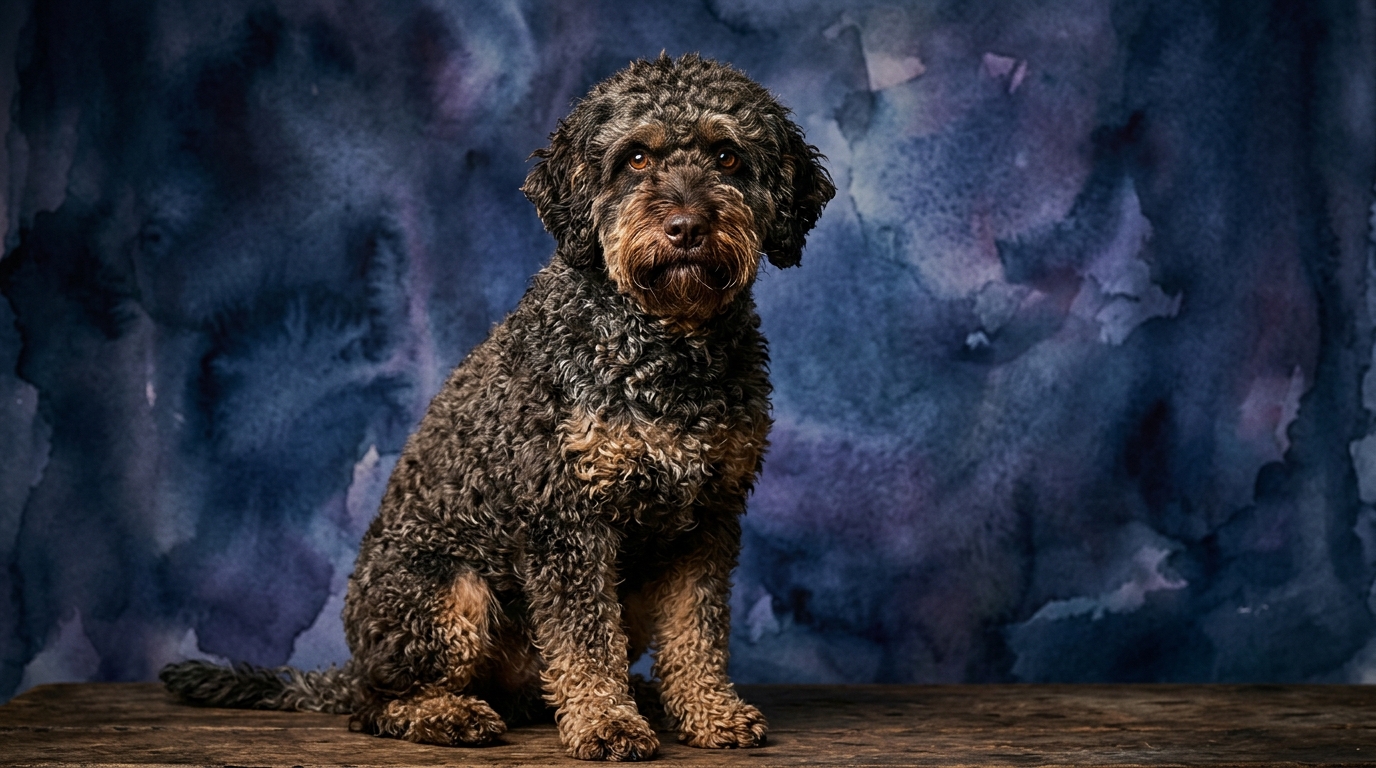
The Spanish Water Dog (SWD), a versatile herding breed, demonstrates a practical Problem Solving ability of 3/5, adept at navigating dynamic environments like managing livestock or retrieving items from water. This reflects a capacity for situational assessment and adaptive decision-making to achieve a specific goal, often in collaboration with a handler.
Their Training Speed, also 3/5, indicates a moderate pace for learning new commands, particularly when tasks align with their natural herding or retrieving instincts. The SWD's Social Intelligence (3/5) manifests as a keen ability to interpret human cues, fostering a strong working partnership, while their Instinctive Drive (3/5) is robust in herding, gathering, and water-related tasks. A Memory score of 3/5 allows them to recall complex sequences of learned behaviors and patterns crucial for their working roles.
Side-by-Side IQ Profile: Otterhound
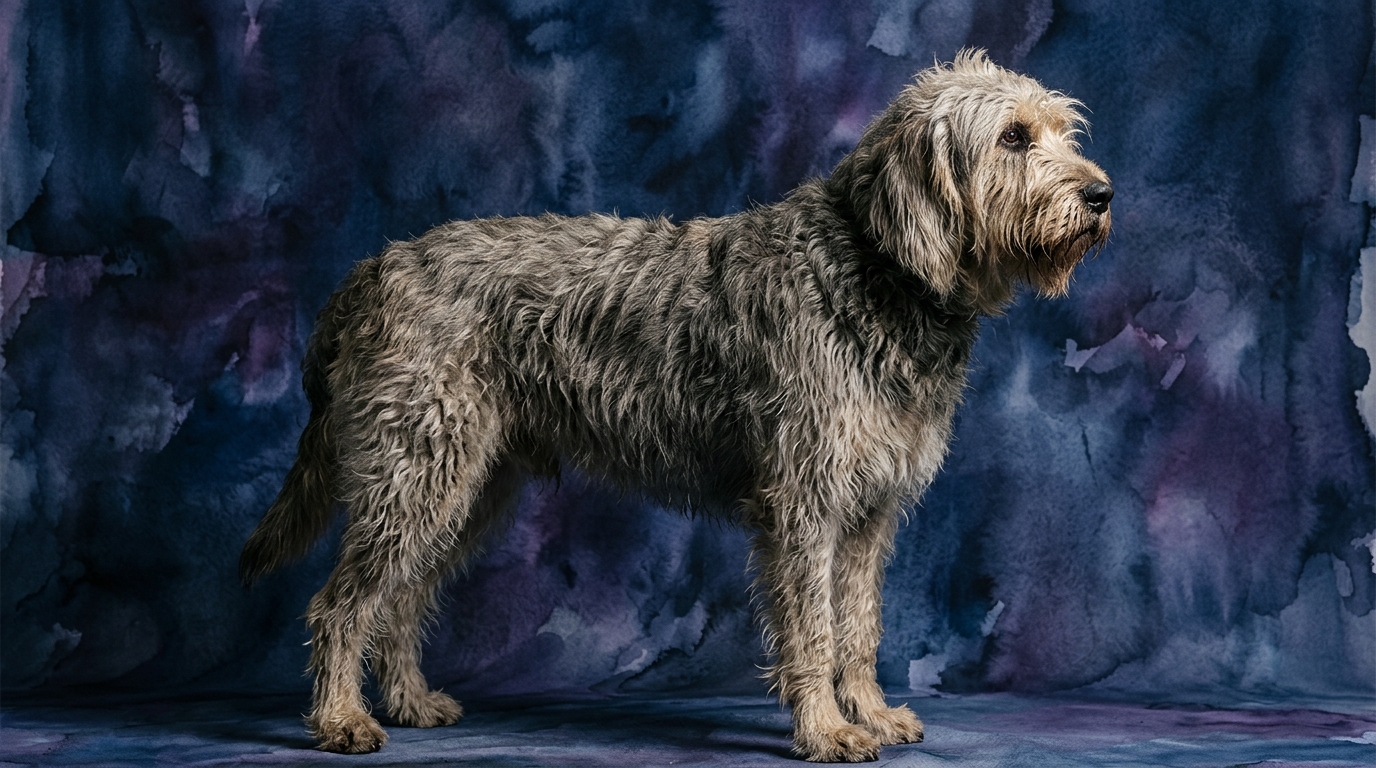
The Otterhound, a robust scent hound, exhibits a Problem Solving score of 3/5, uniquely tailored for deciphering complex scent trails and navigating challenging terrain independently. This involves making autonomous decisions to pursue a quarry, demonstrating a specialized, instinct-driven approach to environmental puzzles.
Their Training Speed, also 3/5, suggests a moderate learning curve, but one often influenced by their powerful scenting abilities and independent nature, making general obedience potentially slower. The Otterhound’s Social Intelligence (3/5) is often geared towards pack dynamics and environmental interpretation, while their Instinctive Drive (3/5) is dominated by a persistent hunting drive, particularly for scenting and pursuing prey over long distances and through water. Their Memory (3/5) is highly specialized, excelling at recalling scent patterns and the geography of previous hunts.
Where the Spanish Water Dog Wins Cognitively
While both breeds exhibit a 3/5 in problem-solving, the Spanish Water Dog's cognitive strengths shine in scenarios demanding adaptable, responsive action in close partnership with a human. Their historical role as a multi-purpose farm dog, herding livestock and retrieving from water, honed a mind capable of quickly assessing dynamic situations and executing precise maneuvers based on handler cues. This means they are often quicker to grasp novel tasks that require abstract understanding of a human's goal, such as learning complex agility courses or intricate trick sequences, where interpreting subtle body language is key.
Their social intelligence, while rated 3/5, often manifests as a keen attentiveness to their human companions. This makes them particularly adept at anticipating commands or understanding unspoken expectations in a cooperative setting. When the task involves intricate communication and a fluid back-and-forth between dog and handler, the Spanish Water Dog's cognitive wiring for partnership gives it a distinct advantage, allowing for more nuanced and responsive teamwork than a breed whose primary focus is often independent pursuit.
Where the Otterhound Wins Cognitively
The Otterhound's cognitive prowess truly excels in domains where relentless focus, environmental interpretation, and autonomous problem-solving are paramount, specifically in the realm of scent work. Their 3/5 problem-solving ability is perfectly tuned for deciphering intricate odor puzzles, navigating varied terrain – from dense underbrush to water bodies – while maintaining an unwavering commitment to a scent trail. They can mentally map complex routes and adapt strategies to overcome physical obstacles, demonstrating a specialized form of intelligence geared towards independent pursuit rather than direct human collaboration.
Their instinctive drive, also rated 3/5, is a dominant cognitive force, enabling an unparalleled tenacity. This means they possess a remarkable ability to ignore distractions and persevere on a task they deem important, particularly when it involves their deeply ingrained hunting instincts. The Otterhound’s memory, while 3/5, is exceptionally robust for recalling scent profiles and environmental markers, allowing them to re-engage with a trail after a break or navigate familiar hunting grounds with uncanny accuracy. This specialized memory is a significant cognitive advantage in any activity requiring sustained, independent sensory tracking.
Which is Easier to Train and Why
Despite both breeds having a Training Speed of 3/5, the Spanish Water Dog generally presents as easier to train for general obedience and cooperative tasks. Their herding background imbues them with a natural desire to work with a human partner, making them more inclined to seek direction and respond to commands. They thrive on having a job and excel in activities like obedience, agility, or rally, where precision and responsiveness to a handler are key. Their focus is often on the human, making them more receptive to learning new cues quickly when motivation and consistency are provided.
The Otterhound, by contrast, while capable of learning, can be more challenging to train for conventional obedience due to its powerful, independent scenting drive. Their focus is often externalized, drawn irresistibly by odors in the environment. This means that while they can learn commands, their innate drive to follow a scent can override their desire to comply, especially in distracting environments. Training an Otterhound requires immense patience, creativity, and a willingness to work with their instincts, often by incorporating scent-based games, rather than trying to suppress their natural inclinations. Their 3/5 training speed is often applied to specific hunting tasks rather than broad obedience.
Which Suits Active Owners vs. Relaxed Owners
The Spanish Water Dog, with its strong instinctive drive and versatile cognitive profile, is ideally suited for active owners who can provide consistent mental and physical engagement. Their need to 'work' means they thrive on structured activities like herding, dock diving, agility, or long, stimulating hikes. Owners who enjoy teaching new skills and participating in dog sports will find the Spanish Water Dog a willing and capable partner. A relaxed owner who cannot fulfill this need for purpose and activity might find their Spanish Water Dog developing unwanted behaviors born of boredom.
The Otterhound also demands an active lifestyle, but one that caters specifically to its profound scenting and exploring instincts. Owners who enjoy long, rambling walks or hikes through varied terrain, allowing their dog to follow scent trails at its own pace, will be a good match. They require substantial outdoor time, but their activity often involves methodical sniffing and tracking rather than high-intensity bursts. While their physical needs are significant, a relaxed owner would struggle with the Otterhound’s independent nature and its potential for stubbornness if not given appropriate outlets for its powerful drives.
The Verdict
Choose the Spanish Water Dog if you seek a highly engaged, cooperative canine partner for diverse activities, valuing a dog that thrives on working closely with you and adapting to varied tasks.
Opt for the Otterhound if you appreciate independent, scent-driven work, are prepared for a persistent hound nature, and enjoy exploring the world at a slower, sniff-centric pace.
🧠 Find Your Pet's IQ Score
Our Pet IQ Lab assessment covers 25+ tests across 5 cognitive dimensions — personalized to your breed.
Take the Full IQ Test →Frequently Asked Questions
Do Spanish Water Dogs and Otterhounds get along with other pets?
Spanish Water Dogs, with good socialization, typically integrate well into multi-pet households, though their herding instinct might make them prone to "managing" other animals. Otterhounds, bred for pack life, usually get along with other dogs, but their strong prey drive requires careful management around smaller non-canine pets.
Are either of these breeds good for first-time dog owners?
Neither breed is typically recommended for first-time owners due to their strong working drives and specific needs. Both require experienced handling, consistent training, and owners who understand their unique cognitive and behavioral traits to prevent challenges.
How do their grooming needs compare given their coats?
The Spanish Water Dog has a distinctive corded or curly coat that requires specific grooming to prevent matting and maintain its texture, typically involving regular clipping or cording. The Otterhound has a shaggy, water-resistant double coat that needs regular brushing to prevent tangles and remove loose hair, but generally less specialized care than the SWD.