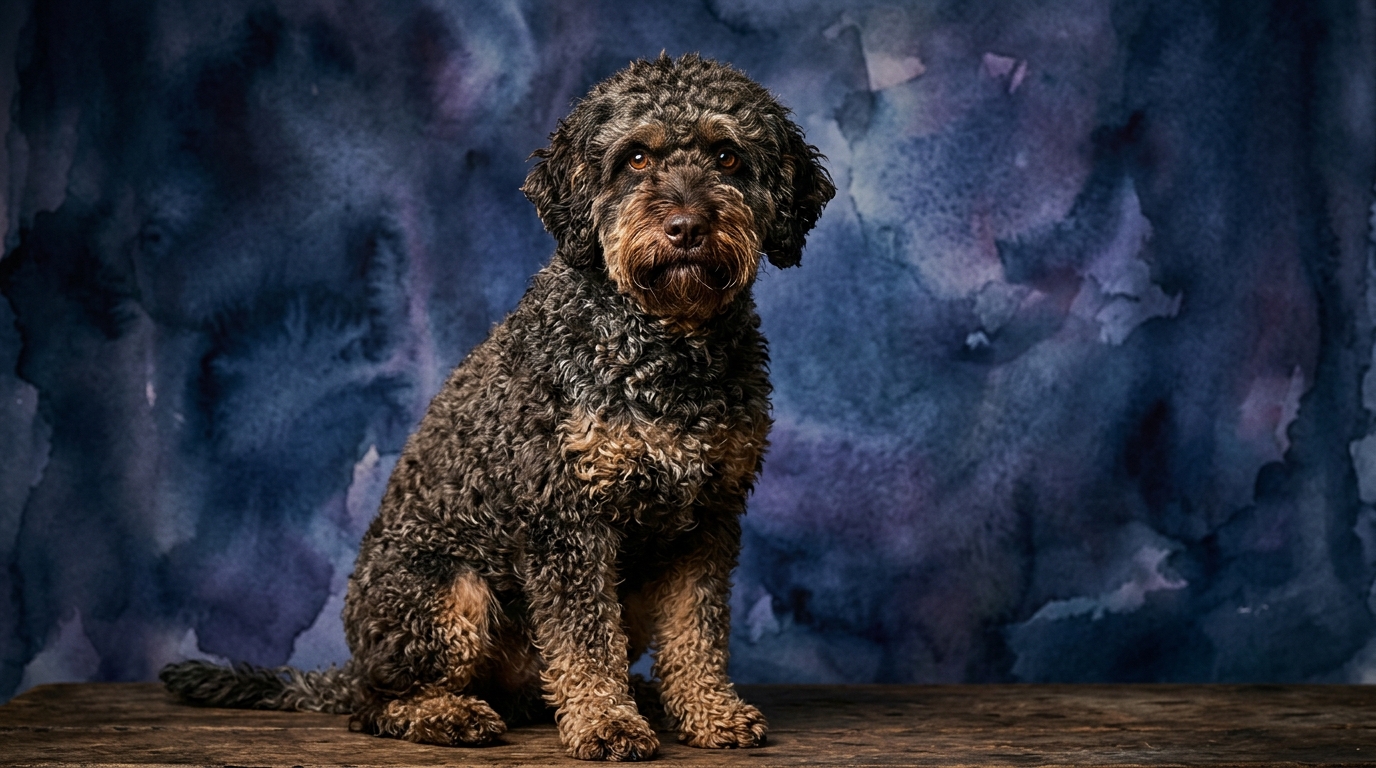
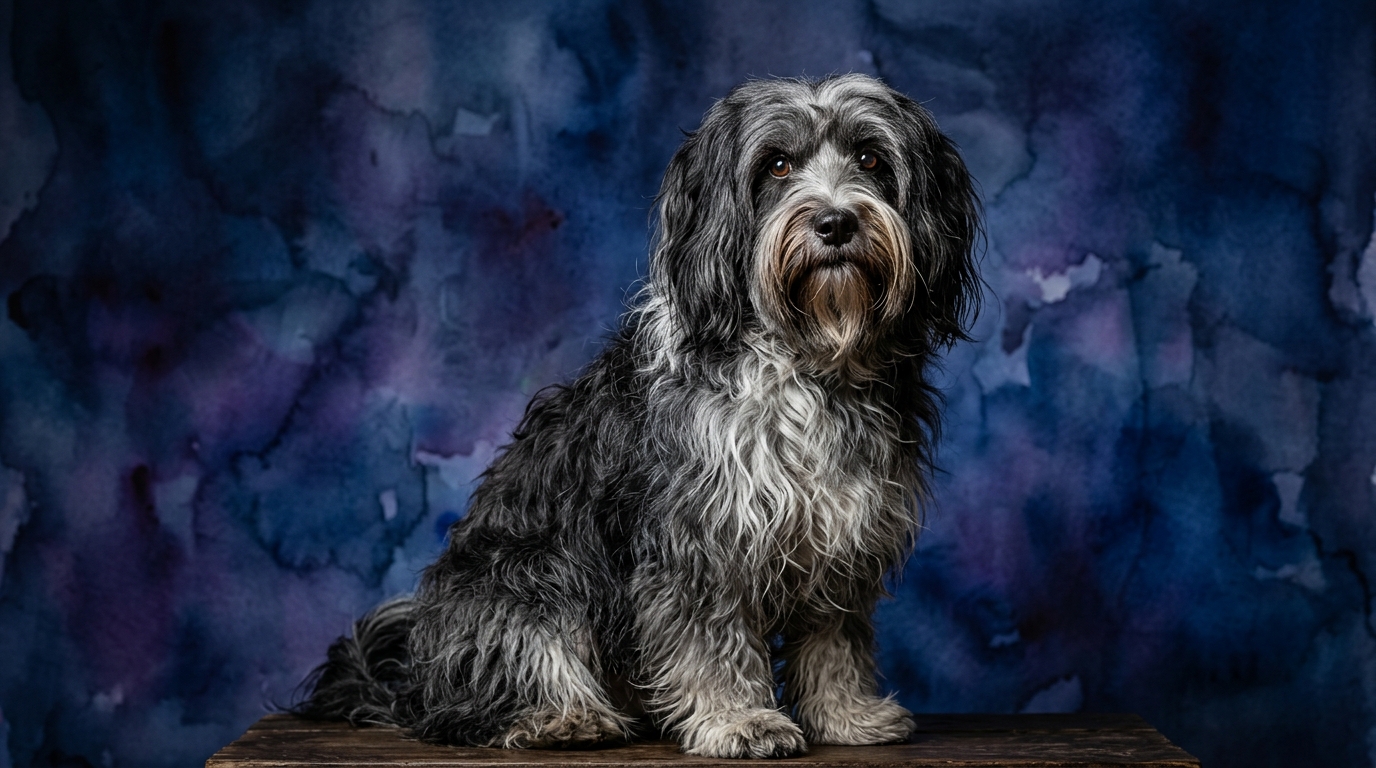
Side-by-Side IQ Profile: Spanish Water Dog vs. Tibetan Terrier
At first glance, the cognitive profiles of the Spanish Water Dog and the Tibetan Terrier appear remarkably similar, with both breeds scoring 3/5 across all five dimensions of our Pet IQ Lab assessment: Problem Solving, Training Speed, Social Intelligence, Instinctive Drive, and Memory. However, a deeper understanding reveals how these identical scores manifest through the lens of their unique breed histories and purposes, offering distinct cognitive experiences for their owners.
The Spanish Water Dog, originating from Spain's varied terrains, is a robust, rustic breed from the Herding Group. Historically, they served as versatile farm dogs, herding livestock, retrieving from water, and guarding property. This working background deeply influences how their 3/5 scores play out in daily life. Their Problem Solving at 3/5 indicates a competent ability to navigate practical challenges, especially those related to their working instincts, such as figuring out how to retrieve a specific item or managing a group of animals. Their Training Speed, also 3/5, reflects a moderate learning curve where they are receptive to instruction and eager to please within a structured, task-oriented environment. Social Intelligence at 3/5 means they are attuned to family dynamics and human cues, but their protective nature might make them reserved with strangers, requiring consistent socialization. Their Instinctive Drive, rated 3/5, is purposeful and channeled towards tasks like herding, retrieving, and guarding, suggesting a dog that thrives when given a 'job.' Finally, Memory at 3/5 ensures they retain commands, routines, and experiences well, supporting their capacity for complex, multi-step tasks over time.
The Tibetan Terrier, despite its name, is not a true terrier in the hunting sense but a companion and watch dog from Tibet, classified in the Non-Sporting Group. Revered as 'holy dogs' and good luck charms, their history is one of companionship and adaptability within monastic communities. Their Coren ranking of #63 further situates them as capable learners. For Problem Solving (3/5), Tibetan Terriers display a clever aptitude for figuring things out, often with an independent streak. They might excel at household puzzles or devising ingenious ways to achieve a desired outcome, blending observation with a desire for personal comfort or attention. Their Training Speed (3/5) shows they learn at a moderate pace, but their independent and sometimes mischievous nature means they respond best to engaging, positive reinforcement rather than repetitive drills. Social Intelligence at 3/5 highlights their skill in reading human emotions and family dynamics, forming deep bonds while maintaining a watchful, sometimes reserved, demeanor with outsiders. Their Instinctive Drive (3/5) is primarily focused on companionship, playful interaction, and alerting their family to new arrivals, rather than strong herding or hunting tendencies. And with Memory also at 3/5, they consistently recall routines, commands, and the people in their lives, allowing them to integrate seamlessly into family life and maintain learned behaviors.
Where the Spanish Water Dog Wins Cognitively
The Spanish Water Dog's cognitive strengths truly shine in scenarios demanding practical application of intellect within a working framework. Their Herding background imbues them with a particular aptitude for task-oriented problem-solving and sustained focus. For instance, in complex agility courses or multi-stage retrieval exercises, their 3/5 Problem Solving and Instinctive Drive converge to enable persistent, goal-directed action. They excel at deciphering the steps required to complete a job, often displaying a tenacity to see it through, whether it's navigating an obstacle course or locating a hidden object. This breed's memory (3/5) supports their ability to recall intricate sequences, making them highly effective in roles requiring consistent performance of learned behaviors. Their cognitive profile leans towards efficiency and diligence in fulfilling a purpose, making them adept at understanding and executing structured commands from a handler, particularly when those commands tap into their natural inclinations.
Where the Tibetan Terrier Wins Cognitively
The Tibetan Terrier, while sharing the same numerical scores, demonstrates cognitive victories in areas reflecting its history as a cherished companion and observant watch dog. Their 3/5 Social Intelligence is often expressed as a nuanced understanding of human emotional states and subtle household dynamics. They can be remarkably attuned to their owner's moods, offering comfort or playfulness as appropriate, a skill honed over centuries of close companionship. Their Problem Solving (3/5) often manifests as cleverness in navigating the domestic environment, perhaps figuring out how to open a cupboard for a treat or strategically positioning themselves for maximum comfort. This breed's adaptability, stemming from their history of traveling with monks, means they can quickly assess and adjust to new environments or social situations, a cognitive flexibility that might appear as a quick grasp of new household rules or social cues among unfamiliar people. Their intelligence is often expressed through a charming independence and a knack for making their own way within the family structure.
Which is Easier to Train and Why?
Despite both breeds scoring 3/5 in Training Speed, the 'ease' of training can feel quite different depending on the owner's approach and expectations. The Spanish Water Dog generally presents as more straightforward to train for owners who appreciate structure and task-oriented sessions. Their Herding background means they are often handler-focused and possess a natural desire to work and please, especially when the tasks align with their instinctive drives. They thrive on clear direction and consistent routines, channeling their moderate instinctive drive into productive learning. Owners who enjoy dog sports or working trials will likely find the SWD eager to engage and relatively compliant, making the training process feel rewarding and efficient.
Conversely, the Tibetan Terrier, while certainly capable of learning a wide array of commands, can offer a different training experience. Their independent and sometimes mischievous nature means they might approach training with a 'what's in it for me?' attitude. While they learn at a moderate pace, they can be prone to selective hearing if a task becomes repetitive or boring. Training a Tibetan Terrier often requires more creativity, variety, and consistent positive reinforcement to maintain engagement. Owners need patience and a good sense of humor, as this breed might test boundaries or find clever ways to avoid compliance if not properly motivated. Therefore, while both are capable learners, the SWD might feel 'easier' for owners who prefer a more traditional, structured training dynamic, while the TT demands a more imaginative and flexible approach.
Which Suits Active Owners vs. Relaxed Owners?
The Spanish Water Dog is an ideal match for active owners who are prepared to provide consistent mental stimulation and physical exercise. Their Herding group classification and 3/5 Instinctive Drive mean they are not content to be couch potatoes; they need a job or an outlet for their energy. Owners who enjoy long hikes, dog sports like agility or dock diving, or even structured training sessions several times a week will find the SWD a willing and enthusiastic partner. Their intelligence thrives when challenged with purposeful activities, making them less suitable for purely relaxed lifestyles where their needs for engagement might go unmet, potentially leading to boredom-driven behaviors.
The Tibetan Terrier, while possessing a moderate energy level, offers greater adaptability, making them suitable for a broader range of owners. While they certainly enjoy daily walks, playtime, and mental engagement, their Non-Sporting, companion history means they can also be content to relax with their family. They thrive with owners who appreciate a balance of activity and downtime, enjoying both an invigorating walk and a cozy evening on the sofa. Their cleverness and social intelligence ensure they remain engaged even in quieter moments, making them a good fit for moderately active individuals or families who seek a companion capable of both playful energy and serene presence, without the intense working drive of the SWD.
The Verdict: When to Choose Each Breed
The Verdict
Choose the Spanish Water Dog if you seek a diligent, task-oriented companion eager for structured activity and mental challenges that tap into its working heritage, thriving with an owner committed to engaging its purposeful drives.
Opt for the Tibetan Terrier if you desire a clever, adaptable companion who thrives on nuanced social interaction and a balanced lifestyle, offering both playful energy and serene companionship with a charming independent streak.
🧠 Find Your Pet's IQ Score
Our Pet IQ Lab assessment covers 25+ tests across 5 cognitive dimensions — personalized to your breed.
Take the Full IQ Test →Frequently Asked Questions
Do Spanish Water Dogs and Tibetan Terriers require similar levels of mental stimulation?
Both breeds benefit from mental engagement, but the type differs. The Spanish Water Dog, with its Herding background, thrives on structured tasks and problem-solving related to work, while the Tibetan Terrier enjoys puzzles, interactive games, and social interaction that stimulates its adaptable and clever nature, often with a more independent approach.
How do their social intelligence scores manifest differently in a family setting?
While both score 3/5, the Spanish Water Dog's social intelligence often leans towards understanding its role within a pack and responding to handler cues, sometimes being reserved with strangers. The Tibetan Terrier's social intelligence, stemming from its companion history, might show as a deeper attunement to subtle family dynamics and emotions, though it also maintains a watchful demeanor with new people.
Can a Tibetan Terrier participate in dog sports like a Spanish Water Dog?
Absolutely, a Tibetan Terrier can excel in various dog sports like agility, obedience, and rally, demonstrating its problem-solving and memory skills. However, a Spanish Water Dog might approach these activities with a more intense, task-driven focus owing to its Herding instincts, potentially making it appear more naturally inclined towards structured work.