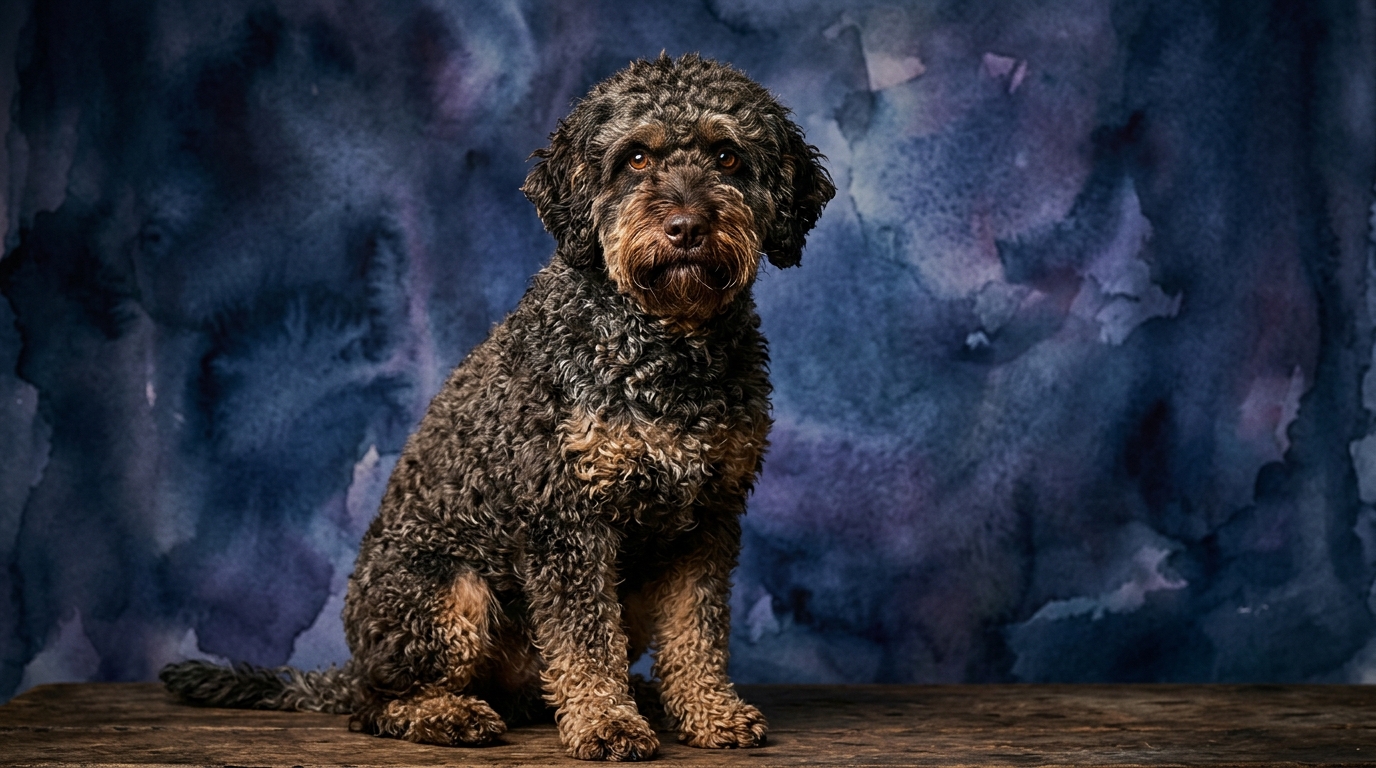
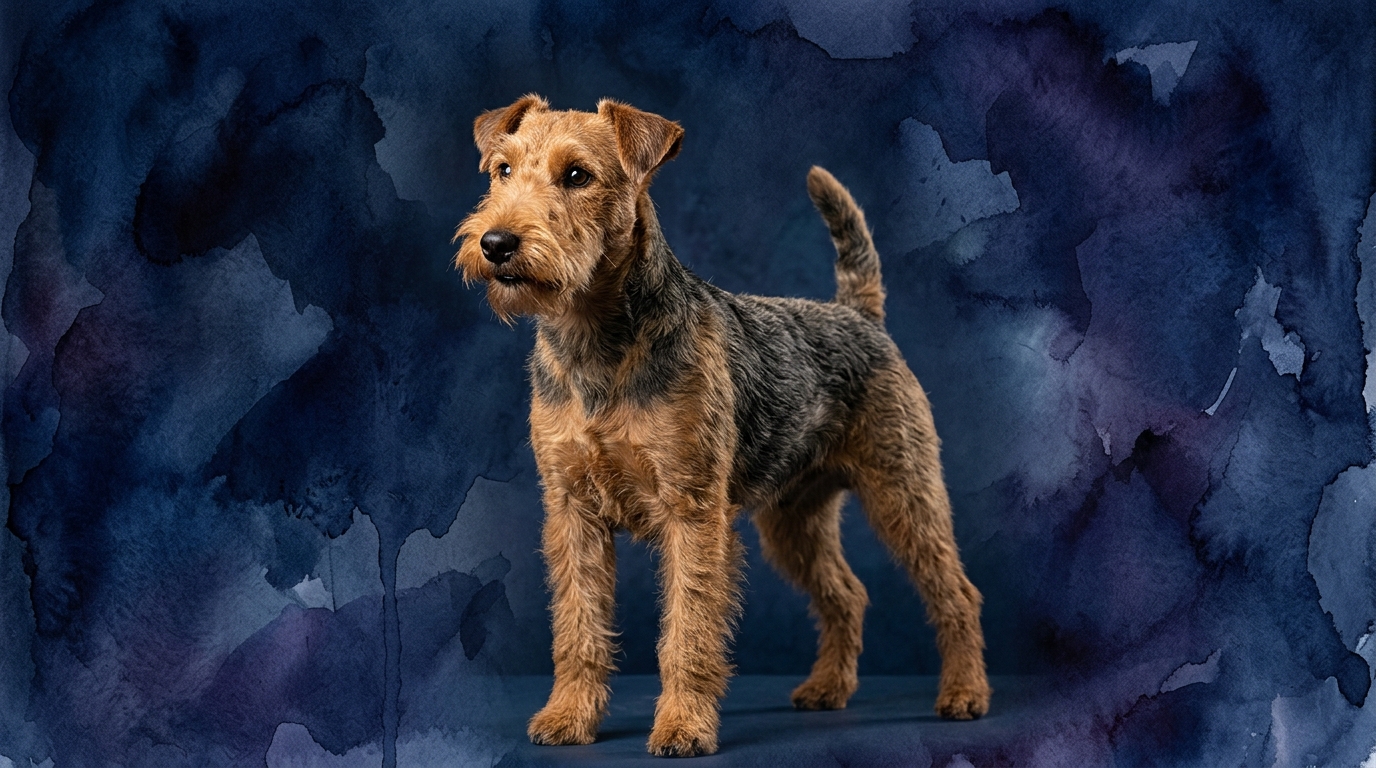
Side-by-Side IQ Profile: Herding Instinct vs. Terrier Tenacity
The Cosmic Pet Pet IQ Lab assesses five key dimensions of canine intelligence. For both the Spanish Water Dog and the Welsh Terrier, all dimensions are rated at a solid 3 out of 5, indicating capable but not extreme cognitive abilities. However, the manifestation of these scores is profoundly shaped by their breed-specific histories and inherent drives.
For the **Spanish Water Dog (Herding)**:
**Problem Solving (3/5):** This score reflects their practical intelligence in dynamic environments, adept at assessing situations to manage livestock or retrieve objects. They excel at spatial reasoning and adapting strategies in cooperative tasks.
**Training Speed (3/5):** Spanish Water Dogs learn new commands at a moderate pace, particularly when training is purposeful and engaging. Their desire to work alongside their handler aids in consistent learning and retention.
**Social Intelligence (3/5):** They possess a balanced understanding of human cues and household dynamics, forming strong bonds. Their social acumen extends to managing interactions within a family or working group.
**Instinctive Drive (3/5):** Their drive is rooted in herding and retrieving, manifesting as an inclination to gather, organize, and protect. They are watchful and purpose-driven, often channeling their energy into tasks.
**Memory (3/5):** These dogs demonstrate solid recall for routines, learned commands, and environmental layouts, especially for tasks with consistent, meaningful application over time.
For the **Welsh Terrier (Terrier)**:
**Problem Solving (3/5):** Their problem-solving is marked by resourcefulness and tenacity, often independently figuring out how to access desired items or navigate obstacles, fueled by curiosity and prey drive.
**Training Speed (3/5):** Welsh Terriers learn at a moderate pace, but their independent spirit requires engaging, varied training. They grasp concepts, but consistent execution needs strong motivation.
**Social Intelligence (3/5):** They exhibit keen social awareness, quickly assessing individuals and situations. Often discerning and self-possessed, they read intentions well while maintaining an independent social presence.
**Instinctive Drive (3/5):** Their drive is strong, influenced by hunting vermin, leading to a persistent nature, digging instincts, and a high prey drive. This fuels their need for exploration and mental engagement.
**Memory (3/5):** Welsh Terriers have good memory for places, people, and exciting experiences, recalling successful strategies or locations tied to their interests, such as scent trails or buried treasures.
Where the Spanish Water Dog Wins Cognitively
The Spanish Water Dog excels in cognitive tasks requiring cooperative effort and sustained focus within a structured framework. Their herding lineage primes them for understanding and responding to nuanced human direction, making them superior partners in complex obedience, agility, or service work. They demonstrate a particular aptitude for pattern recognition in dynamic, fluid environments, such as anticipating movement in a flock or navigating varied terrain during a retrieve. Their cognitive strengths lie in their ability to seamlessly integrate environmental information with human instructions, leading to a more harmonized and directed intellectual output in a team setting.
Where the Welsh Terrier Wins Cognitively
The Welsh Terrier's cognitive strengths lean towards independent problem-solving and tenacious, self-directed action, a hallmark of their terrier heritage. They often display remarkable ingenuity in figuring out how to achieve a personal goal, whether escaping a yard or accessing a forbidden treat, often without direct human instruction. Their persistence and sharp sensory perception give them an edge in tasks requiring detailed investigation and follow-through, such as scent discrimination or tracking. This breed's intelligence shines in scenarios where quick, decisive, and often solitary action is required, demonstrating a cleverness rooted in their drive to explore and conquer challenges on their own terms.
Which Is Easier to Train and Why
Despite identical training speed scores, the Spanish Water Dog generally presents as easier to train for a typical household seeking a well-mannered companion. Their historical role as a cooperative herder has fostered a greater natural inclination to work *with* their handler and respond to direction. They often possess a stronger desire to please and a more focused attention span when engaged in purposeful activities. While they require mental stimulation to prevent boredom, their innate drive to form a working partnership makes them receptive to consistent, positive reinforcement training, leading to more predictable obedience.
The Welsh Terrier, conversely, while capable of learning quickly, often requires a more nuanced approach. Their independent, tenacious terrier spirit means they question commands more readily and are less inclined to perform tasks they perceive as arbitrary. Training a Welsh Terrier necessitates making the learning process highly engaging, often leveraging their prey drive and zest for life, and understanding that absolute, robot-like obedience may not be their natural inclination. Their 'trainability' is often tied to their motivation and the perceived value of the task from their perspective.
Which Suits Active Owners vs. Relaxed Owners
The Spanish Water Dog is an ideal match for active owners who relish outdoor adventures and are prepared to engage their dog in mentally stimulating activities. Their herding and water dog heritage means they thrive on purpose-driven work, whether it's advanced obedience, agility, dock diving, or long hikes. Owners who appreciate a dog that is deeply involved in family activities and requires significant daily exercise and mental challenges will find a devoted companion. For more relaxed owners, the Spanish Water Dog's need for engagement could lead to frustration for both dog and human, potentially resulting in undesirable behaviors if their energy and intellect are not adequately channeled.
The Welsh Terrier, while also requiring regular exercise and mental stimulation, suits an active owner who appreciates a dog with a spirited, independent streak. They thrive on varied activities like earthdog trials, scent work, or vigorous play sessions that tap into their natural hunting instincts. They are not content to be couch potatoes and need consistent opportunities to explore and expend energy. While they can enjoy downtime with their family, their definition of 'relaxed' often involves a watchful eye and readiness for action, making them less suited for genuinely sedentary lifestyles.
The Verdict
Opt for a Spanish Water Dog if you seek a highly engaged, cooperative working partner for activities like agility, herding, or water sports, and value a dog that thrives on shared purpose and consistent direction.
Select a Welsh Terrier if you appreciate a spirited, independent companion with a tenacious problem-solving approach, are ready for creative training to harness their drive, and enjoy a dog that approaches life with bold curiosity.
🧠 Find Your Pet's IQ Score
Our Pet IQ Lab assessment covers 25+ tests across 5 cognitive dimensions — personalized to your breed.
Take the Full IQ Test →Frequently Asked Questions
Do Spanish Water Dogs and Welsh Terriers learn at the same pace?
While both breeds score similarly in training speed, their *approach* to learning differs. Spanish Water Dogs generally pick up tasks quickly when they perceive a clear purpose and enjoy working with their handler, while Welsh Terriers learn quickly but may require more motivation and variety due to their independent nature.
Which breed is better at adapting to new environments?
Both breeds demonstrate good adaptability. The Spanish Water Dog adapts well when their routine and family structure are consistent, while the Welsh Terrier's independent curiosity often makes them robustly adaptable to varied settings, provided they receive sufficient mental and physical engagement.
Are there specific games or activities that best stimulate each breed's intelligence?
For the Spanish Water Dog, activities like herding games, retrieving tasks, advanced obedience, and water sports effectively engage their cooperative problem-solving and drive. For the Welsh Terrier, earthdog trials, scent work, puzzle toys, and agility courses that tap into their prey drive and independent ingenuity are highly stimulating.