Side-by-Side IQ Profile
The Cosmic Pet Pet IQ Lab employs five key dimensions to evaluate canine intelligence, offering a granular view of each breed's cognitive strengths.
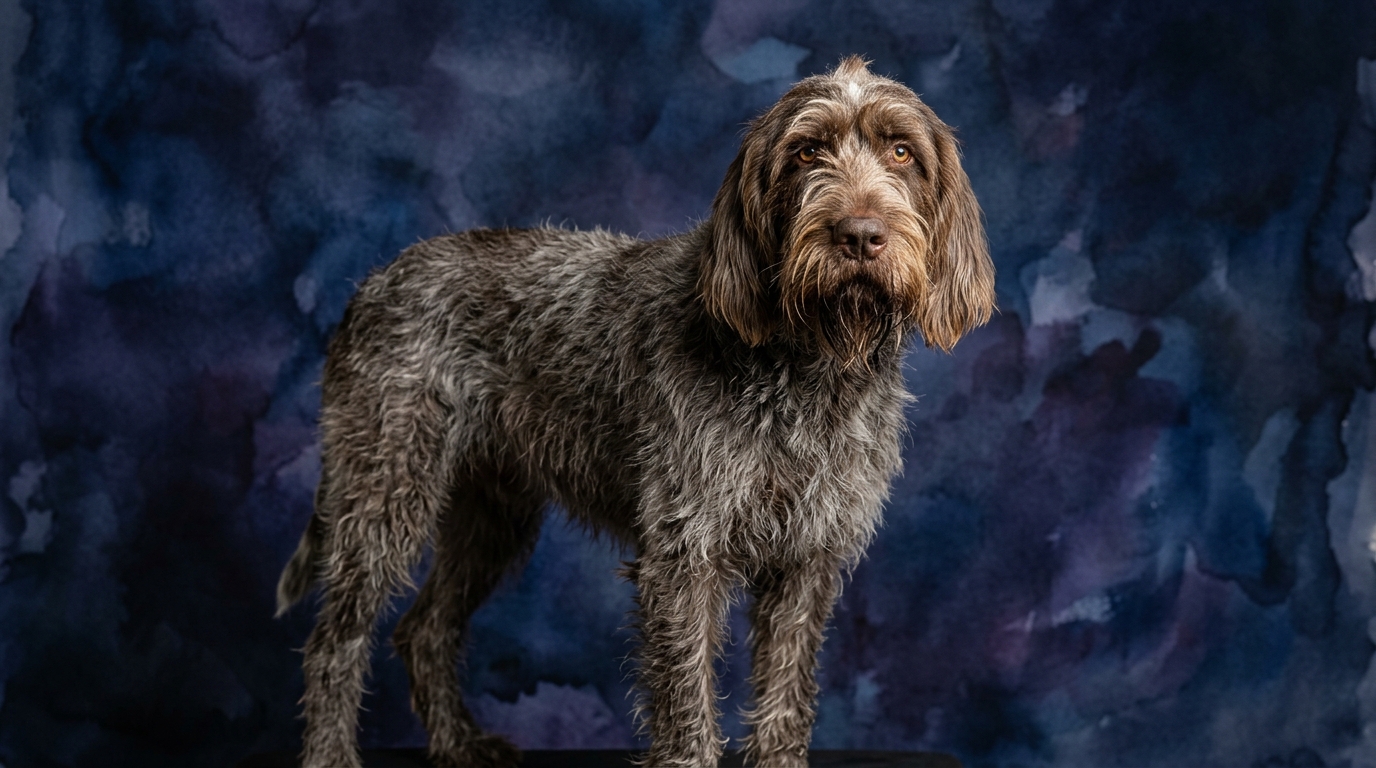
**Spinone Italiano (Problem Solving 3/5, Training Speed 3/5, Social Intelligence 3/5, Instinctive Drive 3/5, Memory 3/5):** The Spinone approaches obstacles with practical persistence, favoring established methods over complex innovation. Their solutions often rely on instinct and scent, indicating a steady capacity for navigating familiar challenges rather than devising novel strategies. Spinones learn new commands at a moderate, consistent pace. They are receptive and generally cooperative, requiring patient, repetitive instruction to solidify behaviors, with a dependable learning curve. They exhibit a balanced understanding of human cues and social structures, integrating well into the household without extreme dependence or independence. Their drive stems from their gundog role, focused on cooperative hunting and retrieving, manifesting as a moderate, persistent drive that channels effectively, often with a handler-focused approach. Spinones reliably retain learned information, including routines, commands, and past interactions, supporting a stable behavioral repertoire and strong family bonds.
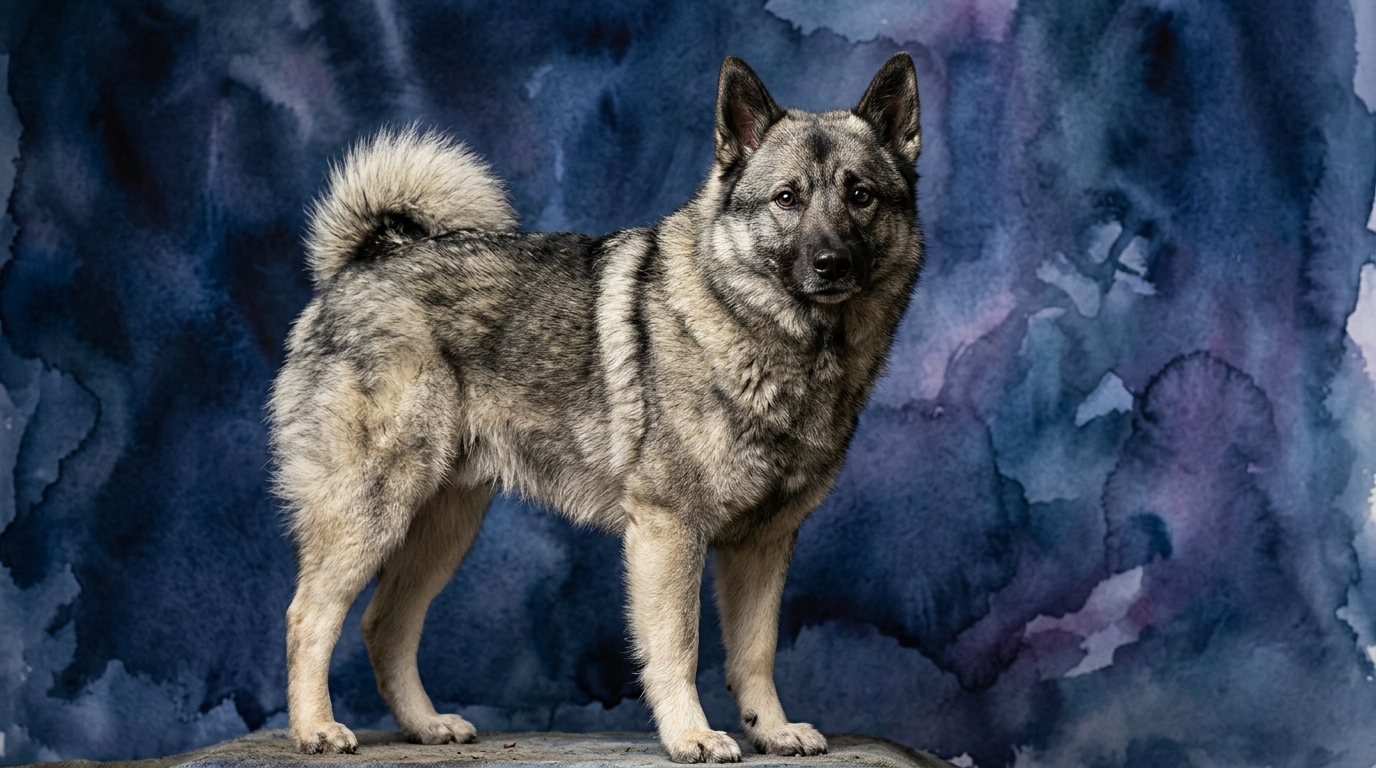
**Norwegian Elkhound (Problem Solving 4/5, Training Speed 4/5, Social Intelligence 3/5, Instinctive Drive 3/5, Memory 4/5):** The Elkhound shows a higher capacity for analytical thought and innovative solutions. They are more likely to experiment or strategize to overcome obstacles, reflecting their history as independent hunters adapting to complex situations. Elkhounds grasp new commands and concepts remarkably quickly, often with fewer repetitions, showing impressive ability to generalize learned behaviors, making initial training phases highly efficient. They display moderate social awareness, understanding human intentions; however, their independent hunting heritage means they might occasionally prioritize personal instincts over human directives, requiring clear, consistent leadership. Their drive is strong, centered on tracking and baying large game, manifesting as a persistent, often independent pursuit of scents, requiring careful channeling due to its self-directed nature. Elkhounds possess excellent memory, retaining a vast array of commands, experiences, and spatial information over long periods, contributing to their quick training speed and effective navigation.
Where Spinone Italiano Wins Cognitively
The Spinone Italiano, while not boasting higher individual scores, presents a unique cognitive advantage in its *consistency and balanced approach*. A uniform 3/5 across all five dimensions—problem-solving, training speed, social intelligence, instinctive drive, and memory—creates a predictable and harmonious mental landscape. This balance translates into a dog less prone to extreme cognitive "quirks" or challenges often associated with disproportionate traits. For instance, their moderate problem-solving (3/5 vs. Elkhound's 4/5) might mean less inclination for mischievous schemes when bored, making them potentially easier to manage. Their 3/5 instinctive drive is typically more cooperative and handler-focused than many hounds, encouraging partnership. This well-rounded profile fosters a steady, reliable companion whose mental processes are generally easy to anticipate and guide, promoting a consistent and less demanding partnership.
Where Norwegian Elkhound Wins Cognitively
The Norwegian Elkhound clearly demonstrates cognitive strengths in Problem Solving (4/5), Training Speed (4/5), and Memory (4/5). Their elevated problem-solving capacity means Elkhounds excel at analyzing situations and formulating effective solutions, a trait honed by centuries of independent big-game hunting. This translates to a dog capable of complex planning and adapting to changing circumstances, even figuring out how to open gates or outwit owners if not mentally stimulated. The superior training speed allows them to absorb new commands and concepts with remarkable efficiency, often requiring fewer repetitions than the Spinone. This rapid learning curve enables quick introduction of diverse skills. Coupled with excellent memory, Elkhounds not only learn fast but also retain knowledge over extended periods, making them reliable in recalling commands and experiences. These combined strengths make the Elkhound a formidable cognitive partner for owners who enjoy engaging in advanced training or complex tasks where quick comprehension and retention are paramount.
Which is Easier to Train and Why
Based on "Training Speed," the Norwegian Elkhound (4/5) is undeniably quicker to learn new commands than the Spinone Italiano (3/5). Elkhounds grasp behaviors with fewer repetitions, and their superior memory (4/5) ensures strong retention. However, "easier to train" also involves willingness to comply. The Spinone's more balanced social intelligence (3/5) and cooperative instinctive drive (3/5, often handler-focused) might make them *more consistently eager to please* and less independently minded during training. Elkhounds, while quick learners, possess a strong independent streak, typical of hounds bred to make decisions away from handlers. An Elkhound might perfectly understand a command but choose not to execute it if a compelling scent or personal interest intervenes. Therefore, while the Elkhound learns *faster*, the Spinone may be *more consistently compliant* and less challenging in terms of sustained focus for an average owner, provided patience is given to their moderate learning pace.
Which Suits Active Owners vs. Engaged Owners
Both the Spinone Italiano and the Norwegian Elkhound are working breeds, requiring active engagement. However, their cognitive profiles differentiate the *type* and *intensity* of activity needed. The Norwegian Elkhound, with 4/5 in Problem Solving, Training Speed, and Memory, demands significant mental and physical stimulation. Owners who are highly active and enjoy challenging dogs with complex training, dog sports, long hikes, or scent work will find the Elkhound thrives. Their sharp minds need constant engagement to prevent boredom and potential destructive behaviors. Conversely, the Spinone Italiano, with consistent 3/5 scores, is an active dog but more adaptable to a slightly less intense, yet still engaged, lifestyle. They require regular exercise like long walks, retrieving, or field work, but might not demand the same level of intricate mental puzzles as the Elkhound. Their balanced nature suits owners who enjoy outdoor activities and consistent, cooperative training without needing to constantly push cognitive boundaries. For those seeking an athletic, engaged companion that is also mentally "go with the flow," the Spinone offers balance; the Elkhound is for those ready for a dog whose intellect demands continuous partnership and challenge.
The Verdict
Opt for a Spinone Italiano if you seek a consistently balanced, cooperative companion with a steady learning pace and predictable temperament, thriving on consistent engagement rather than intense cognitive challenges.
Select a Norwegian Elkhound if you are an experienced, active owner ready to channel a keen intellect, quick learning, and independent problem-solving into advanced training and stimulating activities.
🧠 Find Your Pet's IQ Score
Our Pet IQ Lab assessment covers 25+ tests across 5 cognitive dimensions — personalized to your breed.
Take the Full IQ Test →Frequently Asked Questions
Do Spinone Italianos get bored easily?
With a 3/5 in problem-solving and instinctive drive, Spinones require regular mental and physical stimulation to prevent boredom, but they are generally less prone to destructive boredom-driven behaviors than breeds with higher cognitive demands. Consistent routines, scent games, and moderate exercise are usually sufficient to keep them content.
Are Norwegian Elkhounds good for first-time dog owners?
Norwegian Elkhounds, with their independent streak, strong problem-solving abilities, and quick learning curve, can be challenging for first-time owners who might not be prepared for their cognitive demands and strong will. They thrive with experienced owners who can provide consistent leadership, ample mental stimulation, and structured training.
How do their social intelligence scores impact their family life?
Both breeds score 3/5 in social intelligence, indicating a moderate understanding of human cues and family dynamics. This means they are generally responsive and integrate well into a household, but the Elkhound's independent nature (despite the same social score) might lead them to prioritize their own interests more often than the more cooperatively inclined Spinone.