
Side-by-Side Cognitive Profile
The Cosmic Pet Pet IQ Lab assesses canine cognition across five key dimensions, rating each on a scale of 1 to 5. Interestingly, both the Staffordshire Bull Terrier and the American Eskimo Dog land squarely in the middle with a 3/5 rating across all categories. However, these identical scores belie distinct expressions of cognitive strength, shaped by their breed heritage and typical behaviors.
For the Staffordshire Bull Terrier, Problem Solving (3/5) often manifests as persistent, goal-oriented action. Faced with an obstacle, a Staffy will frequently apply physical strength or tenacious digging to achieve its objective, like reaching a favored toy or investigating a compelling scent. Their solutions are typically direct and driven by their strong will, sometimes overlooking more subtle approaches. Training Speed (3/5) for Staffies means they learn commands at a moderate pace, especially when training engages their desire to please their handler and involves clear, consistent methods. Their independent terrier spirit, however, means they may require firm yet fair guidance to overcome stubborn streaks, sometimes interpreting requests as suggestions rather than commands. Social Intelligence (3/5) within their human family shows Staffies are highly attuned to emotional states, offering comfort or seeking interaction based on cues. With unfamiliar dogs, their social intelligence can be more guarded, requiring careful socialization to ensure polite interactions, as their inherent bravery can sometimes be mistaken for aggression. A Staffy's Instinctive Drive (3/5) is powerfully rooted in their terrier heritage, manifesting as a strong prey drive, a desire to dig, and an unwavering focus on a perceived 'job.' This drive, though sometimes challenging, can be channeled into focused activities like scent work or retrieve games. Memory (3/5) demonstrates Staffies have a solid recall for routines, learned commands, and the people they bond with. They quickly remember pleasant experiences, such as walks and playtimes, but also retain negative encounters, which underscores the importance of positive reinforcement in their upbringing.
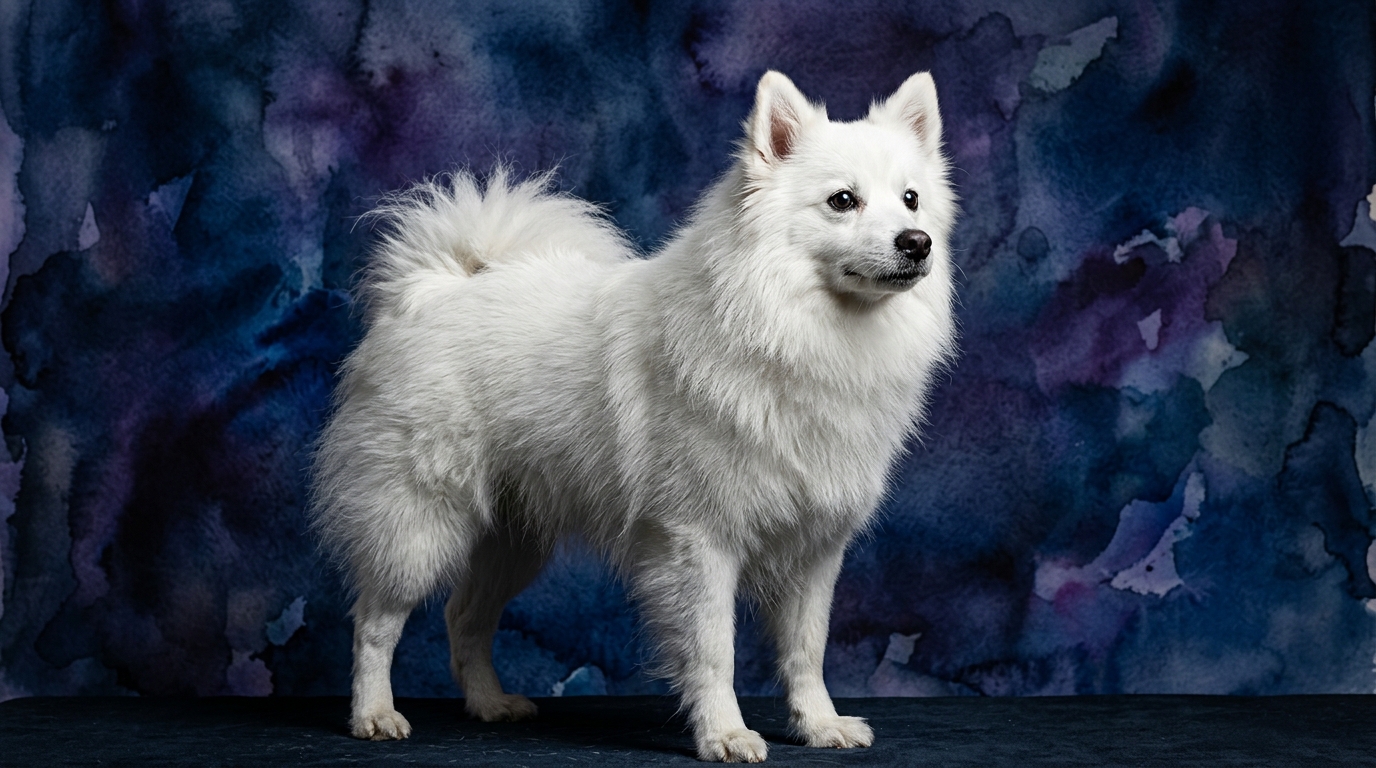
The American Eskimo Dog, conversely, approaches Problem Solving (3/5) with a keen observational intelligence, often assessing situations before acting. They might cleverly manipulate objects to get what they want, or use their distinct vocalizations to 'ask' for assistance, showcasing a more strategic, less physical problem-solving style compared to the Staffy. Training Speed (3/5) for Eskies means they are generally quick learners, often picking up new tricks and commands with enthusiasm, especially when training is kept engaging and fun. Their desire to please their family makes them responsive, though they can become bored or distracted if training sessions are repetitive or lack variety. Social Intelligence (3/5) highlights Eskies are deeply connected to their human families, often acting as sensitive barometers of household moods. They are masters of communication, using a wide range of barks, yips, and body language to express their needs and desires. While affectionate with their family, they can be reserved or cautious with strangers, observing before engaging. The Eskie's Instinctive Drive (3/5) includes a strong desire for companionship, a natural alert barking tendency, and a playful, almost clownish demeanor. They possess a persistent curiosity and a drive to be involved in family activities, sometimes exhibiting a 'herding' instinct to keep their humans together. Memory (3/5) for American Eskimo Dogs involves easily recalling learned behaviors, routines, and the people they interact with regularly. They remember complex sequences of tricks and can retain training over long periods, making them excellent candidates for advanced obedience or performance sports.
Where Staffordshire Bull Terriers Excel Cognitively
Staffordshire Bull Terriers demonstrate a particular strength in tasks requiring tenacious focus and determined, single-minded execution. When a Staffy sets its mind to something, whether retrieving a specific toy from under furniture or working through a scent trail, its unwavering concentration is a cognitive advantage. This persistence, while sometimes challenging in unwanted behaviors, is highly valuable in activities demanding grit and resilience.
Their robust build and inherent drive mean Staffies often find physical solutions to problems. They might push, dig, or pull to overcome an obstacle, demonstrating a practical, hands-on form of intelligence. This contrasts with more analytical approaches, highlighting their strength in direct, force-of-will cognition directed towards a clear goal.
While not strictly a cognitive win, their mental toughness and resilience allow them to bounce back from setbacks during training or problem-solving attempts. They possess a certain mental fortitude that enables them to keep trying, even when initial attempts fail, which is a valuable trait for enduring complex learning processes.
Where American Eskimo Dogs Excel Cognitively
American Eskimo Dogs often demonstrate a superior ability to learn by observing their environment and humans. They are adept at picking up routines and anticipating events, adapting their behavior accordingly. This observational intelligence makes them quick to understand household dynamics and human expectations, often adjusting their actions to gain favor or avoid disapproval.
The American Eskimo Dog's sophisticated vocal repertoire and expressive body language represent a cognitive strength in communication. They are adept at conveying their needs, emotions, and even playful suggestions to their human companions, making them particularly easy to 'read' for an attentive owner. This social intelligence allows for a rich, two-way interaction.
Eskies often shine in learning complex sequences of tricks and performing them with flair. Their agility, desire to please, and capacity for memorizing specific actions make them natural performers. This ability to link multiple commands and execute them smoothly is a testament to their cognitive flexibility and memory for detailed instructions.
Which is Easier to Train and Why
Training ease isn't solely about how quickly a dog grasps a command, but also about their motivation and consistency. The American Eskimo Dog generally presents as easier to train for a wider range of owners. Their innate desire to please, combined with their responsiveness to positive reinforcement and engaging training methods, means they often eagerly participate and respond well to guidance. They thrive on variety and mental stimulation, making them excellent candidates for trick training, agility, and obedience sports where their enthusiasm can be harnessed.
The Staffordshire Bull Terrier, while capable of learning quickly, can pose a greater challenge for novice trainers due to their independent streak and strong will. Their terrier tenacity means they might decide a task isn't worth their effort if the motivation isn't strong enough or if they perceive an opportunity to do something more inherently rewarding (like chasing a squirrel). Consistent, patient, and firm (but fair) training is crucial for Staffies, focusing on channeling their powerful drives rather than suppressing them. Their training requires understanding their motivations and leveraging their bond with their handler.
Suitability for Active vs. Relaxed Owners
Both breeds benefit from active engagement, but in different ways. An active owner who enjoys structured activities like advanced obedience, agility, or performance sports will likely find the American Eskimo Dog a delightful partner. Their quickness, eagerness, and mental agility make them shine in these focused, interactive pursuits. Similarly, an active owner who appreciates robust physical exercise, challenging puzzle toys, and consistent outdoor adventures, possibly involving scent work or structured play, will find a strong companion in the Staffordshire Bull Terrier. Staffies need outlets for their physical energy and mental drive to prevent boredom.
For a more relaxed owner, the American Eskimo Dog might be a better fit, provided they can still offer consistent companionship and mental engagement through interactive play and short training sessions. Eskies thrive on being part of the family and are content with indoor play and moderate walks, as long as they aren't left alone for long periods. A relaxed owner considering a Staffordshire Bull Terrier must understand that 'relaxed' doesn't mean 'sedentary.' While Staffies are affectionate couch potatoes indoors, they require a dedicated owner who can provide daily bursts of vigorous activity and mental puzzles to satisfy their drive, even if the owner's overall lifestyle is less 'on-the-go.' Without sufficient mental and physical enrichment, a Staffy's tenacity can manifest in undesirable ways.
The Verdict
The Staffordshire Bull Terrier is ideal for owners who appreciate a dog with tenacious drive, enjoy robust physical activities, and are committed to consistent, firm-but-fair training to channel their powerful will.
The American Eskimo Dog suits owners seeking an engaging, communicative companion who thrives on interactive play, enjoys learning tricks, and can provide ample companionship and mental stimulation.
🧠 Find Your Pet's IQ Score
Our Pet IQ Lab assessment covers 25+ tests across 5 cognitive dimensions — personalized to your breed.
Take the Full IQ Test →Frequently Asked Questions
Do Staffordshire Bull Terriers and American Eskimo Dogs get along with other pets?
Staffordshire Bull Terriers can coexist with other pets, but their strong prey drive and potential for dog-dog intolerance mean careful, early socialization is crucial. American Eskimo Dogs generally get along well with other pets, especially if raised together, though their alert nature might lead to chasing smaller animals if not trained.
Are either of these breeds good for first-time dog owners?
The American Eskimo Dog, with its eagerness to please and responsiveness to positive training, can be a good choice for a committed first-time owner willing to provide consistent mental and physical engagement. The Staffordshire Bull Terrier, due to its independent nature and strong drives, is generally better suited for owners with some prior dog experience who understand how to manage terrier traits effectively.
How much exercise do these breeds require daily?
Both breeds require daily exercise to remain happy and well-adjusted. Staffordshire Bull Terriers need at least 60-90 minutes of vigorous activity, including walks, play, and mental challenges, to satisfy their high energy and drive. American Eskimo Dogs need 30-60 minutes of moderate exercise, such as walks and interactive play, alongside plenty of mental stimulation to prevent boredom.