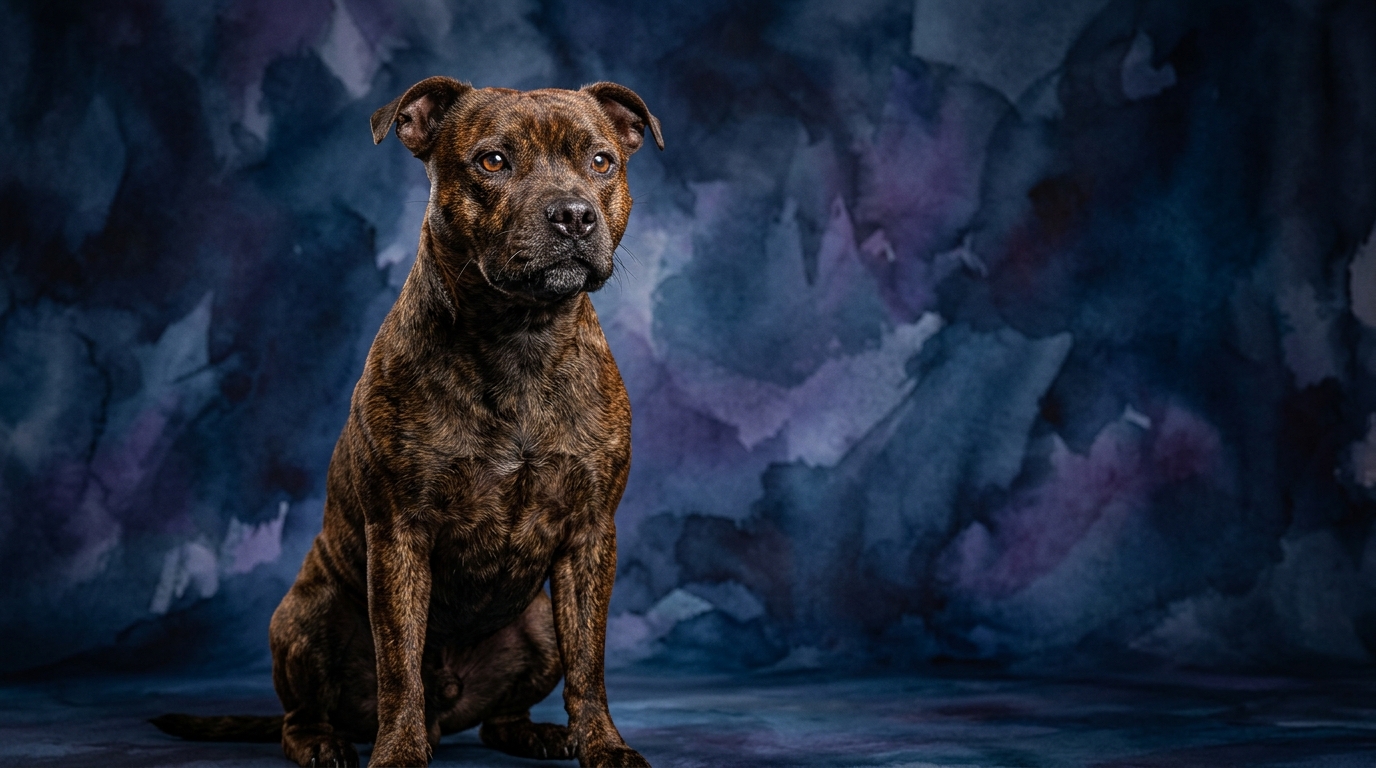
Side-by-Side IQ Profile: Staffordshire Bull Terrier
The Staffordshire Bull Terrier's cognitive profile, as measured by our Pet IQ Lab, reveals a balanced and robust intellect. Their Problem Solving score of 3/5 indicates a moderate capacity for independent thought and navigating novel situations; a Staffie can figure things out with proper guidance, adapting rather than overthinking complex puzzles. In Training Speed, they also score 3/5, suggesting a steady pace for learning new commands and behaviors, where consistency and an engaging approach are key to success, rather than immediate comprehension. Their Social Intelligence at 3/5 reflects a clear understanding of human and canine social cues, enabling them to form strong bonds and interact appropriately within a family unit. An Instinctive Drive of 3/5 points to a manageable level of inherent behaviors, often manifesting as a desire for physical engagement and tenacity, which can be positively channeled into structured play or activities. Finally, their Memory score of 3/5 signifies a solid, reliable capacity to retain learned information and experiences, with consistent reinforcement helping to solidify their recall over time.
Overall, the Staffie's consistent 3/5 across all cognitive dimensions paints a picture of a dog that is reliably capable, adaptable, and possesses a practical intelligence that serves them well in diverse environments, valuing consistency and straightforward engagement.
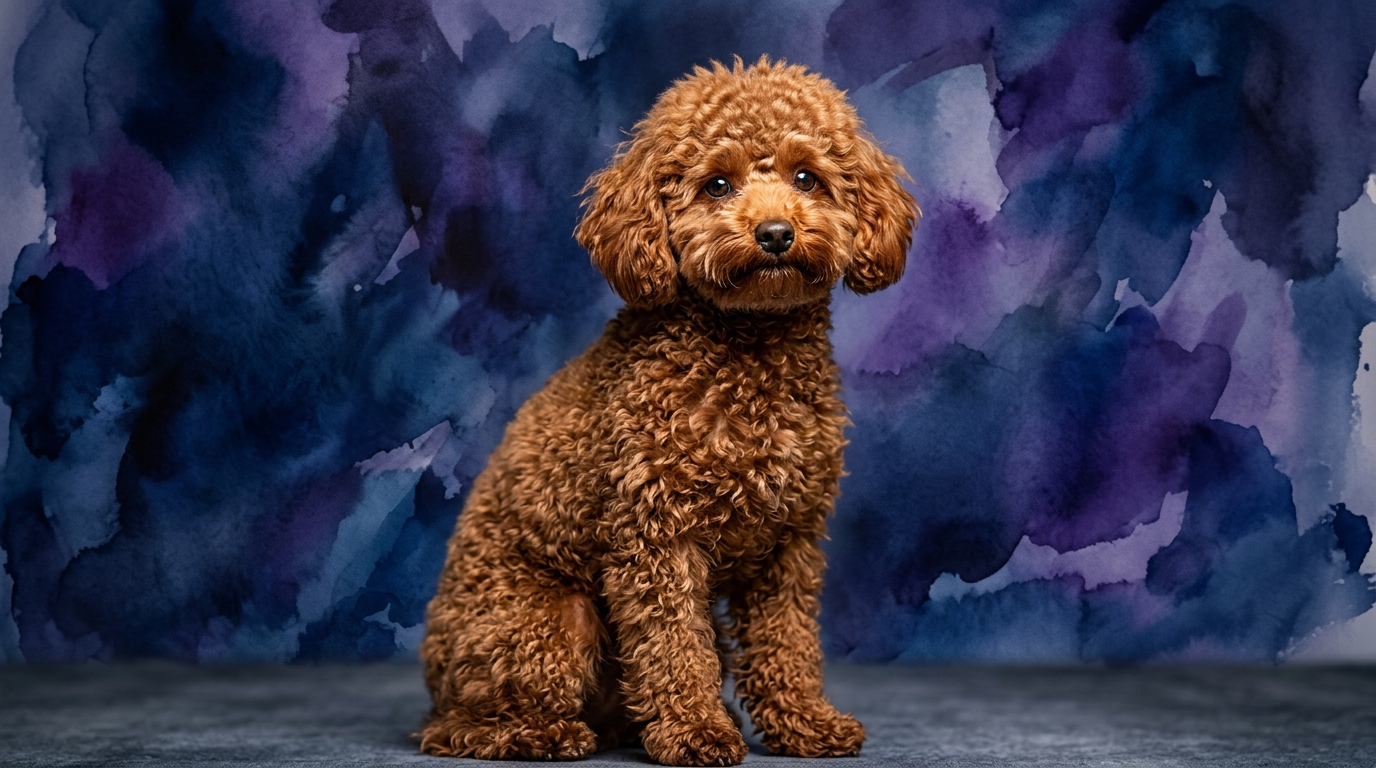
Side-by-Side IQ Profile: Toy Poodle
The Toy Poodle's IQ Lab profile showcases a mind geared for rapid learning and intricate thought. Their Problem Solving score of 5/5 denotes an exceptional ability to analyze situations, devise strategies, and overcome obstacles independently, often demonstrating innovation in finding solutions to challenges. With a Training Speed of 5/5, Toy Poodles absorb new commands and behaviors with remarkable speed and precision, often grasping concepts in very few repetitions, making them highly responsive to training. Interestingly, their Social Intelligence is also 3/5, mirroring the Staffie in their balanced aptitude for reading social cues from humans and other animals, capable of forming strong social bonds without being overly sensitive or detached. An Instinctive Drive of 3/5, similar to the Staffie, translates from their historical role as waterfowl retrievers into a keen interest in toys, carrying objects, or scent work, present but well-integrated into their temperament. Their Memory score of 5/5 is outstanding, indicating an impressive ability to recall learned information, routines, and past experiences with exceptional accuracy and longevity.
The Toy Poodle’s profile highlights a dog with profound cognitive abilities in specific areas, making them particularly adept at complex learning, memory-based tasks, and intellectual engagement, thriving on mental stimulation.
Where the Staffordshire Bull Terrier Wins Cognitively
While the Toy Poodle's metrics boast higher numbers in several categories, the Staffordshire Bull Terrier's cognitive profile reveals a distinct set of strengths, particularly in its balanced and resilient approach to the world. A Staffie's 3/5 in Problem Solving, combined with a similar score in Instinctive Drive, suggests a dog that approaches challenges with a practical, grounded mindset rather than an overthinking one. They are less likely to become anxious or frustrated by complex mental tasks that might overwhelm a more sensitive breed, instead demonstrating a steadfast persistence. This equilibrium across all five cognitive dimensions means a Staffie is consistently reliable across various situations. Their moderate Social Intelligence, for instance, implies they are neither prone to over-interpreting subtle human emotions nor are they aloof; they simply engage directly and honestly. This cognitive balance contributes to their well-regarded adaptability and unflappable nature, making them robust companions who process information steadily and react predictably, a significant advantage for owners valuing consistency over flash.
Where the Toy Poodle Wins Cognitively
The Toy Poodle's cognitive strengths are undeniably impressive, particularly in the realm of rapid learning and intellectual engagement. Their 5/5 scores in Problem Solving, Training Speed, and Memory illuminate a dog with a profound capacity for abstract thought and retention. This means a Toy Poodle can quickly grasp multi-step commands, invent creative solutions to everyday dilemmas, and remember them with exceptional clarity. For example, a Toy Poodle might figure out how to manipulate a childproof latch after only a few observations, or recall a complex obedience routine perfectly after months without practice. Their high problem-solving ability means they actively seek out mental stimulation, often devising their own games if not provided with enough enrichment. This keen intellect, coupled with their rapid training speed, makes them exceptionally versatile in competitive dog sports and a joy for owners who relish engaging in intricate training sequences and intellectual games with their companion.
Which is Easier to Train and Why
When considering ease of training, the Toy Poodle holds a distinct advantage due to its exceptional Training Speed (5/5), Problem Solving (5/5), and Memory (5/5). A Toy Poodle's rapid comprehension means they typically learn new commands in a fraction of the repetitions a Staffordshire Bull Terrier might require. Their superior memory ensures that once a behavior is learned, it is retained for a long time, making refreshers quick and effective. For instance, house-training a Toy Poodle might involve fewer 'accidents' because they quickly associate the desired location with relief, and remember it. Conversely, the Staffordshire Bull Terrier, with 3/5 in Training Speed and Memory, requires a more patient and consistent approach. While certainly trainable, a Staffie might need more frequent repetitions and varied training environments to solidify new behaviors. Their moderate instinctive drive means they respond well to positive reinforcement but might not be as inherently driven to 'figure out' the training game as quickly. Therefore, owners seeking a dog that picks up complex tasks with minimal effort and retains them flawlessly will find the Toy Poodle significantly easier to train, whereas the Staffie demands a more dedicated and consistent investment of time and effort, albeit with rewarding results for the patient trainer.
Which Suits Active Owners vs. Relaxed Owners
The choice between a Staffordshire Bull Terrier and a Toy Poodle based on owner lifestyle hinges on the type of activity desired, rather than just physical exertion. A Staffordshire Bull Terrier, with its balanced 3/5 Instinctive Drive and moderate Problem Solving, often thrives with owners who enjoy consistent physical activity and structured play, but might not demand constant, intricate mental puzzles. They are content with robust walks, engaging tug games, or short bursts of fetch, followed by periods of calm companionship. They appreciate routine and a clear, predictable environment. For owners who are 'active' in a physical sense but prefer a companion that doesn't constantly seek out novel intellectual challenges, a Staffie could be an excellent fit. The Toy Poodle, however, with its 5/5 Problem Solving and Memory, requires significant mental stimulation in addition to physical exercise. These dogs need owners who are 'active' in a cognitive sense, willing to engage in puzzle toys, learning new tricks, or participating in dog sports like agility or obedience. A 'relaxed' owner who provides minimal mental engagement might find a Toy Poodle prone to boredom and potentially developing undesirable behaviors as they seek their own mental outlets. Therefore, the Staffie suits owners seeking a steadfast, physically active companion who appreciates a predictable mental rhythm, while the Toy Poodle is ideal for those who revel in intellectual partnership and consistent mental enrichment.
The Verdict
Choose a Staffordshire Bull Terrier if you value a physically resilient companion with a balanced cognitive profile, offering steady learning and dependable companionship without constant demands for complex mental gymnastics.
Opt for a Toy Poodle if you are an owner eager to engage a dog with exceptional problem-solving skills, rapid learning, and a keen memory, thriving on intricate training and consistent mental enrichment.
🧠 Find Your Pet's IQ Score
Our Pet IQ Lab assessment covers 25+ tests across 5 cognitive dimensions — personalized to your breed.
Take the Full IQ Test →Frequently Asked Questions
Do Staffordshire Bull Terriers learn tricks quickly?
Staffordshire Bull Terriers, with a Training Speed of 3/5, learn tricks at a moderate pace. They are capable learners but benefit from consistent, positive reinforcement and may require more repetitions than breeds with faster training speeds to solidify new behaviors.
Are Toy Poodles good at puzzle toys?
Absolutely. With a Problem Solving score of 5/5, Toy Poodles excel at puzzle toys. They are adept at figuring out mechanisms and strategies, making them ideal candidates for toys that challenge their intellect and require creative solutions.
How does social intelligence differ between these breeds?
Both breeds score 3/5 in Social Intelligence, indicating a similar, balanced capacity to understand and respond appropriately to social cues from humans and other animals. Neither is prone to extreme sensitivity or detachment, making both capable of strong, clear social bonds.