Side-by-Side Cognitive Profiles
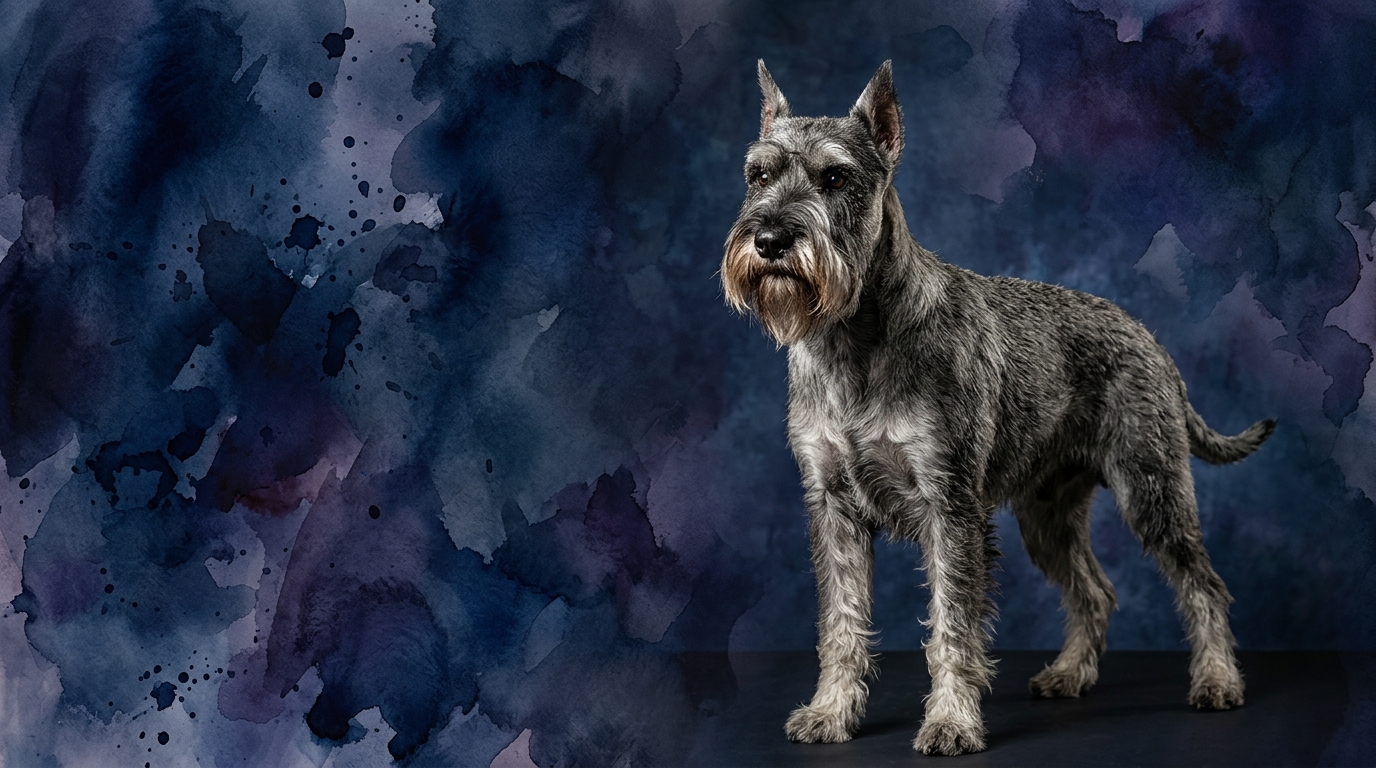
The Standard Schnauzer, a member of the Working Group, presents a robust cognitive profile, reflecting its heritage as a versatile farm dog. Its Problem Solving at 4/5 indicates a strong capacity for navigating complex situations, often devising solutions independently, whether it's figuring out how to open a gate or understanding multi-step commands. Training Speed, also at 4/5, highlights its quick grasp of new concepts and commands, often requiring fewer repetitions than many other breeds. Social Intelligence, rated 3/5, suggests a balanced awareness of human cues and pack dynamics, making it responsive but not overly dependent. The Instinctive Drive at 3/5 speaks to a foundational desire for purposeful activity, often manifesting as guarding or general working behaviors. Finally, its Memory, a solid 4/5, ensures it retains learned behaviors and routines, making long-term training highly effective.
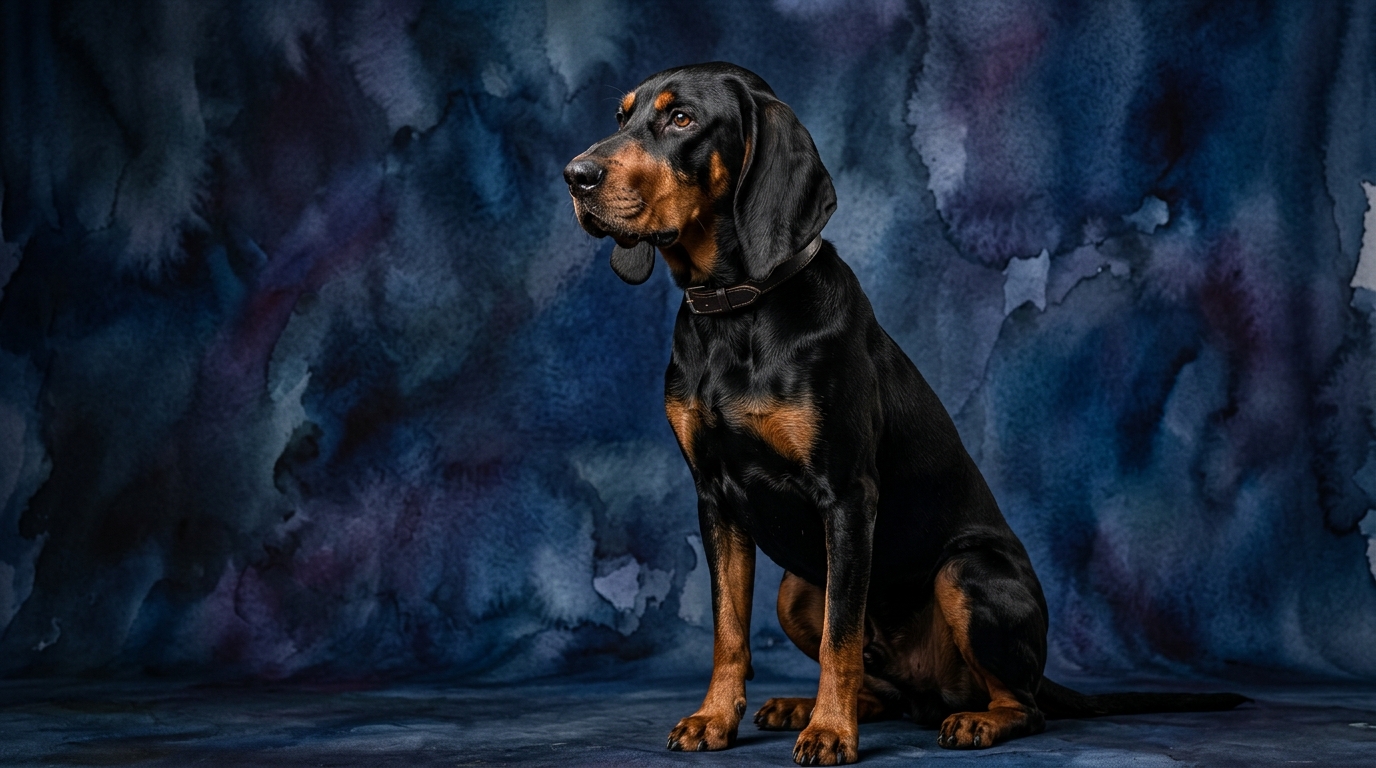
The Black and Tan Coonhound, from the Hound Group, possesses a cognitive profile distinctly tailored to its specialized role as a trailing dog. Its Problem Solving at 3/5 indicates a practical, task-oriented approach to challenges, typically excelling when the problem involves scent discrimination rather than abstract reasoning. Training Speed, rated 3/5, means it learns at a steady pace, though its independent nature can sometimes require more motivational effort from a handler. Social Intelligence, also 3/5, shows it can integrate well into a family or hunting pack, understanding hierarchies and interactions without being overtly people-pleasing. The Instinctive Drive, a strong 3/5, is almost entirely channeled into its powerful scenting ability and the pursuit of a trail, often overriding other impulses. Its Memory, at 3/5, is particularly adept at recalling scent patterns and geographical layouts encountered during a hunt, essential for tracking over long distances.
Where the Standard Schnauzer Excels Cognitively
The Standard Schnauzer's cognitive strengths lie in its adaptability and quick processing. Its superior problem-solving (4/5) allows it to analyze novel situations and formulate effective responses, often demonstrating initiative in domestic or work environments. This means a Schnauzer is more likely to assess a barrier and strategize an alternative path, or understand a complex sequence of tasks without constant intervention. Coupled with its faster training speed (4/5), the Schnauzer readily absorbs and applies new information, making it exceptionally proficient in advanced obedience, agility, or tasks requiring a variety of learned behaviors. Its excellent memory (4/5) ensures these skills are retained over time, building a reliable and consistently performing companion capable of intricate partnerships.
Where the Black and Tan Coonhound Excels Cognitively
While the Black and Tan Coonhound's general cognitive scores may appear modest compared to the Schnauzer, its true brilliance shines in its specialized instinctive drive (3/5) and its application. Its unparalleled ability to process and follow complex scent trails, often hours old, through varied terrain is a cognitive feat that few breeds can match. This isn't just instinct; it involves sophisticated sensory processing, pattern recognition, and a tenacious focus that allows it to filter out distractions and maintain a singular objective. Its memory (3/5) is particularly potent for retaining vast 'maps' of scent information and associating them with specific targets, a highly specialized form of cognitive recall. In its realm of scent work, the Coonhound exhibits a deep, persistent form of problem-solving centered around unraveling olfaction puzzles, demonstrating a unique form of working intelligence.
Ease of Training and Behavioral Differences
Comparing their training ease reveals distinct approaches. The Standard Schnauzer's training speed (4/5) and problem-solving aptitude (4/5) translate into a dog eager to engage with its handler and learn new commands quickly. They tend to seek out opportunities for mental stimulation and respond well to structured, reward-based training, often showing a desire to please and understand expectations. Their strong memory further solidifies learned behaviors, making them reliable in their responses. In contrast, the Black and Tan Coonhound's training speed (3/5) is steady, but their deep-seated instinctive drive (3/5) for scent often presents a training challenge. While capable of learning, their primary motivation is the pursuit of a trail, meaning they can be easily distracted by compelling scents and may appear 'stubborn' when their nose takes over. Training a Coonhound requires immense patience, consistency, and a deep understanding of their innate motivations, often needing to integrate scent-based rewards or activities to maintain engagement. Real behavioral differences include the Schnauzer's readiness for varied tasks versus the Coonhound's singular focus once a scent is detected, making off-leash recall particularly difficult for the latter in stimulating environments.
Suiting Active vs. Relaxed Owners
The cognitive makeup of these breeds strongly dictates their ideal owner match. The Standard Schnauzer, with its robust problem-solving, quick training speed, and balanced instinctive drive, thrives with active owners who can provide consistent mental stimulation and varied physical activities. They excel in dog sports like agility, obedience, or even therapy work, requiring an owner who enjoys engaging in structured training and providing a 'job' for their dog. These dogs benefit from owners who can dedicate time to daily walks, training sessions, and interactive play that challenges their intellect. Conversely, the Black and Tan Coonhound, driven by its powerful scent instinct and requiring sustained physical output, is better suited for active owners who appreciate long, consistent exercise focused on exploration and scent work. They aren't necessarily looking for complex mental puzzles but rather extended opportunities to use their noses, such as tracking, long hikes, or even scent-detection games. While they enjoy companionship, a 'relaxed' owner who cannot accommodate their need for extensive, often solitary, scent-driven physical activity will likely find a Coonhound difficult to manage, as unfulfilled drives can lead to undesirable behaviors like baying or wandering.
The Verdict
Choose a Standard Schnauzer if you seek a versatile, mentally agile companion eager to learn a variety of tasks and participate in structured activities, thriving on consistent engagement and a clear sense of purpose.
Choose a Black and Tan Coonhound if you are an owner passionate about extensive outdoor activities, particularly those involving scent work and long, steady exercise, and are prepared to embrace a dog whose primary motivation is its nose.
🧠 Find Your Pet's IQ Score
Our Pet IQ Lab assessment covers 25+ tests across 5 cognitive dimensions — personalized to your breed.
Take the Full IQ Test →Frequently Asked Questions
Does the Coonhound's lower Problem Solving score mean it's not capable of learning?
Not at all; it means their problem-solving tends to be highly specialized for scent-related tasks rather than abstract or general challenges, and they learn effectively within their domain, albeit at a different pace.
Can a Standard Schnauzer be a good family dog with children?
Yes, with proper socialization and training, their balanced social intelligence and desire for purposeful interaction can make them excellent family companions, often being protective and playful.
How much exercise does a Black and Tan Coonhound truly need to be content?
They require substantial daily exercise, ideally 1-2 hours of sustained activity, often incorporating scent work or long, brisk walks, to satisfy their strong instinctive drive and prevent boredom.