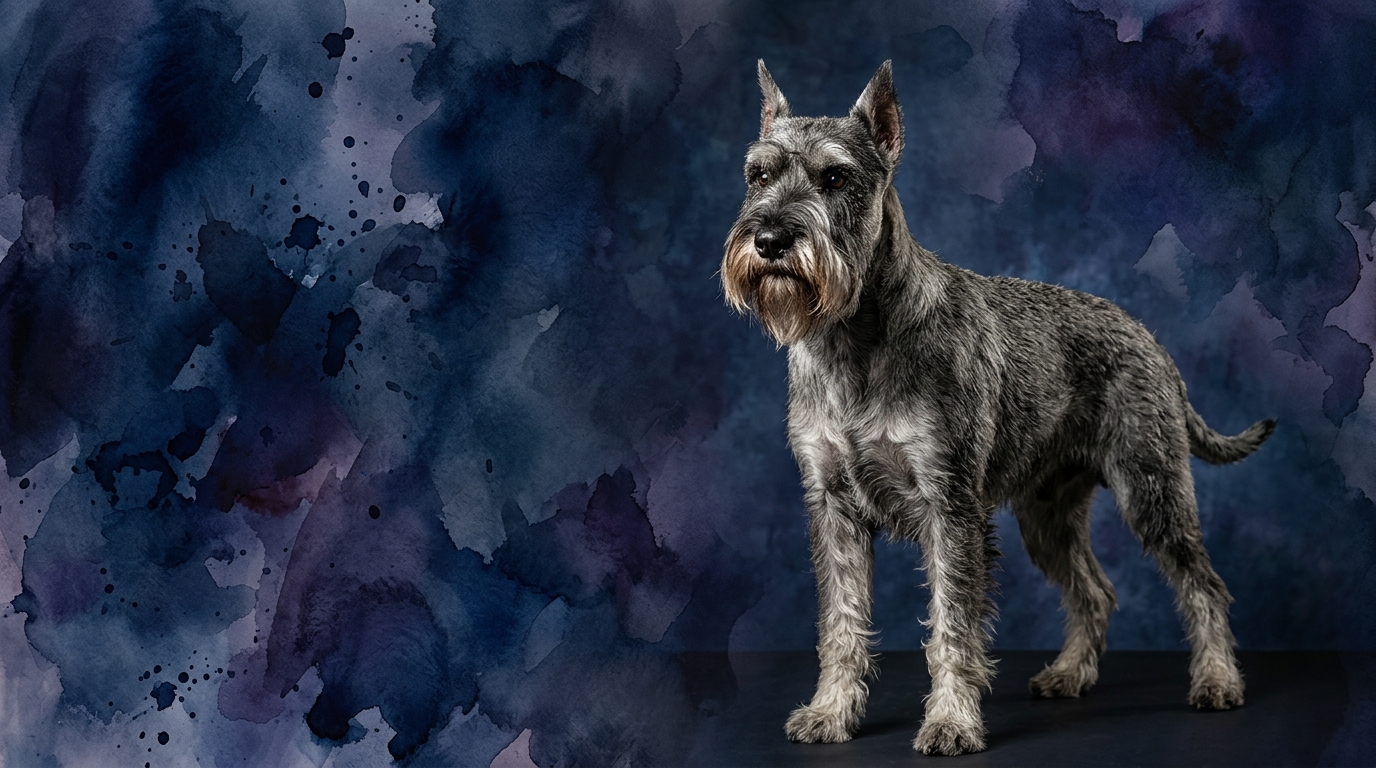
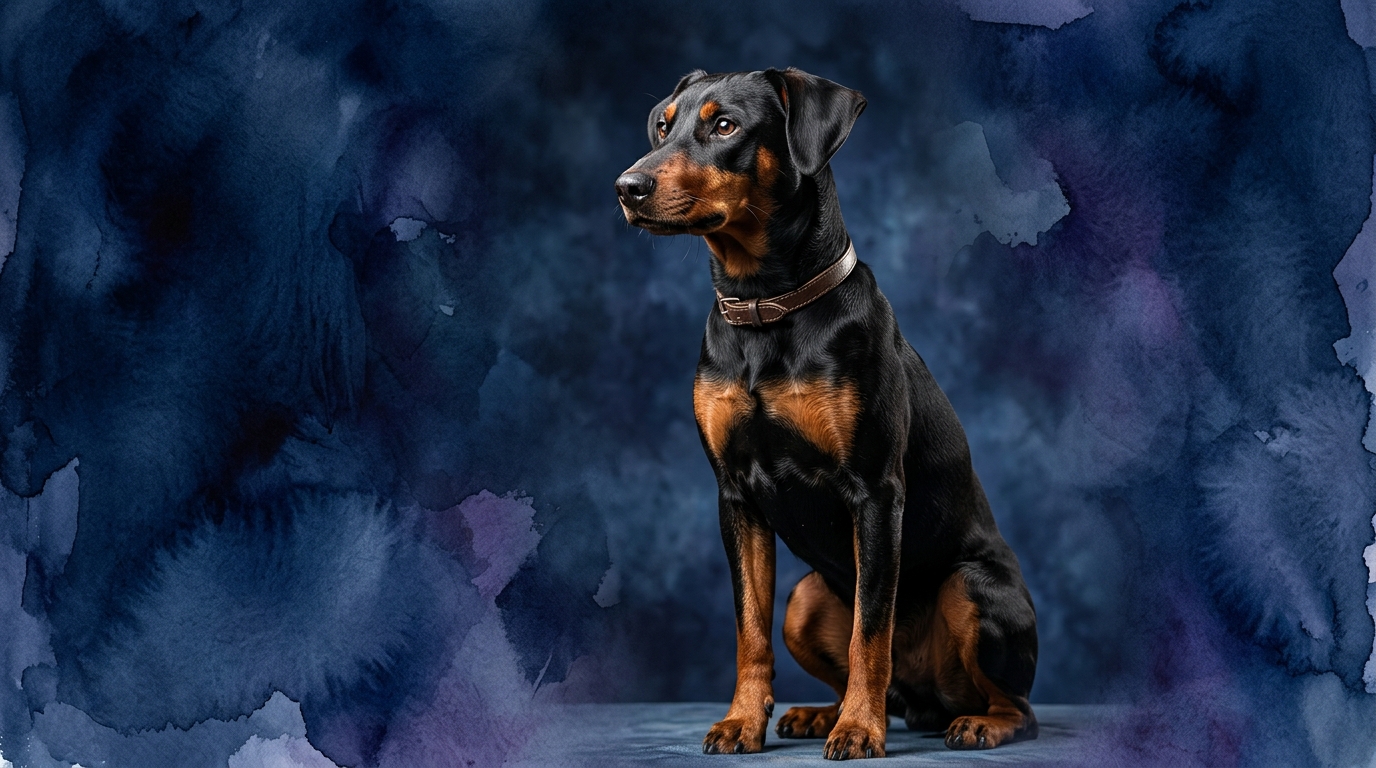
Side-by-Side Cognitive Profiles
Delving into the intellectual makeup of the Standard Schnauzer and German Pinscher reveals fascinating insights into their respective strengths. For the Standard Schnauzer, ranked #22 by Coren, its problem-solving ability scores a robust 4/5, indicating a strong capacity for independent thought and strategic thinking when faced with novel situations. This is complemented by a training speed of 4/5, suggesting a rapid grasp of new commands and routines, making them highly receptive to instruction.
The Standard Schnauzer's social intelligence registers at 3/5, signifying a good understanding of human cues and social dynamics, though perhaps with an independent streak rather than an overwhelming desire to please. Its instinctive drive also sits at 3/5, reflecting a moderate but present inclination for tasks rooted in its heritage, such as guarding or vermin control. A memory score of 4/5 means this breed retains learned information and past experiences with impressive fidelity, building a rich behavioral repertoire over time.
In contrast, the German Pinscher, while not specifically Coren-ranked, presents a more uniformly balanced cognitive profile. It scores 3/5 in problem-solving, indicating a capable but perhaps more direct approach to challenges that may require more guidance or trial-and-error than its Schnauzer counterpart. Its training speed, also at 3/5, suggests a steady learning pace that benefits from consistency and clear repetition. Like the Schnauzer, its social intelligence and instinctive drive are rated 3/5, pointing to a similar level of understanding social cues and a moderate drive for traditional working dog activities. Finally, its memory score of 3/5 means it reliably retains information, though perhaps not with the same depth or recall speed as the Standard Schnauzer.
Where the Standard Schnauzer Excels Cognitively
The Standard Schnauzer consistently demonstrates superior cognitive agility in several key areas. Its problem-solving score of 4/5, a full point above the German Pinscher, signifies a pronounced capacity for analytical thought and independent reasoning. When confronted with new scenarios or obstacles, a Schnauzer is more inclined to devise creative solutions and adapt its strategies effectively, often with minimal human intervention, showcasing a deeper level of cognitive flexibility.
Furthermore, the Schnauzer's advantage in training speed (4/5) and memory (4/5) creates a powerful synergy for learning and retention. This breed internalizes complex commands, multi-step routines, and intricate sequences with remarkable efficiency, requiring fewer repetitions to achieve mastery. Their robust memory ensures that these learned behaviors and past experiences are not only quickly acquired but also retained over extended periods, making them exceptionally well-suited for advanced obedience, complex dog sports, or specialized task training where cumulative learning is paramount.
Where the German Pinscher Excels in its Own Right
While the Standard Schnauzer's cognitive profile features distinct peaks, the German Pinscher offers a different kind of strength through its consistent 3/5 across all five intellectual dimensions. This uniformity implies a steadfast and predictable cognitive engagement, where a German Pinscher is less likely to over-analyze situations or develop complex, subtle strategies to bend rules. Instead, their direct approach to problem-solving and a steady learning pace means they excel in environments that value consistency and clear communication.
This balanced cognitive makeup provides a reliable and straightforward partnership for dedicated owners. German Pinschers are less prone to the intellectual 'gamesmanship' that some breeds with higher problem-solving scores might exhibit, making them a less demanding intellectual partner. Their consistent scores mean owners can anticipate a reliable learning curve and a dog that, while capable, won't constantly seek to outsmart or manipulate, fostering a clear and uncomplicated bond built on trust and consistent guidance.
Which is Easier to Train and Why
Based on their respective cognitive profiles, the Standard Schnauzer generally presents as the easier breed to train. Its 4/5 training speed means it grasps new commands and routines quickly, often requiring fewer repetitions to solidify learning. This is significantly aided by its 4/5 problem-solving ability, allowing it to generalize concepts and apply learned behaviors to new contexts more readily, and its strong memory ensures that once a lesson is learned, it is retained for the long term.
The German Pinscher, with its 3/5 training speed, will certainly learn, but it typically requires more consistent repetition and patience. Owners of German Pinschers should prepare for a more gradual learning curve, focusing on clear, unambiguous instructions and rewarding desired behaviors consistently. While both breeds are working dogs, the Schnauzer's heightened intellectual curiosity and faster processing speed often translate into a more enthusiastic and rapid engagement with formal training sessions, potentially making the process feel more fluid and rewarding for the handler.
Which Suits Active Owners vs. Owners Seeking Straightforward Companionship
Both the Standard Schnauzer and German Pinscher are working breeds with moderate instinctive drives (3/5), indicating they require regular physical activity and mental engagement. However, the *type* of engagement they thrive on differs. The Standard Schnauzer, with its superior problem-solving and memory, demands more intricate mental stimulation alongside its physical exercise. Owners who enjoy participating in dog sports like agility, advanced obedience, or rally, or who are keen on teaching complex tricks and providing puzzle toys, will find the Schnauzer's mind eager to engage.
For owners who are active but prefer a more straightforward cognitive partnership, the German Pinscher might be a more fitting choice. While still requiring plenty of physical exercise to satisfy its energetic nature, its consistent 3/5 across cognitive dimensions suggests it may be content with less intellectually demanding activities. These owners appreciate a dog that is reliable and consistent, enjoying regular walks, runs, and consistent training without the constant need to introduce novel, complex mental challenges that a higher-scoring problem-solver might demand to prevent boredom.
The Verdict
For those seeking a highly trainable companion adept at complex tasks and eager to engage in intricate intellectual challenges, the Standard Schnauzer's sharp mind and impressive memory are ideal. They thrive with owners who enjoy delving into advanced training or dog sports.
The German Pinscher is best suited for owners who value a steady, consistent companion with a direct approach to learning, and who can provide clear guidance and regular physical activity. Their balanced cognitive profile makes them a reliable and less intellectually demanding partner.
🧠 Find Your Pet's IQ Score
Our Pet IQ Lab assessment covers 25+ tests across 5 cognitive dimensions — personalized to your breed.
Take the Full IQ Test →Frequently Asked Questions
Are Standard Schnauzers prone to being stubborn?
Their high problem-solving ability can sometimes manifest as independent thinking, leading them to question commands if they perceive a better solution or lack clear motivation, which some owners might interpret as stubbornness. Consistent, fair training is key to channeling this intelligence.
Do German Pinschers get bored easily?
While active and alert, their consistent 3/5 in problem-solving and memory suggests they are less likely to demand constant novelty in mental stimulation compared to breeds with higher scores, as long as their physical and social needs are consistently met. They appreciate routine and clear expectations.
Which breed is better for a first-time dog owner?
While both are working breeds requiring commitment, the German Pinscher's more predictable learning curve and balanced cognitive profile might offer a slightly less intense initial training experience for a dedicated first-time owner compared to the Standard Schnauzer's sharper, more demanding intellect. Both benefit from experienced guidance.