Side-by-Side IQ Profile: Unpacking the Mental Toolkits
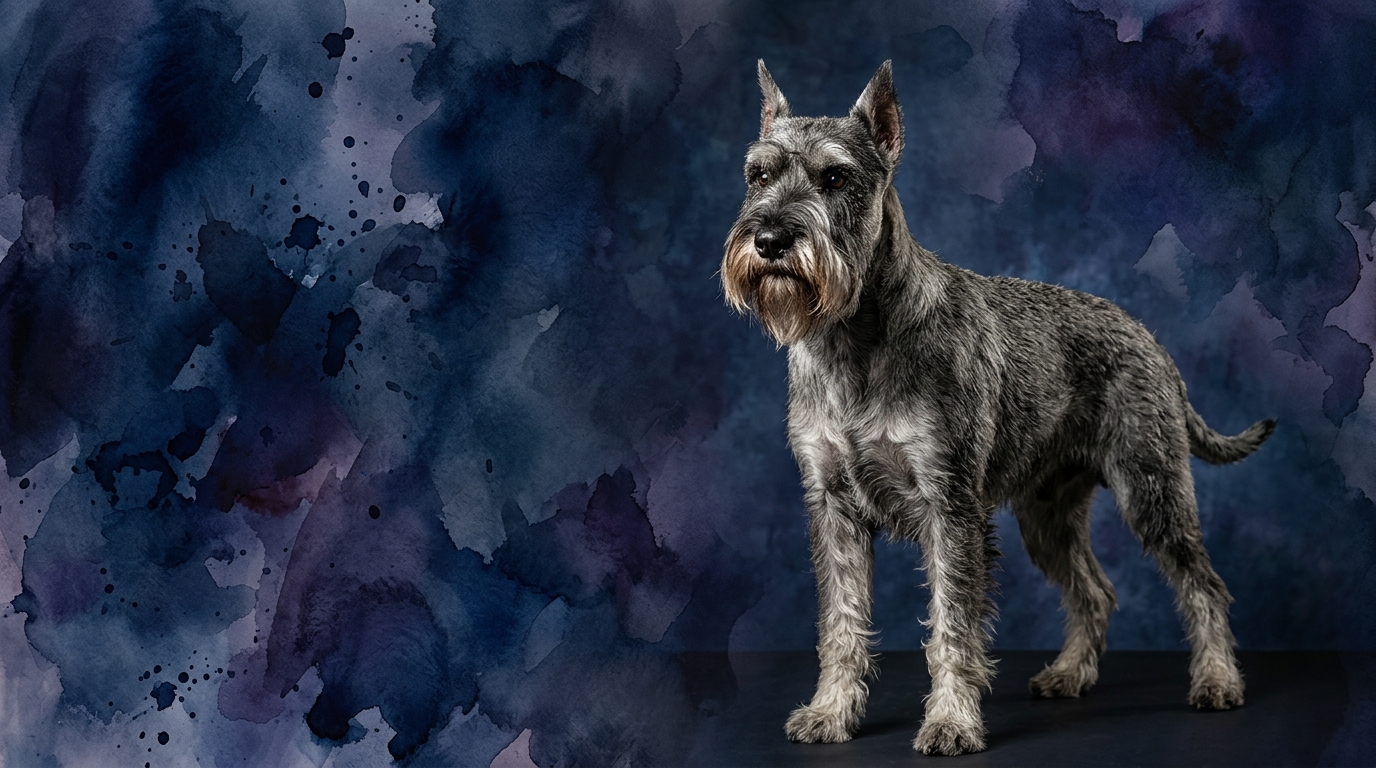
**Standard Schnauzer (Working Group):** This breed, ranking #22 on Coren's scale, demonstrates a Problem Solving score of 4/5, often applied to navigating complex household scenarios or assessing perceived threats with a discerning eye. Its Training Speed of 4/5 reflects a quick grasp of commands, though sometimes filtered through an independent streak. Social Intelligence, at 3/5, suggests competence in understanding human cues but with a preference for its core family unit. An Instinctive Drive of 3/5 points to its historical roles in guarding and vermin control, manifesting as vigilance and a strong territorial sense. Memory, also 4/5, allows for consistent recall of learned behaviors and spatial layouts.
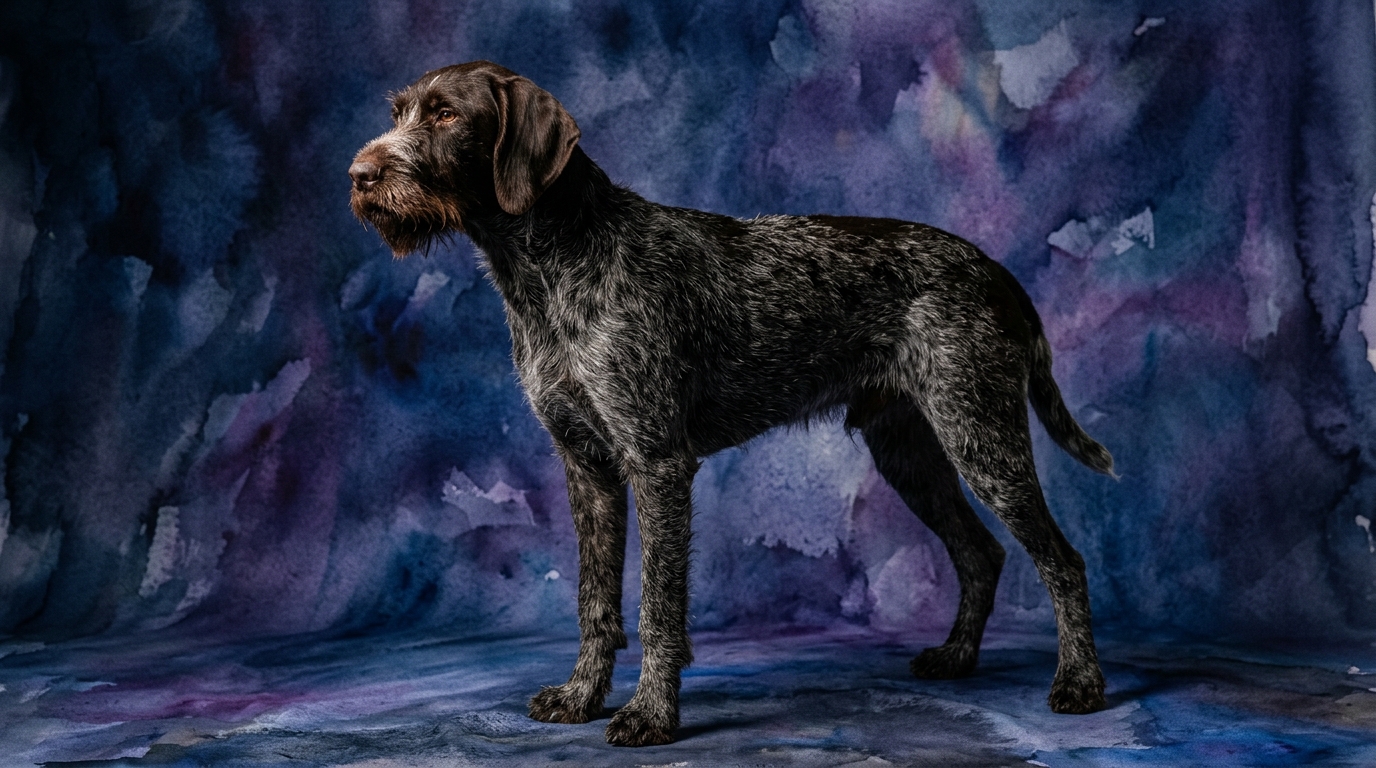
**German Wirehaired Pointer (Sporting Group):** With a Coren rank of #28, the GWP also scores 4/5 in Problem Solving, typically leveraging this to efficiently track game, navigate varied terrain, or overcome obstacles during a hunt. Its Training Speed of 4/5 means it picks up new tasks readily, especially when motivated by purpose and partnership. Social Intelligence, at 3/5, shows an aptitude for cooperative work with handlers, though its primary focus often remains on the task at hand. An Instinctive Drive of 3/5 is deeply rooted in its pointing and retrieving heritage, driving its relentless search and strong prey drive. Memory, rated 4/5, ensures it remembers scent trails, retrieve locations, and complex hunting patterns.
Where the Standard Schnauzer Wins Cognitively
Despite identical raw scores, the Standard Schnauzer's cognitive strengths lean into its working heritage, specifically in independent decision-making and protective vigilance. Its Problem Solving at 4/5, combined with its Working group designation, often translates into a dog adept at assessing novel situations from a self-reliant perspective, such as determining the best route to investigate an unfamiliar sound or figuring out how to "manage" its territory. This breed's memory (4/5) is particularly potent for retaining established routines and understanding the hierarchy within its family, making it a reliable sentinel. The Schnauzer's social intelligence (3/5), while not the highest, is finely tuned to its immediate family, allowing it to quickly discern changes in their moods or intentions, which is crucial for its protective role. This breed excels in tasks requiring a blend of observational skill and a confident, self-directed response.
Where the German Wirehaired Pointer Wins Cognitively
The German Wirehaired Pointer, while matching the Schnauzer's scores, applies its cognitive abilities with a distinct focus on collaboration and task-oriented persistence within a working partnership. Its Problem Solving (4/5) shines in dynamic outdoor environments, where it must quickly evaluate complex scent trails, navigate challenging cover, and strategize the most efficient path to game, often adjusting its approach based on handler cues. The GWP's impressive memory (4/5) is particularly powerful for recalling vast areas of scent, remembering the location of fallen game, and executing complex multi-step commands during a hunt. Its training speed (4/5) is fueled by an intense desire to work alongside its human companion, making it exceptionally receptive to instruction when the activity aligns with its inherent sporting drives. The GWP's social intelligence (3/5) is geared towards understanding and responding to its handler's subtle signals, enabling a seamless partnership in the field.
Which Is Easier to Train and Why
Both breeds possess a Training Speed score of 4/5, indicating a rapid capacity for learning, but the *ease* of training can differ significantly due to their behavioral predispositions. The Standard Schnauzer, originating from the Working group, often combines its quick learning with a degree of independent thought and a protective instinct. This means while it grasps commands swiftly, it may occasionally choose to apply its problem-solving abilities to situations in ways that deviate from direct instruction if it perceives a better, more "Schnauzer-like" solution, or if its guarding instincts are triggered. Training a Schnauzer requires consistent, firm, and engaging methods to maintain its focus and ensure its independence doesn't override its willingness to comply.
Conversely, the German Wirehaired Pointer, a Sporting breed, also learns rapidly, but its strong desire to cooperate with its handler and its innate drive to perform tasks (like hunting) often make it appear more "eager to please" in a training context. GWPs thrive on purpose-driven activities and working alongside their human partners, which can make them highly motivated students. However, their intense instinctive drive (3/5), particularly their prey drive and boundless energy, means that while they learn quickly, managing distractions and ensuring sufficient physical and mental outlets are critical for effective training. A GWP might be easier to motivate through a shared activity, whereas a Schnauzer might need more convincing that a command is truly necessary or beneficial.
Which Suits Active Owners vs. Relaxed Owners
Neither the Standard Schnauzer nor the German Wirehaired Pointer are suited for genuinely relaxed, sedentary owners; both breeds demand substantial engagement. The Standard Schnauzer, while active, often thrives with owners who can provide structured physical activity combined with significant mental stimulation that leverages its problem-solving skills and watchful nature. These owners should appreciate a dog that enjoys learning complex tricks, participating in dog sports like agility or obedience, and engaging in activities that allow it to "work" its mind, such as puzzle toys or advanced scent work. Its exercise needs are robust but can be met with consistent daily walks, playtime, and dedicated training sessions.
The German Wirehaired Pointer, on the other hand, is built for endurance and intense outdoor activity, making it an ideal companion for owners with a truly adventurous and consistently active lifestyle. This breed requires extensive daily exercise that goes beyond a simple walk, thriving on activities like long hikes, running, biking, swimming, and especially any form of field work or dog sports that mimic hunting. Owners who enjoy spending hours outdoors, exploring varied terrains, and can channel the GWP's powerful instinctive drive into productive outlets will find an unparalleled partner. While both breeds need activity, the GWP's sheer stamina and drive for continuous motion make it less suitable for owners whose "active" lifestyle only extends to a few short bursts a day.
The Verdict
Choose the Standard Schnauzer if you seek an observant, self-reliant companion who excels in structured environments, enjoys mental challenges, and offers a protective presence, thriving with an owner who appreciates its independent problem-solving and can provide consistent, engaging training.
Choose the German Wirehaired Pointer if your life is defined by extensive outdoor adventures, a desire for a tireless, cooperative partner in physically demanding activities, and you're prepared to channel its powerful hunting instincts into productive, shared pursuits.
🧠 Find Your Pet's IQ Score
Our Pet IQ Lab assessment covers 25+ tests across 5 cognitive dimensions — personalized to your breed.
Take the Full IQ Test →Frequently Asked Questions
Do Standard Schnauzers and German Wirehaired Pointers have the same memory capacity?
Based on The Cosmic Pet's IQ Lab, both breeds score 4/5 for memory, indicating a strong capacity for retaining learned behaviors, spatial layouts, and environmental information. The application of this memory might differ, with Schnauzers recalling family routines and territory, while GWPs remember scent trails and hunting patterns.
Which breed is better at problem-solving?
Both breeds are rated 4/5 for problem-solving. A Standard Schnauzer's problem-solving often manifests in independent decision-making related to its environment or family, while a German Wirehaired Pointer applies its problem-solving to navigating complex outdoor tasks and tracking during field work.
Is one of these breeds more social than the other?
Both the Standard Schnauzer and the German Wirehaired Pointer score 3/5 in social intelligence. This suggests they are competent in understanding human cues; the Schnauzer often focuses its social aptitude on its family, while the GWP's social intelligence is geared towards cooperative work with a handler in task-oriented scenarios.