Side-by-Side IQ Profile: Standard Schnauzer vs. Miniature Bull Terrier
The Cosmic Pet Pet IQ Lab employs five core dimensions to map a breed's cognitive architecture, providing a nuanced understanding beyond simple 'smart' labels. Let's dissect the profiles of the Standard Schnauzer and the Miniature Bull Terrier.
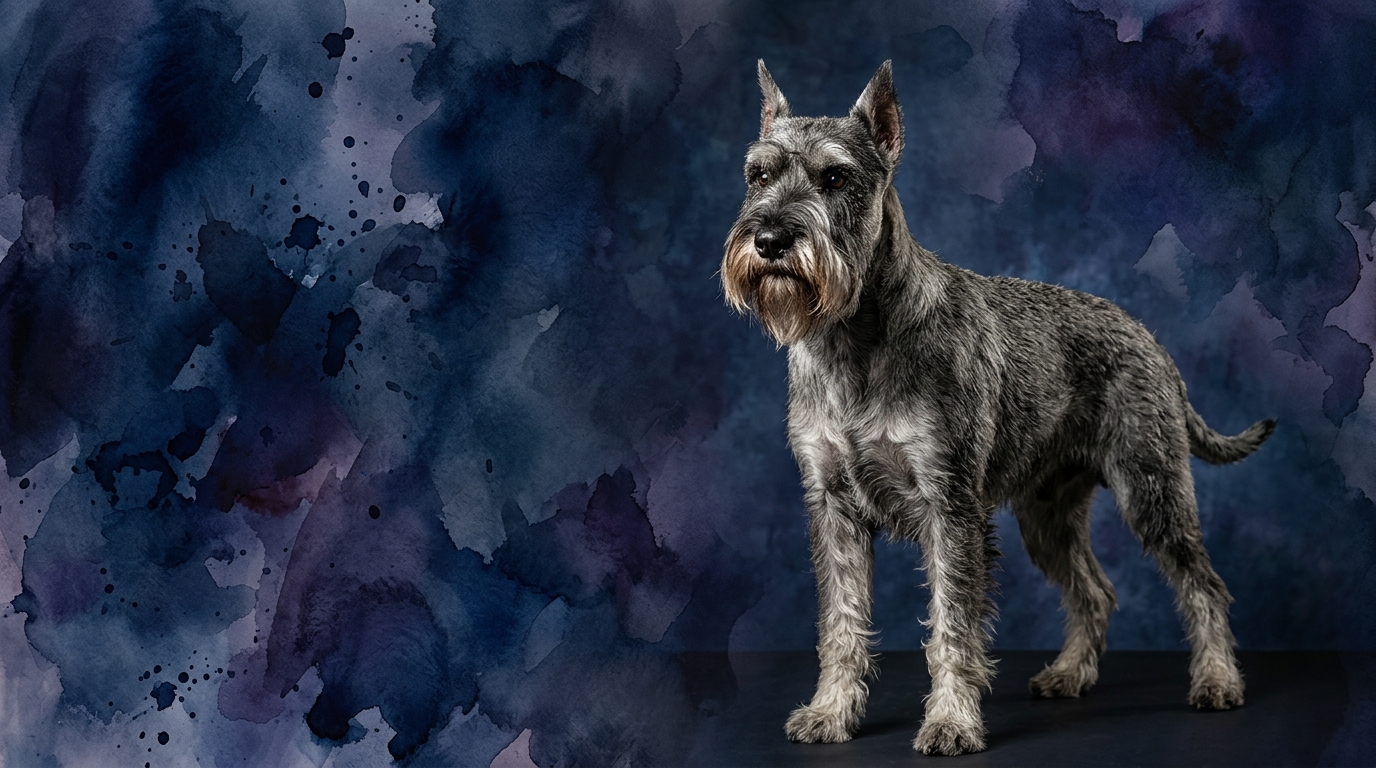
The Standard Schnauzer, a robust member of the Working Group, registers impressively on the Coren ranking at #22, indicating a substantial capacity for understanding new commands quickly and obeying them reliably. Our IQ assessment further refines this picture: its Problem Solving is rated 4/5, signifying an aptitude for navigating complex situations and devising solutions. Training Speed also scores 4/5, reflecting its readiness to absorb new commands and routines with efficiency. Social Intelligence stands at 3/5, suggesting a balanced approach to interaction, often discerning and focused rather than universally effusive. Its Instinctive Drive is 3/5, channeled effectively into its historical roles like guarding and herding, demonstrating purposeful application of inherent urges. Memory, at 4/5, underscores its ability to retain learned behaviors and recall past experiences with precision.
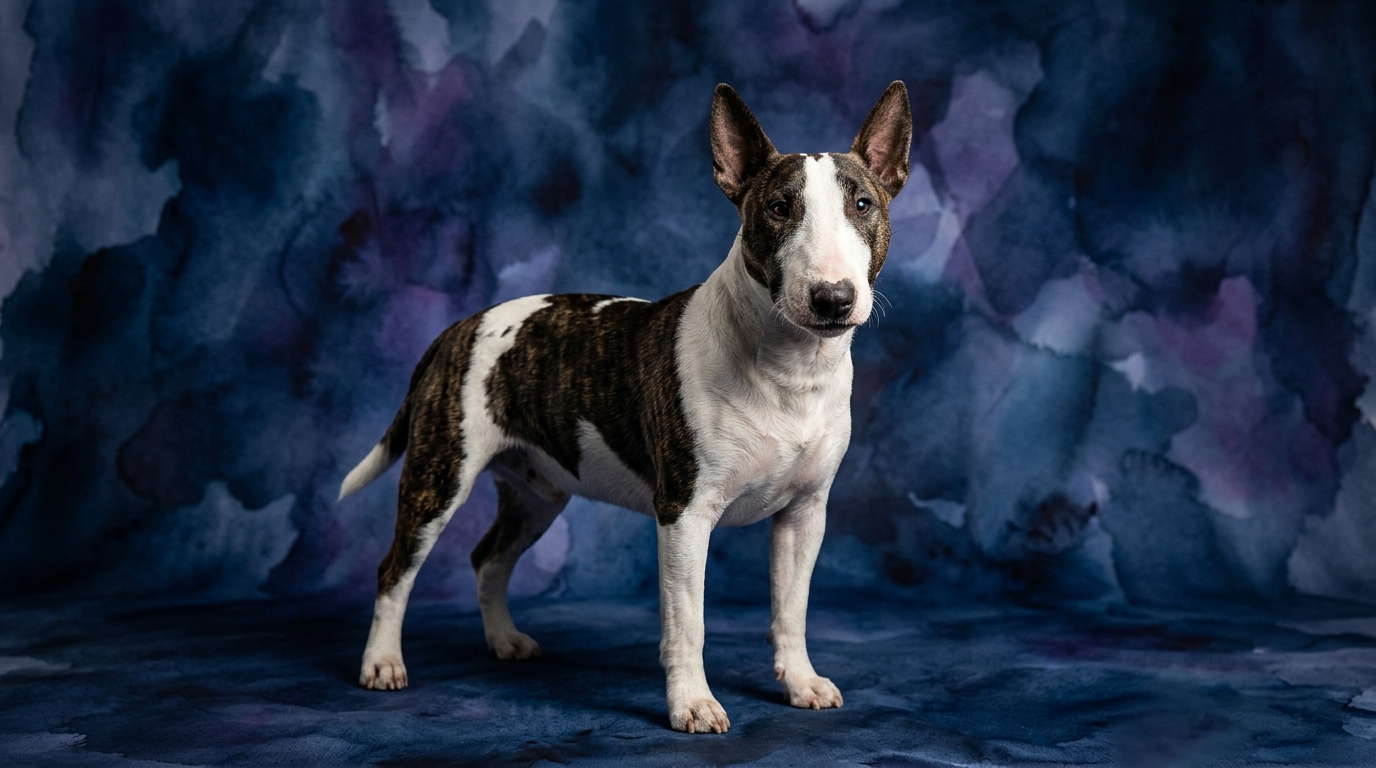
In contrast, the Miniature Bull Terrier, a distinctive Terrier, does not appear on Coren's comprehensive ranking, reflecting a different cognitive emphasis. Its Problem Solving is rated 3/5, indicating an ability to work through challenges, often with a tenacious, trial-and-error approach rather than immediate analytical deduction. Training Speed also sits at 3/5, meaning it can learn, but typically requires more patience, consistency, and motivation compared to faster-learning breeds. Social Intelligence is 3/5, suggesting it forms deep, selective bonds and can be quite discerning in its interactions, rather than overtly gregarious. Its Instinctive Drive is 3/5, manifesting as the characteristic terrier persistence for digging, chasing, or independent exploration, often driven by a strong inner will. Memory, at 3/5, means it retains information adequately, but perhaps without the same comprehensive recall as breeds with higher scores.
Where the Standard Schnauzer Wins Cognitively
The Standard Schnauzer's cognitive strengths are particularly evident in its capacity for structured learning and task execution. Its 4/5 Problem Solving score means it excels at understanding multi-step commands and adapting strategies to achieve specific goals, a trait honed by centuries of working alongside humans. For instance, a Schnauzer might quickly grasp how to open a complex crate latch or navigate an agility course with minimal guidance after initial instruction. This breed's 4/5 Training Speed allows for rapid acquisition of new skills, making it a prime candidate for advanced obedience, protection work, or competitive dog sports where precise execution is paramount. The 4/5 Memory score ensures these learned behaviors are retained over time, reducing the need for constant re-training and allowing for the building of a vast repertoire of commands and routines. This combination of quick understanding, efficient learning, and robust recall positions the Standard Schnauzer as a highly capable and responsive partner in structured activities.
Where the Miniature Bull Terrier Wins Cognitively
While the Miniature Bull Terrier's scores might appear numerically lower, its cognitive strengths lie in areas that celebrate independence and tenacity, rather than strict adherence to command. Its 3/5 Problem Solving, though not as analytically swift as the Schnauzer's, often translates into a persistent, unyielding approach to challenges. A Miniature Bull Terrier might not immediately deduce the 'correct' way to solve a puzzle, but it will likely try every possible method until it succeeds, demonstrating remarkable grit. The 3/5 Instinctive Drive, while moderate, is deeply rooted in its terrier heritage, manifesting as an unwavering determination when pursuing an interest, whether it's a scent trail or a favorite toy. This focused drive, combined with its 3/5 Social Intelligence, allows it to form exceptionally strong, albeit often selective, bonds with its chosen family, exhibiting a unique loyalty and discernment in its social interactions. Its cognitive profile supports an independent spirit, making it adept at navigating its environment with self-assurance and a charming, often mischievous, ingenuity.
Which is Easier to Train, and Why
When it comes to ease of training, the Standard Schnauzer generally holds an advantage due to its higher scores in Training Speed (4/5) and Problem Solving (4/5). These attributes mean a Schnauzer is typically more eager to learn new commands, grasps concepts quickly, and is more inclined to follow directives. Their working background predisposes them to cooperation and understanding human intentions, making them responsive to positive reinforcement and consistent methods. They thrive on having a 'job' and excel in structured training environments, often showing a desire to please their handler.
The Miniature Bull Terrier, with 3/5 scores in both Training Speed and Problem Solving, presents a different training experience. Their terrier nature means they possess a strong independent streak and can be less inclined to unquestioningly follow commands if they don't perceive immediate value or if their own instincts take precedence. Training a Miniature Bull Terrier requires significant patience, creativity, and a deep understanding of motivation. They respond best to engaging, varied sessions that prevent boredom and tap into their inherent drive and playful spirit. While capable of learning, their progress might be slower and require more repetition, with handlers needing to be prepared for moments of delightful stubbornness or selective hearing.
Suitability for Active vs. Relaxed Owners
The Standard Schnauzer, with its Working Group heritage and purposeful cognitive profile, is better suited for active owners who can provide consistent mental and physical engagement. Their 3/5 Instinctive Drive, coupled with high problem-solving and training speed, means they require outlets for their energy and intellect. Owners who enjoy structured activities like obedience training, agility, hiking, or even nose work will find a highly engaged and satisfied companion. A Schnauzer thrives on routine and having a role, making them an excellent fit for individuals or families committed to incorporating their dog into daily activities and providing ample opportunity for cognitive stimulation beyond basic walks.
The Miniature Bull Terrier, while also requiring activity, suits owners who appreciate a dog with a unique blend of energy and independent spirit. Its 3/5 Instinctive Drive, often expressed as bursts of enthusiastic play and exploration, means it needs regular exercise to prevent boredom and destructive behaviors. However, their 3/5 social intelligence and problem-solving suggest they may not always seek constant structured engagement in the same way a Schnauzer does. They can be content with varied activities, including vigorous play sessions, secure off-leash exploration, or puzzle toys that challenge their tenacious problem-solving. Owners who are relaxed about strict adherence to routine but committed to providing outlets for a distinct personality and occasional 'bullheaded' determination will find a rewarding companion in the Miniature Bull Terrier.
The Verdict
Choose the Standard Schnauzer if you seek a highly trainable, task-oriented companion eager for structured learning and consistent mental challenges. They excel with owners who provide clear direction and enjoy engaging in dog sports or advanced obedience.
Opt for the Miniature Bull Terrier if you appreciate an independent, tenacious spirit and are prepared to engage with a dog that learns at its own pace and thrives on varied, stimulating activities. They are best for owners who value a unique personality and can navigate a charmingly stubborn streak.
🧠 Find Your Pet's IQ Score
Our Pet IQ Lab assessment covers 25+ tests across 5 cognitive dimensions — personalized to your breed.
Take the Full IQ Test →Frequently Asked Questions
Do Standard Schnauzers require a lot of mental stimulation?
Yes, with 4/5 scores in problem-solving and memory, Standard Schnauzers thrive on consistent mental engagement. They benefit greatly from training, puzzle toys, and activities that challenge their intellect and provide a sense of purpose.
Are Miniature Bull Terriers difficult to train due to their independence?
Miniature Bull Terriers can present training challenges due to their independent nature and 3/5 training speed score. They require patient, creative, and consistent training methods, often responding best to motivation-based techniques that make learning fun and engaging.
Which breed is better for a first-time dog owner?
The Standard Schnauzer's higher trainability and desire to please generally make it a more manageable choice for a dedicated first-time owner willing to commit to consistent training. The Miniature Bull Terrier's independent streak might be more challenging for someone new to dog ownership.